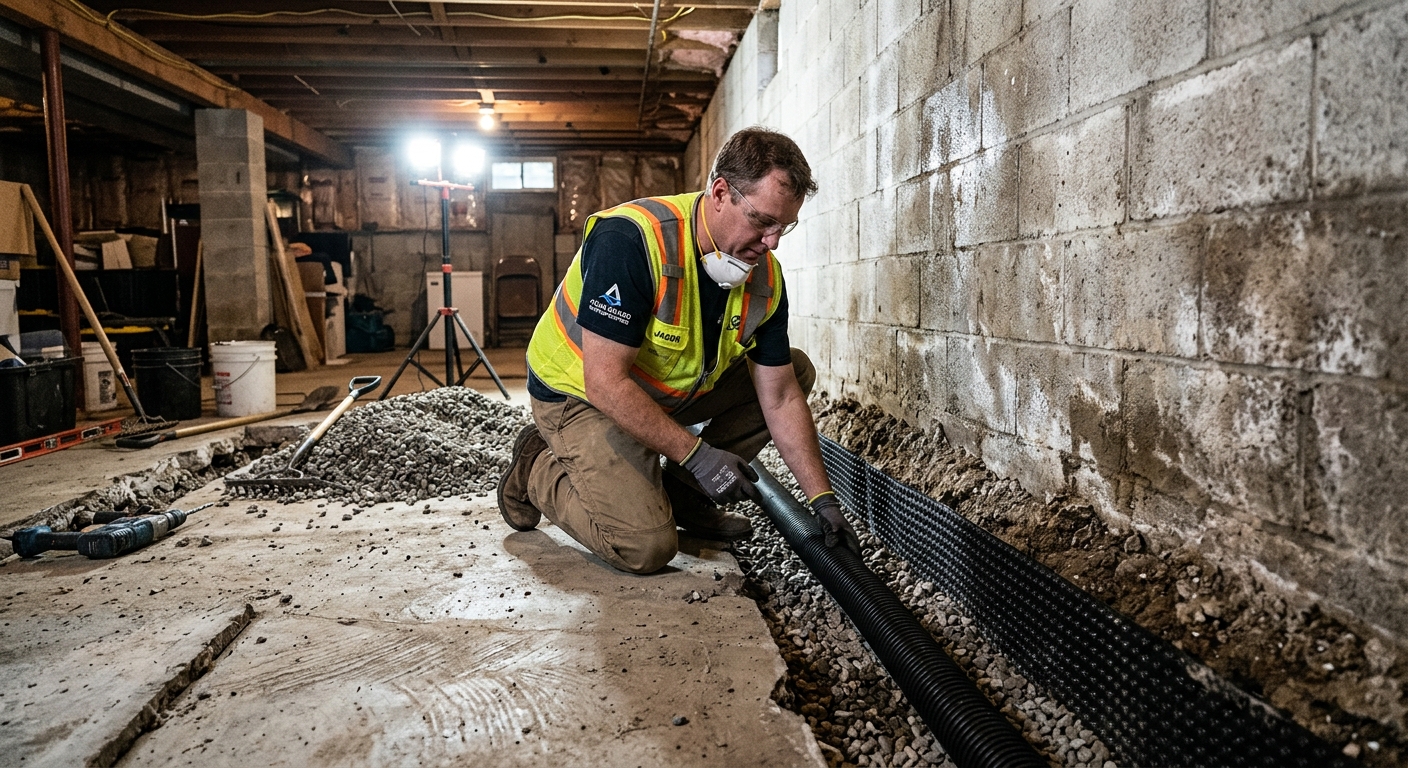
Basement waterproofing options and costs in Whistler
Whistler homeowners typically consider waterproofing options once they notice recurring dampness, salt-and-mineral staining, or water intrusion after wet stretches. With just 21.1% of homes built before 1981 (Statistics Canada, 2021 Census), Whistler still has a meaningful pocket of older foundations where original tar-and-paper systems and early weeping tile setups are more likely to have failed, even when walls look “intact.” In a community of 13,982 people (Statistics Canada, 2021 Census), contractors also face jobsite realities—steep grades, tight driveway access, and excavation constraints—that can raise labour and disposal costs compared with less access-restricted areas.
In the Lower Mainland–Southwest, the cost driver is persistent groundwater pressure during intense, prolonged rainfall. That means exterior excavation and new perimeter drainage tile often sit at the higher end of the region’s national pricing. Wet winters also bring frequent freeze-thaw cycles, which widen existing joints and cracks and can turn “occasional” seepage into ongoing seepage. For many Whistler properties—especially along popular residential pockets near the Village area—water management demand is high because basement leaks often show up during shoulder-season storms.
The best choice depends on where the water is coming from and whether the foundation is poured concrete, block, or a mixed build. The table below compares common approaches you’ll see in Whistler quotes, from exterior membrane and drainage tile to interior systems and crack repair.
| Method |
What It Addresses |
Disruption Level |
Durability |
Price Range |
| Exterior excavation + new membrane + drainage tile |
Primary water entry at perimeter; hydrostatic pressure control with new drainage |
High (excavation + landscaping restoration) |
Long-term (typically 15–30+ years when installed to spec) |
$15,000–$30,000 |
| Interior perimeter drain channel + sump pit |
Water that enters through wall/floor transitions; reduces interior seepage |
Medium (interior work + partial floor/tile removal) |
High (often 10–20+ years depending on system design) |
$8,000–$18,000 |
| Foundation crack injection (epoxy or polyurethane) |
Cracks that act as pathways; stabilizes or stops active leakage |
Low to Medium (drilling/patching work) |
Varies by crack type and product (often 5–15+ years) |
$500–$2,000 |
| Sump pump installation (primary + battery backup) |
Manages collected groundwater to prevent backup and flooding |
Low to Medium (pit + discharge lines) |
Longer when paired with backup power and proper discharge |
$1,000–$5,000 |
| Window well drain installation |
Water entry at basement egress points during storms |
Low to Medium (limited excavation/fitment) |
Good when tied into drainage and covered properly |
$1,500–$4,500 |
| Lot re-grading / downspout extension |
Stops surface water from flowing toward foundation |
Low to Medium (yard work) |
Moderate (depends on ongoing grading maintenance) |
$3,000–$8,000 |
Prices are estimates only and vary by project scope, site access and material selection.
What affects the price of waterproofing in Whistler
In Whistler and the wider Lower Mainland–Southwest region, you can easily see waterproofing quotes for “the same basement issue” that differ by 30–50%. The gap usually comes down to the site’s water behaviour and how fully each quote deals with it—particularly whether the contractor addresses the source with exterior drainage and membrane, or manages water after it enters with an interior system.
Three technical drivers separate local costs from the national average: soil type, water table level, and freeze-thaw cycling. Clay-heavy soils can expand during freeze-thaw and push laterally against foundation walls, worsening cracks over time. In Whistler’s coastal BC conditions, the bigger distinction is often the high groundwater and saturation: intense rainfall can keep backfill soils loaded for long periods. When original drainage fails, the water can build hydrostatic pressure against basement walls and slabs, increasing both material use (membranes, drainage rock, pipe) and system complexity (larger sump capacity, check valves, and discharge routing).
Two common cost examples in Whistler: (1) an older home with long-established weeping tile that’s collapsed or disconnected—interior drainage may be the cheaper first move, but full exterior replacement typically becomes necessary if the water table pressure is persistent; (2) a property with tight access near the Village area where excavating around decks and retaining walls triggers mechanical breaking and longer haul-away time. If foundation crack injection is needed, repairs can sit in the $500–$2,000 band, while a full interior system with weeping tile and sump can move toward $8,000–$18,000, and complete exterior waterproofing often lands in the higher $15,000–$30,000 range.
| Price Factor |
Why It Matters |
Cost Impact |
| Interior vs. exterior approach — interior is less disruptive but addresses symptoms |
Interior manages collected water; exterior targets water entry and pressure control |
Interior often 40–60% less than exterior, but may require sump operations long-term |
| Foundation type — poured concrete vs. block vs. stone vs. ICF |
Crack behaviour and sealing strategies differ by foundation material |
Poured concrete often lends itself to crack injection; block commonly needs interior drainage as a complement |
| Soil type — clay expands more than sand, adding pressure |
Freeze-thaw can widen joints and increase lateral pressure |
More extensive crack repair and stronger drainage detailing may be required |
| Crack type and length — hairline vs. structural horizontal cracks |
Structural cracks may need engineering review and potentially stabilization |
Structural work can shift the project from “repair” to “engineering + remedial measures” |
| Sump pump backup system — battery or water-powered backup needed |
Protects against power loss during wet seasons and spring flooding periods |
Often adds cost but reduces risk of basement flooding; can move total by roughly 10–30% for pump systems |
| Access — landscaping, decks, or driveways must be removed for exterior |
Excavation time, disposal, and restoration drive labour |
In Whistler’s tighter lots, access constraints commonly raise exterior costs toward the upper band |
| Weeping tile age — original tile (60+ years) may be completely failed |
Old systems often clog or disconnect, turning “partial” repairs into full replacements |
May change a smaller interior retrofit into a more comprehensive interior or exterior solution |
| Mould or efflorescence remediation required before sealing |
Trapped moisture and salts can prevent proper adhesion and shorten membrane life |
Additional labour and drying time add cost before waterproofing materials go on |
Permits & regulations in British Columbia
In British Columbia, foundation excavation and structural crack repair typically require a building permit, particularly when the work may affect structural elements or requires changes that go beyond simple surface patching. Sump pump installations that discharge to a municipal system (storm or sanitary) generally need municipal approval, so a contractor should be able to confirm the required approvals and handle the process where applicable.
For structural crack repair—commonly horizontal cracks in block walls or any major step cracks—a structural engineer’s assessment is often necessary to determine whether underpinning or other structural measures are required. Before you sign a contract, ask whether the contractor’s scope includes engineering support for structural repairs and whether they carry the appropriate liability coverage and WSIB/WCB coverage (as applicable). Whistler projects also frequently involve lot drainage adjustments and excavation near existing hardscaping, so permitting can be the difference between a straightforward retrofit and a delayed jobsite.
To verify a contractor in Whistler, homeowners should: (1) confirm the contractor’s licence details through the appropriate online registry listing for BC; (2) request a certificate of insurance and confirm coverage amounts and that it lists you/your property as required by your agreement; (3) ask for WSIB/WCB clearance documents (or the contractor’s coverage status) before work begins; and (4) ensure the written quote lists what permits are included, who pulls them, and whether engineering is required.
Interior vs exterior waterproofing — what does Whistler need?
The fundamental difference is source control versus water management. Exterior waterproofing—full excavation, new membrane, new perimeter drainage tile, and properly graded backfill—addresses where water enters and reduces hydrostatic pressure against the wall. It’s the most permanent solution, but it costs more and requires substantial landscape disruption. Interior waterproofing—typically a perimeter drain channel, sump pit, and sump pump—captures water after it enters and keeps basements drier. It’s less invasive, but it does not stop water pressure on the exterior wall; it relies on consistent drainage capacity and reliable pump operation.
In Whistler’s wet, mild winters and Lower Mainland–Southwest rainfall patterns, interior solutions can be a smart choice when access is limited or when the foundation material makes exterior work complicated. Poured concrete walls often seal well with crack injection (especially when cracks are cleanly identified), while block foundations commonly benefit from interior drainage as a practical complement because block systems can allow moisture migration through joints and surface pores. If you’re dealing with ongoing seepage during prolonged storms, pairing interior drainage with sump pump backup becomes important; in British Columbia, power outages during extreme weather can create a failure point if the system only has primary power.
A common justification for paying more for exterior work is when the perimeter drainage system is fundamentally failing and water is being kept up against the foundation for weeks at a time. In those cases, an interior system in the $8,000–$18,000 band may still be sensible as an interim step, but full exterior work in the $15,000–$30,000 range can be the better long-term risk reduction—particularly for properties with repeated leaks after heavy rain events.
| Method |
Best For |
Addresses Source? |
Disruption |
Lifespan |
Price Band |
| Full exterior excavation + membrane |
Persistent seepage driven by high groundwater and failed perimeter drainage |
Yes (primary source control) |
High (excavation and landscaping restoration) |
15–30+ years with proper installation |
$15,000–$30,000 |
| Interior French drain + sump system |
Basements that leak despite grading fixes, or when exterior access is limited |
Partially (manages water after entry) |
Medium (floor/tile removal in targeted areas) |
10–20+ years with correct pump sizing |
$8,000–$18,000 |
| Crack injection — epoxy (structural) |
Non-moving cracks where the goal is sealing and restoring integrity |
Yes (seals crack pathways) |
Low to Medium (drilling and patching) |
5–15+ years depending on crack stability |
$500–$2,000 |
| Crack injection — polyurethane (active leak) |
Active seepage where water pressure is still present |
Yes (stops leakage pathways) |
Low to Medium (drilling and patching) |
5–10+ years; best paired with drainage improvements |
$500–$2,000 |
| Interior drain channel only (no sump) |
Light seepage where water volumes are low and manageable |
No (relies on gravity discharge) |
Medium (interior trenching/finishes) |
Variable; risk increases if groundwater rises |
$4,000–$10,000 |
| Re-grading + downspout extensions |
Surface water driving the problem (wet spots near footing after storms) |
No (doesn’t control hydrostatic pressure) |
Low to Medium (yard work) |
3–8 years depending on maintenance and settlement |
$3,000–$8,000 |
How to choose a waterproofing contractor in Whistler
Choosing a contractor in Whistler starts with verification. In British Columbia, ask for proof of licence details (as applicable to their work category), a certificate of liability insurance, and WSIB/WCB coverage status before any excavation begins. You should request the documents directly, confirm they are current, and ensure the certificate aligns with the legal name on your contract. Then, verify clearance or coverage status where applicable through the contractor’s provided documentation—don’t rely on verbal assurances.
Next, get 2–3 written, itemised quotes. You want labour and materials broken out (excavation, drainage tile, membrane, pipe/joint materials, disposal, interior drains, pump and backup system). A quote that only provides a lump sum without describing what is included makes it difficult to compare and can lead to change orders once the contractor sees actual site conditions.
Read the scope carefully: is permit pulling included or excluded, is soil hauling/disposal part of the price, and what is excluded (for example, restoring finished landscaping, decks, or driveways)? Warranty matters too—ask for the workmanship warranty length, product/manufacturer warranty terms, and whether the warranty is transferable to future homeowners if you sell.
For payment, keep it conservative: never pay more than 10–15% upfront and use a holdback until the job is substantially complete. Get a written start date and completion timeline, and ensure any seasonal access constraints (common in Whistler) are acknowledged in the schedule.
- Ask how they identify the water source (visual tracing, moisture mapping, crack survey, drain tie-in review).
- Confirm whether they recommend interior, exterior, or a hybrid system and why—based on observed conditions.
- Request a detailed excavation plan (limits of work, haul route assumptions, and restoration approach).
- Verify the pump design includes a check valve and correct discharge routing.
- Confirm sump backup strategy (battery or water-powered) and what triggers it.
- Check that foundation crack injection uses the correct product for crack behaviour (epoxy vs polyurethane).
- Ask how they treat mould or efflorescence before sealing.
- Ensure they specify pipe size, bedding, slope, and drain rock specification.
- Clarify whether exterior membrane overlaps and termination details are included.
- Confirm disposal and tipping fees are included for exterior excavation.
- Make sure the quote states what is excluded (engineering, structural assessment, permitting fees).
- Get warranty details in writing and ask who provides it (contractor vs manufacturer).
Red flags in Whistler: vague scopes (“waterproofing as required” with no materials list), no mention of weeping tile tie-in/discharge details, missing insurance/coverage documents, refusing to provide itemised pricing or permitting responsibilities, and warranties that only cover labour with no written workmanship terms or product exclusions.
Frequently asked questions — waterproofing in Whistler
Interior vs exterior waterproofing — which is better?
In Whistler, exterior waterproofing is generally the “best” option when your leaks are driven by perimeter groundwater pressure and a failed drainage setup. Exterior excavation plus new membrane and drainage tile targets the source; interior systems typically manage water after it enters. That’s why a full exterior project usually sits in the higher range—often $15,000–$30,000—while interior perimeter drainage and sump systems commonly fall around $8,000–$18,000. That said, exterior isn’t always practical on tight lots or when landscaping/hardscaping is extensive. Many Whistler homes use a hybrid approach: crack injection where appropriate, plus interior drainage to reduce risk during storms while exterior work is planned or scoped.
Why is my basement leaking in Whistler?
Basement leaks in Whistler are commonly caused by sustained rainfall loading the backfill and keeping water under hydrostatic pressure against foundation walls and slabs. When older perimeter drain/weep systems are clogged, disconnected, or undersized, water can build up and find pathways through wall-floor transitions, joints, and cracks. Freeze-thaw cycles can also widen existing defects, making seepage more obvious over time. If your home has signs like efflorescence or recurring dampness near corners, it often indicates long-term moisture movement rather than a one-time overflow. In homes built prior to 1981, the original waterproofing and drainage components are more likely to have reached the end of their service life (Statistics Canada, 2021 Census), which increases the odds you’ll need either drainage replacement or an interior retrofit.
How do I know if a foundation crack is serious?
Not all cracks are equal in British Columbia. Hairline, vertical shrinkage cracks are often less concerning, but serious indicators include horizontal cracks in block walls, step cracks, cracks that widen seasonally, and signs of water movement through the crack (wetness, seepage staining, or mineral buildup). If you notice bowing, doors/windows that suddenly misalign, or cracking that clearly progresses after heavy rain, treat it as higher risk. For structural crack repair—especially major horizontal or step cracking—an engineer assessment is often required to decide whether stabilization or underpinning is needed. For non-structural sealing, many homeowners can pursue crack injection (commonly budgeted in the $500–$2,000 band for targeted repairs), but only after confirming crack behaviour and water presence.
How much does foundation crack repair cost in Whistler?
In Whistler, foundation crack repair cost depends on the crack type, length, and whether it’s actively leaking. Targeted injection for a limited section is often budgeted in the $500–$2,000 range, assuming the crack is accessible and the scope stays limited to sealing. If multiple cracks are involved, if injection requires extensive surface prep, or if a structural engineer assessment is needed, costs can rise beyond that band. Another factor is the source water: if your perimeter drainage is failing and hydrostatic pressure is ongoing, sealing alone may not hold long-term. In those cases, contractors commonly recommend pairing crack injection with drainage improvements, which can shift the overall waterproofing project into interior ($8,000–$18,000) or exterior ($15,000–$30,000) territory depending on the solution.
Do I need a sump pump in Whistler?
A sump pump is commonly recommended in Whistler when interior drainage collects meaningful groundwater and you can’t rely on gravity discharge. Given Lower Mainland–Southwest conditions—high groundwater pressure and prolonged wet periods—a sump reduces the chance of interior flooding. If you already have frequent water in the pit area, the system may be undersized or missing backup power. Many contractors also recommend battery backup or water-powered backup because spring storms and extreme weather can cause outages; your basement shouldn’t become the “backup storage.” Pump installation budgets often land in the $1,000–$5,000 range depending on whether you’re adding a primary unit only or including backup and proper discharge routing. If you can provide photos of the sump/grade area and describe when water appears, a contractor can tell you whether sump + backup is essential or optional for your setup.
How does Whistler's soil affect my foundation?
Whistler’s foundation risk isn’t just “soil type”—it’s how soil holds water and how it responds to freeze-thaw. In coastal BC conditions, saturation and drainage limitations can keep soils loaded behind foundation walls for long periods after heavy rain. If you have clay-rich or compacted soils, moisture can linger and can increase pressure at the wall when drainage fails. Freeze-thaw then widens existing joints and cracks, giving water new pathways and accelerating deterioration. If your home’s weeping tile is old or blocked, even well-graded yards can’t prevent backfill saturation. As a result, your foundation may show seepage patterns near joints and low points rather than one-time leaks. Matching the waterproofing approach to the observed water behaviour—often via interior drains, exterior drainage replacement, or both—is the practical way to address it.