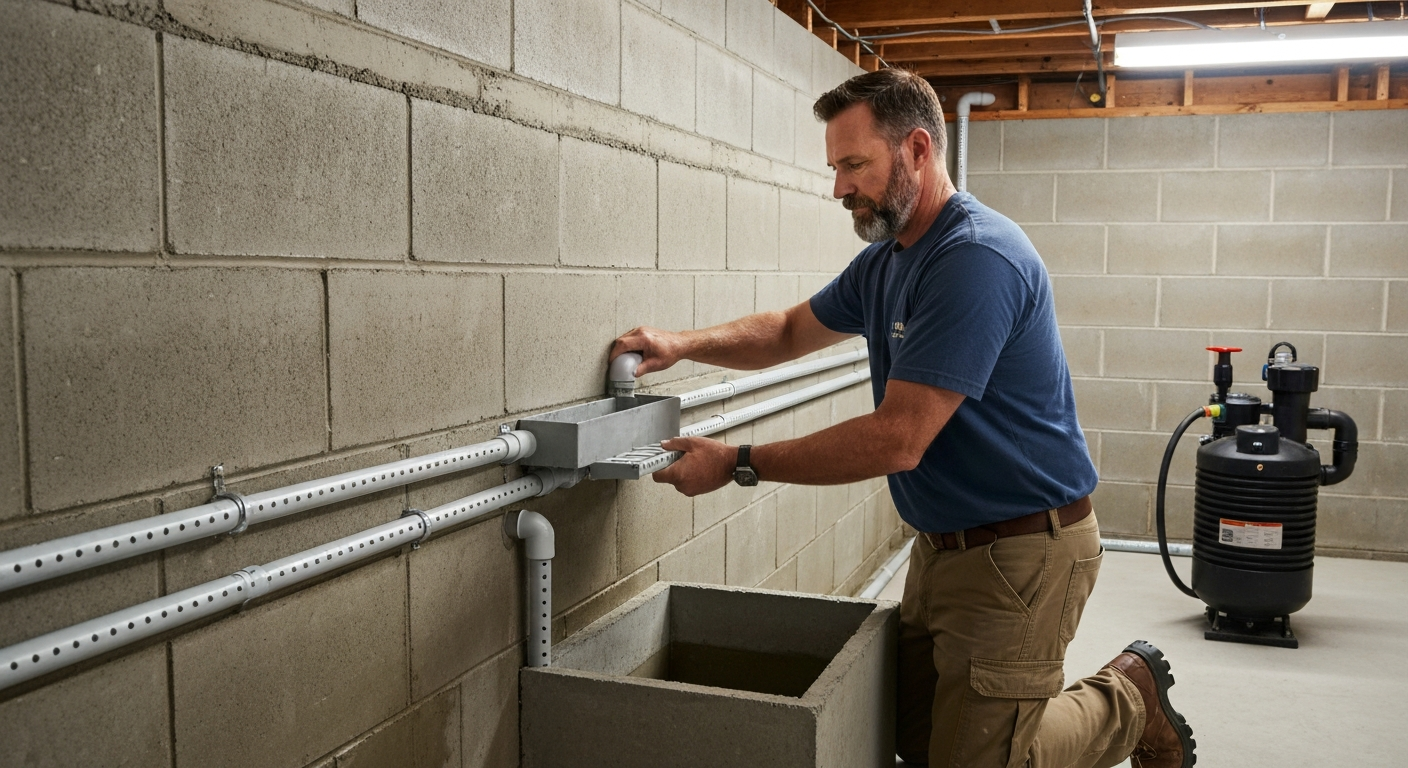
Basement waterproofing options and costs in Chemainus
Chemainus homeowners typically see waterproofing quotes that look similar on paper, but the work scope can swing widely depending on where the water is entering and how saturated the soils get around the foundation. In Chemainus, the smaller local population (3,021 residents, Statistics Canada, 2021 Census) also means fewer crews in peak season, so scheduling and access planning can affect cost. Just as importantly, many homes in the area are older—older foundations are more likely to be dealing with failed or corroded perimeter drain (weeping tile), plus older tar-and-paper style systems that don’t perform well after decades of wet/dry cycling.
In the Lower Mainland–Southwest, the main cost drivers are high groundwater and prolonged rainfall. Hydrostatic pressure pushes against basement walls and slabs for longer stretches, so contractors often need complete perimeter exterior systems rather than quick “patch and seal” approaches. Wet, mild winters and frequent freeze-thaw also widen existing cracks and joints, accelerating seepage and deterioration. Demand is especially high around the older core and residential blocks near the downtown/harbour-adjacent neighbourhoods where lots can be tight, landscaping is mature, and excavation access is limited.
Below is a practical comparison of common options you’ll see in Chemainus, with typical price bands to help you interpret itemised quotes before you contact contractors.
| Method |
What It Addresses |
Disruption Level |
Durability |
Price Range |
| Exterior excavation + new membrane + drainage tile |
Primary source water entry; relieves hydrostatic pressure at the foundation |
High (excavation, backfill, restoring landscaping) |
High (system designed for long-term exterior performance) |
$15,000–$30,000 |
| Interior perimeter drain channel + sump pit |
Captures seepage after it enters; manages interior water |
Medium (minor floor/wall openings) |
Medium–High (depends on discharge reliability) |
$8,000–$18,000 |
| Foundation crack injection (epoxy or polyurethane) |
Seals cracks; polyurethane is used when active leakage is present |
Low–Medium (drilling ports; surface restoration) |
Medium–High (crack dynamics and wall type matter) |
$500–$2,000 |
| Sump pump installation (primary + battery backup) |
Moves collected water away to prevent flooding and backflow risk |
Medium (pit, discharge line; electrical considerations) |
High (with backup during outages) |
$1,000–$5,000 |
| Window well drain installation |
Reduces water pooling and seepage at basement window areas |
Low–Medium (access around windows) |
Medium (improves local drainage; not full foundation control) |
$1,500–$6,500 |
| Lot re-grading / downspout extension |
Moves roof runoff away; reduces how much water reaches foundation |
Low–Medium (surface/landscape work) |
Medium (supportive measure; may not fix hydrostatic pressure) |
$1,200–$4,800 |
Prices are estimates only and vary by project scope, site access and material selection.
What affects the price of waterproofing in Chemainus
In Chemainus and across the Lower Mainland–Southwest, even “the same” waterproofing job can come in 30–50% apart because the real work is determined by soil saturation, water-table behaviour, and how accessible the foundation is once excavation starts. Compared to British Columbia’s national-at-scale averages, the region more often requires robust drainage and longer discharge run times because persistent rainfall keeps backfill water levels high. That persistent saturation is also why contractors in this market tend to price interior systems with higher emphasis on sump performance and discharge reliability rather than only installing a drain channel.
The three biggest separating drivers are soil type, water table, and freeze-thaw. Clay-heavy soils in other provinces can expand during freeze-thaw and exert lateral pressure on foundation walls; in Chemainus you often still see freeze-thaw-related crack widening, but the more consistent expense driver is the high moisture loading of soils during prolonged wet periods. In the Lower Mainland–Southwest, a higher water table means sump pumps may run longer and discharge lines may need additional engineering for safe routing. Heavy coastal BC rainfall saturates backfill quickly when original drainage fails, which can turn a “small leak” into an interior flooding issue that requires comprehensive perimeter capture.
Two quick examples from local scopes: if excavating requires breaking up rocky sections or removing mature landscaping near the basement perimeter, exterior waterproofing can move toward the upper portion of the $15,000–$30,000 band. If the main issue is active seepage through cracks, a crack injection plan can stay near the $500–$2,000 foundation crack repair band—provided the wall is stable and the drainage pathway (weepers/sump) isn’t overwhelmed.
Older housing stock is also a factor: when weeping tile is original (often 60+ years) and fully failed, contractors typically shift from “treat the symptom” to “fix the source,” which is where budgets rise.
| Price Factor |
Why It Matters |
Cost Impact |
| Interior vs. exterior approach — interior is less disruptive but addresses symptoms |
Interior systems can catch water after entry; exterior reduces hydrostatic pressure at the wall |
Interior often 30–60% less than full exterior excavation, but may require stronger sump design |
| Foundation type — poured concrete vs. block vs. stone vs. ICF |
Wall material changes how cracks form, how injection performs, and how drainage should be detailed |
Poured concrete crack sealing may be simpler; block walls often need practical interior drainage |
| Soil type — clay expands more than sand, adding pressure |
Expanding soils can worsen crack movement and increase lateral pressure over freeze-thaw cycles |
Increases likelihood of repeat repairs if source drainage isn’t corrected |
| Crack type and length — hairline vs. structural horizontal cracks |
Horizontal/structural cracks may indicate movement and need engineered assessment |
Structural cracks push costs upward and can change the entire scope |
| Sump pump backup system — battery or water-powered backup needed |
Power reliability matters during spring wet periods and outages |
Backup adds cost but reduces flood risk during failures; common in higher-risk basements |
| Access — landscaping, decks, or driveways must be removed for exterior |
More demolition means more labour and reinstatement |
Can add significant cost, especially on tight Chemainus lots |
| Weeping tile age — original tile (60+ years) may be completely failed |
Failed tile stops drainage and increases hydrostatic pressure inside and outside |
May require full perimeter replacement rather than minor repairs |
| Mould or efflorescence remediation required before sealing |
Moisture must be stabilized; contaminated materials need proper containment and cleanup |
Usually adds time and materials before waterproofing membranes/coatings are applied |
Permits & regulations in British Columbia
In British Columbia, foundation excavation, structural crack repair, and changes to lot drainage typically require a building permit. If your work includes altering how water is directed (for example, re-routing discharge lines, changing discharge locations, or modifying drainage connections), you’ll want to confirm permit needs early with your local building department. Sump pump installations that connect to storm or sanitary sewer systems need municipal approval, since those connections and discharge routing must meet local requirements.
For structural crack repair—especially horizontal cracks in block walls, major step cracking, or signs of movement—an assessment by a structural engineer is often required to determine whether underpinning or other structural work is needed. A good contractor should be able to coordinate engineering support for structural repairs and provide documentation for the city/inspector if requested.
To verify a contractor in Chemainus, start with their business licensing and standing, then check for a certificate of insurance (liability) that includes your project address. Ask for WSIB/WCB clearance or proof of coverage for their workers before work begins; you’re protecting yourself from liability if an injury happens on site. Finally, for any permit-required items, ask the contractor: “Who pulls the permit, and are you listing me as the permit holder?” Your contractor should tell you exactly what they will manage versus what you must approve.
Interior vs exterior waterproofing — what does Chemainus need?
Exterior waterproofing is the “source-control” approach: you excavate around the foundation, install a proper exterior membrane, restore the drainage pathway with new drainage tile, then backfill. Because it relieves hydrostatic pressure before water reaches the basement wall, it’s the most permanent solution when the original perimeter drainage system has failed or when the water table stays high for long stretches. The trade-off is disruption—excavation, landscaping removal, and restoration are significant, which is why exterior scopes in Chemainus commonly land in the $15,000–$30,000 range.
Interior waterproofing works differently. It manages water after it enters the basement by installing an interior perimeter drain channel, adding a sump pit and pump system, and sometimes sealing cracks as part of a broader moisture-control plan. It’s typically less invasive and can avoid major yard excavation, so it often fits budgets in the $8,000–$18,000 band. However, interior systems do not eliminate hydrostatic pressure on the wall itself; instead, they collect and discharge that water fast enough to prevent seepage staining and flooding.
In Chemainus’s coastal BC conditions—prolonged rainfall, saturated soils, and freeze-thaw—the best choice often depends on foundation type and the status of original drainage. Poured concrete walls generally respond well to crack injection when the wall remains stable, but you still need an effective drainage pathway (often a sump) if the water table is pushing inward. Block foundations frequently benefit from interior drainage as a practical complement because their crack/void behaviour can be more variable.
Power-outage risk is another consideration. Spring flooding periods can coincide with outages; that’s where a backup system matters. For example, adding backup to a sump installation can be a reasonable “insurance” expense compared with the cost of cleanup after a basement flood—often far exceeding the incremental cost to protect the pump system during interruptions.
A scenario we see often: if the basement shows recurring dampness along one wall after heavy rain, an interior drain + sump can sometimes be justified. But if inspections confirm failed perimeter weeping tile and the soil stays saturated at multiple walls, the price gap can be justified—exterior work can prevent recurring interior overload that would otherwise force repeated sump interventions.
| Method |
Best For |
Addresses Source? |
Disruption |
Lifespan |
Price Band |
| Full exterior excavation + membrane |
High groundwater pressure, failed exterior drainage, widespread seepage |
Yes (primary water entry) |
High (excavation and reinstatement) |
Long-term |
$15,000–$30,000 |
| Interior French drain + sump system |
Basements with recurring dampness/flooding where excavation isn’t practical |
No (manages water after entry) |
Medium (floor openings, pit) |
Medium–Long with proper pump/discharge |
$8,000–$18,000 |
| Crack injection — epoxy (structural) |
Non-leaking or low-movement cracks where sealing is the priority |
Sometimes (depends on crack condition) |
Low–Medium |
Medium–Long with correct prep |
$500–$2,000 |
| Crack injection — polyurethane (active leak) |
Active seepage through cracks needing flexible, water-reactive sealing |
Yes for crack-path, but not external hydrostatic sources |
Low–Medium |
Medium (often paired with drainage for best results) |
$700–$2,500 |
| Interior drain channel only (no sump) |
Light seepage with manageable inflow and an alternate discharge method |
No |
Medium |
Limited (depends heavily on gravity/flow conditions) |
$4,500–$10,000 |
| Re-grading + downspout extensions |
Roof runoff issues causing localized wet areas near foundation |
Partially (reduces surface water load) |
Low–Medium |
Medium (supportive measure) |
$1,200–$4,800 |
How to choose a waterproofing contractor in Chemainus
Choosing the right waterproofing contractor in Chemainus starts with proof—not promises. In British Columbia, verify licensing/credentials appropriate to the work, and always request a current certificate of insurance showing liability coverage that includes your address. For worker protection, confirm WSIB/WCB clearance for their trades and subs; ask for the clearance document number or a copy you can keep for your records. Don’t accept “we’re covered” without documentation.
Next, get 2–3 itemised written quotes. You want a labour + materials breakdown that clearly lists what’s being installed (membrane type, drainage tile specs, discharge piping, pump model, backup system if included) and where work is happening (e.g., wall length, number of downspout extensions, which windows). Avoid “lump sum” quotes that don’t show exclusions. Ask specifically: Is the permit included? What’s excluded (haul-away/disposal, landscape reinstatement, concrete patching, electrical work for pumps)? If mould or efflorescence remediation is needed, is that part of the scope or a separate line item?
Warranty matters too. Make sure you have a workmanship warranty length in writing, plus a product/manufacturer warranty, and confirm whether warranties are transferable if you sell the home. For payment, never pay more than 10–15% upfront; hold back until key completion milestones are confirmed. Finally, insist on a written start date and completion estimate, and confirm how delays caused by rain or access will be handled—important in Lower Mainland–Southwest conditions.
- Provide a detailed site plan showing excavation limits and drainage layout.
- List pump brand/model and confirm whether backup (battery or water-powered) is included.
- Confirm disposal/haul-away is included for excavated soil and debris.
- Explain how they test drainage performance (flow checks, dye testing, or sump monitoring).
- Specify crack injection material and whether they treat active leaks with polyurethane.
- Confirm how they handle mould/efflorescence before sealing.
- Include electrical responsibility for sump wiring (and who pulls any required connections).
- Provide a written warranty covering labour and a separate product/manufacturer warranty.
- State what they restore after exterior excavation (topsoil, grading, landscaping reinstatement).
- Use measurable scope language (linear feet of drain, number of sump pits, window wells covered).
- Keep photos documenting before, during, and after waterproofing.
- Put the payment schedule in the contract with a completion holdback.
Red flags to watch for in Chemainus: contractors who won’t provide written, itemised scopes; who skip site inspection and jump straight to “seal everything” coatings; who cannot show liability insurance and WSIB/WCB clearance; who offer no clarity on discharge routing for sump pumps; and who provide a short or vague warranty without specifying workmanship versus product coverage.
Frequently asked questions — waterproofing in Chemainus
How long does basement waterproofing take in Chemainus?
Most basement waterproofing timelines in Chemainus depend on whether you’re doing interior work (faster access) or full exterior excavation (more demolition and reinstatement). A typical interior perimeter drain + sump installation often takes about 3–7 working days, assuming concrete cutting, installation, and backfilling are straightforward. Full exterior waterproofing can take longer—commonly 1–3 weeks—because excavation, membrane installation, drainage tie-ins, and backfill compaction require careful sequencing and weather windows, especially during Lower Mainland–Southwest’s prolonged wet periods. If crack injection is the only scope, timelines can be shorter (often 1–3 days), but active leaks still require drying/prep.
What is a weeping tile and does my Chemainus home have one?
Weeping tile is the old-style perimeter drainage system installed around the foundation that collects groundwater and sends it to a sump or discharge point. In many Chemainus homes built decades ago, that original tile may still exist, but it can be clogged, broken, or badly corroded—especially after years of saturation and freeze-thaw strain. To confirm, look for signs such as a sump pit (even if it’s not running), interior drain lines, or dampness patterns that align with the basement perimeter. The surest method is an inspection with access planning: a contractor can often verify by tracing down to the foundation drain points or locating pits/cleanouts. If your weeping tile is 60+ years old, expect higher failure odds and a scope that may involve replacement rather than patching.
Can I waterproof my basement in winter in Chemainus?
You can often address certain waterproofing components in winter in Chemainus, but full excavation and exterior membrane work can be limited when soils are frozen and access is messy. Interior waterproofing is usually more feasible in colder months because floors and wall work can proceed without extensive yard excavation. That said, active leaks still need correct surface prep: contractors may use controlled drying or scheduling to ensure materials bond properly. Crack injection can sometimes be completed in winter if the wall conditions allow for proper preparation, but it’s best done when the foundation isn’t actively moving due to freeze-thaw expansion. In the Lower Mainland–Southwest, prolonged dampness can continue through winter, so getting a clear moisture condition check from the contractor helps avoid sealing over unsettled conditions.
What is the difference between waterproofing and damp-proofing?
Damp-proofing generally targets minor moisture and condensation—think surface treatments meant to slow moisture penetration—while waterproofing aims to manage or stop water entry under wet conditions and hydrostatic pressure. In Chemainus and coastal BC climates, “damp” problems can worsen after prolonged rainfall if groundwater pressures build against basement walls and slabs. That’s why true waterproofing usually involves drainage systems (weeping tile replacement, interior perimeter drains, sump pumps) and correct sealing methods matched to crack type (epoxy for structural/static cracks, polyurethane for active leakage). A damp-proofing approach may reduce staining but may not handle the volume of water during peak saturation periods. If you’re seeing recurring seepage at heavy-rain times, budgeting typically needs to align with the $8,000–$18,000 interior or $15,000–$30,000 exterior bands, depending on the source.
Will basement waterproofing affect my property value in Chemainus?
It often does, because waterproofing reduces the risk of recurring damage, odours, and costly cleanup after floods or heavy rain events—issues that can concern buyers in Chemainus and across the Lower Mainland–Southwest. However, value impact depends on documentation and how thoroughly the source of water entry is addressed. A properly scoped system with warranties, photos, and clear maintenance/discharge details tends to be easier for future buyers to trust. If you only do a surface “seal” without correcting drainage, buyers may still worry about ongoing hydrostatic pressure. For many homeowners, investing in a solution aligned with the correct price tier—like $1,200–$4,800 for re-grading and downspout fixes when roof runoff is the trigger, or $15,000–$30,000 for exterior systems when perimeter drainage has failed—can be easier to justify with a credible cause-and-effect story.
What drainage issues are most common in Chemainus homes?
In Chemainus, the most common drainage issues usually relate to persistent saturation and drainage pathway failure rather than extreme soil expansion. Homeowners often report damp corners, efflorescence, and seepage lines that track around the basement perimeter—signs consistent with failing or undersized perimeter drainage and older weeping tile systems. Downspout routing and grading problems are also common contributors, especially when roof runoff flows too close to foundation walls during prolonged coastal rainfall. Freeze-thaw cycles then widen existing cracks and joints, allowing water to penetrate faster and increasing the likelihood of recurring leaks. Finally, sump systems (when present) can be undersized or lacking backup, so heavy-rain events can overwhelm discharge capacity. In many cases, the most effective solutions include interior drains with a sump—or exterior replacement when access and site conditions permit.