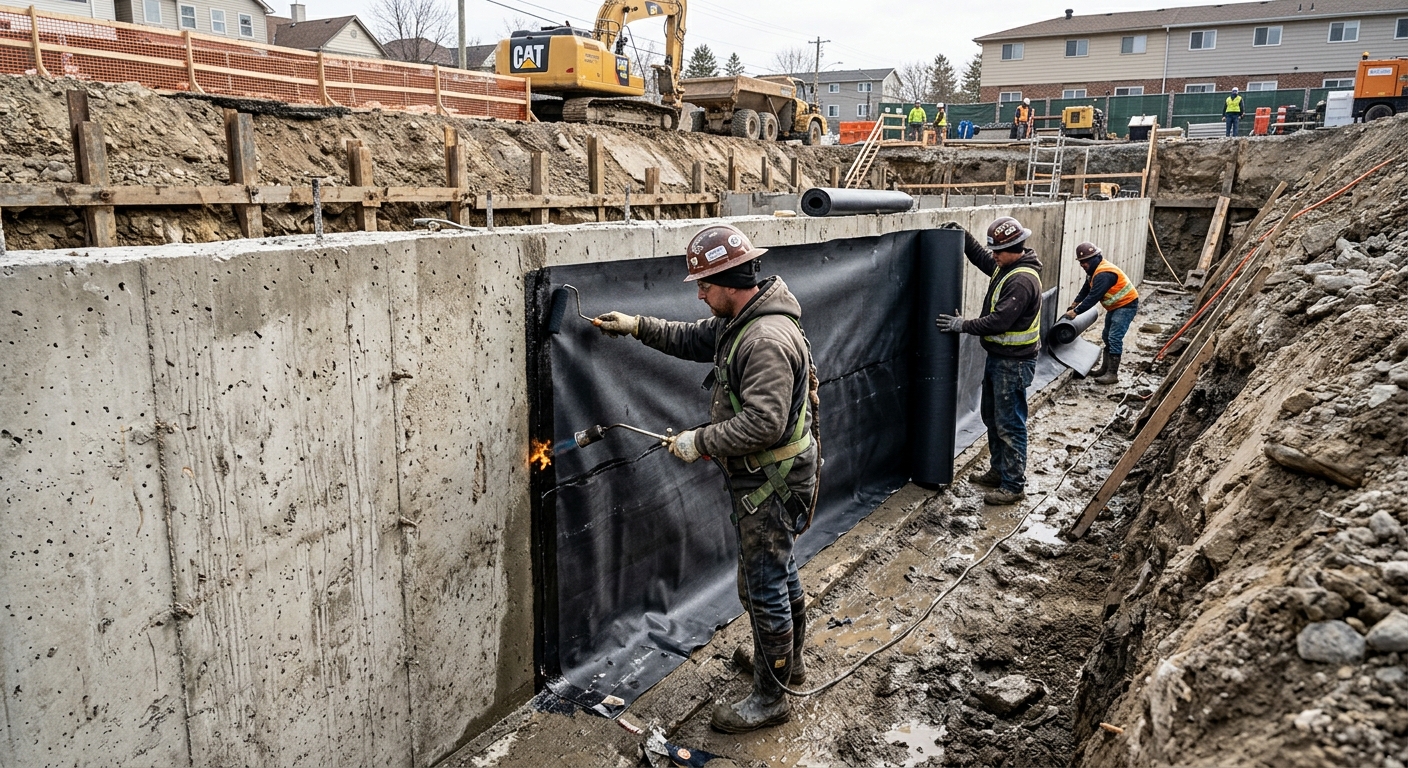
Basement waterproofing options and costs in Queens Park
In Queens Park, British Columbia, basement waterproofing typically starts with identifying where water enters—often through foundation cracks, joints, or an older perimeter drainage system. With a population of 2,781 (Statistics Canada, 2021 Census), Queens Park is small enough that contractors tend to prioritize established local crews, but jobs still face the same Lower Mainland–Southwest realities: tight lots, fast saturation after rain, and access constraints that can raise excavation and disposal costs.
Because Queens Park and surrounding Lower Mainland neighbourhoods include a mix of older and newer homes, many homeowners are dealing with original drainage that is long past its useful life. In practical terms, older “original” weeping tile systems (often 60+ years) can be partially crushed, mis-sloped, or disconnected—so water bypasses the intended path and increases seepage into poured concrete and block foundations. Meanwhile, coastal BC’s persistent rainfall and mild winters maintain hydrostatic pressure for longer stretches, and freeze-thaw cycles widen hairline cracks and loosen sealants, accelerating deterioration.
That’s why excavation-driven exterior systems are especially in demand in areas with older housing stock and landscaping that has matured around the foundation—commonly around the residential belts near Queens Park’s older streets where driveways, mature hedges, and retaining edges limit easy access. For most homeowners, the decision is between a full exterior approach that addresses the source versus interior drainage that manages water after it enters. The table below compares the most common methods and realistic budget ranges for Queens Park projects.
| Method |
What It Addresses |
Disruption Level |
Durability |
Price Range |
| Exterior excavation + new membrane + drainage tile |
Hydrostatic pressure at the foundation exterior; re-establishes perimeter drainage |
High (excavation, landscaping/driveway impacts, backfill) |
15–25+ years with proper installation and grading |
$15,000–$30,000 |
| Interior perimeter drain channel + sump pit |
Captures seepage from interior footing area; reduces interior moisture |
Medium (floor/trim cuts near perimeter) |
10–20 years (depends on sump maintenance and drainage routing) |
$8,000–$18,000 |
| Foundation crack injection (epoxy or polyurethane) |
Stops specific crack pathways; restores water-tightness when properly selected |
Low to Medium (access openings at crack locations) |
5–15 years depending on crack type and movement |
$500–$2,000 |
| Sump pump installation (primary + battery backup) |
Maintains safe basement conditions during wet seasons and power interruptions |
Low to Medium (minor floor work; discharge routing) |
8–15 years for pump components; longer with routine service |
$1,000–$5,000 |
| Window well drain installation |
Prevents water pooling around basement window wells |
Low to Medium (excavation at window exterior) |
8–15 years |
$1,500–$4,500 |
| Lot re-grading / downspout extension |
Moves roof water away from foundation; improves surface drainage |
Low to Medium (topsoil/landscaping adjustments) |
3–10 years depending on ongoing maintenance |
$1,000–$6,000 |
Prices are estimates only and vary by project scope, site access and material selection.
What affects the price of waterproofing in Queens Park
In Queens Park and the broader Lower Mainland–Southwest, it’s common to see two quotes for the “same” waterproofing problem come in 30–50% apart. The reason is that pricing follows the water route and the effort required to reach it—not just the label of the method. In coastal British Columbia, elevated and persistent groundwater, intense rainfall, and drainage backlogs push crews to use more robust drainage materials and add extra labour for excavation, backfill, and disposal.
Compared with the national average, the three biggest cost drivers that separate Lower Mainland–Southwest from other parts of Canada are soil/water conditions and freeze-thaw: (1) Soil type: clay-heavy soils can expand and exert lateral pressure during freeze-thaw, which worsens cracks over time—this is one reason contractors in Ontario or the Prairies sometimes see structural crack problems that need additional repair steps. (2) Water table: here, high groundwater tables raise sump pump run times and increase the capacity required for effective drainage. (3) Freeze-thaw: frequent wetting cycles in mild winters widen existing joints and cracks, so “quick fixes” tend to fail earlier.
Concrete local examples: if your basement is in a poured-concrete foundation with fine hairline leakage, crack injection plus a targeted interior drain often lands closer to the $500–$2,000 crack repair band, while a full exterior system with membrane and drainage tile usually aligns with the $15,000–$30,000 exterior range. If your weeping tile is failing and the basement shows active seepage during prolonged rain, an interior perimeter drain plus sump typically fits the $8,000–$18,000 band, because the sump and piping must handle continuous inflow. Finally, tight urban lots—narrow side yards, mature landscaping, or rocky sections—can add mechanical breaking and longer labour days, pushing prices upward even when the plan is straightforward.
| Price Factor |
Why It Matters |
Cost Impact |
| Interior vs. exterior approach — interior is less disruptive but addresses symptoms |
Exterior stops water at the source; interior manages after entry and relies on sump/drains |
Exterior commonly 2–4× interior on active seepage issues |
| Foundation type — poured concrete vs. block vs. stone vs. ICF |
Crack behaviour differs; block joints often need different detailing than poured walls |
Poured walls can be cheaper for injection; block often increases interior drainage scope |
| Soil type — clay expands more than sand, adding pressure |
Expanded soils increase lateral pressure and crack movement during freeze-thaw |
Higher likelihood of recurring leaks unless drainage is upgraded |
| Crack type and length — hairline vs. structural horizontal cracks |
Structural cracks may require engineer review and more than injection |
Structural conditions can multiply labour and materials costs |
| Sump pump backup system — battery or water-powered backup needed |
Prevents overflow during outages or high-rain events |
Can add several thousand dollars depending on backup type |
| Access — landscaping, decks, or driveways must be removed for exterior |
More removals and restoration increase excavation time and costs |
Site access is often a hidden 10–25% driver |
| Weeping tile age — original tile (60+ years) may be completely failed |
Failed tile increases seepage volume and changes required drainage design |
May shift you from “repairs” to full exterior replacement or major interior retrofit |
| Mould or efflorescence remediation required before sealing |
Sealers shouldn’t be applied over contaminated or active moisture sources |
Adds prep labour and specialized cleaning materials |
Permits & regulations in British Columbia
In British Columbia, many basement and foundation waterproofing-related tasks cross into “regulated work,” especially when they affect structure or lot drainage. Typically, foundation excavation near footings, structural crack repair where wall stability is in question (such as major step cracks in block or horizontal cracks), and changes to lot drainage or discharge routing generally require a building permit. If your sump pump discharge connects to a municipal sewer (storm or sanitary), you’ll need municipal approval and proper permitting documentation before any connection is made.
For structural crack repair, it’s often not enough to choose an injection product; a structural engineer’s assessment is frequently needed to determine whether underpinning or other structural work is required. Reputable contractors should be able to show engineering support for structural scopes, and they should carry liability insurance and WSIB/WCB coverage (as applicable for their workforce).
How a Queens Park homeowner verifies credentials (step-by-step):
- Confirm the contractor’s licence/registration status using the BC government online registry (search by company and individual if applicable).
- Request a current certificate of liability insurance and verify the coverage is active (check expiry dates and insured entity name).
- Request WSIB/WCB clearance information and confirm it matches the contractor/company name that will be on the invoice.
- Ask who will pull permits; ensure the permit number (or application) is provided before work starts.
- For structural concerns, ask for engineering involvement in writing—what the engineer assessed and what details the contractor will follow.
Interior vs exterior waterproofing — what does Queens Park need?
The fundamental difference is source control versus symptom control. Exterior waterproofing (full excavation, new membrane, new drainage tile, backfill) addresses the water before it reaches your foundation wall. It’s the most permanent direction when drainage is failing, but it’s also the most disruptive: landscaping and hardscape often must come off, and the job involves significant excavation and backfill in Lower Mainland–Southwest conditions.
Interior waterproofing (perimeter drain channel, sump pit, sump pump) manages water after it enters by intercepting seepage at the interior footing area. It’s usually less invasive and can be a smart fit when exterior access is difficult or when the main issue is interior moisture during prolonged rainfall. However, it doesn’t relieve hydrostatic pressure against the exterior wall. For Queens Park homes, that matters because coastal BC rainfall keeps saturation levels high and freeze-thaw cycles can widen crack pathways. In poured concrete foundations, crack injection is often effective for specific leak points, and interior drains can keep the system working even when minor seepage persists. In block foundations, interior drainage is often essential because joint pathways can keep reintroducing water unless both exterior water shedding and interior interception are handled.
Backup sump systems are also a practical necessity in British Columbia—power interruptions can happen during spring storms, and a battery backup helps keep the sump from falling behind when inflow is highest. For example, if you’re quoted near the $15,000–$30,000 exterior band but the exterior access is impossible (retaining walls, narrow side yard, and mature planting), a $8,000–$18,000 interior perimeter drain plus sump with backup can be a justified compromise—especially when the goal is to protect finished spaces immediately while you plan any future exterior work.
| Method |
Best For |
Addresses Source? |
Disruption |
Lifespan |
Price Band |
| Full exterior excavation + membrane |
Consistent seepage driven by failing perimeter drainage or high hydrostatic pressure |
Yes (stops water entry at the exterior) |
High |
15–25+ years |
$15,000–$30,000 |
| Interior French drain + sump system |
Basements with chronic interior moisture when exterior access is limited |
No (intercepts water after entry) |
Medium |
10–20 years |
$8,000–$18,000 |
| Crack injection — epoxy (structural) |
Non-moving cracks where you have a stable crack profile |
Partly (seals a defined pathway) |
Low to Medium |
5–15 years |
$500–$2,000 |
| Crack injection — polyurethane (active leak) |
Cracks with active seepage or where minor movement is expected |
Partly (seals active pathways) |
Low to Medium |
5–12 years |
$600–$2,200 |
| Interior drain channel only (no sump) |
Light seepage that doesn’t require pumping |
No (collects water internally) |
Medium |
5–12 years (depends on inflow) |
$4,000–$10,000 |
| Re-grading + downspout extensions |
Water is driven by roof runoff and surface ponding |
Not directly (reduces surface water load) |
Low to Medium |
3–10 years |
$1,000–$6,000 |
How to choose a waterproofing contractor in Queens Park
Choosing the right waterproofing contractor in Queens Park, British Columbia comes down to verification and clarity. Start by confirming licensing/registration status using the BC government online registry. Then ask for a current certificate of liability insurance—verify the insured company name and expiry date before you sign anything. For labour compliance, request WSIB/WCB clearance information (where applicable) so you know the contractor’s coverage is active for their workers.
Next, request 2–3 itemised written quotes—not just a lump sum. You want the breakdown to show labour and materials, and it should specify the exact system elements (membrane type, drainage tile diameter, discharge route, sump model, backup plan, and crack injection product choice). Carefully read the scope for inclusions and exclusions: disposal included or not, permit pull included or not, and whether landscaping restoration is included after exterior excavation. A good warranty should cover workmanship (often 1–5 years minimum, sometimes longer) and clearly state product/manufacturer coverage. Ask if the workmanship warranty is transferable if you sell the home.
For payments, use a sensible schedule: never pay more than 10–15% upfront; hold back a portion until the job is complete and verified. Insist on a written timeline that includes proposed start date and completion estimate.
- Confirm BC licence/registration status and company name matches the quote and invoice.
- Request liability insurance certificate and verify coverage limits are appropriate for excavation and interior work.
- Provide WSIB/WCB clearance information (where applicable).
- Require a written scope with measurements, drainage routing, and materials specified.
- Ask what happens if they find failed perimeter drain segments (change-order rules in writing).
- Verify whether permits are required and who will pull them.
- Ensure disposal of excavated soil is included in the quote.
- Confirm sump pump discharge details (approved routing) and backup option.
- Get warranty terms for workmanship and product, including start date and exclusions.
- Use an itemised quote: labour hours, materials, and allowances should be visible.
- Set a payment schedule with minimal upfront payment and a holdback until punch list completion.
- Ask for a moisture diagnosis method (internal inspection, hydrostatic observations, or prior leak history).
Red flags in Queens Park include: (1) quotes that recommend exterior excavation without inspecting drainage patterns; (2) injecting epoxy into active leaking or moving cracks without explaining the product choice; (3) skipping sump backup where inflow is seasonal and power outages are possible during storms; (4) vague scopes that don’t state discharge routing or permit responsibility; and (5) contractors who won’t provide insurance/coverage documentation or a written warranty in plain language.
Frequently asked questions — waterproofing in Queens Park
How much does foundation crack repair cost in Queens Park?
In Queens Park, foundation crack repair costs typically depend on crack type (hairline versus active seepage), length, and how much access is needed to inject. For many straightforward crack repair jobs, homeowners commonly budget around $500–$2,000 for injection work (epoxy or polyurethane), assuming the crack is identified as a defined leakage pathway and the walls are otherwise stable. If the crack suggests structural movement (for example, certain horizontal or step cracking patterns), engineering review and additional measures can increase the total.
Do I need a sump pump in Queens Park?
You may need a sump pump in Queens Park if you have active seepage that collects below grade or you experience moisture episodes during prolonged rainfall. In the Lower Mainland–Southwest climate, high groundwater and saturated backfill can increase hydrostatic pressure for longer stretches, which means passive drainage alone sometimes can’t keep up. If you’re choosing an interior perimeter drain system, a sump pit is often part of the design, and many homeowners also add backup to handle power interruptions. Depending on scope, sump pump installations typically fall in the $1,000–$5,000 range, with backup being a key factor.
How does Queens Park's soil affect my foundation?
In Queens Park and across the Lower Mainland–Southwest, soil and drainage conditions affect how quickly groundwater saturates around your foundation, which changes how hard the wall is pressured during rainy periods. While clay can be more common in other regions of Canada and can expand during freeze-thaw, Lower Mainland projects more often deal with persistent saturation and drainage delays when older perimeter drainage (weeping tile) fails. If your backfill stays waterlogged, seepage can start or intensify even in homes that look “fine” most of the year. That’s why contractors often design drainage to handle sustained inflow, not just one-off events.
Do I need a permit for foundation work in British Columbia?
Often, yes—foundation excavation, structural crack repairs that may affect stability, and changes to lot drainage/discharge routing commonly require a building permit in British Columbia. Also, if your sump pump discharge is being connected to a municipal sewer system (storm or sanitary), municipal approval is typically required before connection. Before the contractor starts, ask what permit is required for your specific work and request the permit number once applied. You can also confirm contractor licence/credentials using the BC online registry and verify insurance coverage before work begins.
How long does waterproofing last?
Longevity depends on the method and whether the underlying water entry route is truly addressed. A properly installed full exterior system (membrane plus new drainage tile) commonly lasts $15,000–$30,000-level projects’ lifecycle expectations—often 15–25+ years—when grading directs roof and surface water away. Interior drainage and sump systems are also effective, but they manage water after entry and often perform well for 10–20 years if the sump is maintained and discharge is clear. Crack injection can last 5–15 years depending on whether the crack is stable and whether conditions are controlled (including drainage).
Can I waterproof my basement from the inside only?
Yes, many Queens Park homeowners do waterproof from the inside only—especially when exterior access is limited by landscaping, driveways, or retaining edges. Interior solutions like a perimeter drain channel and sump pit can significantly reduce interior moisture and protect finished spaces during the wet season. However, interior waterproofing doesn’t eliminate hydrostatic pressure against the exterior walls, so it works best when paired with good surface drainage (downspouts and grading) and when the leak pathways are properly intercepted. In practice, for active seepage you’ll often look at the $8,000–$18,000 interior band, and adding a backup sump option is commonly recommended for British Columbia storm periods.