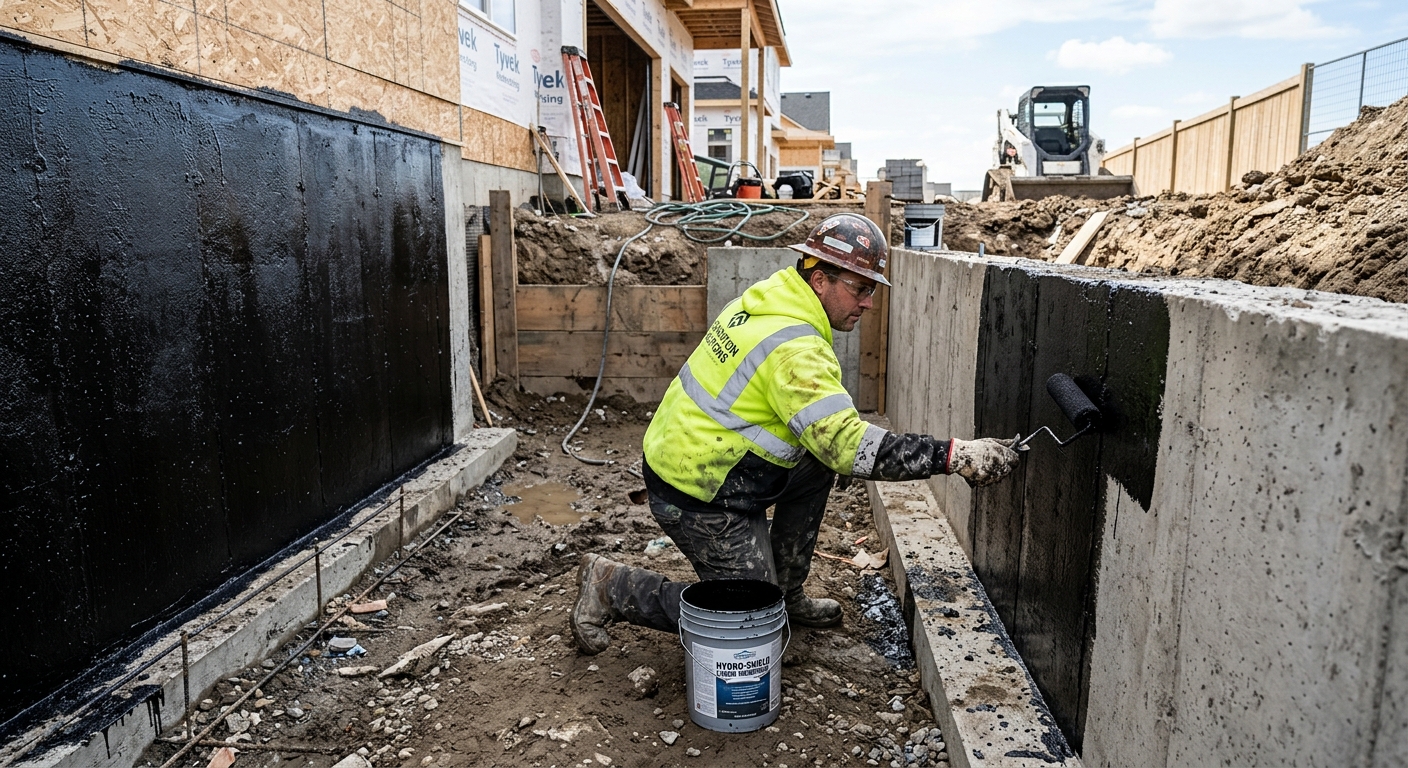
Basement waterproofing options and costs in Penticton
Penticton homeowners often ask the same question: “What will stop the water?” In practice, the best answer depends on where the moisture is entering—cracks at slab edges, cold joints, failing weeping tile, or saturated backfill that increases hydrostatic pressure. With 45.5% of homes built before 1981 in the wider Penticton area profile (Statistics Canada, 2021 Census), you’ll see a lot of older systems that were originally installed with tar-and-paper style thinking and earlier, simpler drainage. When those original membranes and perforated pipes corrode or clog, water can reappear as persistent seepage, damp carpets, or efflorescence.
The Thompson–Okanagan’s semi-arid valleys can lull people into thinking basements are “dry enough,” then spring snowmelt and heavy rain events raise seepage risk—especially near the lake and creek corridors. Add repeated freeze-thaw cycles, and hairline cracks can widen and turn minor dampness into active leaks over a few seasons. Costs can also swing based on excavation access (tight infill lots in central areas), foundation depth (full basements vs. crawlspaces), and how much landscaping, concrete walks, or patios must be removed and reinstated.
We see especially high demand for exterior drainage and excavation work in neighbourhoods with older stock and mature landscaping, such as parts of South Okanagan/central Penticton. The table below compares the common approaches so you can line up quotes against the same scope.
| Method |
What It Addresses |
Disruption Level |
Durability |
Price Range |
| Exterior excavation + new membrane + drainage tile |
Primary water source: hydrostatic pressure from saturated backfill, failed drainage |
High (excavate perimeter, remove/reinstate landscaping/sidewalks) |
Long-term (often the most permanent fix) |
$18,000–$40,000 |
| Interior perimeter drain channel + sump pit |
Captures infiltrating water inside foundation footprint; reduces seepage |
Medium (cut floor, minimal exterior disturbance) |
Good with proper pump + discharge |
$9,000–$22,000 |
| Foundation crack injection (epoxy or polyurethane) |
Crack leakage control (active leaks with polyurethane; structural sealing with epoxy) |
Low (drill ports, seal surface, limited mess) |
Moderate to long-term depending on crack type |
$800–$3,500 |
| Sump pump installation (primary + battery backup) |
Manages collected water; reduces flooding risk during heavy rain/snowmelt |
Low to medium (pump pit, piping, electrical work) |
Good when paired with proper drainage/discharge |
$2,500–$5,500 |
| Window well drain installation |
Stops water pooling near basement windows/egress wells |
Low to medium (small excavations and grading) |
Good (if discharge route is sized correctly) |
$1,200–$3,200 |
| Lot re-grading / downspout extension |
Reduces surface water run-off near foundation |
Low (landscaping adjustments) |
Variable (best as a first step or supplement) |
$1,000–$4,500 |
Prices are estimates only and vary by project scope, site access and material selection.
What affects the price of waterproofing in Penticton
In Penticton and across the Thompson–Okanagan, you can see the same basic waterproofing concept quoted 30–50% differently from one contractor to another. Part of that spread is scope interpretation (what’s included for excavation, disposal, and reinstatement), and part is that site conditions here—soil, water movement, and freeze-thaw—change the amount of labour and the systems required.
Three drivers separate regional costs from a “national average” assumption: soil type, water table pockets, and freeze-thaw. In clay-heavy soils, moisture expands during freeze-thaw and increases lateral pressure against foundation walls, which can worsen cracks over time and require more robust crack repair or drainage. Where high-water-table pockets exist (including seepage-prone areas around Penticton’s lake/creek influence), sump pumps can run longer and discharge/pipe sizing becomes more critical. Also, repeated freeze-thaw can turn a small leak into an active seep, meaning an interior approach alone may not be enough.
Concrete examples from Penticton: (1) Homes built in the 1960s–1990s era often have older weeping tile or undersized perforated pipe, so weeping tile replacement or verified discharge capacity can add major labour—pushing projects toward exterior waterproofing pricing. (2) On tighter infill lots, excavation and shoring can be slower and more expensive, even when the foundation footprint is smaller. (3) If the basement floor has a slab with cold joints that are already spalling, interior drain channel work and cleanup can creep toward the upper end of the interior band (for instance, closer to $9,000–$22,000), whereas a straightforward perimeter drain in a clean, accessible basement might land nearer the middle.
If you’re comparing quotes, anchor your discussion to local pricing reality: exterior waterproofing excavation typically sits in the $18,000–$40,000 band, while interior drainage and weeping tile alternatives usually fall below that, unless the job includes extensive demolition and multiple repair routes.
| Price Factor |
Why It Matters |
Cost Impact |
| Interior vs. exterior approach — interior is less disruptive but addresses symptoms |
Exterior targets hydrostatic pressure; interior manages collected water |
Exterior often costs significantly more due to excavation and reinstatement |
| Foundation type — poured concrete vs. block vs. stone vs. ICF |
Crack behaviour and sealing methods differ by material |
Poured walls may respond well to crack injection; block often needs interior drainage support |
| Soil type — clay expands more than sand, adding pressure |
Clay pockets hold water longer and increase lateral load during freeze-thaw |
More robust drainage/membrane or more extensive crack repair increases labour and materials |
| Crack type and length — hairline vs. structural horizontal cracks |
Active leaks require different injection systems than minor hairline seepage |
Structural or long cracks can require engineer review and higher-cost injection/repairs |
| Sump pump backup system — battery or water-powered backup needed |
Spring storms and outage risk make backup critical |
Backup increases equipment and installation time |
| Access — landscaping, decks, or driveways must be removed for exterior |
Excavation is slower where movement is restricted and reinstatement is required |
Reinstatement and removal can add thousands to excavation pricing |
| Weeping tile age — original tile (60+ years) may be completely failed |
Old tile systems often clog or collapse, leaving backfill saturated |
Replacement shifts scope toward exterior excavation and drainage |
| Mould or efflorescence remediation required before sealing |
Active biological growth and salt deposits must be treated to avoid reoccurrence |
Extra labour, cleaning, and dry-out time increases project duration and cost |
Permits & regulations in British Columbia
In British Columbia, foundation excavation and work that changes or corrects lot drainage typically requires a building permit, and structural crack repairs often trigger additional oversight. In practical terms for Penticton homeowners, permit requirements commonly apply to foundation excavation, structural crack repair, and any modification to how stormwater is managed around the foundation.
Sump pump installations are a special case: when discharge is connected to municipal storm or sanitary sewer infrastructure (or otherwise tied into the local drainage network), municipal approval is typically required. If your plan is simply to discharge onto a properly constructed surface route (with correct grading and erosion control), requirements can still apply—but the key is whether you’re connecting to a municipal system.
For structural cracks—especially horizontal cracks in block walls, major step cracking, or signs the foundation has shifted—an engineer’s assessment is often required to confirm whether underpinning or other structural work is needed before waterproofing proceeds. Reputable contractors in BC will have engineering support available (or will coordinate it) and carry proper liability insurance. Also confirm workers are covered by WSIB/WCB so you’re not exposed to liability if someone is injured on-site.
To verify a contractor in Penticton:
- Check the contractor’s licensing/registration on the provincial registry the company is required to use.
- Request a certificate of insurance and verify liability coverage is current and matches the work type.
- Ask for WSIB/WCB clearance (or equivalent proof of coverage) before starting.
- For structural work, ask whether an engineer letter or stamped assessment will be provided/arranged.
- Confirm whether the contractor will pull permits and include that in the written scope.
Interior vs exterior waterproofing — what does Penticton need?
Think of basement waterproofing as two different strategies. Exterior waterproofing—full excavation, new membrane, new drainage tile, and controlled backfill—targets the source by lowering hydrostatic pressure against the foundation wall. It’s the most “permanent” approach, but it costs more and creates more disruption because landscaping and hardscape must be removed and reinstated. Interior waterproofing—typically a perimeter drain channel, sump pit, and sump pump—does not stop water from pressing on the wall; instead, it captures water that reaches the interior face and prevents it from flooding or saturating the basement.
In Penticton’s Thompson–Okanagan climate, we frequently see a combination problem: surface water management may be adequate, yet saturated backfill and older drainage systems still feed seepage during spring melt and heavy rain. That’s why exterior work is often justified when there’s evidence of long-running hydrostatic pressure or when weeping tile has failed. For poured-concrete foundations, crack injection can be particularly effective as part of the system, because sealed concrete can resist moisture when crack paths are properly treated. For block foundations, interior drainage is commonly needed as a practical complement because block’s crack and mortar pathways can act like capillaries; interior drainage then becomes the “safety net” that keeps the system working even if micro-movements occur.
A real-world example: if you’re choosing between interior perimeter drainage around $9,000–$22,000 versus exterior excavation in the $18,000–$40,000 band, the higher-cost exterior option is usually warranted when the contractor can document failing exterior drainage, high seepage volume, or a clay/low-drainage site where water lingers seasonally. If seepage is limited to a few active cracks and the exterior drains test well, crack injection and a sump solution may be the better value.
Finally, consider backup pumping. BC spring flooding and stormy weather can coincide with short outages. A battery backup on the primary sump pump helps protect your basement during those events, especially when the perimeter drain is already capturing water.
| Method |
Best For |
Addresses Source? |
Disruption |
Lifespan |
Price Band |
| Full exterior excavation + membrane |
High seepage, failing weeping tile, clay-heavy backfill, long-term hydrostatic pressure |
Yes |
High |
Long-term |
$18,000–$40,000 |
| Interior French drain + sump system |
Water coming in through perimeter, dampness near walls, inaccessible exterior |
No (manages water after it enters) |
Medium |
Good with proper pump maintenance |
$9,000–$22,000 |
| Crack injection — epoxy (structural) |
Structural cracks where movement is not active and the crack is stable |
Indirectly (seals the path) |
Low |
Moderate to long-term |
$800–$3,500 |
| Crack injection — polyurethane (active leak) |
Active seepage and crack leaks where water is still flowing |
Indirectly (seals the path) |
Low |
Moderate (depends on moisture conditions) |
$1,200–$4,200 |
| Interior drain channel only (no sump) |
Light seepage where collected water can be managed without pumping (or limited risk) |
No |
Medium to low |
Variable |
$6,500–$14,000 |
| Re-grading + downspout extensions |
Surface water run-off issues, minor dampness, first-stage correction |
Sometimes (reduces added water load) |
Low |
Variable |
$1,000–$4,500 |
How to choose a waterproofing contractor in Penticton
Start with proof. In British Columbia, you want a contractor who can show current licensing/registration for the type of work they’re doing, plus liability insurance and WSIB/WCB clearance. To check each item: (1) ask for the contractor’s licence/registration number and verify it on the relevant provincial online registry; (2) request a certificate of insurance and confirm the policy is active and covers the specific construction trade; (3) ask for WSIB/WCB clearance (or equivalent proof of coverage) before excavation begins.
Next, get 2–3 itemised written quotes—not lump sums. The estimate should break out labour and materials for the exact method (excavation vs. interior drain, crack injection type, pump model/backup, discharge route, and reinstatement). Carefully read what’s excluded: permit pulling (if required), disposal, restoration of sod or concrete, electrical work for sump pumps, and any engineer involvement for structural cracks.
Warranty matters. Ask for the workmanship warranty length, what it covers (materials defects vs. installation only), whether the product/manufacturer warranty applies, and if it’s transferable to a new homeowner. For payment, never pay more than 10–15% upfront; hold back the remainder until completion and cleanup are confirmed. Also get the timeline in writing: a start date, estimated duration, and when inspections or permit milestones will happen.
- Match scope line-by-line across bids so you’re comparing apples-to-apples.
- Confirm how they determine the cause (visual inspection + drainage testing, not guesses).
- Ask whether they’ll document soil conditions and water paths before proposing interior-only solutions.
- Require pump sizing and backup selection based on expected seepage and discharge constraints.
- Verify crack injection plan: epoxy vs. polyurethane based on active vs. stable cracks.
- Confirm disposal and reinstatement scope for excavation jobs (topsoil, grading, and hardscape).
- Ask who pulls permits (and whether that cost is included).
- Get the discharge plan in writing (where water goes and how erosion is controlled).
- Review warranty exclusions (power outages, clogged discharge, landscaping changes, maintenance).
- Ask for product specifications and system details, not just “we use membrane.”
- Confirm WSIB/WCB coverage and liability coverage are current on the day work starts.
- Ensure the contract states start date, duration, and completion checklist.
Red flags we see in Penticton include: (1) contractors offering “one-size-fits-all” solutions without inspecting foundation joints or drainage discharge routes; (2) quotes that omit reinstatement details after exterior excavation; (3) no written scope for sump discharge direction/erosion control; (4) refusal to provide warranty terms in writing; and (5) asking for large upfront payments beyond 10–15% with no holdback tied to completion.
Frequently asked questions — waterproofing in Penticton
How long does basement waterproofing take in Penticton?
In Penticton, typical timelines depend on whether you’re doing interior drainage, crack injection, or exterior excavation. Crack injection is often the quickest—commonly a few days on-site—because it’s targeted drilling and sealing, with drying time between steps. Interior perimeter drain and sump work usually takes longer because the floor must be cut and the perimeter drain channel installed; plan for about a week to two weeks including prep and restoration. Exterior excavation can be the longest due to access, shoring/excavation, membrane and drainage tile installation, then backfill and landscaping reinstatement. Weather matters in BC: rain events and freeze-thaw can slow excavation and curing, especially around spring melt. (Statistics Canada, 2021 Census)
What is a weeping tile and does my Penticton home have one?
A weeping tile (often called foundation drainage tile) is a perforated pipe system located near or at the base of your foundation perimeter that collects groundwater and redirects it away from the foundation. In older Penticton homes—especially those built before the late 1970s and 1980s—these systems were commonly installed, but they may be clogged, collapsed, or connected to outlets that no longer drain effectively. With 45.5% of homes built before 1981 in the local profile (Statistics Canada, 2021 Census), it’s very common to find original drainage that has aged out. You may have a weeping tile if your basement has old drain lines, an older sump pit, or specific discharge routing visible outside. A proper inspection, not guesswork, will confirm whether it’s functional.
Can I waterproof my basement in winter in Penticton?
You can often do portions of waterproofing in winter in Penticton, but full exterior excavation is usually constrained by ground conditions. When soil is frozen, digging and placing drainage tile/membranes is slower and can require extra time or temporary work methods. Interior work—like sump pump installation, interior drain channels, and crack injection—is frequently more feasible because it doesn’t rely on extensive exterior soil disturbance. That said, freeze-thaw can still affect curing and drying, and an active leak may be harder to stop if the surrounding soil remains saturated. The best approach is to inspect first and plan a system that matches seasonal risk. If you’re planning a sump installation, many homeowners in BC prefer prioritizing pump protection so that spring melt isn’t when the first failure happens.
What is the difference between waterproofing and damp-proofing?
Waterproofing is designed to manage water under pressure and prevent water entry or actively control it using a complete system (membranes, drainage tile, interior drains, and properly sized discharge and pumps). Damp-proofing is generally a lower-spec approach aimed at reducing moisture transmission during minor damp conditions; it typically isn’t intended to handle hydrostatic pressure during wet seasons and freeze-thaw cycles. In Penticton’s Thompson–Okanagan climate, where spring rain and snowmelt can raise seepage risk, damp-proofing alone can leave you with recurring leaks—especially if older weeping tile has failed. That’s why exterior waterproofing excavation systems often land in the $18,000–$40,000 range when the source needs correcting, while interior perimeter systems may fit the $9,000–$22,000 band when the goal is to capture water after it enters.
Will basement waterproofing affect my property value in Penticton?
Yes—properly done waterproofing can improve property value and marketability, particularly in areas where buyers worry about basement health, odours, and past moisture events. In Penticton, where a significant share of housing stock is older (with many homes in the pre-1981 category), documented waterproofing work can reduce buyer uncertainty. It’s also a practical benefit: a dry basement protects finishes and reduces ongoing repair costs. That said, value depends on how well the job addresses the root cause. Interior-only solutions can be very effective, but buyers typically want to see evidence of a complete system (drain path, discharge route, pump specs, and warranty). If major exterior drainage and membrane replacement is needed, it’s a bigger investment—often $18,000–$40,000—but it can be a stronger selling point when correctly documented.
What drainage issues are most common in Penticton homes?
Common Penticton basement drainage issues include failing or clogged weeping tile, undersized perforated pipe discharge routes, and surface water that runs toward the foundation due to grading or short downspouts. In homes with 1960s–1990s construction patterns, we also often find exterior drains that can’t handle spring melt or heavy rainfall, leading to seepage along slab edges and cold joints. Clay pockets and localized dense silts can hold water longer, increasing lateral pressure and turning hairline leaks into active seepage over a few seasons. Freeze-thaw widens cracks and joints, so the problem can escalate even if it seemed minor the year before. If you’ve noticed efflorescence, musty odours, or water after storms, it’s usually time to investigate both interior symptoms and the exterior water path before sealing.