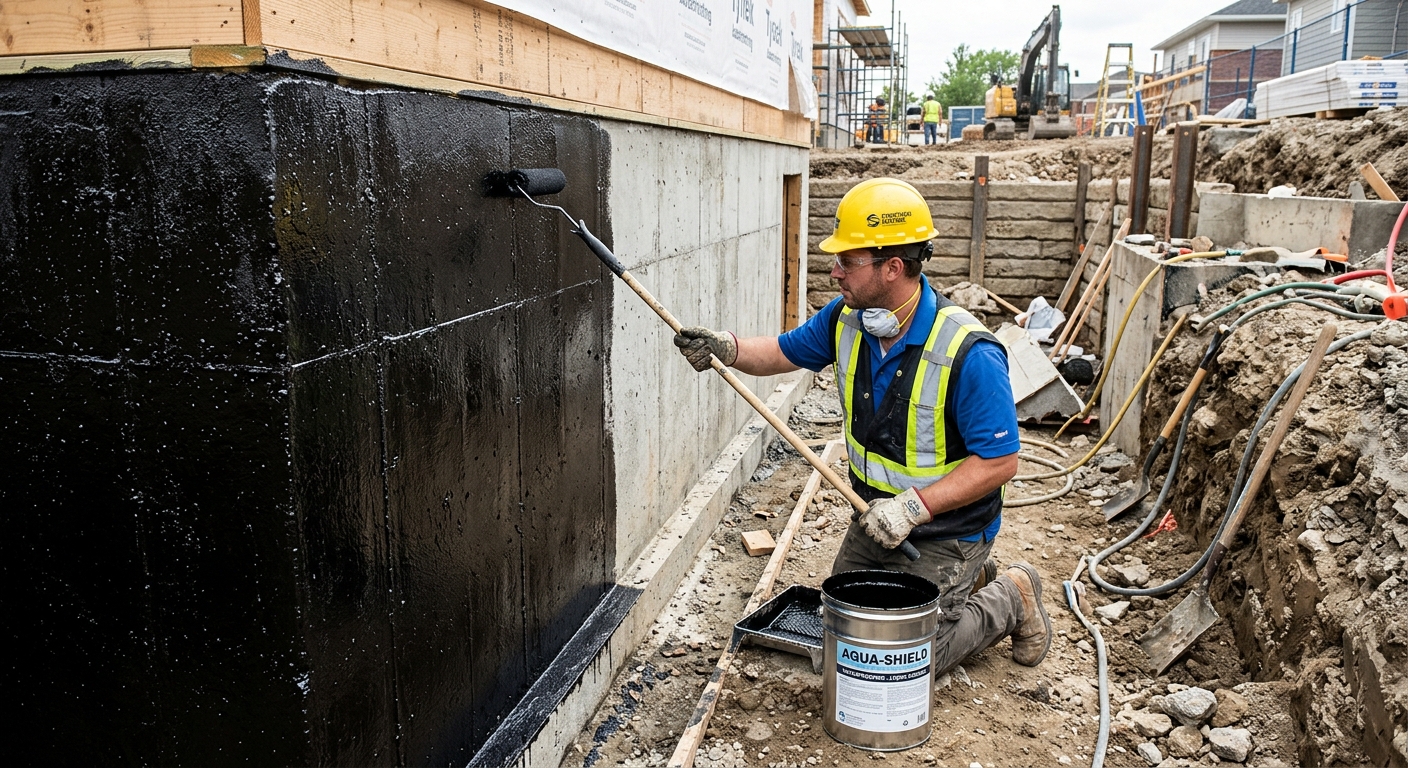
Basement waterproofing options and costs in Osoyoos
Osoyoos homeowners often start with one simple question: “Can we stop the water?” The answer usually depends on where it’s entering—at the foundation wall, along slab edges, through a joint, or from failed drainage outside. In Osoyoos, with 33.8% of homes built before 1981 (Statistics Canada, 2021 Census), many foundations are older systems that commonly carried original tar-and-paper style waterproofing and early weeping-tile drainage. When those assemblies age, they can fail gradually—then spring snowmelt and heavy rain push water toward the lowest point.
In the Thompson–Okanagan, costs are driven by site conditions more than by “what a typical basement needs.” Semi-arid valleys mean summers are dry, but winter freeze-thaw and quick seasonal recharge can widen cracks and stress weak joints. Where localized clay pockets or dense silts occur, they can hold water longer against foundation walls, increasing lateral pressure compared with freely draining sandy/gravelly lots. That’s why exterior excavation and drainage tile work can land at the top end of the provincial ranges, especially on older neighbourhood streets around the Lake Osoyoos / east side where mature landscaping and tight access are common.
Contractor availability and labour rates also change with how much excavation is possible: full dig-outs take longer and require careful concrete/asphalt removal and reinstatement. If you’re comparing options, the table below breaks down the most common approaches and typical cost bands for Osoyoos projects.
| Method |
What It Addresses |
Disruption Level |
Durability |
Price Range |
| Exterior excavation + new membrane + drainage tile |
Primary water entry by rebuilding the outside waterproofing system (membrane + weeping tile + backfill drainage) |
High (excavation, removal/reinstatement of landscaping, patios/driveways) |
High (when installed to code with correct drainage) |
$18,000–$40,000 |
| Interior perimeter drain channel + sump pit |
Water after it enters the foundation; intercepts seepage at the interior footing line |
Medium (minor floor/wall cutting, sump discharge routing) |
Medium–High (depends on wall condition and discharge reliability) |
$9,000–$22,000 |
| Foundation crack injection (epoxy or polyurethane) |
Cracks and joints; epoxy seals dormant cracks, polyurethane targets active leaks |
Low–Medium (surface prep; limited interior or exterior access) |
Medium–High (good results when crack type is matched correctly) |
$800–$3,500 |
| Sump pump installation (primary + battery backup) |
Controls water levels during seepage events; backup reduces risk during outages |
Medium (pit + discharge line; some interior work) |
High (with reliable backup and alarm) |
$2,500–$5,500 |
| Window well drain installation |
Directs surface and seepage water away from window wells |
Low–Medium (excavation around wells, short drainage runs) |
Medium (great for targeted leaks; not a full foundation solution) |
$1,200–$4,000 |
| Lot re-grading / downspout extension |
Improves site drainage to reduce water load against foundation |
Low (typically landscaping-focused, not full excavation) |
Low–Medium (only as good as grading/drainage maintenance) |
$900–$3,200 |
Prices are estimates only and vary by project scope, site access and material selection.
What affects the price of waterproofing in Osoyoos
In Osoyoos and the wider Thompson–Okanagan, two bids for the “same” basement can differ by 30–50% because the scope isn’t truly the same. The biggest reason is site-driven: how the soil holds water, whether there’s a high-water-table pocket, and what freeze-thaw is doing to existing cracks. Compared to a national average, local pricing is often separated by those three drivers. In clay-heavy conditions, freeze-thaw can expand and contract soils, exerting more lateral pressure on foundation walls and turning hairline seepage into recurring leaks. When water levels are higher, interior systems run more frequently—meaning more excavation for drain channeling, larger discharge lines, and (often) sump pump and backup upgrades.
Thompson–Okanagan also has a practical market factor: many homeowners are in single-detached homes (58.7% of dwellings) and want minimal disruption, but older lots around established neighbourhoods can have mature trees, older driveway aprons, and landscaping that must be removed and reinstated—especially for exterior excavation that sits within the $18,000–$40,000 band. Conversely, quick wins (like downspout extensions and grading) can keep projects closer to the lower end, sometimes below the mid-point of the exterior range, but only when the leak is clearly surface-water related.
Concrete examples from Osoyoos jobs: (1) a short interior perimeter drain can come in around $9,000–$22,000 when the leak is mostly from slab-edge seepage and the footing line is accessible; (2) the same basement can escalate toward the top end of exterior waterproofing ($18,000–$40,000) if excavation reveals saturated backfill and a failed weeping tile that needs replacement plus membrane work; (3) if cracks are structural or horizontal, injection may be more complex and may require engineer-led assessment before sealing.
| Price Factor |
Why It Matters |
Cost Impact |
| Interior vs. exterior approach — interior is less disruptive but addresses symptoms |
Exterior treats the water source; interior manages water after entry |
Can shift cost by 2x or more (interior often in $9,000–$22,000 vs exterior $18,000–$40,000) |
| Foundation type — poured concrete vs. block vs. stone vs. ICF |
Crack behaviour and sealing methods differ |
Poured concrete usually responds well to targeted crack work; block often needs perimeter drainage (driving interior scope) |
| Soil type — clay expands more than sand, adding pressure |
Water retention and freeze-thaw expansion increase lateral forces |
More extensive membrane/drainage design and longer drainage scope |
| Crack type and length — hairline vs. structural horizontal cracks |
Correct product choice matters; structural cracks may not be “just sealing” |
Injection may add labour and prep; structural cases can require engineer assessment and additional work |
| Sump pump backup system — battery or water-powered backup needed |
Reduces risk during outage events during wet/spring periods |
Typically increases pump system cost within the $2,500–$5,500 band |
| Access — landscaping, decks, or driveways must be removed for exterior |
Excavation time and reinstatement vary widely |
Can move projects upward toward the $18,000–$40,000 exterior range |
| Weeping tile age — original tile (60+ years) may be completely failed |
Old tile can be clogged or broken, causing chronic seepage |
Replacement and drainage bed changes can add substantial labour and materials |
| Mould or efflorescence remediation required before sealing |
Moisture damage must be stabilized before membrane coatings or injections |
Adds time for cleaning, drying, and protective systems before waterproofing |
Permits & regulations in British Columbia
In British Columbia, foundation excavation, structural crack repair, and changes to lot drainage typically require a building permit. If you’re planning to correct drainage patterns (for example, major downspout rerouting, new discharge routes, or substantial grading changes tied to foundation performance), confirm the permit requirement early rather than after excavation. Sump pump installations can also trigger municipal review—especially when the discharge connects to the storm or sanitary sewer system.
For structural crack repair, particularly horizontal cracks in block walls or major step cracks, a structural engineer’s assessment is often required. The purpose isn’t to “sell more work,” but to determine whether the foundation needs underpinning, stitching, or another structural remedy before waterproofing. As a homeowner, ask the contractor whether they have engineering support for structural repairs and whether they carry liability insurance plus WSIB/WCB coverage (as applicable) for the crews doing the work.
How to verify a contractor in Osoyoos (and across BC) step-by-step:
- Ask for their BC licence/registration details and confirm the correct business name.
- Request a certificate of insurance and verify coverage limits and effective dates.
- Ask for proof of WSIB/WCB coverage for workers and confirm the certificate is current.
- For structural cracks, require written confirmation of who provides the engineer assessment (or that the scope includes it if needed).
- Verify permit responsibility in writing: who pulls permits, what’s included, and what happens if a permit is delayed.
Interior vs exterior waterproofing — what does Osoyoos need?
The fundamental difference is “source control” versus “water management.” Exterior waterproofing—full excavation, new membrane, new drainage tile, and backfill—targets the water before it reaches the foundation. It’s usually the most permanent solution when there’s a documented failure in exterior drainage or waterproofing. The trade-off is disruption: excavation is invasive, and in Osoyoos it often means removing landscaping and reinstating driveways, walkways, or hardscape within established yards.
Interior waterproofing—perimeter drain channel, sump pit, and sump pump—captures water after it enters. That can be the right move when access limits excavation on tight lots, when landscaping is expensive to remove and replace, or when the leak is primarily coming through interior paths like slab edges and cold joints. However, interior work does not reduce hydrostatic pressure on the wall itself, so the foundation’s crack condition and wall type matter.
In the Thompson–Okanagan, poured concrete walls frequently seal well with properly matched crack injection (especially for dormant cracks), and a perimeter approach can be effective where seepage is localized. Block foundations often benefit from interior drainage as a practical complement because water pathways can sit at mortar joints and along footing lines. If you’re seeing recurring water during wet spring periods in BC, sump pump backup becomes a real risk reducer—especially where outages happen during stormy weather.
Cost-wise, think about justification. If an exterior dig-out is $18,000–$40,000 because excavation is possible and exterior tile has failed, that spend can outperform repeated interior interventions. But if the leak is confined and access is difficult, interior work in the $9,000–$22,000 range may be the best value—provided the water path is correctly identified and the sump/discharge is designed properly.
| Method |
Best For |
Addresses Source? |
Disruption |
Lifespan |
Price Band |
| Full exterior excavation + membrane |
Known failed exterior drainage/membrane, persistent seepage, or high water load against the foundation |
Yes |
High |
Long-term (often the most complete solution) |
$18,000–$40,000 |
| Interior French drain + sump system |
Seepage along slab edges/footings, inaccessible exterior, recurring wetting inside |
No (manages after entry) |
Medium |
Medium–Long (depends on pump reliability and discharge) |
$9,000–$22,000 |
| Crack injection — epoxy (structural) |
Dormant cracks where water entry is not active at the time of repair |
Partially (stops seepage when cracks are matched correctly) |
Low–Medium |
Medium–Long |
$1,200–$3,500 |
| Crack injection — polyurethane (active leak) |
Active leaks where water is moving through the crack/joint |
Partially (stops active flow through the crack) |
Low–Medium |
Medium (can vary with ongoing hydrostatic pressure) |
$800–$3,200 |
| Interior drain channel only (no sump) |
Low-level dampness or limited seepage where water volumes are minimal |
No |
Medium–Low |
Short–Medium (higher chance of recurring wetness) |
$3,000–$10,000 |
| Re-grading + downspout extensions |
Surface-water problems and poor runoff direction away from the foundation |
Yes (for the surface-water component) |
Low |
Medium (requires ongoing maintenance) |
$900–$3,200 |
How to choose a waterproofing contractor in Osoyoos
Choosing the right contractor in Osoyoos starts with verification. In British Columbia, confirm they are properly registered/licensed for the scope they’ll perform, then request proof of liability insurance and WSIB/WCB coverage for workers. How to check: (1) ask for a certificate of insurance and ensure the named insured matches the contractor you’ll hire, (2) confirm WSIB/WCB clearance or certificate is current for the company doing the work, and (3) look for clear documentation for any structural or permit-related components.
Next, get 2–3 itemised written quotes—don’t accept a single lump sum without line items. A good quote separates labour and materials (membrane, drain tile, pipe/discharge, pumps, backup systems, crack injection materials, excavation/restoration, and disposal). Make sure the scope includes what’s excluded: for example, is there a limit on crack length? Are they assuming the weeping tile is already functional or will they confirm it? Clarify whether permits are pulled by the contractor, and whether disposal of excavated soils and concrete/asphalt removal is included.
Warranty matters: ask for workmanship warranty length and whether the product/manufacturer warranty covers installation errors and is transferable if you sell the home. Payment should be controlled—never pay more than 10–15% upfront, and use a holdback until completion and final cleanup/inspection. Finally, request a start date and completion estimate in writing, tied to weather conditions common to the Thompson–Okanagan (rainy windows can affect excavation schedules).
- Verify BC registration/licence details match the proposal and the invoice.
- Request certificate of liability insurance (check dates and limits).
- Confirm WSIB/WCB coverage with current documentation.
- Insist on an itemised quote (labour + materials + disposal + reinstatement).
- Confirm whether a permit is required and who pulls it.
- Ask how they identify the water entry point (visual mapping, hose testing, dye tests).
- Match crack products to crack type (epoxy for dormant vs polyurethane for active flow).
- Clarify pump design: discharge route, check valve, and whether backup is included.
- Ask for drainage details: tile slope, outlet/connection plan, and backfill specification.
- Require a written scope for reinstatement (landscaping/driveway/concrete removal and rebuild).
- Review warranty: workmanship term, product warranty term, and transferability.
- Use payment terms: 10–15% max upfront; holdback after walkthrough.
In Osoyoos, red flags I see most often are: a contractor who won’t describe the water path or crack cause, “one-size-fits-all” scopes with no site investigation, quotes that omit disposal and reinstatement details, no proof of insurance/WSIB/WCB, and promises of “guaranteed no leaks” without specifying limits (like crack length, foundation type, and drainage conditions).
Frequently asked questions — waterproofing in Osoyoos
Can I waterproof my basement from the inside only?
Yes, many Osoyoos basements can be waterproofed from the inside only—especially when exterior access is difficult or when the leak is primarily slab-edge seepage and cold-joint moisture. Interior systems typically include a perimeter drain channel, a sump pit, and a sump pump, often in the $9,000–$22,000 range depending on how much flooring must be removed and how complex the discharge routing is. The key limitation in British Columbia is that interior work manages water after it enters; it doesn’t relieve hydrostatic pressure against the wall. If you have active cracking with continued water pressure, interior solutions may still help, but crack type (dormant vs active) and foundation condition must be assessed correctly to avoid recurring wetting during spring events.
What causes foundation cracks in Osoyoos?
In Osoyoos, foundation cracks commonly come from movement—most often freeze-thaw effects plus soil behaviour around the foundation. Even in semi-arid areas, winter temperature swings can widen existing cracks and joints, and seasonal moisture changes can increase lateral stress where soils hold water longer. Clay pockets or dense silts can retain moisture and increase pressure compared with freely draining sandy sites. Age also plays a role: with 33.8% of homes built before 1981 (Statistics Canada, 2021 Census), older foundations and drainage systems may have less effective weeping tile performance over time. Cracks can then shift from hairline seepage into recurring leaks, sometimes requiring injection work in the $800–$3,500 band plus interior drainage upgrades.
How do I compare waterproofing quotes?
Compare quotes like-for-like. Ask each contractor to provide an itemised scope (labour, materials, disposal, and reinstatement) and confirm what’s included/excluded. Make sure they state how they’ll locate the water entry point—don’t accept a guess. In Osoyoos, quote differences of 30–50% are usually explained by site access (excavation needs), foundation type, and whether the plan includes a reliable discharge and, where necessary, sump pump backup. Also compare the product and method pairing: epoxy vs polyurethane injection, sump pump capacity and backup, and whether drainage tile replacement is included or assumed. If one quote is $18,000–$40,000 for exterior work and another is $9,000–$22,000 for interior only, confirm the reason isn’t simply convenience—it should match the water path.
How long does basement waterproofing take in Osoyoos?
Typical timelines vary with scope and weather. Interior perimeter drain and sump work often takes several days to a couple of weeks depending on concrete cutting, drying time, and pump/discharge routing; crack injection can be faster, usually within a few days for prep and curing. Exterior excavation usually takes longer because excavation and reinstatement require more time, and in British Columbia scheduling can shift with rain and ground conditions. Plan for added time if you need engineering assessment for structural cracks before sealing. A good contractor should provide a start date and completion estimate in writing, tied to realistic weather windows in the Thompson–Okanagan. If a quote offers a firm date without considering excavation access and drying/curing requirements, that’s worth clarifying.
What is a weeping tile and does my Osoyoos home have one?
A weeping tile (often called weeping tile or foundation drain tile) is the perforated drain system installed at or near the foundation footing to collect and direct water away from the basement. In many Osoyoos homes built decades ago—especially with 1960s–1990s housing stock and older pre-1981 builds (33.8% of homes, Statistics Canada, 2021 Census)—a weeping tile system is common. Over time, though, it can clog or fail, particularly where older soils retain water or where access and maintenance were limited. You may not “see” it, but symptoms like chronic seepage along slab edges, persistent dampness at corners, or repeated water during wet periods can indicate it’s not functioning. A proper assessment should confirm whether the weeping tile is present, its condition, and whether replacement is necessary before sealing.
Can I waterproof my basement in winter in Osoyoos?
Sometimes, but it’s not always ideal. In Osoyoos and across British Columbia, winter conditions can limit exterior excavation because saturated ground can freeze, making digging and correct backfill compaction difficult. For that reason, exterior waterproofing projects are often best scheduled for milder windows when soil can be excavated and drainage layers can be built properly. Interior waterproofing—perimeter drains, sump pit work, and crack injection—can sometimes proceed in winter since it avoids the majority of exterior dig-out steps; however, curing times and interior humidity still matter. If you’re dealing with active leaks, interior crack injection and sump pump controls can offer faster risk reduction even during colder months. Discuss timing with your contractor and ask how they’ll handle curing, drying, and any permit requirements.