Basement waterproofing options and costs in Merritt
Merritt homeowners usually face the same question: do you fix water entry from the outside, or manage it after it shows up inside? In a community where many houses were built in earlier eras—59.3% of homes were built before 1981—original systems were often basic (and later become undersized, corroded, or simply overwhelmed). With 2,180 homeowner households (73.3% of households own), there’s steady demand for long-term basement solutions, especially when old weeping tile and perimeter drainage start failing.
In the Thompson–Okanagan, waterproofing costs often swing because site conditions drive the job. Semi-arid valleys can still produce intense spring snowmelt, and repeated freeze-thaw cycles can widen cracks and joints, turning “a little dampness” into active seepage over a few seasons. Soil in Merritt can also vary from sandy/gravelly patches (often draining better) to more water-retentive clay pockets (holding water longer and increasing lateral pressure against foundation walls). That’s why two “similar” basements can land at very different totals—depth of foundation, required repair length, and whether exterior excavation is possible are big cost multipliers.
If you’re in older, established pockets of town—where 1960s–1990s housing stock is common and exterior drains may be aging—the trade is especially busy. Trades are also in demand where lots have decks, mature landscaping, or driveways that complicate excavation and reinstatement.
Below are the most common options we see in Merritt, with practical cost bands to help you compare proposals.
| Method |
What It Addresses |
Disruption Level |
Durability |
Price Range |
| Exterior excavation + new membrane + drainage tile |
Source control: hydrostatic pressure and water entry at the foundation exterior |
High (excavation, removal, backfill, landscape/concrete reinstatement) |
Long (often the most complete solution when properly detailed) |
$18,000–$40,000 |
| Interior perimeter drain channel + sump pit |
Collects seepage after it enters; reduces hydrostatic pressure at the floor edge |
Moderate (cutting a perimeter trench, sump discharge plumbing) |
Medium to long (depends on sealing strategy and drainage maintenance) |
$9,000–$22,000 |
| Foundation crack injection (epoxy or polyurethane) |
Sealing cracks: epoxy for structural/hairline sealing; polyurethane for active leaks |
Low to moderate (access ports, crack prep, localized patching) |
Medium to long (best when paired with correct drainage) |
$800–$3,500 |
| Sump pump installation (primary + battery backup) |
Automates water removal during high seepage seasons; protects during outages |
Low to moderate (pit excavation, discharge line, wiring/controls) |
Medium to long (reliable when checked and maintained) |
$2,500–$5,500 |
| Window well drain installation |
Stops side-wall/egress area seepage and limits water pooling near windows |
Moderate (window well modifications and drain routing) |
Medium (improves localized wet spots and reduces freeze-up risk) |
$1,800–$4,200 |
| Lot re-grading / downspout extension |
Redirects roof and surface water away from foundation |
Low (minimal excavation depending on landscaping) |
Short to medium (works best when combined with drainage repairs) |
$900–$3,000 |
Prices are estimates only and vary by project scope, site access and material selection.
What affects the price of waterproofing in Merritt
In Merritt and across the Thompson–Okanagan, it’s common to see quotes for the “same” basement change by 30–50% once contractors factor in real site conditions. That variation isn’t just marketing—it’s largely tied to how soil and water behave around foundations in our region compared with the national average.
Three drivers separate local costs from broader averages: soil type, water table behaviour, and freeze-thaw cycles. Clay-heavy or silty pockets (common where soils aren’t uniformly draining) can hold water and increase lateral pressure against foundation walls for longer periods, which can mean more sealing, more drainage, and longer crack repairs. In the Thompson–Okanagan, spring snowmelt and heavy rain events can push seepage higher, increasing sump runtime and the performance requirements of drainage systems. Freeze-thaw then widens existing cracks and joints—so what starts as dampness can become active leaks, requiring more aggressive solutions.
Here are concrete Merritt examples we typically see: (1) If your exterior weeping tile has failed and the backfill is retaining moisture, an interior perimeter drain can work, but you may still need a crack injection package to stop ongoing discharge at cold joints—often shifting a plan into the higher $9,000–$22,000 interior band. (2) A full exterior excavation can look expensive at first, but when you have long leaking wall runs plus accessible exterior space, the job may land closer to $18,000–$40,000 because we’re correcting the source instead of treating symptoms. (3) If the foundation is deep or you have limited access due to decks and mature landscaping, excavation time and disposal rise quickly, which can push projects toward the top end of the exterior band.
| Price Factor |
Why It Matters |
Cost Impact |
| Interior vs. exterior approach — interior is less disruptive but addresses symptoms |
Interior systems manage water after entry; exterior controls water at the source |
Can change totals by several thousand dollars depending on wall length and access |
| Foundation type — poured concrete vs. block vs. stone vs. ICF |
Crack behaviour and sealing method differ; block often needs drainage as a practical complement |
Block/seeping joints often increase scope and labour |
| Soil type — clay expands more than sand, adding pressure |
Clay pockets hold water longer and exert more force during freeze-thaw |
More extensive sealing and drainage details needed |
| Crack type and length — hairline vs. structural horizontal cracks |
Structural cracks may require engineering review and stabilization |
Structural work can add significant costs and time |
| Sump pump backup system — battery or water-powered backup needed |
Spring seasons can stress drainage; power outages can turn a minor seep into a failure |
Backup adds equipment + controls, commonly raising the sump package |
| Access — landscaping, decks, or driveways must be removed for exterior |
Removal and reinstatement is a major labour and disposal line item |
Can swing exterior excavation costs toward the high end |
| Weeping tile age — original tile (60+ years) may be completely failed |
Failed tile means more water reaches the foundation wall and floor edge |
Often increases the need for replacement drainage and sealing |
| Mould or efflorescence remediation required before sealing |
Moisture must be treated and surfaces prepared to achieve proper adhesion and long-term performance |
Prep work can add time and materials before waterproofing proceeds |
Permits & regulations in British Columbia
In British Columbia, certain waterproofing and drainage work typically requires a building permit, particularly when you’re altering structural elements or lot drainage around the foundation. As a rule of thumb for Merritt homeowners: foundation excavation, structural crack repair, and changes that affect how water leaves your property usually fall under permit requirements. If you’re installing or modifying a sump discharge connection that ties into municipal infrastructure (storm or sanitary), you should expect to need municipal approval and/or documentation before that connection is made.
For structural crack repairs (especially horizontal cracks in block walls or major step cracks), a structural engineer’s assessment is often required to determine whether underpinning or other structural work is needed. That’s why you should ask whether your contractor has engineering support available and whether their team carries appropriate liability coverage and coverage through the applicable worker protection system.
To verify a contractor in Merritt, start with the province’s online contractor and credential verification tools to confirm licensing where applicable, then request a current certificate of insurance showing liability coverage. Ask for proof of coverage for workers (commonly referenced as WSBC/WCB) and ask whether there’s a clearance letter. For permit-related scope, ask who will pull the permit (or coordinate with the homeowner) and confirm the permit number in writing before work starts.
Interior vs exterior waterproofing — what does Merritt need?
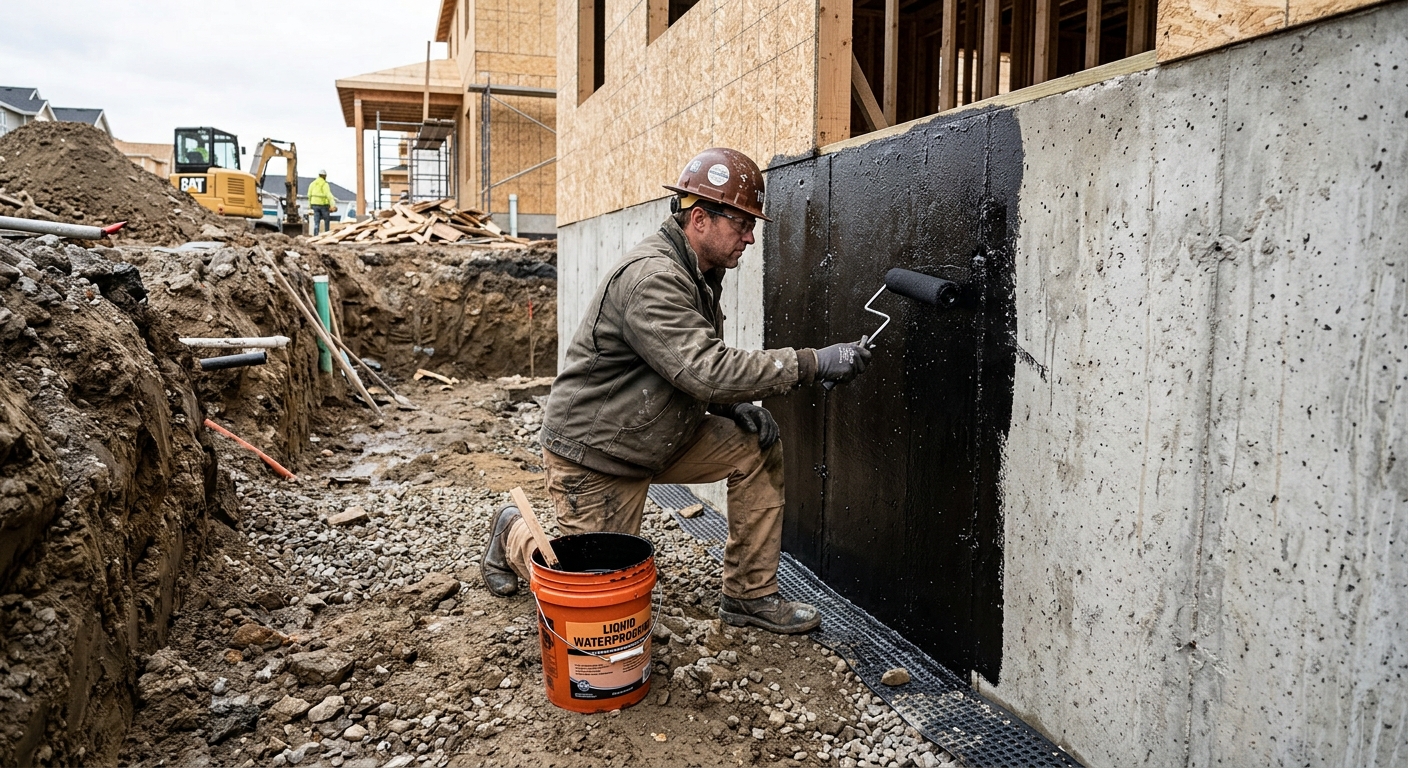
The fundamental difference is source control versus water management. Exterior waterproofing means full excavation, new membrane, new drainage tile, and properly planned backfill—so you stop water entry and reduce hydrostatic pressure against the wall itself. It’s more disruptive and costly because it requires excavation and reinstatement, but it’s often the most complete fix when the exterior drainage has failed or when seepage is persistent along multiple sections of wall.
Interior waterproofing manages water after it gets in. A perimeter drain channel and sump pit collect seepage at the slab/floor edge and pump it away, which can be very effective—especially in homes where exterior access is limited or when you need a quicker solution. However, interior work doesn’t stop water pressure against the wall; it redirects the water that arrives.
In Merritt’s Thompson–Okanagan climate, freeze-thaw and localized water retention in certain soils make “partial fixes” less reliable if the exterior drainage is already failing. Poured concrete walls often respond well to crack injection (when matched to correct drainage), while block foundations frequently benefit from combining interior drainage with targeted sealing because water can travel through joints and voids. Also consider power reliability: in spring, pumps run more often, and backup systems matter if outages occur during wet seasons.
To put it in dollar terms: if your situation is mainly cold-joint leakage along a short section, a crack injection program may sit in the $800–$3,500 range—often justifiable. But if multiple wall sections are wet and exterior drainage is compromised, the same homeowner typically ends up with exterior work closer to $18,000–$40,000, because you’re correcting the source and reducing the chance of repeat failures.
| Method |
Best For |
Addresses Source? |
Disruption |
Lifespan |
Price Band |
| Full exterior excavation + membrane |
Chronic seepage, long wall runs, failed weeping tile, and homes with accessible exterior space |
Yes |
High |
Long |
$18,000–$40,000 |
| Interior French drain + sump system |
Improving damp basements, managing seepage, and when exterior excavation isn’t feasible |
No (manages after entry) |
Moderate |
Medium to long |
$9,000–$22,000 |
| Crack injection — epoxy (structural) |
Stabilized, non-moving cracks and many poured-concrete sealing scenarios |
Partial (seals pathways in the wall) |
Low to moderate |
Medium to long |
$800–$3,500 |
| Crack injection — polyurethane (active leak) |
Active moisture, seepage through cracks/joints, and cases where water is still finding a route |
Partial (seals active pathways) |
Low to moderate |
Medium to long (depends on drainage detail) |
$1,200–$4,500 |
| Interior drain channel only (no sump) |
Light seepage where you can gravity-drain and where pump reliance isn’t necessary |
No (still after-entry management) |
Low to moderate |
Short to medium |
$6,500–$14,000 |
| Re-grading + downspout extensions |
Surface-water problems, roof runoff directed toward foundation, and seasonal dampness |
Partially (reduces water load) |
Low |
Short to medium |
$900–$3,000 |
How to choose a waterproofing contractor in Merritt
Choosing the right contractor matters because waterproofing failures often come from missed site details—wrong drainage direction, inadequate prep, or a design that treats symptoms instead of the source. For British Columbia work, start by verifying the contractor’s licensing/credentials where applicable, then request a certificate of liability insurance and confirm the coverage is active. Ask for proof of worker coverage (WSBC/WCB) and request a clearance letter if they provide one. You should be able to see these documents before you sign or pay for materials.
Get 2–3 itemised written quotes, not lump sums. A good quote breaks down labour and materials (membrane/drain tile, sump components, disposal, concrete/asphalt removal, reinstatement, and any allowance items). Make sure the scope is clear about what’s included: permit pulling, engineering support for structural crack work, disposal of excavated material, and how backfill and compaction are handled.
Warranty is another differentiator. Ask for the workmanship warranty length and whether it includes the drainage system and related components. Also ask about product/manufacturer warranties and whether they’re transferable to future owners. Payment schedules should be sensible: never pay more than 10–15% upfront, and use a holdback until the job is complete and documented. Finally, request a start date and completion estimate in writing so you can plan around removal and reinstatement.
- Ask for previous Merritt-area projects with similar foundation types (poured vs block) and site access conditions.
- Confirm whether they diagnose weeping tile condition and not just install an interior system.
- Require an itemised scope: excavation limits, drain route, membrane type, and discharge method.
- Check that mould/efflorescence remediation is addressed before sealing when present.
- Verify permits/approvals responsibilities in writing (who pulls the permit, if needed).
- Request engineering support for structural cracks where applicable.
- Review warranties: workmanship term, exclusions, and what happens if discharge clogs.
- Confirm sump details: check valves, discharge piping diameter, and whether battery backup is included if recommended.
- Use a clear schedule: excavation prep, waterproofing phase, cure time, backfill, then interior finishing.
- Confirm compaction method and lift depth for backfill (quality affects long-term drainage).
- Do not accept “we’ll figure it out later” language in the quote—scope should be final before work.
- Keep funds protected with a holdback until walkthrough and written completion items are done.
Red flags we see in Merritt include: quotes that skip site assessment and rely only on photos, vague scopes that don’t state drainage discharge location, no mention of weeping tile condition or freeze-thaw crack strategy, requesting large deposits beyond 10–15% before even mobilizing, and warranties that exclude workmanship or fail to cover key components like drainage and installation details.
Frequently asked questions — waterproofing in Merritt
What causes foundation cracks in Merritt?
In Merritt and the wider Thompson–Okanagan, foundation cracks often start with normal movement—then get worse through freeze-thaw cycles. Water is the main accelerant: when seepage reaches joints and hairline cracks, freeze-thaw expands the moisture in the crack, widening it over time. Soil behaviour matters too; localized clay pockets or dense silts can hold water longer and increase lateral pressure compared with freely draining sandy soils. Homes built before 1981 are more likely to have older drainage and waterproofing details that were never designed for today’s performance expectations, so you’ll sometimes see repeating seepage patterns along slab edges and cold joints. If you have step cracks, horizontal cracks, or displacement, you should assume there may be a structural component and request an engineer assessment before you rely on sealing alone.
How do I compare waterproofing quotes?
When comparing quotes in Merritt, focus on scope and design logic rather than the headline total. Two contractors can both say “we’ll waterproof,” but one may include new drainage tile and exterior membrane, while another may only install an interior perimeter drain and sump to manage water after entry. Ask whether the quote includes disposal, excavation limits, backfill/compaction, membrane details, and how the sump discharge will be connected and protected. Confirm whether crack injection is epoxy or polyurethane and how they’ll decide based on whether cracks are actively leaking. A useful check is to compare method match: if your situation calls for source control, a lower-cost interior-only approach can still cost you more later if water pressure persists. Price bands you may see include interior work around $9,000–$22,000 and exterior excavation around $18,000–$40,000, depending on access and wall length.
How long does basement waterproofing take in Merritt?
Timelines vary mainly due to excavation access, foundation type, and whether permits are required. For interior systems (like a perimeter drain channel and sump pit), many jobs are staged over several days: demolition/trenching, plumbing installation, waterproofing work, then concrete reinstatement and cleanup. Exterior projects take longer because excavation, membrane application, new drainage tile installation, and backfill/compaction all have to be sequenced carefully. In Merritt’s spring freeze-thaw season, we also plan around weather windows so membranes and backfill aren’t compromised. If landscaping, decks, or driveways must be removed and reinstated, add time for those trades as well. Your contractor should provide a written start date and completion estimate, and should specify cure and cure-weather dependencies in the schedule.
What is a weeping tile and does my Merritt home have one?
A weeping tile is an underground perforated drainage system placed around (or along) the foundation to collect groundwater and redirect it to an outlet, typically a sump or a daylight/municipal discharge route. Many older Merritt homes—especially those built when passive drainage was the norm—may have had original weeping tile installed. However, even if it exists, it can be failed, blocked, corroded, or disconnected, which is why you can still have recurring seepage. Homes built before 1981 are more likely to have older drainage details that may not perform as intended after decades of soil movement and freezing cycles. You can’t always confirm it visually, so ask your contractor how they verify the condition (camera inspection, excavation evidence near the foundation, or other diagnostic steps). If the tile is failing, waterproofing scope should reflect that—interior solutions alone may not reduce water pressure at the wall.
Can I waterproof my basement in winter in Merritt?
In British Columbia, winter waterproofing is sometimes possible, but it depends on what you’re doing. Interior work is generally more feasible than full exterior excavation during deep cold, because excavation and membrane work are harder to execute correctly when soils and surfaces are frozen. If you have active leaks, crack injection may still be considered because localized work can proceed, but prep and adhesion conditions are critical. Exterior work often needs suitable conditions for proper membrane bonding and backfill placement; freezing backfill can reduce performance and lead to settlement or drainage failures later. For Merritt, freeze-thaw is a real driver, so rushing exterior work in poor weather can backfire. The best approach is to ask contractors for a seasonal plan: what can be done now (stabilization, localized crack sealing, interior drainage) and what should be scheduled when conditions are right for exterior source control.
What is the difference between waterproofing and damp-proofing?
In plain terms, waterproofing aims to prevent water entry under pressure and during higher seepage events, while damp-proofing is more about reducing minor moisture and preventing condensation. In Merritt’s climate, “damp-proofing” often isn’t enough when you have recurring seepage along joints or during spring melt, because freeze-thaw can turn small pathways into active leaks. True waterproofing typically includes exterior source control like membrane systems and properly functioning drainage tile—or an interior drainage/sump system designed to manage collected water reliably. The difference matters when comparing quotes: a contractor offering only surface coatings without addressing drainage may be offering damp-proofing, even if they use the word “waterproof.” If you’re seeing efflorescence, persistent wet edges, or water after rain events, treat it as a waterproofing problem and ensure the plan aligns with hydrostatic pressure and drainage requirements.