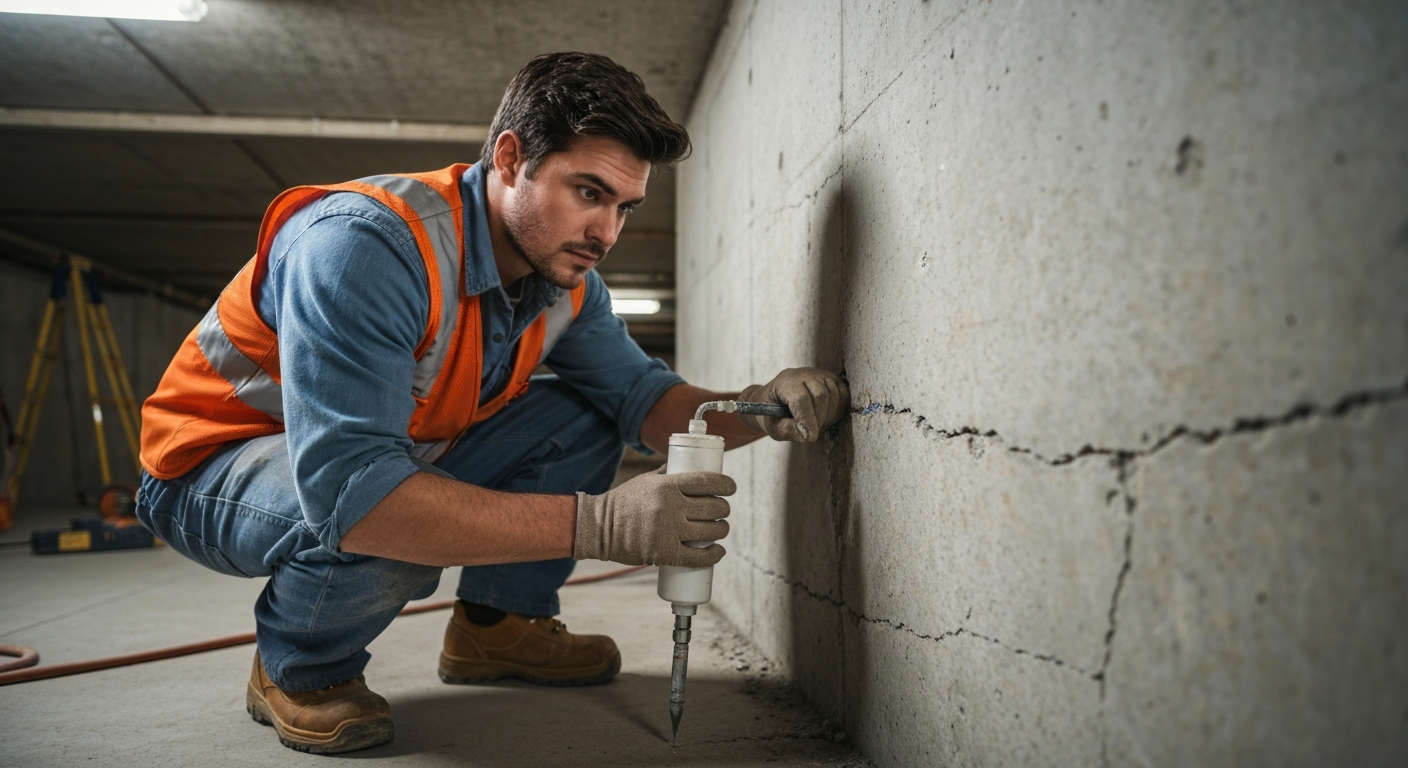
Basement waterproofing options and costs in 100 Mile House
In 100 Mile House, basement waterproofing usually comes down to two realities: the size of the water problem and how much excavation your site can tolerate. With a town population of 1,980 (Statistics Canada, 2021 Census), you’ll often see fewer crews available than in larger centres, and that can affect scheduling and mobilization pricing. Just as important, many homes in established areas have had their original drainage systems for decades, so a “minor leak” can turn into a deeper repair once contractors open the foundation and discover failed weeping tile or saturated backfill.
In the Cariboo economic region, freeze-thaw cycles add cost because repeated expansion and contraction can worsen existing cracks, especially in older poured-concrete or block foundations. Clay-heavy soils and drainage that doesn’t move water away from the wall can increase hydrostatic pressure, pushing contractors toward either exterior drainage upgrades or interior drainage paired with a sump system. In practice, jobs in and around the downtown 100 Mile House area tend to be in higher demand because older housing stock is concentrated there, and access constraints (fences, shrubs, close setbacks) influence how far excavation can proceed and how much backfill and regrading is required.
Use the table below to compare common approaches and typical price ranges, then tailor the scope to your foundation type and water entry pattern before you accept a quote.
| Method |
What It Addresses |
Disruption Level |
Durability |
Price Range |
| Exterior excavation + new membrane + drainage tile |
Primary water entry at foundation wall and footing; improves drainage system around the perimeter |
High (excavation, landscaping restoration) |
Long-term source control when properly backfilled and graded |
$7,000–$18,000 |
| Interior perimeter drain channel + sump pit |
Water after it enters; reduces hydrostatic pressure at the floor/wall interface |
Moderate (interior work; floor protection/masonry cuts) |
Very durable when paired with reliable pump operation and discharge routing |
$3,000–$12,000 |
| Foundation crack injection (epoxy or polyurethane) |
Crack sealing; stops seepage pathways (material choice depends on crack movement and wetness) |
Low to moderate (minor drilling/patching) |
Good for targeted cracks when the correct product is selected and cracks are prepped |
$500–$1,500 |
| Sump pump installation (primary + battery backup) |
Automatic water removal during wet seasons and power disruptions |
Low to moderate (pit/cable/discharge routing) |
Longer-lived when the discharge and backup are designed for local run times |
$800–$2,500 |
| Window well drain installation |
Water entry through or around egress wells and limited surface drainage |
Low to moderate (localized exterior/interior modifications) |
High when the grading and discharge path are correct |
$1,200–$3,000 |
| Lot re-grading / downspout extension |
Reduces surface water flow toward the foundation; complements other systems |
Low (earthworks and minor restoration) |
Moderate to high depending on ongoing maintenance and proper slope |
$600–$2,500 |
Prices are estimates only and vary by project scope, site access and material selection.
What affects the price of waterproofing in 100 Mile House
In 100 Mile House and across the Cariboo, homeowners can receive quotes for the “same” waterproofing problem that differ by 30–50%. The gap usually isn’t the brand of membrane—it’s the site conditions and how much hidden excavation, drainage, and prep work the contractor must do once they’re actually at the foundation wall. That’s why a job priced near the lower end of the local bands is often a straightforward crack/patch scenario, while higher-end pricing typically includes extensive excavation, drainage tile replacement, and backfill/grading work to correct ongoing water movement.
Three drivers separate Cariboo costs from the national average: soil type, water table conditions, and freeze-thaw. Clay-heavy soils (more common in many inland regions) hold moisture and expand during freeze-thaw, increasing lateral pressure against foundation walls and worsening cracks over time. Where the water table is high or groundwater is present, contractors must design for longer sump pump run times and more reliable drainage discharge. In addition, heavy spring saturation can turn backfill areas into “wet ballast,” so if original weeping tile has failed, interior drainage and pump upgrades often become part of the solution.
Two concrete examples you’ll see locally: (1) if a foundation has old weeping tile with saturated, clay-rich backfill, exterior excavation can become a full reset instead of a partial dig, pushing many projects toward the $7,000–$18,000 exterior band; (2) if the leak is limited to a couple of active cracks and the surrounding wall shows stable structure, crack injection and targeted patching can keep costs closer to the $500–$1,500 foundation crack repair range. Older housing stock in established neighbourhoods also increases the odds of corroded drainage components and interior efflorescence, which adds prep time before any sealing is attempted.
| Price Factor |
Why It Matters |
Cost Impact |
| Interior vs. exterior approach — interior is less disruptive but addresses symptoms |
Interior solutions manage water after entry; exterior removes the source by controlling water around the wall |
Interior can be meaningfully cheaper upfront; exterior typically costs more but provides source control |
| Foundation type — poured concrete vs. block vs. stone vs. ICF |
Different wall types require different prep and crack handling; block often benefits from interior drainage complements |
May shift scope, material choice, and labour time by thousands |
| Soil type — clay expands more than sand, adding pressure |
Moisture-retaining soil increases seepage and can worsen cracks as freeze-thaw cycles repeat |
More aggressive drainage and backfill changes can move projects upward |
| Crack type and length — hairline vs. structural horizontal cracks |
Structural cracks may indicate movement and require engineering assessment before sealing |
Structural work can add cost and timeline; minor cracks cost less to treat |
| Sump pump backup system — battery or water-powered backup needed |
BC power interruptions during wet periods can turn a “managed leak” into major flooding |
Backup adds both parts and install labour |
| Access — landscaping, decks, or driveways must be removed for exterior |
Excavation near retaining walls or structures increases labour, disposal, and restoration |
Can quickly increase excavation and restoration costs |
| Weeping tile age — original tile (60+ years) may be completely failed |
Failed tile often means saturated footing conditions and ongoing water entry |
Usually requires larger drainage scope (replacement and re-route) |
| Mould or efflorescence remediation required before sealing |
Sealers often need a clean, dry substrate; contaminated surfaces extend prep time |
Adds labour, cleaning materials, and sometimes drying time before waterproofing |
Permits & regulations in British Columbia
In British Columbia, foundation excavation, structural crack repair, and changes to lot drainage typically require a building permit. If the work involves modifying how water discharges—especially where a sump pump discharge connects to a storm or sanitary sewer—municipal approval is commonly required. For foundation cracking that is considered structural (for example, significant horizontal cracking in block walls or step cracks that suggest movement), an engineer’s assessment is often needed to confirm whether underpinning or other structural measures are required before any sealing or waterproofing proceeds.
From a homeowner perspective, start by asking your contractor to clearly list the permit-related scope in writing: what they will pull (if permitted), what they will manage (inspection scheduling, municipal coordination), and what is excluded. For structural repairs, verify that the contractor has engineering support available and carries liability insurance and WSIB/WCB coverage as required for workers.
To verify compliance in 100 Mile House, you can follow a simple step-by-step approach: (1) ask for the contractor’s business details and check their licensing through the provincial online registry; (2) request a certificate of insurance and confirm the coverage is active, includes liability, and matches the named business; (3) ask for proof of WSIB/WCB coverage and a clearance letter or account verification; and (4) ensure the contract states permit responsibility before excavation begins. If they can’t provide documentation promptly, treat it as a warning sign.
Interior vs exterior waterproofing — what does 100 Mile House need?
The fundamental difference between exterior and interior waterproofing is source control versus water management. Exterior waterproofing involves full excavation to the foundation wall, installation of a waterproof membrane, replacement of drainage tile, and correct backfill and re-grading. Done properly, it permanently reduces the chance that water ever builds up against the wall. Interior waterproofing typically uses a perimeter drain channel, a sump pit, and a sump pump to capture water after it enters the foundation and then move it away before it reaches finished areas. It’s often less invasive and can be faster to complete, but it doesn’t stop hydrostatic pressure from acting on the foundation wall in the first place.
For 100 Mile House, that choice is strongly influenced by the local freeze-thaw season and how readily your soil holds moisture. Poured concrete walls often respond well to correct crack injection when the primary entry points are limited and the crack type is compatible with the chosen product. Block foundations, on the other hand, frequently benefit from interior drainage as a practical complement, especially when exterior access is constrained by landscaping or structures.
Backup pumps matter in British Columbia because wet spring periods can coincide with power disruptions, and a sump system without backup can turn a slow seep into a fast overflow. If you’re comparing costs, a realistic justification example is when exterior work is needed to replace failed perimeter drainage and correct grading—projects can land in the $7,000–$18,000 exterior band. But if the problem is a small set of active cracks plus a manageable interior leak path, interior options and targeted repairs can keep you closer to the $3,000–$12,000 interior band rather than paying for excavation around the entire perimeter.
| Method |
Best For |
Addresses Source? |
Disruption |
Lifespan |
Price Band |
| Full exterior excavation + membrane |
Ongoing seepage from the perimeter where exterior drainage and wall waterproofing are both failing |
Yes (at the foundation) |
High (excavation + restoration) |
Long-term when drainage tile, backfill, and grading are correct |
$7,000–$18,000 |
| Interior French drain + sump system |
Basements where exterior excavation is impractical, or water entry is spread across the perimeter |
Partially (manages water after entry) |
Moderate (interior channel and sump install) |
Very durable with correct discharge and reliable pumping |
$3,000–$12,000 |
| Crack injection — epoxy (structural) |
Non-moving or stable structural cracks in poured concrete where stopping seepage and restoring integrity is the goal |
Yes (seal at the crack) |
Low to moderate (drilling and patching) |
Long-lasting for stable cracks |
$500–$1,500 |
| Crack injection — polyurethane (active leak) |
Active seepage where the crack shows moisture and may continue to weep under pressure |
Yes (seal at the crack) |
Low to moderate (drilling and patching) |
Good for active leaks when prepped and installed correctly |
$600–$1,800 |
| Interior drain channel only (no sump) |
Light seepage that can be directed away without pump operation, or when power protection is not required |
Partially (controls water flow internally) |
Lower than sump installs |
Moderate; depends on gravity discharge and consistent slope |
$2,000–$7,000 |
| Re-grading + downspout extensions |
Surface water overflow issues and runoff directed toward the foundation |
No (source control only for surface runoff) |
Low (earthworks and minor landscaping restoration) |
Moderate; requires good site drainage long-term |
$600–$2,500 |
How to choose a waterproofing contractor in 100 Mile House
Start by verifying British Columbia licensing, liability insurance, and WSIB/WCB coverage—then confirm those details match the actual scope of work. Ask for the contractor’s business registration and licensing details (check the provincial online registry), request a certificate of insurance and verify it covers the named business, and ask for WSIB/WCB proof or a clearance letter. In 100 Mile House, you’re often dealing with jobs that involve excavation, cutting concrete, and working around foundation structures, so don’t accept vague answers or “we’re insured” without documentation.
Next, get 2–3 itemised written quotes. You want a breakdown that separates labour and materials and clearly lists each component: excavation limits, disposal, membrane type, drainage tile and filter fabric, sump pump model, backup system, discharge method, crack injection product, and finishing/cleanup. Be especially careful about inclusions: whether permits are included, whether restoration landscaping is part of the quote, and how disposal will be handled. A detailed scope helps you compare bids fairly rather than paying for uncertainty.
On warranty, ask for workmanship warranty length and whether it applies to the full system (membrane/drainage/pumps) or only certain parts. Confirm the product manufacturer warranty terms and whether you can assign/transfer it to future owners. Payment schedule should be conservative: never pay more than 10–15% upfront; hold back until the job is complete and verified. Finally, demand a clear timeline with start date and completion estimate in writing, including weather-related allowances for excavation and curing times.
- Provide the exact method for determining water entry points (probe, inspection openings, drain dye or moisture observations).
- List which foundation walls and areas are included (full perimeter vs partial sections).
- Explain soil conditions and how excavation depth affects the plan and price.
- Confirm membrane and drainage products are specified by type and brand, not just “waterproofing materials.”
- Include the sump pump discharge route in writing (where it goes and how it’s protected).
- State whether battery backup or water-powered backup is included when a sump is recommended.
- Clarify disposal: soil removal, hauling distance assumptions, and site cleanup responsibilities.
- Confirm restoration scope: backfill compaction standard, re-grading expectations, and landscaping reinstatement.
- Provide a warranty document with coverage details and any exclusions.
- Require engineering support for structural crack scenarios (and specify who supplies the report).
- Use a payment schedule with milestones; keep a holdback until inspections and final walkthrough are complete.
- Ensure the quote includes permit responsibility (what they pull vs what you pull).
Red flags in the 100 Mile House market: vague “lump sum” pricing with no breakdown; refusing to disclose insurance/WSIB/WCB paperwork; promising “one-size-fits-all” crack injection without discussing crack movement; skipping backup discussion when a sump is involved; and not explaining discharge compliance or whether they’ll handle municipal approval for tie-ins where applicable.
Frequently asked questions — waterproofing in 100 Mile House
What is a battery backup sump pump and do I need one in 100 Mile House?
In 100 Mile House, a battery backup sump pump is a secondary pump system designed to run when the power is out—so a sudden outage during wet spring conditions doesn’t turn seepage into flooding. The primary sump is connected to your home’s power, while the backup (battery or other approved backup approach) automatically kicks in based on water level. You’re more likely to “need” backup when you get recurring basement water, you already have a sump, you have low-lying finished areas, or your discharge setup can’t tolerate delays. As a practical benchmark, many homeowners budget a sump installation in the $800–$2,500 range, and backup options typically increase the scope.
How much does basement waterproofing cost in 100 Mile House?
Basement waterproofing in British Columbia varies widely because excavation depth, soil conditions, and access can change the scope quickly. For 100 Mile House, exterior excavation jobs commonly fall in the $7,000–$18,000 band when contractors must reach the foundation wall, replace drainage components, and complete membrane installation plus backfill and re-grading. Interior solutions—like perimeter drains and sump pit systems—often land in the $3,000–$12,000 range depending on how much interior work is needed and whether a reliable pump and discharge route are required. If the issue is limited to cracking, foundation crack repair/injection can be far lower, often in the $500–$1,500 range, but only if the crack type and conditions suit injection.
Interior vs exterior waterproofing — which is better?
“Better” depends on what’s causing the water entry. Exterior waterproofing is best when you need source control—meaning the wall and footing are being overwhelmed by perimeter water—and it typically includes full excavation, new membrane, new drainage tile, and correct backfill. Interior waterproofing is usually better when excavation isn’t practical or when the goal is to manage water after it enters the foundation, using perimeter drains, a sump pit, and a pump. In 100 Mile House, poured concrete walls may benefit from crack injection as part of a repair strategy, while block foundations frequently require interior drainage as a practical complement. Freeze-thaw and moisture-holding soils can worsen cracks over time, so if the source is clearly exterior (failed weeping tile, saturated backfill), exterior work can be more cost-justified even though it’s disruptive and typically sits in the higher band.
Why is my basement leaking in 100 Mile House?
Most basement leaks in 100 Mile House come from either water getting to the foundation from the outside or a failed pathway inside. Common causes include failed original weeping tile, poor downspout routing, or re-grading that directs runoff toward the foundation—especially after spring saturation. Freeze-thaw can widen small cracks and turn intermittent seepage into recurring dampness. Clay-rich soil (or poorly draining backfill) retains water against the wall and increases lateral pressure, which also worsens cracking over time. Older housing stock is more likely to have corroded drainage components and weakened interior conditions like efflorescence or mould, which means repairs must include proper cleaning and drying steps before sealing or drainage upgrades.
How do I know if a foundation crack is serious?
A crack may be more serious when it’s wider than a hairline, shows movement signs (step cracks on masonry, noticeable offset), appears as a consistent horizontal crack, or worsens after freeze-thaw seasons. Moisture at the crack face and repeated wet staining can also indicate an active pathway, which may require polyurethane injection and sometimes engineering review depending on foundation type and crack pattern. In British Columbia, structural crack repair often triggers additional requirements—so if a crack suggests structural movement, expect that the contractor may need an engineer’s assessment before any sealing or underpinning decisions. If you’re unsure, ask your contractor to document crack location, length, whether it’s dry or actively weeping, and what product they’d use (epoxy for stable cracks vs polyurethane for active leaks).
How much does foundation crack repair cost in 100 Mile House?
For many homeowners in 100 Mile House, crack repair/injection is the lower-cost option when the problem is localized and the crack type is suitable for injection. Typical pricing for foundation crack repair sits around the $500–$1,500 range, depending on how many injection ports are needed, crack length, access, and whether the contractor must remove failing coatings or properly prep the surface. Costs can rise if multiple cracks require drilling, if the crack is active and needs a specific polyurethane approach, or if the contractor recommends additional drainage measures because crack sealing alone can’t solve ongoing hydrostatic pressure. If the crack appears structural or horizontal and moving, engineering assessment and possible structural work can add to the overall budget.