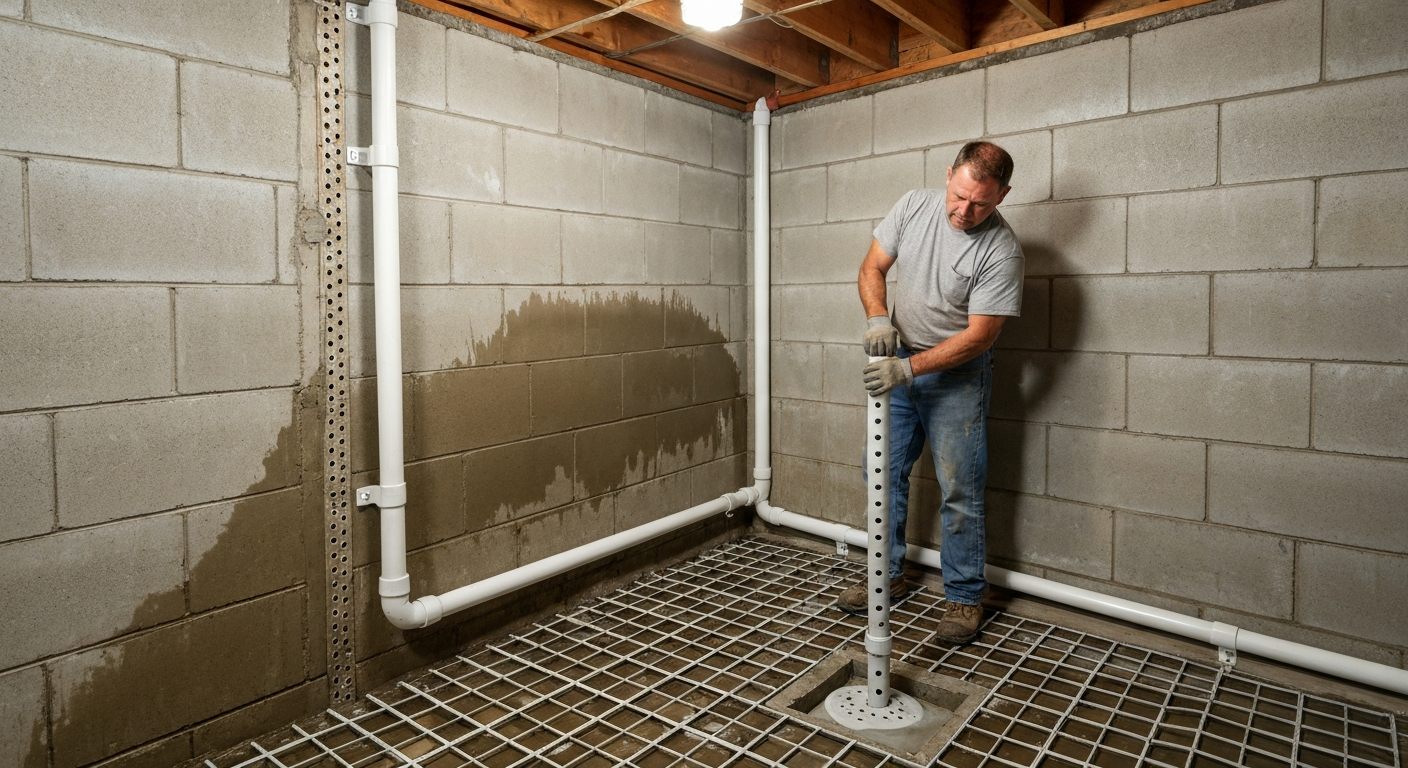
Basement waterproofing options and costs in Jasper
Jasper, Alberta, has a lot of appeal—but when seasonal meltwater and freeze–thaw cycles drive groundwater toward older basements, waterproofing becomes a must-do. In Jasper, many homes are older: 57.9% of dwellings were built before 1981, which means a higher chance the original tar-and-paper style waterproofing and/or early weeping tile systems are now failing. Homeownership is also common, with 845 homeowner households (Statistics Canada, 2021 Census), so many projects start as planned “keep the basement dry” upgrades rather than emergency repairs.
In the Banff–Jasper–Rocky Mountain House corridor, costs are shaped by mountain/foothill soils and difficult winter scheduling. Excavation is often more labour-heavy due to rocky substrate and short construction seasons, so exterior work typically sits closer to the upper end of the price range. Interior approaches can be more available because they focus on interior drainage and pump retrofits, but they still depend on how much crack sealing, tie-ins, and discharge routing are required. Contractor availability can also tighten around peak spring melt, when multiple basements are experiencing seepage at the same time—especially in areas along the Athabasca Valley and older neighbourhoods where drainage is marginal.
If you’re seeing recurring wet patches in the basement of homes near downtown Jasper (common in older blocks and where grading has shifted), compare below how each method addresses water entry versus water management. The right choice usually comes down to whether water is simply showing up after it enters, or whether it’s being driven through by hydrostatic pressure at the foundation wall.
| Method |
What It Addresses |
Disruption Level |
Durability |
Price Range |
| Exterior excavation + new membrane + drainage tile |
Primary water entry at the foundation wall; restores outer drainage path |
High (excavation, landscaping impacts) |
Long-term (typically best source control) |
$12,500–$22,000 |
| Interior perimeter drain channel + sump pit |
Captures seepage once it enters; reduces hydrostatic pressure at the floor |
Medium (floor/finishing disruption) |
Good (depends on pump sizing and discharge) |
$9,000–$18,000 |
| Foundation crack injection (epoxy or polyurethane) |
Stops or reduces crack leakage through poured concrete or block mortar joints |
Low to Medium (access to crack line) |
Good (polyurethane often for active leaks) |
$600–$2,500 |
| Sump pump installation (primary + battery backup) |
Manages collected water during high melt/seepage periods |
Low to Medium |
Good (backup improves reliability) |
$2,200–$4,000 |
| Window well drain installation |
Relieves water at window wells and prevents surface runoff from infiltrating |
Low to Medium |
Moderate to Good |
$1,200–$3,200 |
| Lot re-grading / downspout extension |
Moves roof runoff away; improves surface drainage to reduce seepage |
Low (minor landscape/grade changes) |
Moderate (best when drainage is the main issue) |
$900–$2,900 |
Prices are estimates only and vary by project scope, site access and material selection.
What affects the price of waterproofing in Jasper
In Jasper, Alberta, two quotes for the same “wet basement” problem can differ by 30% to 50% because contractors often interpret the cause differently—source control (exterior) versus symptom management (interior) and how much prep/remediation is needed before sealing. National averages don’t fully reflect the Banff–Jasper–Rocky Mountain House corridor, where excavation can be costly due to mountain/foothill soils (from coarse sand and gravel to glacial tills and clay lenses), and where short seasons compress scheduling.
The three biggest cost drivers that separate regional pricing from a national baseline are soil type, water table, and freeze–thaw. In clay-influenced soils, moisture expansion and contraction can stress foundations and widen cracks over time—meaning more crack work before a membrane system can be considered truly “finished.” In areas where the seasonal water table sits higher during spring melt, sump pumps run more often, and the drainage system needs the right size for discharge routing and tie-ins. In older housing pockets (with the 57.9% pre-1981 build profile), failing weeping tile is common, and that pushes many projects from “small patching” into full interior drainage or even exterior excavation.
For example, a straightforward interior drain channel may fall around $9,000–$18,000 when only the perimeter is affected, but it can climb toward the top end if mould removal, efflorescence remediation, and additional tie-ins are required. By contrast, exterior excavation + membrane is commonly $12,500–$22,000; it’s often justified when seepage is coming through active foundation wall defects or when the original exterior drainage is completely failed—especially in wet spring seasons when freeze–thaw keeps opening pathways.
| Price Factor |
Why It Matters |
Cost Impact |
| Interior vs. exterior approach — interior is less disruptive but addresses symptoms |
Exterior is source control; interior captures water after entry |
Exterior can add major excavation/return costs; interior often starts cheaper |
| Foundation type — poured concrete vs. block vs. stone vs. ICF |
Material affects how leaks form and what repair methods bond best |
Poured concrete crack injection may be simpler; block often needs complementary drainage |
| Soil type — clay expands more than sand, adding pressure |
Clay lenses hold moisture and stress walls more during seasonal cycles |
Higher crack repair allowance and stronger drainage/pump sizing |
| Crack type and length — hairline vs. structural horizontal cracks |
Structural cracks may require engineer input before sealing |
Structural repairs can increase scope and budget beyond typical waterproofing |
| Sump pump backup system — battery or water-powered backup needed |
Protects during power interruptions common in spring storms and outages |
Adds equipment and installation, but reduces “dry basement” failure risk |
| Access — landscaping, decks, or driveways must be removed for exterior |
Disassembly and reinstatement drive labour hours and disposal |
Exterior jobs can jump if patios, shrubs, or retaining work are in the way |
| Weeping tile age — original tile (60+ years) may be completely failed |
When the exterior drain is collapsed or clogged, interior-only fixes may not last |
May require rework of drainage routing or exterior excavation |
| Mould or efflorescence remediation required before sealing |
Sealers and membranes don’t perform well on contaminated or unstable surfaces |
Can add days and specialized materials before waterproofing installation |
Permits & regulations in Alberta
In Alberta, foundation excavation, structural crack repair, and changes to lot drainage typically require a building permit. If your plan includes installing or modifying a sump pump system that connects to storm or sanitary sewer infrastructure, you’ll need the correct municipal approval and connection method. Where structural cracking is involved—such as major step cracks in block walls, horizontal displacement, or cracks that suggest movement—an engineer’s assessment is often required to determine whether underpinning or other structural work is needed before any “waterproofing only” scope can be safely approved.
For most homeowners, the simplest way to stay compliant is to treat permitting as part of the contractor’s job documentation, not an afterthought. Here’s how you verify a Jasper contractor meets Alberta expectations:
- Request the contractor’s permit list: confirm which items are permitted work (typically excavation, foundation crack repair where structural, and drainage changes).
- Ask for their Alberta licensing details and trade scope where applicable; confirm they are eligible to perform the work they’re proposing.
- Request a certificate of liability insurance (showing current coverage and jobsite address).
- Verify WSIB/WCB clearance for the specific company performing the work (ask for the clearance letter or equivalent).
- For structural crack repairs, confirm whether they provide engineering support or coordinate directly with an engineer.
- Get the permit/inspection responsibility clearly stated in writing (who files, who schedules, what’s included).
If a contractor says permits “aren’t needed” without reviewing crack type, drainage changes, and foundation conditions, slow down—proper documentation helps protect both the structure and your investment.
Interior vs exterior waterproofing — what does Jasper need?
Jasper basements usually leak for two reasons: water is reaching the foundation, and then it finds a pathway—cracks, failing weeping tile, or weak points around windows. The fundamental difference is that exterior waterproofing permanently addresses the source by excavating around the foundation, applying a proper membrane, installing new drainage tile, and restoring backfill and grading. It’s the more expensive and disruptive route, but when the original exterior drainage is failing, it’s the most complete solution.
Interior waterproofing (perimeter drain channel, sump pit, and sump pump) manages water after it enters. It reduces the likelihood of standing water and can protect finished spaces, but it doesn’t remove the hydrostatic pressure against the foundation wall. In Jasper’s climate—high snowpack, rapid spring melt, and freeze–thaw—interior systems often shine as a “reliable line of defence,” especially when exterior excavation is impractical because of access or landscape.
Choice depends on foundation type and soil/water behaviour. In poured concrete foundations, crack injection is often practical because the substrate can accept injections well, and if cracks are the primary entry pathway, you may avoid costly excavation. In block foundations, interior drainage is frequently needed as a practical complement because water can migrate through joints or mortar lines; crack injection alone may not be sufficient.
Battery backup matters in Alberta. During spring melt and storm outages, a primary sump pump can fail if the power goes out—backup helps keep the basin from overfilling. For example, a full interior system might sit around $9,000–$18,000, while adding backup and extra pump piping can move the project toward the upper portion of that band; that’s often cheaper than remediating drywall and flooring after a spring power interruption.
If you’re seeing repeated seepage in multiple walls during wet periods, an exterior approach that restores drainage can be justified because it targets water at the source—often in the $12,500–$22,000 range—rather than repeatedly managing symptoms every spring.
| Method |
Best For |
Addresses Source? |
Disruption |
Lifespan |
Price Band |
| Full exterior excavation + membrane |
Failed weeping tile, consistent seepage, need source control |
Yes |
High |
Long (often decades with correct installation) |
$12,500–$22,000 |
| Interior French drain + sump system |
Recurring seepage during spring melt; limited exterior access |
No (manages after entry) |
Medium |
Good (depends on pump capacity and discharge) |
$9,000–$18,000 |
| Crack injection — epoxy (structural) |
Stabilized, non-moving cracks in poured concrete |
Partial (seals pathway) |
Low |
Good (when cracks are stable) |
$900–$2,200 |
| Crack injection — polyurethane (active leak) |
Active seepage through cracks or mortar gaps |
Partial (seals while leak is present) |
Low |
Good (best for active pathways) |
$600–$2,500 |
| Interior drain channel only (no sump) |
Small seepage volumes where water can be controlled |
No |
Medium to Low |
Moderate |
$8,000–$12,500 |
| Re-grading + downspout extensions |
Roof runoff causing surface infiltration; early-stage wet spots |
Indirect (reduces water reaching foundation) |
Low |
Moderate (works best when drainage is the main issue) |
$900–$2,900 |
How to choose a waterproofing contractor in Jasper
Choosing the right waterproofing contractor in Jasper starts with proof. First, confirm Alberta licensing/trade eligibility where applicable, and verify liability insurance before anyone touches your basement. Ask for a certificate of insurance showing current coverage and the correct company name. Next, request WSIB/WCB clearance for the specific legal entity performing the work—don’t accept “we’re covered” without documents. If the contractor is proposing structural repair or you have horizontal/step cracking, ask how they handle engineering requirements and whether they coordinate with an engineer when needed.
Then, get 2–3 itemised written quotes rather than a single lump sum. You want a breakdown of labour and materials for each scope line item (demo, cleaning/remediation, crack injection materials, drain channel length, pump model, discharge routing, electrical tie-ins, and disposal). Make sure the scope clearly states what’s included and what’s excluded: permit pulling (if required), asbestos/mould remediation responsibility, restoration of flooring or landscaping, and whether the quote includes pump testing, discharge confirmation, and final inspection.
For warranty, ask for both workmanship and product/manufacturer coverage. Confirm the length, what conditions void coverage, and whether it’s transferable to future owners (important in a resale market). Payment schedule matters: never pay more than 10%–15% upfront; use a holdback until completion and final walkthrough. Finally, ask for a written start date and completion estimate tied to weather constraints common in spring melt.
- They perform a site assessment (crack mapping, moisture source discussion, grading review) before pricing.
- They provide an itemised scope: quantities (linear feet), not just “waterproofing system.”
- They explain whether the plan is source control (exterior) or water management (interior).
- They specify pump model, discharge path, and where the discharge goes.
- They include backup option details if requested or if spring melt risk is high.
- They state how they’ll deal with mould/efflorescence before any sealing.
- They confirm what permits (and inspections) are included vs homeowner responsibility.
- They describe disposal and restoration scope (flooring, drywall, landscape reinstatement).
- They provide warranty paperwork in writing before scheduling.
- They give a payment schedule with a holdback and milestones.
- They document pre/post conditions (photos, crack locations, moisture areas).
- They answer questions about freeze–thaw performance and how their materials handle cycling.
Red flags in Jasper: (1) a quote that ignores crack type and treats all leaks the same, (2) promising “guaranteed dry” without acknowledging seasonal freeze–thaw and water table swings, (3) refusing to provide insurance/WSIB/WCB clearance documents, (4) asking for large upfront payments, and (5) vague scopes that don’t specify drainage routing, pump capacity, or whether a backup system is included.
Frequently asked questions — waterproofing in Jasper
How do I choose a waterproofing contractor in Jasper?
In Jasper, start by matching the contractor’s approach to your likely cause, not just the symptom. Ask for a site visit and a clear plan showing whether you need source control (exterior drainage and membrane) or interior management (perimeter drain channel and sump). Get 2–3 itemised quotes and confirm quantities like drain footage and number of tie-ins. Verify Alberta coverage: request the certificate of liability insurance and a WSIB/WCB clearance letter for the company doing the work. Finally, ensure the scope includes what typically matters in winter: crack sealing strategy for freeze–thaw and discharge routing so the sump can handle spring meltwater.
What is a battery backup sump pump and do I need one in Jasper?
A battery backup sump pump keeps your basement dry if power fails, by running the pump during outages long enough for water levels to stabilize. In Jasper, power interruptions can happen during spring storms and wet-season events, so backup becomes more valuable when you get recurring seepage during rapid melt or when you have finished spaces you can’t rework every season. Many homeowners choose backup to protect against the most expensive failure mode: a sump system that can’t run when water volume peaks. Depending on scope, sump pump work is often in the $1,600–$3,500 band, while adding backup typically pushes the total higher within those ranges.
How much does basement waterproofing cost in Jasper?
Costs vary based on whether you need exterior excavation (source control) or an interior system (water management), plus the extent of crack repair and drainage tie-ins. For many Jasper basements, interior waterproofing and weeping-tile-style perimeter drainage falls around $8,000–$22,000 depending on linear footage and whether mould/efflorescence remediation is required. If you’re moving water at the foundation with exterior excavation and new drainage tile, exterior waterproofing commonly ranges from $9,000–$25,000. Because Jasper has older housing stock (many homes built before 1981), you may also need more crack injection work and pump upgrades to manage seasonal water table changes.
Interior vs exterior waterproofing — which is better?
There isn’t one universal winner; the “better” option is the one that matches where the water is entering. Exterior waterproofing is best for source control: excavation, membrane, and new drainage tile aim to stop hydrostatic pressure at the wall. It’s more disruptive and often costlier due to excavation and restoration. Interior waterproofing is best when you need a practical, less invasive barrier: perimeter drains and a sump capture water after entry. In Jasper’s freeze–thaw and spring melt conditions, interior systems often protect finished basements effectively, especially if you also address cracks with injection. If your problem is widespread seepage and you have failing original drainage, exterior can be worth the extra investment.
Why is my basement leaking in Jasper?
In Jasper, leaks usually relate to seasonal conditions: high snowpack and rapid spring melt raise the water table, feeding seepage into older foundations. Freeze–thaw can widen existing cracks, letting meltwater track into poured concrete or block walls and around penetrations. Soil type matters too—mountain/foothill areas can shift between coarse drainage and finer glacial tills/clay lenses that hold moisture and increase lateral pressure. If you have wet wall corners or a damp floor during melt, failed or undersized weeping tile and clogged drains are common causes in older homes.
How do I know if a foundation crack is serious?
Not all cracks mean structural failure, but you should treat certain patterns as higher risk in Alberta. Hairline cracks that stay the same over time may be primarily water paths that can often be addressed with crack injection. More concerning are cracks that are horizontal or show step patterns in block walls, cracks that widen seasonally, and signs of displacement near doors/windows. In Jasper’s freeze–thaw environment, widened cracks after spring melt can indicate active leakage pathways. If you have structural-type cracking, ask for an engineer assessment before sealing so repairs address movement—not just moisture.