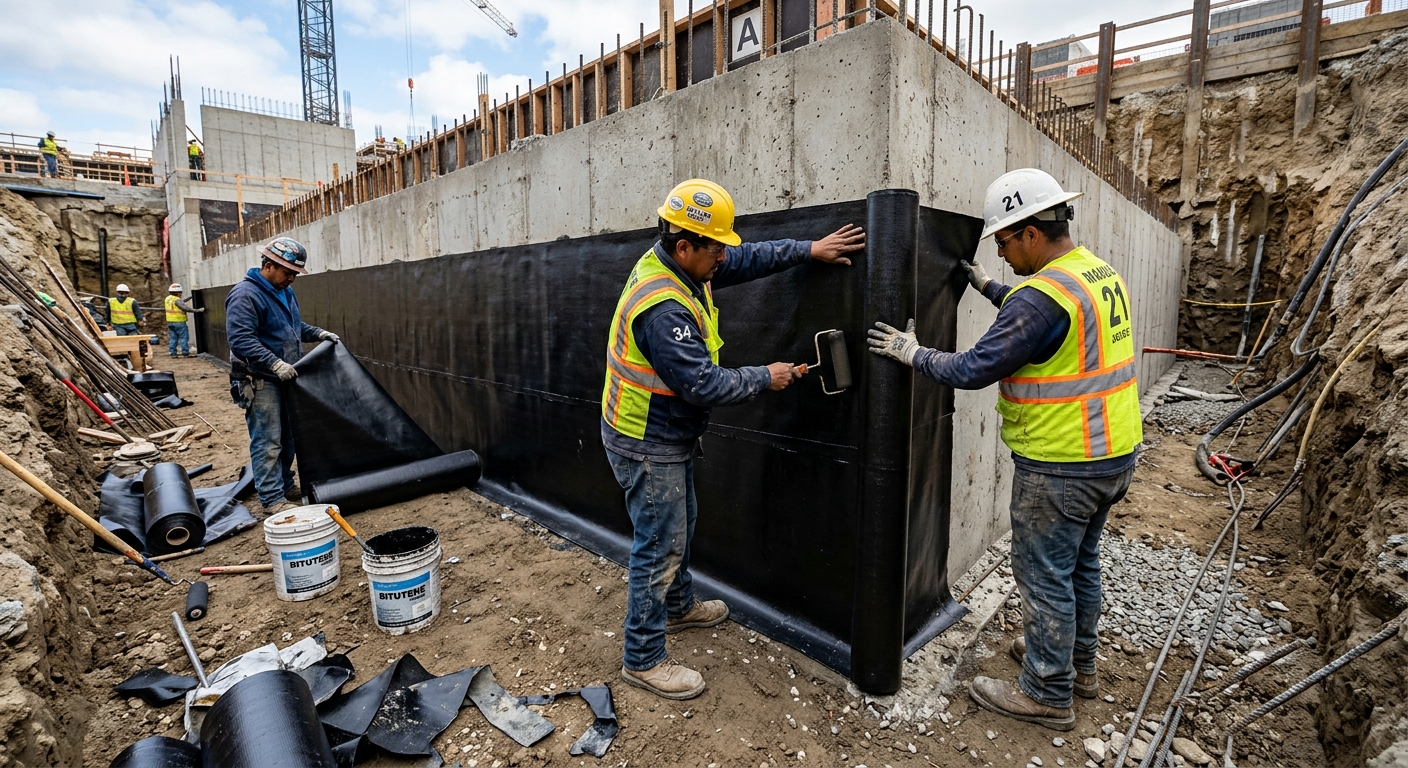
Basement waterproofing options and costs in High River
High River homeowners typically explore waterproofing options after noticing wet basements, damp corners, or salty mineral deposits that show up after spring melt. With 14,324 residents and a housing stock where 23.8% of homes were built before 1981 (Statistics Canada, 2021 Census), many older basements were originally protected with less durable systems—think early tar-and-paper membranes, older weeping tile, and patchy perimeter drainage. As clay-heavy soils hold and release moisture, the freeze–thaw swings of southern Alberta can widen joints and cracks, letting water find its way in.
In High River and the Calgary region, pricing is shaped by practical jobsite realities: narrow urban lots, concrete patios and mature landscaping that must be temporarily removed for exterior excavation, and the disposal cost of heavy clay spoil. Contractor availability can also shift in spring as crews prioritize active drainage failures from snowmelt and localized storm events along river-valley low spots. That’s why two quotes for “the same” wet-wall issue can differ meaningfully—one crew may propose a quick interior symptom fix while another prioritizes relieving hydrostatic pressure at the source.
Demand is especially high in older neighbourhoods near established commercial/industrial edges and in areas where lots are tight and backyards are landscaped—crews often see repeated failures around weeping-tile lines and basement wall joints.
Below is a practical comparison of common methods and typical cost ranges you can use to benchmark contractor proposals before you book a site visit.
| Method |
What It Addresses |
Disruption Level |
Durability |
Price Range |
| Exterior excavation + new membrane + drainage tile |
Hydrostatic pressure from the outside; water entry through the foundation and footing perimeter |
High (excavation, exterior landscaping impacts, patio/steps impacts) |
Long-term when paired with proper re-grading and functioning perimeter drain |
$9,500–$24,000 |
| Interior perimeter drain channel + sump pit |
Water that enters (intercepted and pumped away); helps with seepage through cracks and porous walls |
Medium (minor concrete cutting; limited yard impact) |
Very good for ongoing seepage if the sump and discharge are maintained |
$6,000–$14,500 |
| Foundation crack injection (epoxy or polyurethane) |
Crack seepage control; restores continuity of the wall system (product choice matters) |
Low to medium (prep/cleaning; may require localized surface opening) |
Good for stable cracks; long-term depends on crack movement and water pressure |
$600–$2,200 |
| Sump pump installation (primary + battery backup) |
Prevents basement flooding during peak melt/rain cycles; backup supports short outages |
Low to medium (cutting for sump basin; electrical work) |
High when paired with proper drainage and discharge routing |
$1,050–$3,100 |
| Window well drain installation |
Controls localized pooling and water intrusion at below-grade window openings |
Low to medium (window well access; minor landscaping) |
Good for recurring window-well wetness when kept clear of debris |
$450–$1,550 |
| Lot re-grading / downspout extension |
Moves surface water away from the foundation; reduces surcharge and water saturation |
Low to medium (yard work; sometimes minor concrete modifications) |
Moderate (relies on maintenance and proper slope) |
$650–$4,250 |
Prices are estimates only and vary by project scope, site access and material selection.
What affects the price of waterproofing in High River
In High River, the same basement waterproofing problem can land anywhere from 30–50% apart across Calgary-area quotes because crews price risk differently: excavation complexity, how much concrete must be cut, whether the contractor needs to replace failed drainage components, and how thoroughly they address water pathways instead of only symptoms. A contractor who proposes interior drainage only may quote a narrower scope, while another may include exterior membrane and drainage to stop water at the source—often the larger number reflects the larger “fix”.
Three drivers that separate regional costs from the national average are soil type, water table conditions, and freeze–thaw. Clay-heavy soils typical of the Prairies can expand when saturated, increasing lateral pressure and making cracks worsen over time; that pressure can also reduce the long-term effectiveness of crack injection alone if water is still reaching the wall. Seasonal groundwater and storm events can raise sump pump run times, which is why High River jobs sometimes require bigger discharge lines, better backfill compaction, and reliable battery backup. Freeze–thaw then turns small pathways into bigger leaks by widening joints and stressing weak points.
Concrete examples in High River: (1) if a basement shows wall seepage during spring melt and the foundation is tied to a tight backyard with a patio, exterior excavation may jump into the exterior band of roughly $9,500–$24,000 because access and disposal add real labour. (2) if the issue is localized dampness and salts around one wall, interior perimeter drainage plus a sump often fits the interior band of roughly $6,000–$14,500, especially when the weeping tile is partly functioning and the crack is not structural. (3) when homes are older (23.8% built before 1981), original drainage components are more likely to be failed or clogged, which increases the likelihood of added excavation or additional interior interception.
| Price Factor |
Why It Matters |
Cost Impact |
| Interior vs. exterior approach — interior is less disruptive but addresses symptoms |
Interior systems manage water after entry; exterior systems relieve water pressure at the foundation. |
Interior typically $3,000–$10,000 less than full exterior excavation, but may require longer-term maintenance. |
| Foundation type — poured concrete vs. block vs. stone vs. ICF |
Crack behaviour and leak pathways differ; block often needs interior drainage as a practical complement. |
Poured concrete may reduce crack-related labour; block and mixed foundations can add inspections, patching, and drainage work. |
| Soil type — clay expands more than sand, adding pressure |
Clay saturation increases lateral pressure on walls and footing edges. |
Higher likelihood of requiring exterior membrane and full perimeter drainage in more severe cases. |
| Crack type and length — hairline vs. structural horizontal cracks |
Structural cracks may need engineering/underpinning considerations; hairline cracks often suit injection. |
Minor crack injection can stay in the lower hundreds to low-thousands; structural repairs can add thousands. |
| Sump pump backup system — battery or water-powered backup needed |
Backup reduces flood risk during power interruptions around spring events. |
Typically adds roughly $300–$1,200 to the sump scope depending on system choice. |
| Access — landscaping, decks, or driveways must be removed for exterior |
More demolition/disposal and more time to excavate and restore. |
Can add thousands, especially where excavation is deeper or access is constrained by lot lines. |
| Weeping tile age — original tile (60+ years) may be completely failed |
Old tile frequently clogs or breaks, causing perched water around the foundation. |
Replacement turns a “repair” into a fuller drain build-out. |
| Mould or efflorescence remediation required before sealing |
Sealing over contamination can trap moisture and worsen indoor conditions. |
Often adds several hundred to a couple thousand depending on the extent of affected areas. |
Permits & regulations in Alberta
In Alberta, foundation excavation, structural crack repair, and changes to lot drainage typically require a building permit. For example, if a contractor is removing a section of foundation to install or repair a perimeter drainage system, that’s often treated as a permit-triggering foundation/drainage alteration. Similarly, if the scope includes modifying drainage routing, creating a new discharge path, or altering how water leaves the site, a permit may be required.
Sump pump installations may also need municipal approval—especially when the system connects to storm or sanitary sewer infrastructure. Even when you’re not “changing plumbing inside,” connecting discharge improperly can create compliance and backflow issues.
For structural crack repair—particularly horizontal cracks in block walls, major step cracking, or anything that suggests movement—an assessment by a structural engineer is often needed to determine whether underpinning or other structural work is required. A good waterproofing contractor will either have engineering support in-house or coordinate with an engineer and will clearly outline what’s structural vs. what’s water-management.
To verify a contractor in High River, start with their Alberta business licence status (the provincial licence/registration information available through online resources), then ask for a current certificate of insurance (liability coverage) and proof of WSIB/WCB coverage. For certificate checks, look for policy dates and insured operations. If the contractor handles structural work or coordinates engineer reviews, ask whether engineering documents are provided and stored as part of your project file.
Interior vs exterior waterproofing — what does High River need?
The fundamental difference is simple: exterior waterproofing addresses the source of water entry by excavating around the foundation, installing a continuous membrane, adding/repairing perimeter drainage tile, and backfilling to restore proper slope. Interior waterproofing, by contrast, manages water after it enters by creating a perimeter drain channel, installing a sump pit and sump pump, and intercepting seepage before it collects on your slab or basement floor. The exterior approach usually costs more and involves yard disruption; the interior approach is less invasive, but it doesn’t fully relieve hydrostatic pressure on the wall itself.
In High River’s clay-prone conditions and freeze–thaw cycles, exterior solutions are often preferred when there’s evidence of persistent hydrostatic pressure—think wall seepage after storms/melt, recurring efflorescence, or a history of failed weeping tile. Poured concrete walls can respond well to a combination of crack injection and a well-designed exterior drainage plan; block foundations frequently benefit from interior drainage as a practical complement because water pathways through block and mortar joints can keep reappearing unless interception is reliable.
Sump pump backup systems are a smart add in Alberta spring seasons. If power drops during flooding or heavy snowmelt, backup reduces the chance of water rising faster than a single pump can keep up.
Here’s a typical budgeting example: if you have widespread exterior seepage and access is straightforward, exterior waterproofing may land around $9,500–$24,000. If the same home has only localized seepage at one wall segment and the rest of the perimeter is stable, an interior perimeter drain plus sump may be better value at roughly $6,000–$14,500—but only if the contractor confirms the likely water pathways and discharge plan through a proper site assessment.
| Method |
Best For |
Addresses Source? |
Disruption |
Lifespan |
Price Band |
| Full exterior excavation + membrane |
Ongoing hydrostatic pressure, recurring wall seepage, older failed drainage systems |
Yes (water entry source) |
High (excavation + yard restoration) |
Long-term when drainage is continuous and re-grading is correct |
$9,500–$24,000 |
| Interior French drain + sump system |
Seepage that’s showing inside, limited exterior access, or as a complement to crack repairs |
No (intercepts after entry) |
Medium (concrete cutting) |
Very good with proper pump selection and maintenance |
$6,000–$14,500 |
| Crack injection — epoxy (structural) |
Stable cracks with no active water flow and no evidence of ongoing movement |
Partial (stops seepage through that crack, but not external pressure) |
Low to medium |
Good when the crack is truly static |
$600–$1,900 |
| Crack injection — polyurethane (active leak) |
Active leaks or non-structural movement where water is currently entering |
Partial (controls the crack pathway) |
Low to medium |
Good, but depends on whether the external water source is addressed |
$700–$2,200 |
| Interior drain channel only (no sump) |
Minor seepage or where pumping is not required (rare in true hydrostatic cases) |
No |
Medium to high (concrete cutting still needed) |
Moderate (performance depends on localized drainage success) |
$5,000–$10,500 |
| Re-grading + downspout extensions |
Surface water management; dampness tied to roof runoff and poor slope |
Partial (reduces surcharge but doesn’t stop all wall seepage) |
Low to medium |
Moderate (requires maintenance) |
$650–$4,250 |
How to choose a waterproofing contractor in High River
Start by verifying three things in Alberta: licensing/registration (where applicable for the contractor’s business activity), liability insurance, and WSIB/WCB coverage. To check liability insurance, ask for a current certificate of insurance and confirm the policy is active for your project period. For WSIB/WCB, request proof of coverage or a clearance letter (as applicable) and verify the contractor’s name matches the business on the quote. If structural repairs or engineering coordination are in the scope, ask how they ensure the engineer’s recommendations are implemented.
Next, get 2–3 itemised written quotes that separate labour and materials (membrane, drainage tile, sump components, pumps, backfill, restoration, and any concrete cutting). A proper quote should state what is included and what is excluded: permits, disposal fees for clay spoil, replacing failed weeping tile segments, discharge line routing, and whether pump backup is included. Never accept a “lump sum” without showing how the plan addresses the water pathway you’re experiencing.
Warranty matters: confirm the workmanship warranty length and whether it’s tied to maintenance (like sump pump checks). Also ask for the manufacturer’s product warranty terms and whether they’re transferable to you if you sell your home. Payment schedule should protect you—never pay more than 10–15% upfront, and use a holdback until the job is complete and cleaned up. Finally, request a start date and completion estimate in writing, including weather-related contingencies common in southern Alberta.
- Ask for an in-person inspection and photos of the foundation areas to be treated (not just a “guess” based on symptoms).
- Require a written scope that identifies the likely water pathways (weeping tile failure, wall cracks, window wells, surface runoff).
- Confirm whether exterior excavation includes disposal of heavy clay and the restoration plan for landscaping/paths.
- Check that sump pumps include a sealed basin, proper discharge routing, and a backup option if your basement is prone to melt-time flooding.
- Verify liability insurance is active and matches the legal business name on the contract.
- Verify WSIB/WCB coverage (or clearance documentation) is current and applicable to the work crews.
- Ask what happens if conditions change during excavation (unknown tile condition, deeper-than-expected footing).
- Ensure the quote includes permit pull responsibility (who pulls it, and what fees are included).
- Confirm product details: membrane type, drainage mat/tile specs, and whether backfill compaction is included.
- Ask for warranty wording in plain language, including exclusions (e.g., blocked drains, neglected sump maintenance).
- Request schedule clarity: when temporary protection will be installed if excavation is started near heavy rain/snowmelt.
- Use a holdback until final walkthrough and documentation (photos before/after, pump test, discharge verification).
Red flags in High River: (1) contractors who avoid discussing exterior drainage/discharge routing but propose only interior fixes; (2) no mention of backup pumping for sump systems in spring melt scenarios; (3) vague warranties without workmanship terms; (4) refusing to provide certificate of insurance and WSIB/WCB proof; and (5) quoting without addressing failed weeping tile risk in older homes (especially those built before 1981).
Frequently asked questions — waterproofing in High River
How long does basement waterproofing take in High River?
In High River, typical timelines depend on whether the contractor is doing exterior excavation or interior work. Interior perimeter drains and sump installations often take about 3 to 7 working days, largely driven by concrete cutting, drain routing, and electrical/pump commissioning. Exterior waterproofing usually takes longer—commonly 7 to 14 working days—because excavation must be completed safely, membranes installed, drainage tile checked, and then backfilled and restored. In southern Alberta, crews also factor weather: spring melt and heavy rain can delay excavation or backfill scheduling. If your home is from the pre-1981 era (Statistics Canada, 2021 Census profile: 23.8% built before 1981), the scope can expand if original weeping tile is found failed. Always confirm start/completion dates in writing.
What is a weeping tile and does my High River home have one?
Weeping tile is the perimeter drain system installed around a foundation to collect infiltrating water and route it away from the basement area. Older homes in High River (many from earlier construction) often have a version of weeping tile, but it may be clogged, broken, or disconnected—especially with clay soils that expand and keep pressure on the foundation edges. Since 23.8% of homes in your local profile were built before 1981 (Statistics Canada, 2021 Census), it’s common to see aged drainage components. A contractor can usually confirm presence and condition during an inspection, and if excavation is done (exterior jobs), the tile connections and flow can be directly assessed. If you’re seeing efflorescence or recurring seepage, the weeping tile’s performance is often the first thing we test in the plan.
Can I waterproof my basement in winter in High River?
You can waterproof in winter in Alberta, but it depends on the method and site conditions. Interior work (like perimeter drain channels, sump pits, and crack injection) is often feasible when weather limits exterior excavation—interior concrete cutting and injection still depend on keeping surfaces workable and controlling dust. Exterior membrane work is more constrained: excavation in freeze conditions can be slow and unsafe, and backfilling/compaction quality matters a lot for drainage performance after freeze–thaw. In High River, if you have active leaks, addressing them quickly with interior drainage or targeted crack injection can prevent freeze-related worsening. If your scope is in the interior band (for example, interior drainage and sump often sits around $6,000–$14,500), winter scheduling is sometimes practical. However, exterior solutions typically perform best when excavation and backfill can be done under suitable conditions.
What is the difference between waterproofing and damp-proofing?
Damp-proofing generally means protecting against minor moisture, while waterproofing is intended to control water under pressure—especially when soil stays saturated and freeze–thaw cycles push water into joints and cracks. In High River, dampness can become a recurring “water entry” problem because clay soils hold moisture and the foundation is stressed by seasonal freeze–thaw. Waterproofing approaches like exterior membranes with functioning drainage tile or interior perimeter drains and sumps are designed to intercept and manage water that reaches the basement envelope. A damp-proofing coating alone may not handle hydrostatic pressure after heavy spring melt or during localized storm events. If you’re budgeting, a sump-based interior system often falls within ranges like $6,000–$14,500, while exterior excavation and membrane solutions are typically higher (often $9,500–$24,000) because they address the water source and pathway more comprehensively.
Will basement waterproofing affect my property value in High River?
Usually, yes—especially when the work is properly scoped and documented. A dry, stable basement reduces risk factors that buyers worry about: recurring moisture, odours, visible efflorescence, and the cost of reactive repairs. In High River’s market, where many homes were built in earlier decades (23.8% built before 1981, Statistics Canada, 2021 Census), proactive waterproofing can be a tangible improvement because older drainage systems are more likely to have failed. That said, value impact depends on matching the method to the cause. Exterior waterproofing (full excavation, membrane, drainage tile) can be particularly compelling when hydrostatic pressure is the driver; interior-only solutions can still add value when properly installed with a reliable sump and discharge plan. Keep paperwork: warranties, pump test documentation, and before/after photos help show transparency. A professional contractor should also explain what water pathways were addressed, not just what was installed.
What drainage issues are most common in High River homes?
The most common issues tend to be perimeter drainage failures and crack/joint water entry amplified by Alberta freeze–thaw. In High River, homeowners often notice seepage during spring melt, damp corners near foundation walls, and mineral deposits (efflorescence) that indicate water migration through masonry or concrete pores/cracks. We also commonly see clogged or failing weeping tile, improper downspout routing, and down-grading of soil around the foundation after landscaping changes. In older neighbourhood areas and older homes, aging drainage can create localized hydrostatic pressure. If the basement is equipped with a sump, the pump may be undersized or missing backup, causing higher risk during power interruptions. When the solution matches the pathway—like interior perimeter drains with sump coverage or exterior membrane plus drainage tile—the basement usually becomes more consistent through the shoulder seasons.