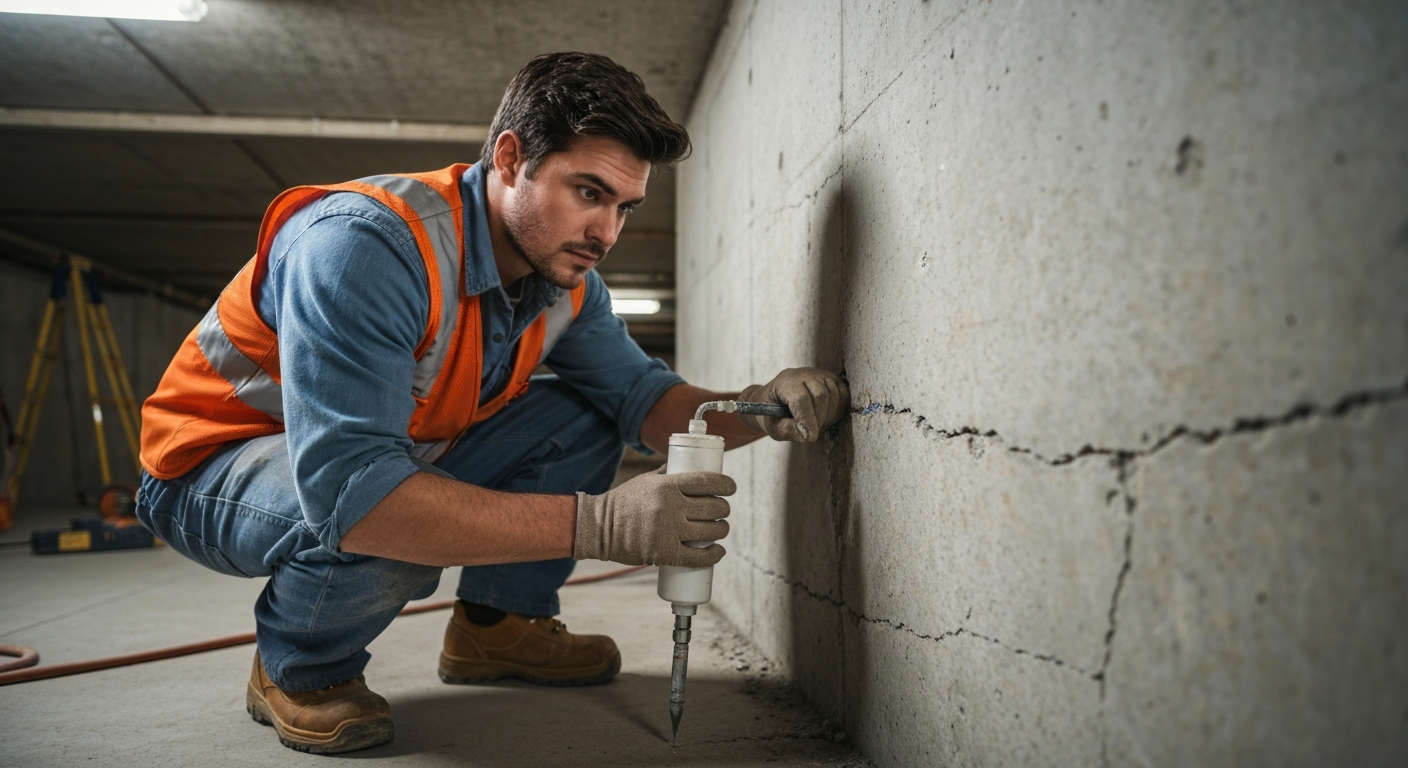
Basement waterproofing options and costs in Fort Saskatchewan
Fort Saskatchewan homeowners often face basement dampness or seepage because the surrounding Edmonton-area soils and water behaviour push water toward foundations during wet periods, then stress them through Alberta’s freeze–thaw cycles. With 27,088 people in the city (Statistics Canada, 2021 Census), there’s steady demand for foundation and drainage work, particularly in resale homes. The timing also matters: 31.2% of homes were built before 1981 (Statistics Canada, 2021 Census), and that housing stock is much more likely to have aged or partially failed original waterproofing systems, including weeping tile that’s older than many modern drainage designs.
In the Edmonton region, contractor availability and pricing are shaped by the need to manage hydrostatic pressure and discharge groundwater reliably. Excavation projects tend to be higher because excavation in clay-rich ground can be slow and messy, and backfill has to be compacted properly to avoid creating new settlement or drainage weak spots. Interior solutions cost less and are faster to schedule, but they primarily manage water after it reaches the foundation—so they’re best when the goal is to control seepage while reducing wall dampness, not to fully eliminate the source.
In Fort Saskatchewan, this trade is especially busy in older neighbourhoods with larger mature lots and established landscaping where exterior access is limited—often around the older residential pockets near the downtown/industrial transition areas. If you’re comparing options for a damp basement floor edge, wall stains, or recurring spring leaks, start with the table below to match the right approach to the problem and your expected disruption.
| Method |
What It Addresses |
Disruption Level |
Durability |
Price Range |
| Exterior excavation + new membrane + drainage tile |
Stops water entry by replacing below-grade waterproofing and redirecting groundwater to a proper discharge line |
High (excavation, landscaping restoration, drying time) |
High (source control when installed correctly) |
$12,000–$25,000 |
| Interior perimeter drain channel + sump pit |
Captures seepage that reaches the wall/floor and pumps it away to a discharge route |
Medium (floor cutting, perimeter channel, patching) |
Medium to high (depends on discharge reliability and maintenance) |
$8,000–$18,000 |
| Foundation crack injection (epoxy or polyurethane) |
Seals leaks—epoxy for structural crack sealing and polyurethane for active moisture routes |
Low to medium (drilling/patching) |
Medium to high (best when matched to crack type) |
$600–$2,500 |
| Sump pump installation (primary + battery backup) |
Prevents water accumulation and reduces freeze risk at the perimeter |
Low to medium (pit work, piping, some electrical) |
High when backup is included |
$1,800–$3,800 |
| Window well drain installation |
Diverts water away from below-grade window areas to reduce dampness and seepage |
Medium (excavation around windows, grating/cover adjustments) |
Medium to high (if weeping/drainage is maintained) |
$1,500–$4,500 |
| Lot re-grading / downspout extension |
Reduces surface water flow toward foundation; improves roof runoff routing |
Low (spot excavation/landscaping changes) |
Low to medium (must be maintained; not a full hydrostatic solution) |
$900–$3,000 |
Prices are estimates only and vary by project scope, site access and material selection.
What affects the price of waterproofing in Fort Saskatchewan
Even when two contractors quote the “same” waterproofing job in Fort Saskatchewan, the total can swing by 30–50% because the scope is rarely identical. One crew may address only visible dampness, while another designs for clay-saturated backfill, poor drainage routes, and long-term freeze–thaw crack movement. In Edmonton-area work, that difference shows up quickly—labour time, excavation method, discharge plumbing, and how much restoration is included can all change the effective cost.
The three biggest regional drivers that separate Edmonton-area costs from a national average are soil type, water table conditions, and freeze–thaw. Clay-rich and silty soils hold water and drain slowly; when saturated they can expand and exert lateral pressure, widening foundation cracks over time. Higher local water exposure means sump pumps may run more often, requiring additional discharge piping and a more reliable backup approach. Freeze–thaw cycles then turn small seepage into active leaks by pushing water through joints each spring and winter.
Concrete examples from Fort Saskatchewan homeowners: if your basement floor edge is damp after spring melt, adding or replacing interior drainage commonly lands in the $8,000–$18,000 band because the perimeter drain channel, sump pit, and pump discharge piping must be installed and tied in correctly. If you have sustained seepage with exterior evidence (efflorescence at a wall line, saturated soil near the foundation, or failed original weeping tile), exterior excavation often comes into the $12,000–$25,000 range because it provides source control with a new membrane and drainage tile.
Finally, older housing stock (including many pre-1981 foundations) increases the chances you’ll encounter failed weeping tile, clogged or undersized drainage, and aged mortar/crack conditions—those surprises increase labour, disposal, and material choices in the quote.
| Price Factor |
Why It Matters |
Cost Impact |
| Interior vs. exterior approach — interior is less disruptive but addresses symptoms |
Interior systems manage water after it arrives; exterior aims to prevent water from reaching the wall |
Interior often cheaper by a material margin; exterior can be 1.5–3x due to excavation and restoration |
| Foundation type — poured concrete vs. block vs. stone vs. ICF |
Porosity, joint behaviour, and crack patterns determine the best sealant and drainage design |
Different labour/time for prep and crack mapping; block and stone frequently require interior drainage complements |
| Soil type — clay expands more than sand, adding pressure |
Clay saturation increases hydrostatic pressure on walls and pushes water through minor defects |
May increase need for exterior drainage design or more robust interior capture |
| Crack type and length — hairline vs. structural horizontal cracks |
Active/leaking cracks need the right injection chemistry and prep to prevent re-leaks |
Structural or longer cracks increase labour, materials, and sometimes engineer assessment |
| Sump pump backup system — battery or water-powered backup needed |
Fort Saskatchewan spring and outage conditions make backup more than optional |
Backup typically adds a few thousand dollars depending on the system |
| Access — landscaping, decks, or driveways must be removed for exterior |
Restoration scope expands when excavation affects patios, steps, fences, or mature shrubs |
Can add significant labour and material costs; often the biggest swing factor in exterior quotes |
| Weeping tile age — original tile (60+ years) may be completely failed |
Older drainage systems are commonly clogged or disconnected |
May trigger full drainage replacement rather than spot fixes |
| Mould or efflorescence remediation required before sealing |
Sealers and membranes don’t perform as intended over uncontrolled moisture and contaminants |
Additional cleaning, containment, and drying time before waterproofing increases overall budget |
Permits & regulations in Alberta
In Alberta, certain foundation-related work typically requires a building permit, especially when the work affects structural performance or involves excavation and drainage changes. Homeowners in Fort Saskatchewan should plan for permits when undertaking foundation excavation, structural crack repair, and alterations to lot drainage that change how water flows toward or away from the foundation. If you’re installing a sump pump and connecting discharge lines to municipal storm or sanitary systems, municipal approval is commonly required to ensure routing is permitted and safe.
For structural crack repair—particularly horizontal cracks in block walls, major step cracks, or any crack pattern that suggests movement—an assessment by a structural engineer is often required to confirm whether underpinning or additional structural remediation is needed. That’s also where you want contractor support in your file: the better contractors coordinate engineer involvement when required, and they carry liability coverage and workers’ compensation coverage for their crew (WSIB/WCB).
Step-by-step verification you can do before signing: (1) ask the contractor for their Alberta business licence information and any applicable trade registrations; (2) request a current certificate of insurance (liability) and check the coverage dates and project name/address; (3) confirm workers’ compensation coverage and ask for proof; (4) request who will pull the permit, what permit number applies, and whether it’s included in your quoted price; (5) if structural repairs are involved, ask whether they will include engineering coordination in writing.
If they can’t provide documentation promptly—or if the scope avoids permits without explaining why—treat that as a warning sign.
Interior vs exterior waterproofing — what does Fort Saskatchewan need?
The fundamental difference is how each approach deals with the water. Exterior waterproofing requires full excavation and rebuilding the below-grade system: membrane, new drainage tile, proper backfill, and restored grading. When designed and installed correctly, it addresses the water’s source of entry by reducing hydrostatic pressure against the wall. The trade-off is cost and landscape disruption. Interior waterproofing (perimeter drain channel, sump pit, sump pump) manages water after it reaches the basement—capturing it and pumping it away. It’s typically less invasive, but it doesn’t remove hydrostatic pressure from the foundation wall itself.
In Fort Saskatchewan’s Edmonton-area climate, you often see interior solutions succeed as a practical control method when the primary symptom is floor edge seepage, periodic wall dampness, or recurring spring water intrusion. For many poured-concrete basements, crack injection and interior drainage together can be very effective because poured walls generally seal well when the crack pathway is properly treated—especially with the right injection product. For block foundations, interior drainage is frequently the complement that makes the system reliable because block joints and mortar can hold water more readily.
Because Alberta winters widen cracks and joints, a sump pump system should be planned with reliability in mind. Adding a backup (battery or water-powered) can reduce the risk of water rising during outages, which matters when spring melt and freeze cycles overlap.
Price-wise, exterior waterproofing often makes sense when you’re already losing the battle: heavy efflorescence, consistent wall wetting, or evidence of failed weeping tile. Interior-only approaches can be justified when the issue is localized and manageable—such as a perimeter seepage line—where costs often start in the $8,000–$18,000 range. Exterior projects commonly reach $12,000–$25,000 because they’re designed to stop water at the source, not just pump it away.
| Method |
Best For |
Addresses Source? |
Disruption |
Lifespan |
Price Band |
| Full exterior excavation + membrane |
Active seepage with signs of high hydrostatic pressure, failed exterior drainage, or repeated interior water issues |
Yes (source control) |
High |
Long (many years with proper backfill and discharge) |
$12,000–$25,000 |
| Interior French drain + sump system |
Floor edge seepage, dampness after spring melt, or homes where exterior access is limited |
No (water management after entry) |
Medium |
Medium to long (depends on pump reliability and discharge) |
$8,000–$18,000 |
| Crack injection — epoxy (structural) |
Non-moving structural cracks in poured concrete where moisture is limited |
No (seals crack pathway; not a full hydrostatic fix) |
Low to medium |
Medium to long when crack movement is ruled out |
$600–$2,500 |
| Crack injection — polyurethane (active leak) |
Active leaks where water is currently tracking through cracks or joints |
No (treats the leak path; not the exterior source) |
Low to medium |
Medium (often paired with drainage for best performance) |
$700–$2,800 |
| Interior drain channel only (no sump) |
Light dampness or intermittent seepage where gravity drainage is adequate |
No |
Medium |
Short to medium (limited by gravity discharge and freeze risk) |
$6,000–$12,000 |
| Re-grading + downspout extensions |
Surface runoff issues (e.g., water pooling near foundation, roof discharge aimed at walls) |
Partially (reduces water load on the wall) |
Low |
Medium (requires maintenance and proper site drainage) |
$900–$3,000 |
How to choose a waterproofing contractor in Fort Saskatchewan
Start by verifying the contractor’s Alberta compliance. Ask for a current certificate of liability insurance (confirm coverage dates and that it includes your project address), and request proof of workers’ compensation coverage (WSIB/WCB). If they’re doing any work that involves engineering input (typical for structural crack patterns), ask whether they have a process for coordinating an engineer when needed. You should also confirm the contractor can pull permits where required, or clearly explain who is responsible for what.
Next, get 2–3 itemised written quotes. The best quotes separate labour and materials (membrane type, drainage tile, pump model, backup system, disposal, backfill compaction method, and restoration items). Avoid “lump sum only” proposals unless the scope is fully documented. Read exclusions carefully: ask whether permit pulling is included, whether waste disposal is included, how many feet/metres of drainage tile are included, and what happens if weeping tile is found failed beyond the suspected area.
Warranty matters. Look for a workmanship warranty length and a clear product/manufacturer warranty. Confirm whether warranties are transferable if you sell the house, and ensure the documentation is provided at completion. Payment schedules should protect you: never pay more than about 10–15% upfront, and use a holdback until punch-list items are completed and the final clean-up is done. Finally, request a start date and completion timeline in writing so you have a measurable plan.
- Ask for a site-specific written waterproofing plan, not just a generic “we’ll waterproof the basement.”
- Confirm whether the contractor designs around soil saturation and freeze–thaw, not only visible cracks.
- Require an itemised breakdown: excavation/disposal, membrane, drainage tile, sump components, and electrical/piping.
- Ask which sump pump is being installed and whether battery or water-powered backup is included.
- Verify pump discharge route (and backups) before work begins.
- Confirm compaction specs for backfill if exterior work is proposed.
- Ensure the quote lists restoration items (grading, topsoil, sod/seeding, patio/step reinstatement if applicable).
- Check warranty terms in writing: workmanship coverage and product warranty documentation.
- Confirm permit responsibility: who pulls it, what it covers, and whether fees are included.
- Request proof of insurance and WSIB/WCB coverage before signing.
- Keep a copy of the contractor’s clearance/coverage proof and insurance certificate for your records.
- Agree on a payment schedule with a holdback and a written completion/punch-list process.
Red flags in Fort Saskatchewan: (1) they won’t provide an itemised scope or they can’t explain what’s included in the discharge route; (2) they recommend sealing cracks without testing whether the crack is active—especially when water is present; (3) they dismiss permits or can’t say who handles them; (4) they ask for large upfront payments; and (5) they provide no warranty details in writing or can’t produce insurance/WSIB/WCB documentation.
Frequently asked questions — waterproofing in Fort Saskatchewan
Do I need a sump pump in Fort Saskatchewan?
Many Fort Saskatchewan homes benefit from a sump pump when you have recurring seepage after spring melt, a damp floor perimeter, or any sign that water is collecting against the foundation. Alberta’s freeze–thaw cycles can worsen small leaks by forcing water through cracks during thaw periods, then expanding it when temperatures drop again. If your basement shows active moisture, a sump system typically becomes the practical control method—often starting around about $1,800–$3,800 for the pump installation, with higher totals when you include a complete interior drainage setup and a reliable backup. If the issue is mostly surface runoff, re-grading and downspout extensions may help, but a sump is usually required when water is truly migrating to the foundation.
How does Fort Saskatchewan's soil affect my foundation?
Fort Saskatchewan sits within the Edmonton-area pattern where clay-rich and silty soils can hold water and drain slowly. When soils stay saturated, they can expand and exert lateral pressure on foundation walls, which can widen cracks over time—especially through winter freeze–thaw cycles. That soil behaviour also makes original weeping tile performance more critical; older drainage can become clogged or undersized, leaving water no efficient path away from the foundation. Homes built before 1981 are more likely to have aging drainage systems, and with 31.2% of local housing stock pre-1981 (Statistics Canada, 2021 Census), you’ll see this theme frequently in resale basements. Depending on whether your foundation is poured concrete or block, the recommended solution may be interior drainage, crack injection, or—when source control is needed—exterior excavation and new drainage tile.
Do I need a permit for foundation work in Alberta?
In Alberta, permit requirements often depend on the type of foundation work and whether you’re changing structural performance or lot drainage. In Fort Saskatchewan, foundation excavation, structural crack repair, and changes to lot drainage commonly require a building permit. If your sump pump discharge connects into storm or sanitary lines, municipal approval is usually required to ensure proper routing. For major crack patterns that may indicate movement (e.g., horizontal cracks in block walls), an assessment by a structural engineer may be needed before proceeding. Before hiring, confirm with the contractor who will pull the permit and whether the permit is included in the quote. Also verify the contractor carries liability insurance and WSIB/WCB coverage so you’re protected during permitted work.
How long does waterproofing last?
How long waterproofing lasts depends on whether you’re treating the source of water entry or only managing water after it reaches the basement. Exterior waterproofing (with proper membrane, new drainage tile, and correctly compacted backfill) is typically designed for long-term performance in Alberta’s conditions. Interior perimeter drains and sump systems are very effective at controlling seepage but depend on pump reliability, discharge routing, and whether the source hydrostatic pressure remains high. Crack injection lifespan also varies: sealing that’s matched to the crack type and activity (epoxy versus polyurethane) performs better. In Fort Saskatchewan basements, many homeowners report needing upgrades when older weeping tile fails or when freeze–thaw cycles re-activate minor pathways. If you’re budgeting, the common bands reflect this: interior drainage often lands in the $8,000–$18,000 range, while exterior source control more commonly sits in the $12,000–$25,000 band.
Can I waterproof my basement from the inside only?
Often, yes—especially when your main symptoms are floor edge seepage, dampness after spring melt, or localized wall staining. Interior waterproofing in Fort Saskatchewan typically involves a perimeter drain channel and sump pit/pump to capture water that reaches the foundation, then discharge it away. This approach is less disruptive and can be a strong solution where exterior access is limited by landscaping, decks, or driveways. However, interior work does not fully eliminate hydrostatic pressure against the wall itself, so it’s best when paired with proper crack treatment (if needed) and when the discharge system is reliable. For many homeowners, the interior approach is the right first step, but if exterior signs suggest consistently high water load—such as widespread wall efflorescence or repeated saturation—source-control excavation may be the more durable choice.
What causes foundation cracks in Fort Saskatchewan?
In Fort Saskatchewan and the broader Edmonton area, foundation cracks are often driven by soil moisture changes and freeze–thaw movement. Clay-rich soils can expand when saturated and shrink as they dry, increasing stress on foundations. Winter thawing can allow water into joints and cracks, then refreeze it—widening pathways and turning hairline cracks into more active leaks over time. Settlement differences can also contribute, particularly in infill lots or areas with less consistent compaction around the foundation. Homes built before 1981 are more likely to have drainage systems that no longer control water effectively (Statistics Canada, 2021 Census). If you’re seeing step cracks in block walls or horizontal cracking patterns, you should treat it as a potential structural concern—get an assessment and match the waterproofing solution to whether the crack is stable or active.