Basement waterproofing options and costs in Blackfalds
In Blackfalds, basement waterproofing decisions usually start with a simple question: is the water getting in from the outside (around the footing and perimeter), or is it only showing up inside after it has already made its way through? With 10.1% of homes built before 1981 in the local housing stock (Statistics Canada, 2021 Census), many older foundations in the area are also more likely to have original tar-and-paper style systems and weeping tile that are past their service life. That matters because older perimeter drainage failures can lead to recurring seepage, damp block walls, and efflorescence—then freeze-thaw cycles widen hairline cracks over time.
Costs in the Red Deer region are shaped by variable glacial and till-derived soils with localized clay content. Clay-heavy areas hold water longer, increase lateral pressure on foundation walls, and make exterior excavation more disruptive because the ground tends to “hold” and re-pack differently. At the same time, contractor availability and access constraints in Blackfalds (especially near driveways and landscaped rear yards off 11–16 Avenue and the newer subdivisions south of the Red Deer corridor) can push labour time and equipment days up quickly. For that reason, two homes that look similar on paper can land far apart on price, especially when weeping tile replacement or groundwater management is required.
Below are the common waterproofing methods homeowners choose in Blackfalds and how they typically compare in disruption and expected lifespan. Use this table as a starting point before you request itemised quotes.
| Method |
What It Addresses |
Disruption Level |
Durability |
Price Range |
| Exterior excavation + new membrane + drainage tile |
Primary water source at footing; re-establishes perimeter drainage and relieves hydrostatic pressure |
High (excavation, backfill, landscape restoration) |
Long-term when drainage is properly installed and backfilled |
$10,000–$22,000 |
| Interior perimeter drain channel + sump pit |
Manages water after entry; reduces seepage and keeps walls/damaged areas drier |
Medium (partial floor/footing work, limited excavation) |
Strong for recurring seepage when sump sizing matches water conditions |
$6,000–$12,000 |
| Foundation crack injection (epoxy or polyurethane) |
Closes cracks and controls seepage pathways (choice depends on crack type and active leakage) |
Low to Medium (surface prep and injection ports) |
High when applied to the right crack type and prepared properly |
$450–$1,800 |
| Sump pump installation (primary + battery backup) |
Removes collected groundwater during high-water periods and power interruptions |
Medium (pit/basin, piping, discharge routing) |
High when backup is included and discharge routing is correct |
$2,600–$4,500 |
| Window well drain installation |
Stops water pooling and migration near basement window wells |
Low to Medium (localized exterior access or trenching) |
Moderate to High when connected to proper drainage and graded away |
$1,200–$3,200 |
| Lot re-grading / downspout extension |
Redirects roof/ surface water away from the foundation and reduces wet soil around walls |
Low (no excavation to footing for most projects) |
Moderate (best as a complement to drainage repairs) |
$2,000–$5,500 |
Prices are estimates only and vary by project scope, site access and material selection.
What affects the price of waterproofing in Blackfalds
In Blackfalds and across the Red Deer region, quotes for the “same” basement problem can vary by 30–50% because waterproofing is heavily site-specific. Two key items drive most swings: (1) whether contractors must manage water at the footing (often exterior excavation) or only after it enters (interior drainage), and (2) the amount of excavation, clay handling, and groundwater work required to install a reliable perimeter system.
Three local drivers separate regional costs from the national average. First is soil type: heavier clay holds water longer and increases lateral pressure on foundation walls, which tends to worsen cracks over time and can increase the number of labour hours spent prepping and sealing. Second is water-table conditions: when groundwater movement changes seasonally, a sump pump may run more often and may need a larger basin, correct discharge routing, and sometimes a battery backup. Third is freeze-thaw stress: in central Alberta winters, small weaknesses expand, so failed joints and cracks often show up or become active after repeated cycles. For contrast, other regions may have different rainfall patterns—coastal climates can saturate backfill quickly when original drainage fails, while other areas experience different freeze timing.
Here are examples that commonly raise or lower cost in Blackfalds. If excavation must remove mature landscaping, hardscaping, or a tight driveway edge, exterior waterproofing priced in the $10,000–$22,000 band can climb toward the top end. If the problem is mostly interior dampness with manageable seepage, interior perimeter drainage often lands in the $3,500–$12,000 range, especially when weeping tile replacement is not required. If you’re dealing with original perimeter tile failures more common in older homes (and 10.1% of the local stock dates before 1981), expect additional assessment and sometimes deeper perimeter work even when the visible crack repair seems small. Finally, if mould or heavy efflorescence remediation is needed before sealing, prep costs increase—but it usually improves long-term results.
| Price Factor |
Why It Matters |
Cost Impact |
| Interior vs. exterior approach — interior is less disruptive but addresses symptoms |
Exterior targets the source at the footing; interior manages water after entry |
Can change total cost by roughly 40%+ depending on excavation needs |
| Foundation type — poured concrete vs. block vs. stone vs. ICF |
Crack behaviour and how water tracks differs by wall material |
May add engineering/extra prep on block or stone foundations |
| Soil type — clay expands more than sand, adding pressure |
Clay-rich backfill holds water and exerts greater lateral and hydrostatic pressure |
Higher labour for drainage board/backfill and more robust detailing |
| Crack type and length — hairline vs. structural horizontal cracks |
Structural cracks may require assessment and potential structural solutions |
Structural evaluation can increase cost and time significantly |
| Sump pump backup system — battery or water-powered backup needed |
Power outages during spring wet weather can lead to renewed flooding |
Typically increases sump scope by about $800–$1,800 depending on setup |
| Access — landscaping, decks, or driveways must be removed for exterior |
More access work means more labour days, hauling, and restoration |
Can shift an exterior job from mid-range toward the upper band |
| Weeping tile age — original tile (60+ years) may be completely failed |
Older perimeter systems may be disconnected, collapsed, or blocked |
Often requires re-installation, pushing interior-only options off the table |
| Mould or efflorescence remediation required before sealing |
Moisture must be controlled and surfaces cleaned for proper adhesion |
Usually adds prep time and materials before membrane/sealants |
Permits & regulations in Alberta
In Alberta, foundation excavation, structural crack repair, and changes to lot drainage typically require a building permit. If a project involves structural crack work—especially horizontal cracks in block walls or any condition suggesting movement—many municipalities and insurance adjusters expect documentation that a qualified party assessed the condition. In practice, a structural engineer’s assessment is often used to determine whether underpinning, supplemental reinforcement, or other structural work is necessary before sealing proceeds.
Sump pump installations can require municipal approval when the discharge connects to storm or sanitary systems. Even when discharge is to grade, contractors should confirm the routing plan complies with local requirements and doesn’t direct water toward neighbouring lots. Also note that exterior excavation and re-grading should be performed with care: you’re changing how water behaves around the foundation, which is part of the reason permits are commonly triggered.
To verify a contractor in Blackfalds step-by-step, start by confirming their Alberta licensing status where applicable for the scope (contractors should be able to provide proof). Next, ask for a current certificate of insurance showing general liability and any specific coverage tied to foundation/waterproofing work. For workplace safety, request proof of WSIB/WCB clearance. Then, for structural crack repairs, confirm they have engineering support or a documented pathway to obtain engineering when required. Finally, verify permit responsibility in the contract: who pulls the permit, what inspections are expected, and whether any excluded work affects compliance.
Interior vs exterior waterproofing — what does Blackfalds need?
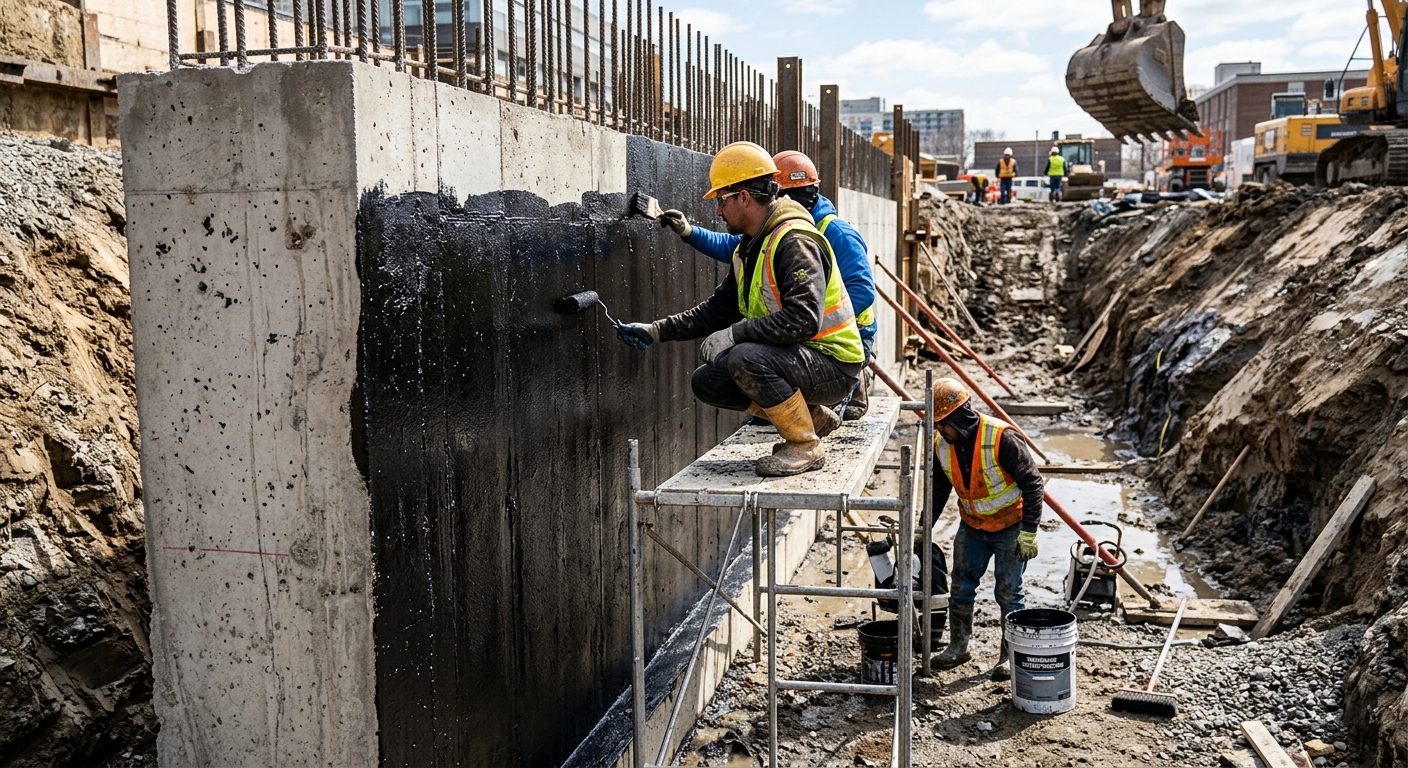
Interior and exterior waterproofing differ at the point where they stop water. Exterior waterproofing involves full excavation to the footing, new membrane, and usually new drainage tile and proper backfill. Done correctly, it addresses the source by re-establishing perimeter drainage and reducing hydrostatic pressure at the wall. It also costs more and creates more jobsite disruption because decks, fences, beds, and parts of the driveway edge often need to be temporarily removed and later restored.
Interior waterproofing—typically a perimeter drain channel and often a sump pit with a pump—manages water after it enters the basement. It’s generally less invasive, but it doesn’t stop pressure from building against the foundation wall itself. In Blackfalds, where the Red Deer region’s glacial till can include clay content that holds water, interior systems still work well for recurring seepage and dampness, but they rely on correct drain slope, proper sump sizing, and discharge routing. For poured concrete walls, crack injection and interior drainage often complement each other well because poured concrete can seal effectively when cracks are treated appropriately. For block foundations, interior drainage is commonly a practical complement, since water can travel through voids and mortar pathways even when crack sealing is performed.
Because Alberta homes can experience spring wet weather and occasional power interruptions, backup systems matter. A battery backup or other approved backup strategy reduces the risk of a sump becoming a single point of failure right when groundwater peaks.
Price-wise, think of a justified spread like this: if exterior waterproofing is likely to restore a failed perimeter system, you might accept the higher $10,000–$22,000 band. But if testing shows the water is mainly entering through localized interior pathways and crack injection plus an interior perimeter drain can address the symptoms, interior solutions often sit in the $3,500–$12,000 range—especially when we’re not replacing weeping tile.
| Method |
Best For |
Addresses Source? |
Disruption |
Lifespan |
Price Band |
| Full exterior excavation + membrane |
Recurring seepage, failed weeping tile, active groundwater conditions near footing |
Yes |
High |
Long-term when drainage board/backfill are correct |
$10,000–$22,000 |
| Interior French drain + sump system |
Interior dampness, chronic wet floors, water management after entry |
No (manages after entry) |
Medium |
Long-term with proper pump sizing and discharge |
$6,000–$12,000 |
| Crack injection — epoxy (structural) |
Non-moving, structural cracks in poured concrete where pressure can be controlled |
Partially (seals pathway) |
Low to Medium |
High when crack is stable and properly prepped |
$750–$2,000 |
| Crack injection — polyurethane (active leak) |
Cracks with active seepage that need a flexible seal |
Partially (seals pathway) |
Low to Medium |
Good for active water when matched to crack behaviour |
$450–$1,800 |
| Interior drain channel only (no sump) |
Light seepage where water can be collected and discharged by gravity or small basin |
No |
Lower than full sump projects |
Moderate (depends on local conditions) |
$3,500–$7,500 |
| Re-grading + downspout extensions |
Surface water problems and improper roof runoff around the foundation |
Reduces source contribution |
Low |
Moderate (best as a complement) |
$2,000–$5,500 |
How to choose a waterproofing contractor in Blackfalds
Choosing the right waterproofing contractor in Blackfalds starts with verifying they can legally and safely complete the work in Alberta, then confirming they’re quoting your specific problem—not a generic basement package. Ask for their current Alberta clearance and licensing information for the relevant scope. Next, request a certificate of liability insurance showing they’re covered for jobsite risk and property damage. For worker safety, obtain proof of WSIB/WCB coverage or clearance. A reputable contractor will provide documents quickly and won’t treat these as “optional extras.”
Get 2–3 itemised written quotes with a labour + materials breakdown (not just a lump sum). Itemisation should clearly cover excavation or interior floor work, membrane/drainage components, discharge piping, disposal/haul-away, and any re-grading or restoration. Pay attention to exclusions: for example, is permit pulling included, is engineering required and included where needed, and does the quote cover assessment for weeping tile condition? Also confirm warranty terms: you want a workmanship warranty length that matches your expected service life, the product manufacturer warranty for membranes/sealants, and whether warranties are transferable if you sell.
For payment, avoid heavy upfront deposits. A common safe approach is to keep upfront payments around 10–15%, then hold back a portion until the job is complete and cleaned. Finally, require a written start date and estimated completion timeline so you can plan around excavation, pump installation, and any inspections.
- Confirm they inspect drainage pathways (roof downspouts, surface grading, and wall seepage points) before quoting.
- Request proof of current general liability insurance and ask what is covered for workmanship issues.
- Verify WSIB/WCB coverage or clearance and keep a copy of it in your records.
- Ask whether they pull permits and list which permits are required for your scope in the contract.
- Require a written scope that names materials (membrane type, drainage board, pipe size) and quantities.
- Ensure the quote includes disposal/haul-away for excavated soil and debris.
- Check whether sump pump discharge routing is detailed (distance, direction, and connection method).
- Ask what happens if the weeping tile is found failed or collapsed during excavation.
- Confirm warranty: workmanship duration, product warranty duration, and whether you receive documents in writing.
- Request a site protection plan (poly protection, sealing dust control, and driveway/landscape protection).
- Plan for freeze-thaw timing: ask how the contractor sequences work so sealing isn’t left exposed.
- Agree on payment schedule with holdback until final walkthrough and punch list completion.
Red flags to watch for in Blackfalds waterproofing proposals: vague scopes with no product names, refusal to provide insurance/WSIB/WCB documents, quotes that ignore drainage at the footing when seepage appears active, no written warranty terms, and payment requests that exceed 10–15% upfront without defined milestones.
Frequently asked questions — waterproofing in Blackfalds
Do I need a sump pump in Blackfalds?
Not every wet basement needs a sump pump, but in Blackfalds (and across the Red Deer region) they’re common when groundwater collects below grade or when interior drainage alone can’t keep the floor dry during wet seasons. If you see recurring water after spring melt, dampness that returns quickly after heavy rain, or water pooling near the foundation wall line, a sump system is often the most dependable “control point.” In Alberta, power interruptions can happen during spring events, so if the job includes a sump, ask about a battery backup option as part of the plan. Sump pump installation typically falls in the $1,800–$4,500 band depending on basin size, discharge routing, and whether backup is included.
How does Blackfalds's soil affect my foundation?
Blackfalds sits in a region where glacial till and localized clay content can influence how water behaves around foundations. Clay holds water longer and can expand during freeze-thaw, which increases pressure against foundation walls and can worsen existing cracks. This is why a home may have a stable-looking crack in winter but see it become “active” after thaw periods. Soil moisture patterns also affect interior-only solutions: if water continues entering at the footing due to failed drainage, a perimeter drain and sump may work, but only if they’re sized correctly for the water conditions. Where soils are more water-retentive, exterior drainage restoration becomes more attractive because it reduces hydrostatic pressure at the wall. For older homes (10.1% built before 1981 in the local profile), original perimeter systems can be more likely to be compromised, so soil impact often shows up as repeated seepage.
Do I need a permit for foundation work in Alberta?
In Alberta, foundation excavation and changes that affect drainage or structural elements commonly require a building permit. For typical waterproofing projects, the permit need depends on the scope: exterior excavation near the footing, re-grading/lot drainage changes, and structural crack repairs usually trigger permit requirements. Sump pump installations that connect discharge to storm or sanitary systems often require municipal approval as well. For structural cracks—like major horizontal cracks in block walls—an engineer assessment may be necessary to determine if additional structural work is required. The best way to protect yourself in Blackfalds is to have the contractor specify in writing what permits they will pull, what inspections are included, and who is responsible for compliance. If a quote is silent on permits, ask directly before signing.
How long does waterproofing last?
With proper installation and correct drainage detailing, waterproofing can last a long time—but “how long” depends on whether the source was truly corrected and whether the system matches the local water conditions. Exterior excavation with new membrane and drainage tile (often in the $10,000–$22,000 range) typically offers the most durable outcome because it restores perimeter drainage and reduces hydrostatic pressure at the foundation. Interior perimeter drains and sump systems (often in the $3,500–$12,000 range) can perform for many years, especially when the sump pump is sized correctly and discharge is routed properly, but they manage water after entry rather than stopping it at the source. Crack injection (commonly $450–$1,800) can be long-lasting when the crack is stable and matched to the right product—epoxy for stable cracks or polyurethane for active leaks. Regular downspout maintenance and keeping surface grading directed away from the foundation is also part of making systems last.
Can I waterproof my basement from the inside only?
Yes, many Blackfalds homeowners can address basement moisture from the inside only, and interior waterproofing is often less disruptive than exterior excavation. Interior solutions commonly include a perimeter drain channel and, if needed, a sump pit and pump to manage water after it enters. This approach is a good fit when excavation access is limited, when the main issue is dampness/seepage rather than a full perimeter failure, or when you’re looking to control water while planning longer-term exterior work. However, interior work doesn’t eliminate hydrostatic pressure against the wall. If your weeping tile is fully failed or you have significant water movement at the footing, exterior restoration usually performs better long term. If your quote is interior-only, ask the contractor what testing or assessment indicates that stopping water at the source isn’t necessary. Sometimes the right answer is interior drainage plus crack injection, especially with poured concrete walls.
What causes foundation cracks in Blackfalds?
Foundation cracks in Blackfalds typically come from a mix of soil movement, moisture changes, and freeze-thaw stress. Clay-containing soils can expand and contract, which increases movement and can push on foundation walls. Seasonal freeze-thaw also widens small openings over time, turning hairline cracks into active seepage pathways. Another common driver—especially in older housing stock (with 10.1% built before 1981 locally)—is failed or clogged perimeter drainage. When weeping tile and exterior drainage aren’t carrying water away, groundwater pressure can build against the wall and encourage cracking or make existing cracks leak. Finally, workmanship and settlement can contribute: small shrinkage cracks may appear early, but ongoing wetting and pressure are what often determine whether they stay cosmetic or become a recurring problem. If you have structural concerns (like horizontal step-like cracks), have them assessed before sealing.