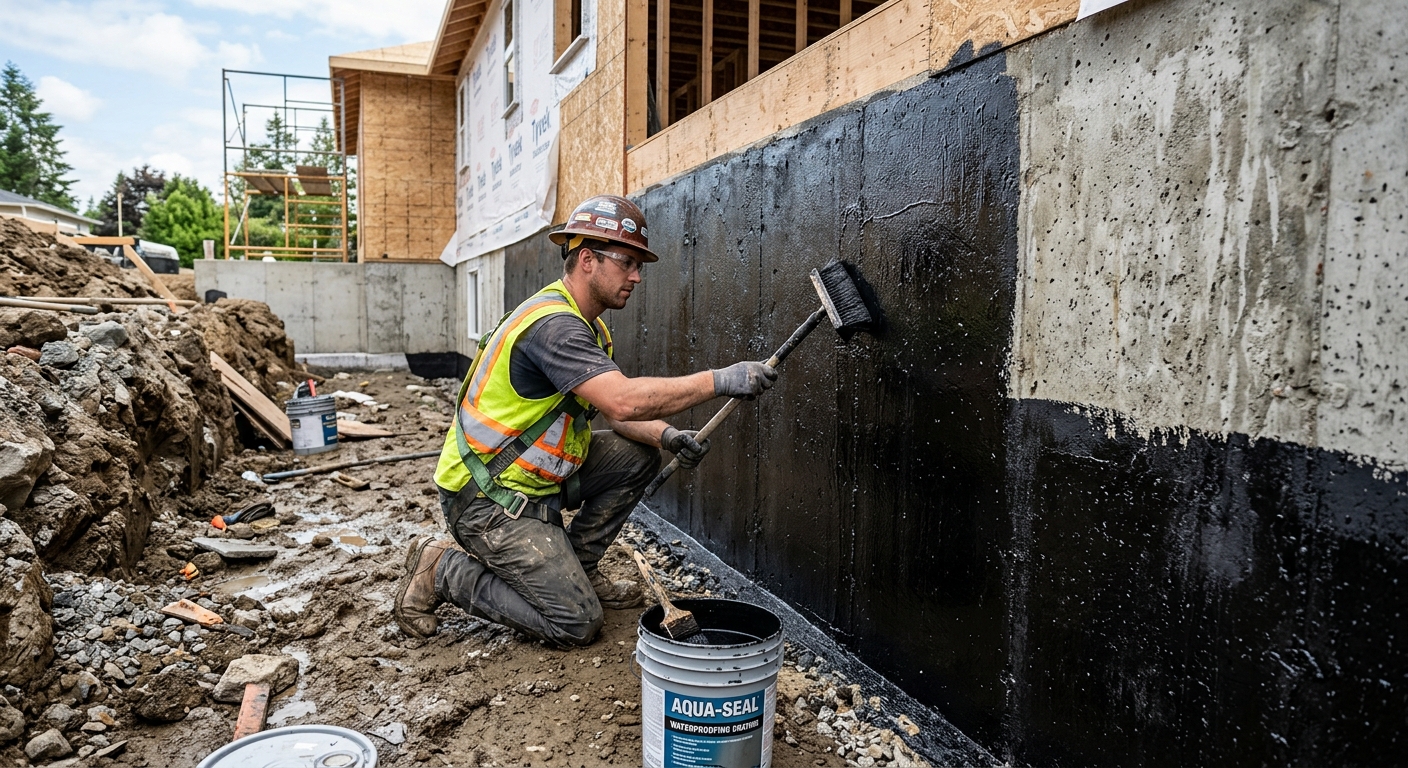
Basement waterproofing options and costs in Cold Lake
Basement waterproofing in Cold Lake is all about managing two things: water entry through below-grade walls and the way Alberta’s freeze-thaw cycles push moisture and pressure into aging foundations. In Cold Lake’s housing stock, 30.8% of homes were built before 1981, and those older basements are far more likely to have original waterproofing membranes and weeping tile that have reached the end of their service life. That matters because once the drainage path fails, seepage can increase and existing cracks can widen under cycling movement.
In the Wood Buffalo–Cold Lake region, pricing is also shaped by local soil and drainage pressure. The area commonly has loamy to clayey glaciolacustrine and morainal soils that can hold water, and moisture can collect from runoff and poor drainage—especially when excavation is harder and drainage layers must be installed correctly. Availability and labour intensity vary by neighbourhood: work is especially in demand around South Point, where many homes sit on lots that require careful excavation access and targeted drainage upgrades.
For homeowners, the right choice typically depends on how far the water travels (active seepage versus persistent hydrostatic pressure), how much excavation is feasible, and whether the foundation has crack movement. That’s why one quote can land closer to $10,000–$22,000 for exterior excavation, while another stays in the $7,000–$14,000 range for interior systems when exterior access or drainage demands are limited. Use the comparison below to anchor your expectations for scope and budget before you ask for itemised quotes.
| Method |
What It Addresses |
Disruption Level |
Durability |
Price Range |
| Exterior excavation + new membrane + drainage tile |
Stops water at the source, rebuilds the perimeter drainage path, reduces hydrostatic pressure |
High (excavation, regrading, landscaping restoration) |
Long-term when installed with correct bedding, membranes, and backfill practices |
$10,000–$22,000 |
| Interior perimeter drain channel + sump pit |
Collects seepage after entry and manages water level to protect the basement interior |
Medium (interior work, localized floor/wall cutting) |
Very durable as long as weeping/tile routing and pump discharge are correct |
$7,000–$14,000 |
| Foundation crack injection (epoxy or polyurethane) |
Seals cracks: epoxy for structural/hairline sealing, polyurethane for active leaks |
Low (drilling, surface prep, patching) |
Depends on crack type and whether the leak source is fully controlled |
$500–$1,800 |
| Sump pump installation (primary + battery backup) |
Keeps basement dry during power interruptions and high-runoff periods |
Low to medium (pit excavation, discharge piping, electrical work) |
Strong protection when paired with proper drainage collection |
$1,800–$4,500 |
| Window well drain installation |
Directs water away from window wells and prevents localized seepage |
Low to medium (excavation at window exterior, localized grading) |
Good for targeted seepage when discharge is routed properly |
$1,200–$3,200 |
| Lot re-grading / downspout extension |
Prevents roof runoff and surface water from loading the foundation perimeter |
Low to medium (yard work; minor restoration) |
Helps long-term, but may not stop seepage if drainage systems are failed |
$800–$2,500 |
Prices are estimates only and vary by project scope, site access and material selection.
What affects the price of waterproofing in Cold Lake
In Wood Buffalo–Cold Lake, it’s common to see quotes for the “same” basement leakage come back 30–50% apart once the contractor factors in excavation difficulty, how saturated the soil is during work, and whether the system addresses the real water source. National averages don’t capture the way Cold Lake’s foundation risk is driven by soil that can retain water, drainage pressure at the base of walls, and freeze-thaw movement that can worsen crack openings. That combination is why local projects often diverge from broader benchmarks.
Three regional drivers separate local costs from the national average: (1) soil type and the lateral pressure it can create, (2) water table / seepage that increases pump run times and demands for drainage capacity, and (3) freeze-thaw cycling, which can expand existing cracks and undermine marginal repairs. While clay-heavy soils can exert more pressure during freeze-thaw than sandy soils, high groundwater or persistent seepage means contractors may need a full perimeter plan rather than a narrow fix. In many older basements—particularly in neighbourhoods with higher proportions of pre-1981 homes—original weeping tile may be completely failed, turning “minor seepage” into interior flooding risk.
Here are concrete Cold Lake examples that move pricing: a basement with a blocked or failing weeping tile behind a poured-concrete wall often benefits from interior perimeter drainage plus a correctly sized sump—typically aligning with the $7,000–$14,000 interior band. By contrast, a corner lot where exterior excavation is feasible (and the drainage layer can be rebuilt end-to-end) can justify exterior costs closer to $10,000–$22,000. If you’re repairing a short, stable hairline crack, injection may stay near $500–$1,800; but if the leak is actively seeping, polyurethane injection often needs to be paired with collection (drain channel/sump) to stop recurrence.
| Price Factor |
Why It Matters |
Cost Impact |
| Interior vs. exterior approach — interior is less disruptive but addresses symptoms |
Exterior rebuilds the drainage path and membrane; interior manages water after it enters |
Exterior often +$3,000–$8,000 compared with a basic interior system |
| Foundation type — poured concrete vs. block vs. stone vs. ICF |
Different wall materials respond differently to sealing and require different detailing |
Block and stone often increase interior drainage complexity |
| Soil type — clay expands more than sand, adding pressure |
Clayey soils can hold water and push laterally during freeze-thaw |
May shift scope from targeted work to full perimeter drainage |
| Crack type and length — hairline vs. structural horizontal cracks |
Structural movement needs deeper assessment; horizontal cracks may require engineering |
Can add $500–$1,800+ or require additional structural measures |
| Sump pump backup system — battery or water-powered backup needed |
Backup reduces risk during power interruptions |
Commonly adds cost within the $1,800–$4,500 sump range |
| Access — landscaping, decks, or driveways must be removed for exterior |
More removal and reinstatement increases labour and disposal |
Exterior excavation can rise quickly with limited access |
| Weeping tile age — original tile (60+ years) may be completely failed |
Old tile may be clogged, detached, or collapsed, turning intermittent seepage into continuous pressure |
Often increases the need for perimeter system renewal |
| Mould or efflorescence remediation required before sealing |
Sealing over active contamination can fail; surface must be treated |
May add remediation steps before waterproofing materials are applied |
Permits & regulations in Alberta
In Alberta, foundation excavation and most below-grade waterproofing work is commonly pulled under a building permit process when it involves changes that could affect structural integrity or lot drainage. In practice, this typically includes structural crack repair where conditions indicate movement, and work that alters how water is managed on the lot (for example, major downspout or drainage modifications that change where runoff is directed). Sump pump installations that connect into storm or sanitary sewer pathways typically require municipal approval, and connecting to sewer systems should never be assumed without confirming the local process.
For crack repairs, the key question is whether the crack is merely leaking or whether it indicates structural movement. Structural or horizontal crack situations in block walls, major step cracks, or widespread bowing often require an assessment by a structural engineer to determine whether underpinning (or other structural measures) is needed. Before you sign, confirm the contractor can provide engineering support for structural repairs and that they carry appropriate liability insurance and WSIB/WCB coverage for their crew.
To verify everything in Cold Lake, homeowners should: (1) ask for the contractor’s Alberta licence/registration details (and review any online registry information the company provides), (2) request a certificate of liability insurance showing active coverage for the project, (3) request current WSIB/WCB clearance, and (4) for structural work, ask who provides the engineer’s assessment and whether it’s documented in writing. If a contractor can’t provide these up front, it’s a sign to pause and get clarification.
Interior vs exterior waterproofing — what does Cold Lake need?
The fundamental difference is that exterior waterproofing addresses the source by excavating around the foundation, applying a waterproofing membrane, rebuilding drainage tile, and then backfilling correctly. Interior waterproofing doesn’t stop water from reaching the wall; instead, it manages what gets in by capturing seepage at the perimeter with a drain channel and sump pit. In Cold Lake’s clayey, water-holding soils, that source vs. symptom distinction matters because hydrostatic pressure and freeze-thaw movement can keep reopening cracks over time.
Exterior work is typically the best long-term solution when you can excavate along the full perimeter and rebuild drainage consistently, especially for older poured-concrete foundations where sealing benefits from a “dry wall” environment. Interior systems are often the practical choice when excavation would be too disruptive or impossible (tight landscaping, decks, or buried utility constraints), or when persistent seepage and higher saturation make a drainage plan more efficient from the inside. For block foundations, many homeowners end up with interior perimeter drainage as a practical complement because block can present more detailing challenges and localized paths for water movement.
Sump pump backup is also a Cold Lake reality. In spring, runoff and seepage can increase quickly, and power interruptions—even if brief—can be enough to stress a primary pump system. That’s why many interior solutions include battery backup, particularly where basement floor drainage leads to finished spaces.
A typical decision example: if your home has a leaking footer line and one active wall crack, an interior perimeter drain plus sump system often sits closer to the $7,000–$14,000 band. If the contractor can excavate the whole perimeter and rebuild the drainage layer end-to-end, the exterior option around the $10,000–$22,000 band can be justified because it reduces reliance on pumping and improves protection against future freeze-thaw pressure.
| Method |
Best For |
Addresses Source? |
Disruption |
Lifespan |
Price Band |
| Full exterior excavation + membrane |
Widespread seepage, failed original drainage, or when you can excavate a full perimeter |
Yes |
High |
Typically the longest, when drainage bedding and backfill are done correctly |
$10,000–$22,000 |
| Interior French drain + sump system |
Persistent seepage where exterior access is limited or groundwater pressure is ongoing |
No (collects after entry) |
Medium |
Long-term with properly sized pump/discharge and correct pipe grading |
$7,000–$14,000 |
| Crack injection — epoxy (structural) |
Stable hairline or non-moving cracks where sealing is the goal |
Partially (seals entry path, but doesn’t rebuild drainage pressure) |
Low |
Good for stable cracks; can fail if water pressure continues |
$500–$1,800 |
| Crack injection — polyurethane (active leak) |
Cracks with active seepage where flexible sealing is needed |
Partially (stops active leak, but should be paired with drainage where needed) |
Low |
Very good for active leak sealing when the leak pathway is fully treated |
$700–$1,900 |
| Interior drain channel only (no sump) |
Light seepage/occasional dampness without consistent water inflow |
No |
Low to medium |
Depends on gravity routing and whether a sump becomes necessary |
$5,500–$10,000 |
| Re-grading + downspout extensions |
Surface water issues: roof runoff, pooling near foundation, and minor dampness |
Yes for surface water |
Low |
Good preventative value, but not sufficient for failed below-grade drainage |
$800–$2,500 |
How to choose a waterproofing contractor in Cold Lake
Choosing a waterproofing contractor in Cold Lake starts with verification. In Alberta, confirm the company can legally perform the scope you’re buying, and verify they carry current liability insurance and WSIB/WCB coverage. Ask for a certificate of insurance for the specific project date range (not an expired one), and request WSIB/WCB clearance documentation before work begins. If they’re doing structural crack work or anything that could require engineering support, ask who provides the assessment and whether that’s included in writing.
Next, get 2–3 itemised written quotes rather than a single lump sum. Itemisation should show labour and materials breakdown (membrane/drain tile components, pump and backup model, excavation/disposal, interior cutting, and discharge line routing). Read the exclusions carefully: does the price include permit pull where needed, disposal of excess soil, and restoration of landscaping or flooring? A quote that won’t specify these is hard to compare and can lead to change orders during excavation when access is already expensive.
Warranty matters: ask for the workmanship warranty length and the product/manufacturer warranty, and whether warranties are transferable to future owners. Payment should be controlled—never pay more than about 10–15% upfront, and hold back a portion until the job is complete and system testing (pump function, discharge flow, and documentation) is done. Finally, request a written timeline with start date, estimated completion date, and weather contingencies for freeze-thaw conditions.
- Ask for proof of liability insurance and confirm the dates match your project.
- Request WSIB/WCB clearance documentation before signing.
- Verify the scope includes sump discharge routing and whether it will be tied to approved municipal pathways if applicable.
- Confirm whether permit pull is included (and for what scope) or who is responsible.
- Get an itemised materials list (membrane system, drainage tile, bedding, pump model, check valves, backup system).
- Ensure disposal/haul-away of excavated soil is explicitly included for exterior jobs.
- Request a detailed plan for crack injection: crack mapping, depth, injection ports, and sealant type selection.
- Ask how they assess whether you need interior drainage versus exterior waterproofing.
- Confirm warranty terms: workmanship duration and whether the manufacturer warranty is separate.
- Clarify restoration: backfill compaction approach, regrading, and landscaping/floor reinstatement.
- Use a payment schedule that holds back until commissioning and documentation are provided.
- Get start/completion dates in writing, including what happens if the site is saturated due to spring runoff.
Red flags in Cold Lake include contractors who (1) recommend crack injection without discussing water management or evidence of active seepage, (2) quote an exterior job without clarifying access/disposal and restoration, (3) refuse to provide proof of insurance/WSIB/WCB, (4) offer only lump-sum numbers with vague exclusions, or (5) provide a short “verbal warranty” instead of written warranty terms for workmanship and materials.
Frequently asked questions — waterproofing in Cold Lake
What is a battery backup sump pump and do I need one in Cold Lake?
In Cold Lake, a battery backup sump pump is a second power source that automatically runs the sump if electricity to the primary pump fails. Many homeowners choose it because spring runoff and high saturation can increase run times, and even short outages can allow water levels to rise faster than a basement can tolerate. A typical installation is priced within the $1,800–$4,500 range depending on pump capacity and backup type.
You’ll likely benefit from battery backup if you have frequent seepage, finished basements, or a history of power interruptions during heavy weather. If the leak is occasional and you don’t see active inflow at foundation level, some contractors may recommend a standard primary pump first—but you should still ask how the system will be protected during outages.
How much does basement waterproofing cost in Cold Lake?
Basement waterproofing in Cold Lake varies mainly by whether the contractor can address the source with exterior excavation or needs to manage water after it enters with an interior system. Exterior excavation plus membrane and new drainage tile typically falls around $10,000–$22,000 because you’re paying for depth of excavation, drainage layers, membrane detailing, and regrading/restoration. Interior waterproofing—like a perimeter drain channel and sump pit—often lands in the $7,000–$14,000 band when excavation from the outside isn’t practical or when groundwater seepage is best managed from inside.
If your issue is limited to a short, specific crack, crack injection is commonly $500–$1,800, but it’s usually only reliable when the leak pathway is stable or the injection is matched with drainage control. As a reference point, Cold Lake has 15,661 residents and a strong share of older homes; many projects involve correcting aging perimeter drainage, which is why costs can move quickly once excavation and drainage are fully defined. (Statistics Canada, 2021 Census)
Interior vs exterior waterproofing — which is better?
“Better” depends on the water source and what’s feasible at your lot. Exterior waterproofing is best when you can excavate along the perimeter and rebuild the drainage tile and membrane end-to-end. It addresses water at the source and generally reduces reliance on pumping—often the rationale behind projects priced around $10,000–$22,000. The trade-off is higher disruption: excavation, removal and restoration of landscaping or hardscape, and more time on site.
Interior waterproofing can be the better practical choice in Cold Lake when exterior access is limited or when groundwater/seepage is persistent and a controlled collection system is more efficient. Interior perimeter drainage and sump systems commonly fall in the $7,000–$14,000 range and are less invasive, though they manage water after entry. For many block-wall basements, interior drainage is also a realistic complement to crack repairs.
Why is my basement leaking in Cold Lake?
Basement leaks in Cold Lake usually come from moisture loading around the foundation and how your drainage system handles water during thaw periods. In the Wood Buffalo–Cold Lake region, soil conditions can be water-holding (loamy to clayey), which can create drainage pressure against below-grade walls. Freeze-thaw cycling can worsen small openings by expanding existing cracks, especially in homes built before the early 1980s—meaning more basements may have aging or failed original weeping tile and membranes. (Statistics Canada, 2021 Census)
Common causes include blocked or collapsed weeping tile, downspouts that discharge too close to the foundation, poor lot grading that directs runoff to the perimeter, and seepage through cracks or joints. If you also see efflorescence or dampness near window wells, targeted drainage at those points may be part of the solution—not just wall sealing.
How do I know if a foundation crack is serious?
A crack can be anything from harmless shrinkage to a sign of movement, and the safest approach is to identify the crack type and whether water is actively finding the path. Hairline cracks that stay stable are often candidates for injection sealing, which is commonly $500–$1,800 depending on length and preparation. But horizontal cracks in block walls, step cracks that widen, or cracks that show signs of differential movement are more serious and may require engineering assessment before sealing.
In Cold Lake, freeze-thaw can widen cracks over time, so “it started small” doesn’t automatically mean it’s minor. Watch for water staining, dampness along the crack, recurring seepage after heavy snowmelt, and patterns that align with corners or footer lines. If the crack is associated with bowing, ongoing seepage, or increasing width, ask your contractor to document conditions and confirm whether an engineer is needed.
How much does foundation crack repair cost in Cold Lake?
Foundation crack repair costs in Cold Lake depend on crack length, access, and whether the crack is actively leaking. For many straightforward cases, injection work lands in the $500–$1,800 range. That figure covers prep, drilling ports, and injection using the correct product type—epoxy for more stable sealing and polyurethane when dealing with active moisture intrusion.
If the crack is part of a larger drainage problem (for example, failing weeping tile or hydrostatic pressure), you may need to add an interior perimeter drain channel and sump system, which typically brings the total to the $7,000–$14,000 band. In those situations, injection alone can temporarily slow leakage but may not stop recurring pressure-driven seepage.