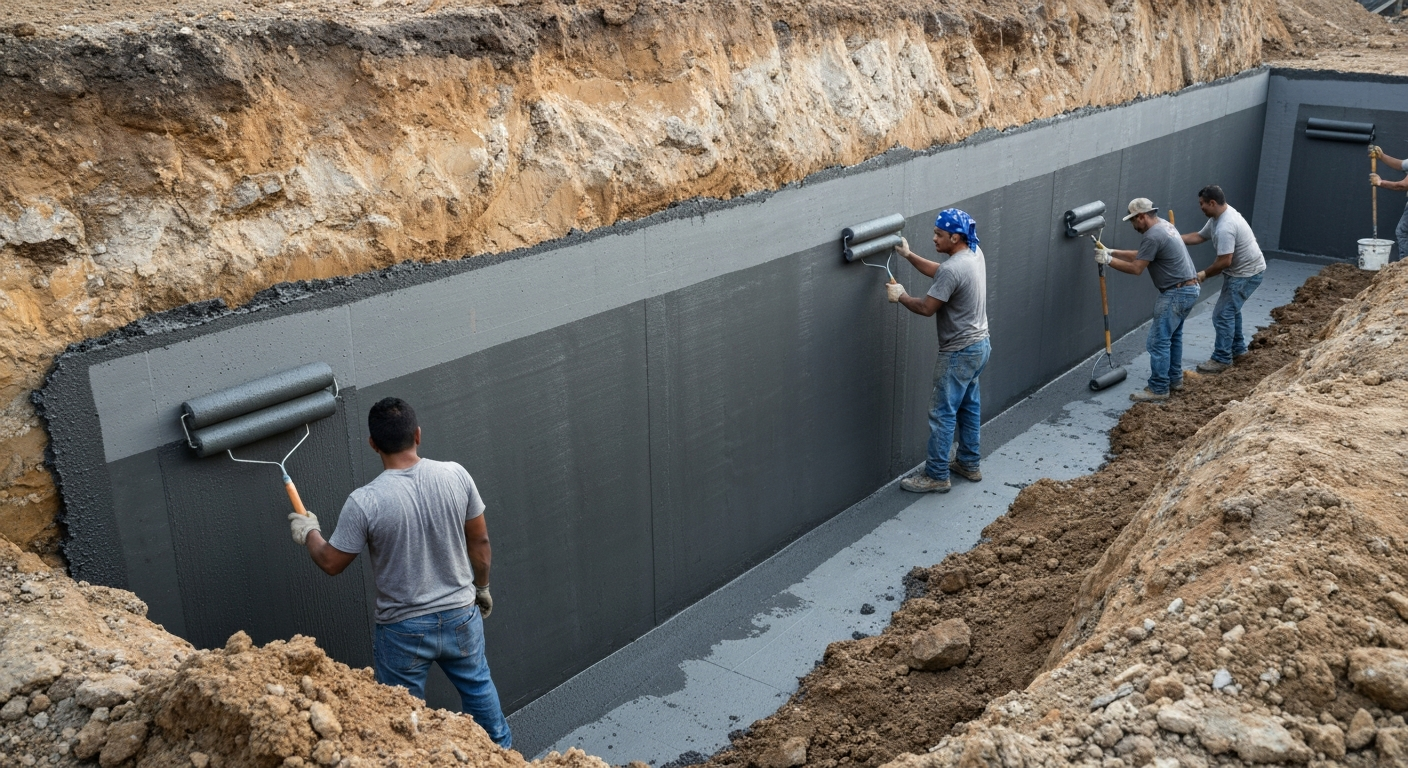
Basement waterproofing options and costs in Silver Springs
Silver Springs homeowners typically face basement water issues that start long before the drywall ever shows a stain. With a population of 8,570 (Statistics Canada, 2021 Census), the local housing mix includes a meaningful number of older basements where the original waterproofing—often tar-and-paper systems and early weeping tile—has aged out. In practical terms, earlier generations of drainage systems were frequently undersized or weren’t maintained, so freeze–thaw cycles in southern Alberta widen joints and cracks, letting spring meltwater and heavy rain work its way in.
In the Calgary region, pricing is influenced by clay-heavy, water-holding soils that can expand when saturated. That means you can get higher lateral pressure on foundation walls and footings, especially around corners, wall-to-floor seams, and areas with missing/failed perimeter drains. Costs also rise when access is tight—think narrow lots, mature landscaping, concrete patios, or deck stairs that must be removed for exterior excavation.
In Silver Springs, waterproofing demand is especially steady around the newer infill edges and established residential pockets where lots have limited side yard width, making “full excavation” work more labour-intensive. Contractors are generally available, but the best teams book faster when excavation, full-perimeter drainage, or sump work is required. Use the options below to compare what each method actually addresses, then match it to your leak pattern before you request an itemised quote.
| Method |
What It Addresses |
Disruption Level |
Durability |
Price Range |
| Exterior excavation + new membrane + drainage tile |
Primary water entry from the exterior soil side; restores perimeter drainage and waterproof barrier |
High (excavation, landscaping removal, backfill) |
Long-term when membrane and drainage are detailed correctly |
$9,500–$24,500 |
| Interior perimeter drain channel + sump pit |
Water that has already entered; reduces hydrostatic pressure at the footing line |
Medium (interior sawcut, floor work) |
Very durable with correct sump and discharge piping |
$6,000–$14,500 |
| Foundation crack injection (epoxy or polyurethane) |
Cracks as entry paths; stops seepage and/or restores integrity where suitable |
Low to medium |
Depends on crack type and whether the crack is active |
$600–$1,800 |
| Sump pump installation (primary + battery backup) |
Controls water in the sump during heavy rain and thaw events |
Low to medium (pit, piping, electrical) |
High with backup system and alarm |
$1,300–$3,200 |
| Window well drain installation |
Localized water around window wells and weeping points |
Low to medium |
Good for targeted, corrected drainage |
$800–$2,000 |
| Lot re-grading / downspout extension |
Redirects roof runoff and reduces surface saturation near the foundation |
Low (light excavation, minor landscaping) |
Moderate (relies on maintenance and grading staying intact) |
$1,000–$3,500 |
Prices are estimates only and vary by project scope, site access and material selection.
What affects the price of waterproofing in Silver Springs
In Silver Springs and across the Calgary area, it’s common to see waterproofing quotes for the “same” problem vary by 30–50%. The difference usually isn’t the brand name—it’s the method selected, how far the contractor must excavate or sawcut, and how much of the drainage system needs rebuilding. A simple interior perimeter drain can be a symptom-management fix, while an exterior membrane and full-perimeter drainage system targets the source of water entry, especially in clay soil conditions.
Three drivers separate Calgary-area costs from the national average: soil type, water table conditions, and freeze–thaw. Calgary-area clay-heavy soils expand when saturated, increasing lateral pressure on basement walls and worsening cracks over time. That means crack repair often needs to be paired with drainage improvements—otherwise you’re sealing the symptoms while water pressure keeps finding new paths. In low-lying pockets and near river-valley areas, higher seasonal groundwater and storm events can increase sump run times and require more reliable pumping/discharge detailing.
Freeze–thaw in southern Alberta also widens joints and cracks, so contractors often add labour for surface preparation, confirm crack movement, and choose the correct injection material. For example, where foundation leaks are largely due to failing weeping tile, an interior perimeter approach can land in the $6,000–$14,500 band, while a full exterior system commonly shifts into the $9,500–$24,500 range because of excavation depth, disposal of clay spoils, and backfill work.
Two common Silver Springs examples: (1) tight side-yard access can turn “standard excavation” into time-consuming, careful digging around fences and landscaping; (2) older basements with seeping block or poured-concrete walls frequently need crack injection plus perimeter drainage, not just one isolated step. If you’re seeing efflorescence or damp corners after spring thaw, plan for the cost to reflect drainage restoration—not just a sealant.
| Price Factor |
Why It Matters |
Cost Impact |
| Interior vs. exterior approach — interior is less disruptive but addresses symptoms |
Exterior stops water at the source; interior manages water after entry |
Exterior typically adds excavation/disposal and can be 30–90% higher depending on access |
| Foundation type — poured concrete vs. block vs. stone vs. ICF |
Crack patterns and sealing methods vary; block seams often leak through joints |
Block and older stone often require additional interior drainage detail |
| Soil type — clay expands more than sand, adding pressure |
Clay saturation increases hydrostatic/lateral pressure on walls |
More drainage capacity and careful backfill detailing required |
| Crack type and length — hairline vs. structural horizontal cracks |
Active cracks need polyurethane or broader remedial scope |
Structural/long horizontal cracks raise engineering assessment and labour |
| Sump pump backup system — battery or water-powered backup needed |
Spring thaw storms can trigger outages and long run times |
Backup can add a meaningful cost but reduces risk of flooding |
| Access — landscaping, decks, or driveways must be removed for exterior |
Excavation depth and haul distances increase labour and costs |
Can significantly raise project time and restoration work |
| Weeping tile age — original tile (60+ years) may be completely failed |
Old tile often collapses or clogs, leaving no effective perimeter drainage |
May require full replacement of the tile line and connected drainage |
| Mould or efflorescence remediation required before sealing |
Sealers and coatings don’t bond well over salts/contaminants |
Adds prep time and may require cleaning/neutralizing steps first |
Permits & regulations in Alberta
In Alberta, some waterproofing-related work typically needs permits, especially when you’re affecting foundation systems, structural components, or lot drainage pathways. Foundation excavation that reaches the exterior face of the foundation and changes to grading/drainage around the foundation often require a permit. Structural crack repair—particularly horizontal cracks in block walls or signs of structural movement—commonly triggers requirements for a structural engineer’s assessment to confirm whether underpinning or other structural measures are necessary. For sump pump work that connects discharge to storm or sanitary sewer systems, you’ll generally need municipal approval (your contractor should clarify the discharge route before work begins).
What typically does not require a permit: targeted crack injection for non-structural, stable cracks; installing interior perimeter drainage where it’s considered drainage control rather than a structural alteration; and window well drain retrofits that don’t involve changing foundation elements or drainage connections to municipal services. However, rules can vary by scope, and it’s still smart to have the contractor confirm permit responsibility in writing.
To verify a contractor for Silver Springs, use these steps: (1) check the contractor’s Alberta business licence and registration details through the appropriate online listings (your contractor should provide the exact business name); (2) ask for a current certificate of insurance—liability coverage and WSIB/WCB (or applicable clearance letter)—and verify dates and policy limits on the document; (3) if structural repair is in scope, confirm they have engineering support documented (engineer involvement, report, and any drawings). If they won’t show insurance documents or clearly explain what permits they pull, treat that as a red flag.
Interior vs exterior waterproofing — what does Silver Springs need?
Waterproofing comes down to where the fix stops the problem. Exterior waterproofing—full excavation, new membrane, new drainage tile, and properly detailed backfill—addresses the source by preventing water from entering the foundation from the outside. It’s the more permanent solution when you have consistent seepage paths, failed weeping tile, or you’re dealing with clay soil holding water against the walls. The trade-off is disruption: exterior work can require removing patios, landscaping, and sometimes portions of fencing, then rebuilding the grade and surface finishes.
Interior waterproofing—perimeter drain channel, sump pit, and sump pump—handles water after it has entered and helps manage hydrostatic pressure at the foundation/footing zone. It’s less invasive and often the faster path to dry basements, but it doesn’t eliminate pressure acting on the wall itself. In Silver Springs, many older poured-concrete basements respond well to crack injection paired with interior perimeter drainage because poured walls can be more reliable once cracks are correctly sealed. Block foundations often benefit from an interior drain as a practical complement because leakage can occur through seams and joint pathways that are hard to access fully without excavation.
Given Alberta’s freeze–thaw and the spring thaw weather pattern, backup pumping matters. A primary sump pump with battery backup (or an approved alternative) can be the difference between a minor inconvenience and a messy cleanup after an outage.
Where the price difference is justified: if you’re seeing recurring dampness after spring melt and you suspect failed exterior drainage, an exterior system in the $9,500–$24,500 band can be justified over a purely interior approach in the $6,000–$14,500 band because it restores the perimeter drainage that clay soils rely on. If the issue is localized (for example, one window well or a short run of downspout runoff), interior-only work may be unnecessary.
| Method |
Best For |
Addresses Source? |
Disruption |
Lifespan |
Price Band |
thead>
| Full exterior excavation + membrane |
Failed weeping tile, widespread seepage, recurring dampness after spring thaw, clay soil saturation |
Yes |
High |
20–30 years+ when detailed and backfilled correctly |
$9,500–$24,500 |
| Interior French drain + sump system |
Hydrostatic water collecting at the footing line, tight lots, or when exterior access is limited |
Partial (manages water entry after it occurs) |
Medium |
15–25 years with correct pump/discharge and maintenance |
$6,000–$14,500 |
| Crack injection — epoxy (structural) |
Stable, non-active cracks where injection is appropriate for crack sealing/integrity restoration |
Yes (for that crack path) |
Low to medium |
Long-lasting if crack movement is not ongoing |
$600–$1,400 |
| Crack injection — polyurethane (active leak) |
Active seepage, ongoing moisture through cracks after thaw events |
Yes (for that crack path) |
Low to medium |
Good performance where the product matches active conditions |
$700–$1,800 |
| Interior drain channel only (no sump) |
Limited seepage where gravity drainage is feasible and discharge route is reliable |
No (relies on water being collected and removed) |
Medium |
Varies; can be less reliable during heavy events |
$5,000–$10,000 |
| Re-grading + downspout extensions |
Surface water issues, roof runoff hitting the foundation, minor localized dampness |
Yes (reduces source runoff) |
Low |
2–10 years depending on settlement and maintenance |
$1,000–$3,500 |
How to choose a waterproofing contractor in Silver Springs
Choosing a contractor in Silver Springs is mostly about verification and clarity. Start with Alberta licensing: ask for their Alberta business details and ensure the company is properly registered for the work they’re proposing. Next, confirm liability insurance and WSIB/WCB coverage. You should request a current certificate of insurance and a WSIB/WCB clearance letter (or equivalent proof). Don’t accept “we’re covered” without documents you can read—check the policy period and ensure it matches your project timeframe.
Then get 2–3 itemised written quotes. Each quote should break down labour and materials, not just a lump sum. Look for specifics such as how many linear feet of drain channel or perimeter drainage will be installed, whether excavation includes disposal and hauling, the type of membrane, sump pump model and pit size, discharge line routing, and whether crack injection includes surface prep and specified curing steps.
Read exclusions carefully: are permits included if needed? Is excavation restoration included (backfill, topsoil, re-seeding or sod, patio/sidewalk restoration)? Is disposal included for heavy clay spoils? Warranty terms also matter—verify the workmanship warranty length, the product/manufacturer warranty details, and whether warranties are transferable to future homeowners.
On payment, never pay more than 10–15% upfront. Hold back the remainder until key milestones are complete (rough-in drainage, membrane system inspection/photos, pump commissioning/testing, and final grade/restoration). Finally, insist on a start date and completion estimate in writing—weather and freeze–thaw can affect exterior scheduling, but the scope and sequence should still be scheduled clearly.
- Ask how they will diagnose the leak (visual mapping, downspout check, dye testing, moisture readings).
- Confirm the exact scope for exterior: excavation depth, disposal, backfill type, and membrane overlap/joints.
- Require a written plan for discharge (sump discharge routing and approved connection details).
- Check that sump pit size and pump capacity match predicted run times during thaw storms.
- Verify crack injection material choice (epoxy for stable cracks vs polyurethane for active leaks).
- Confirm whether mould/efflorescence cleanup is included before sealing or membranes.
- Get photos/inspection points during installation (before backfill, before sealing, after pump test).
- Ask if they include re-grading and downspout extensions to move water away from the foundation.
- Review warranty wording: workmanship, product warranty, exclusions, and transferability.
- Confirm permit responsibility in writing (what they pull vs what you pull).
- Request a project timeline with allowances for freeze conditions and curing times.
- Ensure the quote includes restoration (topsoil, grading, and landscaping repair as listed).
In Silver Springs, common red flags include contractors who: (1) offer a one-size-fits-all “sealant only” solution without addressing drainage; (2) won’t provide proof of liability insurance or WSIB/WCB coverage; (3) exclude disposal and restoration from the quote without explaining how it could change the total; (4) skip backup pump discussion when sump installation is being proposed; and (5) refuse to put permit/approval responsibility in writing when discharge connections or foundation excavation are part of the scope.
Frequently asked questions — waterproofing in Silver Springs
How do I compare waterproofing quotes?
Start by comparing scope, not just totals. For Silver Springs basements, ask each contractor to list what they’ll do line-by-line: how they’ll address drainage (interior drain channel, exterior drainage tile, or both), whether a sump pit and pump are included, and how discharge will be handled. Make sure materials are named (membrane type, drain tile spec, sump pump model, and injection material such as epoxy vs polyurethane). If one quote is far lower than the others, look for exclusions like permit responsibility, disposal of clay spoils, sawcut/floor patching, or restoration (re-grading and landscaping). A realistic comparison might show exterior systems commonly landing in the $9,500–$24,500 range, while interior perimeter + sump work often sits closer to the $6,000–$14,500 band. That gap usually reflects whether they’re stopping the source or managing water after it enters.
How long does basement waterproofing take in Silver Springs?
Timing depends on whether you’re doing exterior excavation or interior drainage, and on access and curing. In Silver Springs, an interior perimeter drain and sump system can often be completed in several working days to about 1–2 weeks depending on floor access, pump commissioning, and restoration. Exterior waterproofing typically takes longer because excavation, membrane detailing, drainage installation, backfill, and final grading/restoration must be sequenced carefully around Alberta freeze–thaw. Weather matters: contractors generally plan exterior stages to avoid leaving trenches open during freeze nights. Your quote timeline should include key milestones like “before backfill inspection/photos” and “pump test” and then restoration. If someone only gives a vague date and doesn’t talk about curing times for membrane seams or injection systems, that’s a sign the schedule may not be realistic.
What is a weeping tile and does my Silver Springs home have one?
Weeping tile is the perimeter drainage system installed around the foundation footing to collect groundwater and direct it to a sump or discharge point. In many older Silver Springs basements, homes may have had original weeping tile that’s now partially clogged, collapsed, or disconnected—especially after decades of freeze–thaw. Whether you have one often depends on the home’s era, basement finish history, and whether earlier waterproofing work was performed. A contractor can usually confirm by inspecting the foundation perimeter (where accessible), reviewing prior renovation records, and sometimes locating discharge points or cleanouts. If it’s failed, you often see symptoms like corner dampness, efflorescence, and recurring wet spots after spring thaw—signs that perimeter drainage isn’t doing its job anymore.
Can I waterproof my basement in winter in Silver Springs?
Yes, but it depends on the method and the conditions. In Alberta winters, exterior excavation and membrane installation can be challenging because frozen ground limits excavation depth and can complicate backfill placement and drainage grading. Interior work—like perimeter drain channel installation, sump pit work, crack injection, and window well drainage—can often be done in winter when the interior floor and wall surfaces can be accessed and prepared properly. Crack injection still requires correct surface prep and product-specific cure conditions, and interior drainage requires that the work can be safely completed and sealed to prevent further moisture intrusion. If you’re planning exterior waterproofing, many homeowners in the Calgary area schedule it for late fall before deep freeze or for spring/summer when soil is workable. A reputable contractor should discuss staging and how they’ll protect open areas if temperatures swing.
What is the difference between waterproofing and damp-proofing?
Waterproofing aims to prevent liquid water from penetrating the foundation assembly under real conditions (rain, meltwater, and groundwater pressure). Damp-proofing typically reduces moisture penetration but isn’t designed to handle persistent hydrostatic pressure. In Silver Springs, because clay soils can hold water and expand when saturated—plus freeze–thaw widens cracks—damp-proofing alone can fail when pressure builds at the wall or footing line. That’s why full exterior systems that include membrane + properly functioning perimeter drainage tile are often treated as true waterproofing solutions. Interior systems (French drains, sump pits, and pumps) are also waterproofing in practice when they’re designed to control the water level and relieve pressure. If your quote uses only “sealant” or “paint-on waterproofing” with no drainage plan, it may be leaning toward damp-proofing rather than true waterproofing.
Will basement waterproofing affect my property value in Silver Springs?
In most cases, yes—especially when the work stops recurring water intrusion and addresses the cause rather than masking it. Waterproofing improvements can reduce odours, protect finishes, and prevent ongoing damage that can otherwise lower buyer confidence. In Silver Springs and the Calgary region, buyers often ask whether the basement is dry after spring thaw and heavy rain, whether there’s a reliable sump system if needed, and whether the drainage plan is sound for clay-heavy soils. A properly documented scope with warranties and inspection photos helps demonstrate quality. While waterproofing isn’t a guaranteed “dollar-for-dollar” ROI, it can protect the home’s livability and reduce risk of further repair costs. If you’re choosing between options, remember that an interior perimeter + sump system in the $6,000–$14,500 range can be a strong practical fix, while an exterior membrane + drainage tile solution in the $9,500–$24,500 band may better reassure buyers when exterior drainage was truly failing.