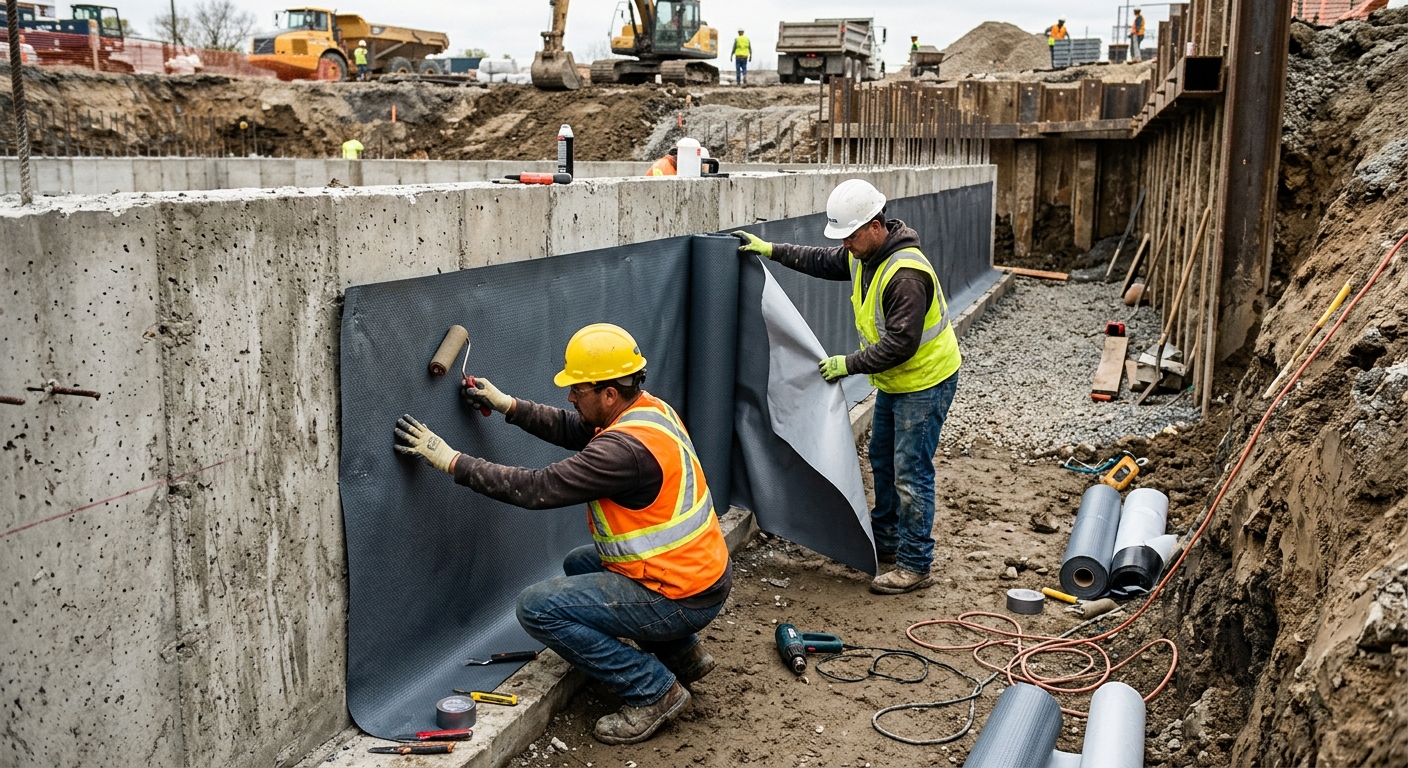
Basement waterproofing options and costs in West Kelowna
In West Kelowna, basement waterproofing decisions usually start with one fact: the foundation is already being asked to perform in a climate that swings between freeze-thaw and heavy wet periods, often with nearby lake/creek influence and variable yard drainage. With 36,078 residents and 11,540 homeowner households (Statistics Canada, 2021 Census), many houses in the area were built long before today’s drainage norms. In fact, 26.6% of homes were built before 1981 (Statistics Canada, 2021 Census), so it’s common to see failed original systems—think tar-and-paper-style membranes, corroded or undersized weeping tile, and exterior drains that are now partially clogged or broken.
Thompson–Okanagan site conditions strongly shape costs. Glacial/alluvial deposits here can create sandier pockets that drain well, but also localized clay that holds water longer and increases lateral pressure on foundation walls. When cracks and joints widen during repeated freeze-thaw cycles, minor seepage can become chronic interior seepage along slab edges and cold joints. Labour and availability can also swing with the construction calendar in West Kelowna and surrounding valleys; excavating in tight infill lots around areas like Glenrosa and parts of Shannon Lake is often more time-consuming because decks, landscaping, and driveways may need removal and reinstatement.
Below is a practical comparison of the most common waterproofing approaches—use it as a starting point before you ask for an itemised quote.
| Method |
What It Addresses |
Disruption Level |
Durability |
Price Range |
| Exterior excavation + new membrane + drainage tile |
Source control: water management around foundation, new membrane barrier, and properly graded drainage tile |
High (excavation, haul-away, landscaping/restoration) |
Long-term (typically best “permanent fix” when done to specs) |
$18,000 – $40,000 |
| Interior perimeter drain channel + sump pit |
Relieves hydrostatic pressure after it enters; captures seepage at perimeter and pumps it away |
Medium (interior flooring/wall penetrations as needed) |
Good (depends on sump capacity, discharge routing, and wall prep) |
$9,000 – $22,000 |
| Foundation crack injection (epoxy or polyurethane) |
Sealing through cracks: epoxy for non-moving/structural cracks; polyurethane for active leaks |
Low to Medium (minor prep; may require localized chipping) |
Moderate to Long-term (best when crack type is correctly matched) |
$800 – $3,500 |
| Sump pump installation (primary + battery backup) |
Continuous removal during seepage; battery backup for outages during spring rain/snowmelt |
Low to Medium (pit, discharge lines, electrical tie-in) |
Good to Long-term (battery selection and venting matter) |
$2,500 – $5,500 |
| Window well drain installation |
Stops water ingress at egress windows and directs it away from window wells |
Low to Medium (localized excavation/stone work) |
Good (when grade and overflow paths are correct) |
$1,200 – $4,200 |
| Lot re-grading / downspout extension |
Reduces surface water near the foundation and improves runoff direction |
Low (minor yard disruption) |
Limited to Moderate (works best as an add-on or for early issues) |
$2,000 – $6,800 |
Prices are estimates only and vary by project scope, site access and material selection.
What affects the price of waterproofing in West Kelowna
In West Kelowna and across the Thompson–Okanagan, two quotes for the “same” basement can differ by 30–50% because the real job drivers are site conditions, not the label on the invoice. In Canada, regional differences also matter: labour availability, disposal hauling, equipment access, and the frequency of freeze-thaw-driven repairs all influence pricing. British Columbia projects often cost more when full excavation is required because of access constraints and the need to re-establish landscaping and drainage to a high standard, especially where yards have retaining walls or tight side passages.
Three drivers separate Thompson–Okanagan costs from the national average: soil type, water table behaviour, and freeze-thaw. Clay-heavy pockets in glacial deposits can hold water longer and exert lateral pressure, worsening cracks over time; that’s why a simple “seal the crack” approach can fail without addressing drainage. Higher water-table pockets—especially near lake/creek corridors in West Kelowna—can increase sump run times and expand the required drainage scope. Finally, the region’s freeze-thaw cycles expand existing cracks and joints. When an older home’s perimeter drains are undersized or clogged, seepage becomes persistent, raising the likelihood you’ll need interior drainage upgrades or a full exterior strategy.
Here are a few local examples: (1) Homes built before 1981 often show failing original weeping tile, which can increase scope toward interior perimeter drains or full excavation; budget closer to the $18,000 – $40,000 band for exterior source control. (2) If you only have hairline seepage at cold joints, crack injection plus interior drainage may land in the $9,000 – $22,000 band instead of full excavation. (3) Tight infill lots around Glenrosa/near Shannon Lake can push excavation costs upward because concrete/asphalt removal, shoring, and reinstatement take longer.
| Price Factor |
Why It Matters |
Cost Impact |
| Interior vs. exterior approach — interior is less disruptive but addresses symptoms |
Exterior manages water at the foundation; interior manages after entry. Choosing based on source vs symptom changes labour and scope. |
Interior often reduces disruption, but if hydrostatic pressure is active, interior-only work may still need a larger system. |
| Foundation type — poured concrete vs. block vs. stone vs. ICF |
Crack patterns and how walls respond to pressure differ; repair methods and prep vary. |
Poured concrete often pairs well with correctly matched crack injection; block walls frequently need interior drainage as a complement. |
| Soil type — clay expands more than sand, adding pressure |
Clay pockets increase lateral pressure and keep water near the foundation longer. |
Clay-heavy sites usually increase drainage scope and material durability requirements. |
| Crack type and length — hairline vs. structural horizontal cracks |
Structural or horizontal movement can require engineering assessment and may change the repair route. |
Structural cracking can move the project into a more complex, higher-cost category. |
| Sump pump backup system — battery or water-powered backup needed |
Backup reduces risk of discharge failure during outages during spring rain/snowmelt. |
Adds equipment and testing time; typically increases total by a few thousand dollars depending on setup. |
| Access — landscaping, decks, or driveways must be removed for exterior |
Excavation is more expensive when restoration is required and access is tight. |
Driveway/asphalt/concrete removal and reinstatement can significantly raise excavation cost. |
| Weeping tile age — original tile (60+ years) may be completely failed |
Old perforated systems often corrode or clog, losing their function. |
Failure often expands the job to full replacement drainage or an interior collection system. |
| Mould or efflorescence remediation required before sealing |
Moisture contamination and salts need proper remediation and can affect what can be safely sealed. |
Can add labour, containment, and drying time before membranes or coatings go on. |
Permits & regulations in British Columbia
In British Columbia, certain waterproofing-related works are commonly tied to permit requirements—especially when the work involves excavation near a foundation, structural crack repair, or changes to how drainage leaves your property. As a rule of thumb, foundation excavation for exterior membrane/drainage and work that alters lot drainage patterns typically triggers the need for a building permit. If your plan involves sump pump discharge connection routes (for example, connecting to municipal storm or sanitary systems), municipal approval is often required.
For structural crack repair—particularly major step cracking in block walls or horizontal cracking that suggests movement—a structural engineer’s assessment is often expected to confirm whether additional structural work (like underpinning or other stabilization) is necessary. Before you sign a contract, ask whether the contractor provides engineering support for structural repairs and whether they carry liability insurance and current WSIB/WCB coverage.
To verify a contractor in West Kelowna, use these steps: (1) confirm their business and licensing information using the province’s contractor/licensing registry and any trade-specific listings that apply; (2) request a Certificate of Insurance (liability) and verify dates and project scope match your job; (3) ask for WSIB/WCB clearance/coverage documentation; and (4) if structural work is anticipated, confirm who supplies the engineer and how that affects warranty and liability.
Interior vs exterior waterproofing — what does West Kelowna need?
Exterior waterproofing and interior waterproofing solve the problem differently, and that’s why “which is better” depends on West Kelowna’s soil behaviour and how your foundation is failing. Exterior waterproofing means full excavation, new membrane, new drainage tile, and proper backfill/grade. This permanently addresses water entry by controlling moisture at the foundation line. It costs more because excavation is labour-intensive and landscaping restoration is often required. Interior waterproofing—perimeter drain channel, sump pit, and a sump pump—manages water after it enters, reducing seepage and hydrostatic pressure inside the home. It’s less invasive, but it doesn’t remove the source pressure against the wall itself.
In West Kelowna’s Thompson–Okanagan conditions, clay pockets and freeze-thaw can turn early seepage into a recurring issue. For poured-concrete foundations, crack injection (with the correct material for the crack type) can be effective as part of an interior strategy because poured walls often show more consistent crack geometry for targeted sealing. For block foundations, water can migrate through mortar lines and joints; in practice, block repairs often benefit from interior drainage as a practical complement—especially when exterior access is limited.
Where the price difference is justified: if you’re facing chronic seepage along many feet of wall plus failing weeping tile, exterior source control can be worth it even at $18,000 – $40,000. If the issue is localized window wells and early perimeter dampness, interior measures and targeted drainage can be more cost-effective in the $9,000 – $22,000 range, without the disruption of full excavation.
Because British Columbia can experience power interruptions during winter storm periods and spring melt events, a sump pump without backup can underperform. That’s why battery backup (or other approved backup options) is commonly recommended when the interior system is the primary line of defence.
| Method |
Best For |
Addresses Source? |
Disruption |
Lifespan |
Price Band |
| Full exterior excavation + membrane |
Chronic seepage, failing exterior drainage, widespread perimeter leaks, or clay-heavy sites with pressure |
Yes |
High |
Long-term when drainage is correctly graded and backfill is properly compacted |
$18,000 – $40,000 |
| Interior French drain + sump system |
When excavation access is limited, or as a practical solution for block foundations and active seepage |
No (manages water after entry) |
Medium |
Good (depends on sump capacity, discharge, and maintenance) |
$9,000 – $22,000 |
| Crack injection — epoxy (structural) |
Non-moving/structural cracks where water is not actively jetting and wall integrity is stable |
Partially (seals the pathway) |
Low to Medium |
Moderate to Long-term when crack movement is addressed |
$800 – $3,500 |
| Crack injection — polyurethane (active leak) |
Active leaks, seepage through moving micro-paths, or where flexible sealing is needed |
Partially (seals the pathway) |
Low to Medium |
Good (best when matched to active water conditions) |
$900 – $4,000 |
| Interior drain channel only (no sump) |
Light dampness, localized seepage, or systems that can be drained to a safe outlet |
No |
Lower |
Shorter or conditional (performance depends on water quantity and outlet routing) |
$6,000 – $14,000 |
| Re-grading + downspout extensions |
Surface-water driven issues with early symptoms, or as an add-on to other waterproofing |
Yes for surface control (not a wall-pressure solution) |
Low |
Moderate (only as effective as ongoing yard drainage) |
$2,000 – $6,800 |
How to choose a waterproofing contractor in West Kelowna
Start by confirming the contractor’s British Columbia credentials and coverage. Ask for their licence details (if applicable to their trade scope), and request a Certificate of Insurance showing liability coverage for the policy term that includes your project dates. Next, verify WSIB/WCB coverage: ask for a clearance letter or documentation that proves their workers are covered. Don’t accept “we’re covered” without paper—West Kelowna basements can involve excavation, electrical sump work, and dust-containment steps, so coverage matters.
Then get 2–3 itemised written quotes. You want line items that separate labour and materials—for example: excavation scope, membrane/drainage tile materials, discharge piping, sump pit work, and crack injection materials—rather than a single lump-sum number. Carefully read exclusions: permit pull included or not, disposal included or extra, and whether landscaping restoration is included for exterior work. A good contractor will also specify warranty terms clearly: workmanship warranty length, manufacturer product warranty, and whether warranties are transferable if you sell the home.
For payment, never plan for large upfront deposits. A common safe approach is keeping upfront payments to 10–15% (or less), then holding back a portion until the job is complete and demonstrated (for example, after drainage discharge is verified). Finally, confirm the timeline in writing—start date, key milestones, and completion estimate—so weather delays don’t become vague scope creep.
- Ask for an inspection checklist: crack mapping, moisture source evaluation, and drain condition review
- Require a written scope that lists exact foundation areas and repair lengths/quantities
- Confirm whether they will assess crack type (hairline vs movement) before choosing epoxy vs polyurethane
- Request confirmation of discharge routing for sump systems (and any required approvals)
- Verify disposal/haul-away is included if excavation is in the scope
- Get details on backfill and compaction practices (especially in clay-prone pockets)
- Ensure warranty covers workmanship, not only product materials
- Ask how they handle mould/efflorescence remediation before sealing
- Confirm they will restore landscaping/asphalt/concrete that is removed
- Check that the electrical work for sump pumps is handled by qualified personnel where required
- Make sure the quote includes contingencies for minor surprises (and states what changes scope)
- Meet the crew lead or site supervisor in advance to confirm their process and protection plan
Red flags in West Kelowna include: quoting “one membrane solves everything” without discussing drainage tile or grading; offering crack injection without verifying whether cracks are active/moving; refusing to provide itemised scope and leaving permit responsibility vague; asking for most payment upfront; and claiming long warranties but not stating manufacturer vs workmanship coverage in writing.
Frequently asked questions — waterproofing in West Kelowna
Will basement waterproofing affect my property value in West Kelowna?
It often can, because buyers in West Kelowna typically treat recurring seepage as a risk—not just an inconvenience. Waterproofing done with a clear scope (for example, addressing drainage and foundation crack pathways, and adding a sump where needed) can reduce moisture-related concerns like musty odours, efflorescence, and intermittent leaks. That said, value impact depends heavily on whether the work actually targets the source: exterior source control is more persuasive for chronic perimeter seepage, while interior systems can still add value when they’re correctly designed for your foundation type and water behaviour. If your home is in the older housing stock category (26.6% built before 1981, Statistics Canada, 2021 Census), buyers may place extra emphasis on the condition of original weeping tile and grading, so itemised documentation and warranty transferability are important.
What drainage issues are most common in West Kelowna homes?
The most common issues are foundation perimeter drainage failures and yard runoff directing water toward the walls. In West Kelowna, variable soils can create clay pockets that hold water longer, increasing seepage and hydrostatic pressure after snowmelt and heavy rain. Many older homes rely on original weeping tile and exterior drains that are now corroded, undersized, or clogged—so water can saturate backfill and take longer to dissipate. You’ll also see problems with downspouts that discharge too close to the foundation, and with re-grading that settled over time. If cracks widen from freeze-thaw, those small pathways become reliable routes for water ingress, especially at cold joints and slab edges. These are exactly the scenarios where homeowners often end up choosing either interior perimeter drains or excavation-based source control, depending on the extent of failure.
How do I choose a waterproofing contractor in West Kelowna?
Choose by verifying coverage, then comparing itemised scopes. In British Columbia, ask contractors for their liability insurance certificate and proof of WSIB/WCB coverage, and confirm their licensing/credentials applicable to their trade scope. Next, request 2–3 written quotes that break out labour and materials—excavation, membrane, drainage tile, sump components, and any crack injection materials—so you can compare apples to apples. Make sure the scope clearly states what’s included: permit pull (if required), disposal, and landscaping/restoration. A strong contractor will also identify crack type and select the right injection material (epoxy vs polyurethane). Finally, review warranty details: workmanship warranty length, product manufacturer warranty, and whether warranties are transferable when you sell the home. For many basements, pricing can land anywhere from the $9,000 – $22,000 band for interior approaches up to $18,000 – $40,000 for exterior source control, so you should understand why the scope matches your conditions.
What is a battery backup sump pump and do I need one in West Kelowna?
A battery backup sump pump is a secondary power system that allows your sump pump to keep removing water when the main power fails. In West Kelowna and across the Thompson–Okanagan, spring snowmelt, heavy rain events, and winter storms can coincide with power interruptions, and hydrostatic pressure can build quickly when drains aren’t fully managing inflow. A battery backup reduces the risk that water rises back into the basement during an outage. You may not need it for every low-water situation, but if you’re installing the sump as the primary line of defence—especially where clay pockets retain moisture—backup is a practical risk-management step. Expect backup options to move you within the typical $2,500 – $5,500 sump pump installation band, depending on the battery system and discharge setup.
How much does basement waterproofing cost in West Kelowna?
Basement waterproofing cost in West Kelowna ranges based on how much excavation is needed and how extensive the water entry pathways are. As a guide, exterior waterproofing (excavation) commonly falls in the $18,000 – $40,000 range when you’re rebuilding the membrane and drainage tile system around the foundation. Interior waterproofing and weeping tile upgrades typically land in the $9,000 – $22,000 band for perimeter drain channels and sump systems. Foundation crack repair by injection often comes in around $800 – $3,500, but only when crack type is correctly matched (epoxy for non-moving cracks, polyurethane for active leaks). Some smaller targeted fixes, like window well drains or downspout rework, may be separate. Because older homes are common—26.6% built before 1981 (Statistics Canada, 2021 Census)—you should expect more frequent drainage failures that can expand scope beyond “simple sealing.”
Interior vs exterior waterproofing — which is better?
Neither is “best” for every West Kelowna home; the better option depends on source control versus symptom management. Exterior waterproofing is superior when the water problem is driven by foundation-adjacent saturation—especially where clay pockets hold water longer, or where original weeping tile has failed. It controls water at the source (new membrane + drainage tile + correct grading), but it’s more disruptive and typically costs more, often within the $18,000 – $40,000 range. Interior waterproofing is better when excavation access is difficult or when the goal is to manage seepage after entry (interior drain channel, sump pit, and sump pump). Interior solutions often sit in the $9,000 – $22,000 band and can be excellent complements to crack sealing—poured concrete frequently benefits from correctly matched injection, while block foundations often require interior drainage for practical water control. If you’re unsure, ask the contractor to map crack pathways and evaluate drainage conditions before choosing.