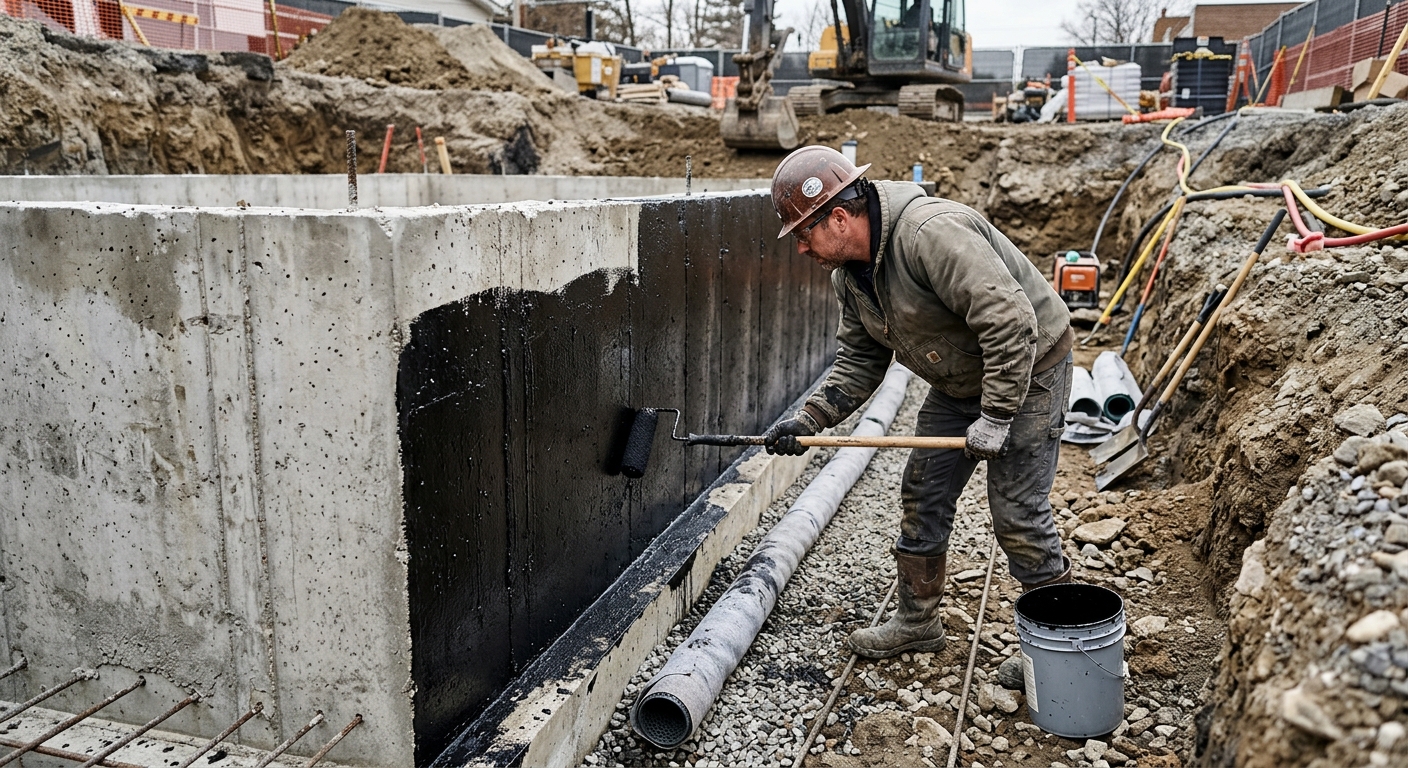
Basement waterproofing options and costs in Quesnel
Basement waterproofing costs in Quesnel vary a lot because Quesnel’s housing stock is older and many foundations have already lived through repeated freeze-thaw seasons. In the Cariboo (home to 9,889 people in the 2021 Census), 62.3% of homes were built before 1981, which usually means the original weeping tile and membranes are long past their service life. For many homeowners, the first signs show up after a wet spring or rapid freeze nights: damp corners, musty odours, and efflorescence that keeps returning until drainage and water management are corrected.
In practice, Cariboo jobs often cost more when access is tight and when excavation has to go deeper to reach sound foundation wall and footing lines. Clay-rich soils can hold water against the wall and increase hydrostatic pressure, so contractors may need exterior drainage upgrades (membrane plus drainage tile) rather than only patching the basement. On top of that, interior repairs in older neighbourhoods around Quesnel’s core—where mature landscaping and driveways limit excavation—are in high demand because homeowners want a solution that works without tearing up yards. This combination of older homes, variable soil drainage, and freeze-thaw is why you’ll see quotes spanning several tiers for the “same” leak.
Below is a practical comparison of common approaches and typical price bands you’ll see for Quesnel basement waterproofing, before we discuss what drives the differences between quotes.
| Method |
What It Addresses |
Disruption Level |
Durability |
Price Range |
| Exterior excavation + new membrane + drainage tile |
Direct water entry through foundation wall area; resets drainage around the perimeter |
High (excavation, regrading, landscaping impacts) |
High (source control when done to footing/grade) |
$7,000–$18,000 |
| Interior perimeter drain channel + sump pit |
Water after it enters; reduces hydrostatic build-up at the base |
Medium (interior excavation, limited wall disruption) |
Medium to high (depends on wall condition and crack control) |
$3,500–$11,500 |
| Foundation crack injection (epoxy or polyurethane) |
Crack sealing to stop seepage or stabilize cracks |
Low to medium (minor interior or localized exterior prep) |
Medium (often best as part of a full water management plan) |
$800–$1,500 |
| Sump pump installation (primary + battery backup) |
Active removal of seepage; protects during power interruptions |
Medium (pit + discharge routing) |
Medium to high (backup improves reliability) |
$1,100–$2,800 |
| Window well drain installation |
Rain/snowmelt infiltration near egress windows |
Low to medium (localized exterior work) |
Medium (depends on downspout/grade improvements) |
$900–$2,300 |
| Lot re-grading / downspout extension |
Redirects surface water away from foundation |
Low (minor landscaping, gutters extensions) |
Low to medium (best as a supporting fix) |
$500–$3,000 |
Prices are estimates only and vary by project scope, site access and material selection.
What affects the price of waterproofing in Quesnel
In Quesnel and across the Cariboo, it’s common to see the same “waterproofing” described two different ways—and priced 30% to 50% apart. A contractor can be quoting source control (exterior excavation, membrane, and drainage tile), or they can be quoting symptom control (interior drains and a sump). That’s only part of the story: the three drivers that most often separate Cariboo pricing from the national average are soil type, water table conditions, and freeze-thaw impacts.
First, soil. Clay-heavy or moisture-retaining soils can hold water against the foundation, increasing lateral pressure and turning a small crack into a recurring issue. When freeze-thaw repeats through winter nights, expansion and contraction can widen hairline cracks. Second, water table and seepage. When seepage is heavy enough to require a longer-running sump system, the job shifts toward more piping, pump sizing, and sometimes a discharge solution—pushing interior work upward toward the upper end of the $3,000–$12,000 interior band. Third, freeze-thaw. Even where exterior membranes are sound, freeze-thaw can expose weak joints, especially if downspouts discharge too close to the foundation.
Here are realistic Quesnel examples: (1) If access requires removing a deck or moving topsoil deep enough to reach the foundation wall, exterior excavation pricing can move toward $7,000–$18,000. (2) In basements of pre-1981 homes (62.3% of dwellings in the 2021 Census profile), failing original weeping tile can mean “interior-only” fixes won’t fully solve the problem, so crack injection plus sump drainage becomes the practical combination. (3) If there’s established landscaping, contractors often pivot to interior perimeter drainage, which reduces excavation but requires careful crack control and a well-sized pump system.
| Price Factor |
Why It Matters |
Cost Impact |
| Interior vs. exterior approach |
Interior manages water after entry; exterior reduces water pressure at the source |
Exterior typically adds the most due to excavation and drainage installation; interior often lands mid-range |
| Foundation type |
Poured concrete, block, stone and ICF behave differently and need different prep for sealing |
Poured concrete often responds well to sealing; block may require more crack control and interior drainage |
| Soil type |
Clay expands more and holds moisture against the wall |
Clay soils can increase seepage severity, raising interior drainage scope and/or pushing exterior work higher |
| Crack type and length |
Hairline cracks may be non-structural; horizontal/step cracks often need a deeper plan |
Structural-oriented repairs can increase labour and may require engineering involvement |
| Sump pump backup system |
Backup reduces risk during outages and spring surges |
Adds cost to equipment and wiring, but prevents basement water events |
| Access |
Landscaping, decks, driveways, and narrow side yards affect excavation and disposal |
More removal/rebuild time can shift costs upward quickly |
| Weeping tile age |
Original tile systems may be clogged, disconnected, or failed after decades |
Failed tile often means interior fixes won’t last without reset drainage strategy |
| Mould or efflorescence remediation required before sealing |
Active moisture feeds contamination and can compromise coatings and adhesives |
Can add time and specialized materials prior to waterproofing |
Permits & regulations in British Columbia
In British Columbia, foundation excavation, structural crack repair, and changes to lot drainage typically require a building permit, especially when work affects structural elements or alters how stormwater is directed away from the foundation. If a sump pump installation includes routing discharge in a way that connects to municipal storm or sanitary sewer systems, municipal approval is usually required. For structural crack repair—commonly horizontal cracks in block walls or major step cracks—an engineer’s assessment is often needed to confirm whether underpinning or other structural measures are required.
Before work begins in Quesnel, ask your contractor to explain what permits they will pull (or confirm they will not), and have that written into the scope. Many purely cosmetic sealing tasks and minor interior drying measures may not trigger permits, but anything that alters foundation drainage, includes exterior excavation, or addresses likely structural pathways generally does.
To verify your contractor in BC, start with these steps. First, check the online contractor registry for their licensing/authorization as applicable to their trade and work type. Second, request a current certificate of insurance (liability) and verify the coverage limits match the job size and excavation scope. Third, confirm WSIB/WCB coverage (or the appropriate equivalent) by asking for clearance documentation or proof of coverage. For structural repairs, verify whether they work with (or provide) engineering support and that the engineer is included where required. Finally, insist on a clear paper trail: permit responsibilities, start date, and warranty terms in the written estimate.
Interior vs exterior waterproofing — what does Quesnel need?
The fundamental difference is simple: exterior waterproofing aims to stop water before it reaches the foundation by doing full excavation, installing a membrane, adding drainage tile, and then backfilling correctly. Interior waterproofing (a perimeter drain channel, sump pit and sump pump) manages water after it enters and collects it before it damages your finished space. Because Quesnel sits in a freeze-thaw climate and many homes are older (62.3% built before 1981), the choice often comes down to source control versus reliable water management.
For poured concrete walls, crack injection can be very effective when the crack is not actively moving, and interior systems often act as insurance during wet cycles. For block foundations, interior drainage is commonly a practical complement because water can track through mortar joints and block geometry; even with sealing, you still want a collection system that reduces basement seepage.
Because spring melt and wet stretches can raise seepage quickly, sump pump reliability matters in British Columbia. That’s why homeowners in Quesnel frequently choose a backup strategy (battery backup) when they have any history of power outages or when seepage appears suddenly during storms. It’s not only about comfort—it’s about preventing a full basement event while the grid is down.
When is the price gap justified? If access allows exterior work and you have repeated seepage, the long-term “source control” can be worth paying toward the $7,000–$18,000 exterior range. If the basement is already finished and excavation would require major removals, a properly detailed interior system can be a smart alternative in the $3,000–$12,000 interior band—especially if crack sealing and drainage are coordinated.
| Method |
Best For |
Addresses Source? |
Disruption |
Lifespan |
Price Band |
| Full exterior excavation + membrane |
Recurring seepage, high hydrostatic pressure, failed original drainage, accessible side yards |
Yes |
High (excavation, backfill, regrading/landscaping) |
Long (often the best “reset” option) |
$7,000–$18,000 |
| Interior French drain + sump system |
Finished basements, limited access for excavation, ongoing seepage managed by pumping |
No (manages after entry) |
Medium (interior digging and pump installation) |
Medium to high with correct sizing |
$3,500–$12,000 |
| Crack injection — epoxy (structural) |
Non-active cracks requiring structural sealing and stabilization (as assessed) |
Partly (stops water through the crack pathway) |
Low to medium |
Medium (depends on whether the crack is truly inactive) |
$700–$1,500 |
| Crack injection — polyurethane (active leak) |
Cracks with active seepage or water movement through the crack |
Partly (targets active water flow) |
Low to medium |
Medium to high when matched to crack conditions |
$800–$1,800 |
| Interior drain channel only (no sump) |
Light moisture, occasional dampness, lower seepage rates |
No |
Low to medium (limited excavation) |
Lower (performance depends on how much water enters) |
$2,000–$6,500 |
| Re-grading + downspout extensions |
Surface water issues and overflow discharge near foundation |
Indirect (improves runoff away from wall) |
Low |
Low to medium (works best with drainage corrections) |
$500–$3,000 |
How to choose a waterproofing contractor in Quesnel
Choosing the right waterproofing contractor in Quesnel starts with checking the basics in British Columbia: licensing/authorization where applicable, liability insurance, and WSIB/WCB coverage. Ask for their current certificate of insurance and confirm it is active for the period of your project. For WSIB/WCB, don’t rely on verbal assurances—request proof of coverage or clearance documentation. Then, verify licensing details using the BC registry or their trade/contractor listing information so you can confirm their authority matches the scope (exterior excavation versus interior drainage work).
Next, get 2–3 itemised written quotes. You want line items for labour and materials, not just a lump sum. The scope should clearly state what’s included in preparation (surface cleaning, crack prep, removal of failing tile where relevant), disposal, pipe routing, and whether the contractor pulls permits or you do. Ask specifically what’s excluded—common exclusions include landscaping restoration, re-routing downspouts, patching floors after interior work, and mould or efflorescence remediation.
Warranty matters: confirm the workmanship warranty length (often time-bound), the product/manufacturer warranty (what membrane or injection material it covers), and whether the warranty is transferable if you sell the home. Also watch the payment schedule: never pay more than 10–15% upfront, and request a holdback until the job is complete and tested. Finally, insist on a written timeline with a start date and estimated completion date, including weather contingencies common in the Cariboo.
- Ask for proof of liability insurance with project-specific coverage.
- Verify WSIB/WCB coverage with a current clearance/proof letter.
- Confirm who pulls permits for excavation, drainage changes, and structural crack work.
- Require engineering involvement when the crack pattern suggests structural movement.
- Get 2–3 itemised quotes: labour hours, materials, and disposal listed separately.
- Confirm excavation depth targets (to reach sound foundation/footing line where needed).
- Ask how they handle clay soils and backfill compaction for exterior work.
- Confirm discharge plan for interior sump drains (where the water goes).
- Discuss power reliability: battery backup option and testing steps.
- Ensure crack injection method matches crack behaviour (epoxy vs polyurethane).
- Clarify remediation steps if there’s mould or heavy efflorescence before sealing.
- Use a written warranty with workmanship + product terms and transferability.
Red flags in Quesnel include: quoting “waterproofing” without a site drainage and soil assessment; refusing to put permits and exclusions in writing; offering no evidence of WSIB/WCB or current liability coverage; making you pay most of the contract upfront; and skipping backup discussions for sump systems where spring seepage is recurring.
Frequently asked questions — waterproofing in Quesnel
How much does basement waterproofing cost in Quesnel?
Basement waterproofing in Quesnel usually lands in a wide range because excavation depth, access, soil moisture behaviour, and whether the original weeping tile has failed can change the scope quickly. For many homeowners, interior waterproofing and weeping tile (when done as an interior drainage system with a sump) commonly falls in the $3,000–$12,000 band, while exterior waterproofing that involves excavation, membrane, and drainage tile often budgets in the $7,000–$18,000 range. If you’re dealing with a single localized entry point, crack repair might be closer to $500–$1,500, but that’s rarely the whole story when seepage is recurring. Because 62.3% of homes were built before 1981 (Statistics Canada, 2021 Census profile), older drainage components often need more than a spot fix.
Interior vs exterior waterproofing — which is better?
“Better” depends on what’s driving the leak. Exterior waterproofing is best when you want source control: excavation to expose the foundation, new membrane, and new drainage tile so water is redirected before it builds up against the wall. That’s why exterior work is commonly priced higher, often within the $7,000–$18,000 range. Interior waterproofing is usually the best fit when access is limited (mature landscaping, finished basements, tight side yards) and you need to manage water after it enters. Interior systems with perimeter drains and a sump typically fall within the $3,000–$12,000 band, sometimes with sump pump and backup. In Quesnel’s freeze-thaw seasons, homeowners often choose interior as an effective “insurance layer” even when some crack sealing is done.
Why is my basement leaking in Quesnel?
Basement leaks in Quesnel are usually caused by water finding a pathway: failed or clogged weeping tile, surface water draining toward the foundation, wall/footing cracks, or poor backfill drainage. Freeze-thaw cycles can worsen existing cracks, turning a minor seepage into repeated dampness each season. If your home was built before 1981 (62.3% of dwellings in the local profile, Statistics Canada, 2021 Census), the original waterproofing approach may be outdated and the original drainage may no longer function as intended. Clay-rich or moisture-retaining soils can hold water against the foundation and increase pressure, which often explains why leaks return even after small patch repairs. If you also see efflorescence or recurring wet corners, it points to an ongoing water pathway rather than a one-time failure.
How do I know if a foundation crack is serious?
Not all cracks mean the foundation is failing, but some patterns do require closer assessment. Hairline, vertical cracks are often less concerning than horizontal cracks, step cracks, or cracks that appear to widen over time. If you have bowing walls, cracking at window/door openings, or water actively seeping through the crack during wet periods, it’s a stronger sign the crack is part of a water entry pathway and may need injection and drainage measures. In British Columbia, structural crack repair typically requires extra care: if it suggests structural movement, you may need an engineer’s assessment to determine whether underpinning or other structural work is needed. For homeowners in Quesnel, the practical step is to document when the leak is worst (spring melt vs freeze nights) and ask for a crack condition evaluation before selecting epoxy versus polyurethane injection.
How much does foundation crack repair cost in Quesnel?
Foundation crack repair pricing in Quesnel often depends on the crack type (hairline vs active seepage vs structural concerns), total length, and how much prep is required. For many localized repairs, homeowners can expect crack repairs to be around the $500–$1,500 band, but that typically covers straightforward sealing of a limited number of cracks. If the contractor needs more extensive prep, multiple injection ports, or the plan requires coordination with drainage (for example, active leaks in a block foundation), the total can rise. Epoxy (structural) and polyurethane (active leak) injections also influence equipment and labour. A common reason quotes differ is that one contractor is only sealing the crack, while another is addressing the water source that keeps reactivating it.
Do I need a sump pump in Quesnel?
You may need a sump pump if water is actively entering at a rate that exceeds what a drain channel alone can handle, or if you want dependable protection during heavy spring wetting. In Quesnel’s freeze-thaw and wet-season conditions, homeowners with recurring seepage—especially where there’s no functioning perimeter drainage—often benefit from sump-based systems because they continuously remove collected water. That said, if seepage is minimal and localized, a drain channel without a sump may be enough as a temporary or partial solution. When you do install one, consider backup during power interruptions: a sump system with battery backup typically pushes the budget upward, often within the $800–$2,500 band when included as part of the overall waterproofing scope. A contractor should size the pump based on site conditions rather than using a one-size-fits-all approach.