Basement waterproofing options and costs in Pitt Meadows
Pitt Meadows homeowners typically face basement moisture from two directions: water that gets in because exterior drainage and waterproofing have failed over time, and water that then presses inward due to persistent local saturation. In Pitt Meadows, 25.9% of homes were built before 1981 (Statistics Canada, 2021 Census), which matters because older basements were more likely to have original tar-and-paper systems, dated weeping-tile layouts, and drain lines that have gradually clogged. When those systems fall short, even “minor dampness” can become active seepage during the wet winter and spring periods common across the Lower Mainland–Southwest.
Lower Mainland–Southwest pricing is shaped by high groundwater conditions and prolonged rainfall that maintain hydrostatic pressure against foundation walls and slabs. That’s why comprehensive exterior work—excavation, new membrane, and full drainage—sits at the higher end of regional expectations. At the same time, contractors often see demand spikes in older neighbourhood pockets near busy arterials and denser lots where access constraints increase excavation time and disposal handling. Many jobs are especially in demand around areas like the North Pitt Meadows / Meadowtown corridor, where mature landscaping and tighter setbacks can make exterior approaches more disruptive.
Depending on your foundation type, the leak pattern, and how much of the exterior can be opened, your solution may range from an exterior perimeter rebuild to interior drainage retrofits. Use the table below as a quick “apples-to-apples” comparison before you request itemised quotes for your specific site.
| Method |
What It Addresses |
Disruption Level |
Durability |
Price Range |
| Exterior excavation + new membrane + drainage tile |
Source control of water entry; replaces perimeter drainage and waterproofing system |
High (landscaping, excavation, re-backfill) |
Long-term (often the most complete solution) |
$15,000–$30,000 |
| Interior perimeter drain channel + sump pit |
Captures seepage after water enters; reduces hydrostatic pressure at the floor/wall interface |
Medium (interior cutting; minimal exterior damage) |
Good (depends on discharge routing and maintenance) |
$8,000–$18,000 |
| Foundation crack injection (epoxy or polyurethane) |
Seals cracks; epoxy for structural/low-flow cracks, polyurethane for active leaks |
Low to Medium (interior/local wall access) |
Variable (best when water entry path is understood) |
$500–$2,000 |
| Sump pump installation (primary + battery backup) |
Manages collected groundwater; backup reduces risk during power interruptions |
Low to Medium (small pit and piping; tied to existing routes) |
Good (only as reliable as discharge and power backup) |
$1,000–$5,000 |
| Window well drain installation |
Stops water pooling at egress/window wells; reduces localized seepage and damp flooring |
Low (excavation at the window area) |
Good for the targeted areas |
$2,000–$6,000 |
| Lot re-grading / downspout extension |
Redirects roof and surface water away from foundation; improves drainage away from walls |
Low (often limited spot excavation) |
Fair to Good (requires correct slope and ongoing maintenance) |
$1,500–$6,000 |
Prices are estimates only and vary by project scope, site access and material selection.
What affects the price of waterproofing in Pitt Meadows
In the Lower Mainland–Southwest, it’s common to see quotes for the “same” basement problem swing by 30–50% depending on what the contractor includes and how they address water entry versus water management. The biggest reason is that Pitt Meadows waterproofing costs diverge from the national average because three factors—soil/water conditions, hydrostatic pressure, and freeze-thaw—change both the labour intensity and the materials needed. Across Ontario and the Prairies, some failures relate more to expansive clay and wall movement; in British Columbia, persistent saturation and drainage limitations are often what keep pressure high against the foundation.
First, soil and water table levels in our region tend to raise sump pump run times and create more continuous seepage. Second, wet, mild winters and repeated freeze-thaw cycles widen existing cracks and joints, letting water path(s) evolve. Third, the housing mix matters: with 25.9% of homes built before 1981 (Statistics Canada, 2021 Census), many basements have dated or failing perimeter drainage, which increases the likelihood that interior retrofits alone won’t be sufficient.
Two practical Pitt Meadows examples that move the price: (1) If your exterior access requires breaking up a driveway apron or removing mature landscaping to reach the perimeter, exterior excavation commonly pushes toward the $15,000–$30,000 range. (2) If you only need targeted interior perimeter drainage and a sump system (no full perimeter opening), the project may fit the $8,000–$18,000 band—especially when your footing depth and floor-to-wall transitions are straightforward.
On the flip side, some jobs are lower cost when the water source is clearly surface-related and corrected with re-grading/downspout work, or when a small number of cracks are actively leaking and can be addressed by injection. Your final scope should reflect what’s causing the water, not just where moisture shows up.
| Price Factor |
Why It Matters |
Cost Impact |
| Interior vs. exterior approach |
Exterior controls water at the source; interior manages water after entry |
Interior often reduces disruption, but exterior can be more complete and sometimes longer-term |
| Foundation type |
Poured concrete, block, stone, and ICF behave differently and require different sealing/drainage strategies |
Block walls often need interior drainage more than crack injection alone |
| Soil type |
Soils with different permeability and compaction rates change how quickly backfill saturates |
Denser, poorly draining soils increase labour and may drive higher-end sums |
| Crack type and length |
Hairline cracks may be passive; horizontal/step cracks suggest higher movement or higher water pathways |
Structural-grade repairs typically cost more than small cosmetic seals |
| Sump pump backup system |
Battery backup keeps the pit from flooding during outages; essential when storms overwhelm discharge |
Can add thousands depending on system choice and discharge design |
| Access |
Decks, fences, driveways, and narrow side yards affect excavation speed and disposal |
Limited access commonly pushes exterior work toward the top of regional bands |
| Weeping tile age |
Original (often decades-old) tiles may be clogged, broken, or undersized for current rain patterns |
Failing tile increases likelihood of full replacement |
| Mould or efflorescence remediation required before sealing |
Moisture damage and salts can prevent long-term adhesion if not remediated |
Adds labour and may require additional drying time |
Permits & regulations in British Columbia
In British Columbia, many foundation and drainage scopes do require permits, especially when work touches structural elements or changes how water leaves your lot. Foundation excavation, structural crack repair, and modifications to lot drainage typically require a building permit so the work can be inspected for compliance and safety. If you’re installing or altering sump pump discharge connections—particularly anything that ties into storm or sanitary sewer infrastructure—you’ll usually need municipal approval as well.
For structural crack repair, especially horizontal cracks in block walls or major step cracking, an engineer’s assessment is often needed to confirm whether underpinning or other structural remediation is required. A reputable contractor should have engineering support available when structural conditions warrant it, and should carry liability insurance and WSIB/WCB coverage (as applicable) for the trades working at your home.
Here’s how a homeowner in Pitt Meadows can verify compliance step-by-step: (1) Ask the contractor for their licence/business registration details and confirm them using the provincial online licence registry. (2) Request a current certificate of insurance showing liability coverage and the correct insured address/entity. (3) Ask for WSIB/WCB clearance or account proof documents for the relevant contractors/subcontractors. (4) For permit-required scopes, confirm who pulls the permit and provide the permit number and inspection plan. (5) For engineered work, ask for the engineer’s letter or design documents before any crack injection that claims “structural” performance.
Interior vs exterior waterproofing — what does Pitt Meadows need?
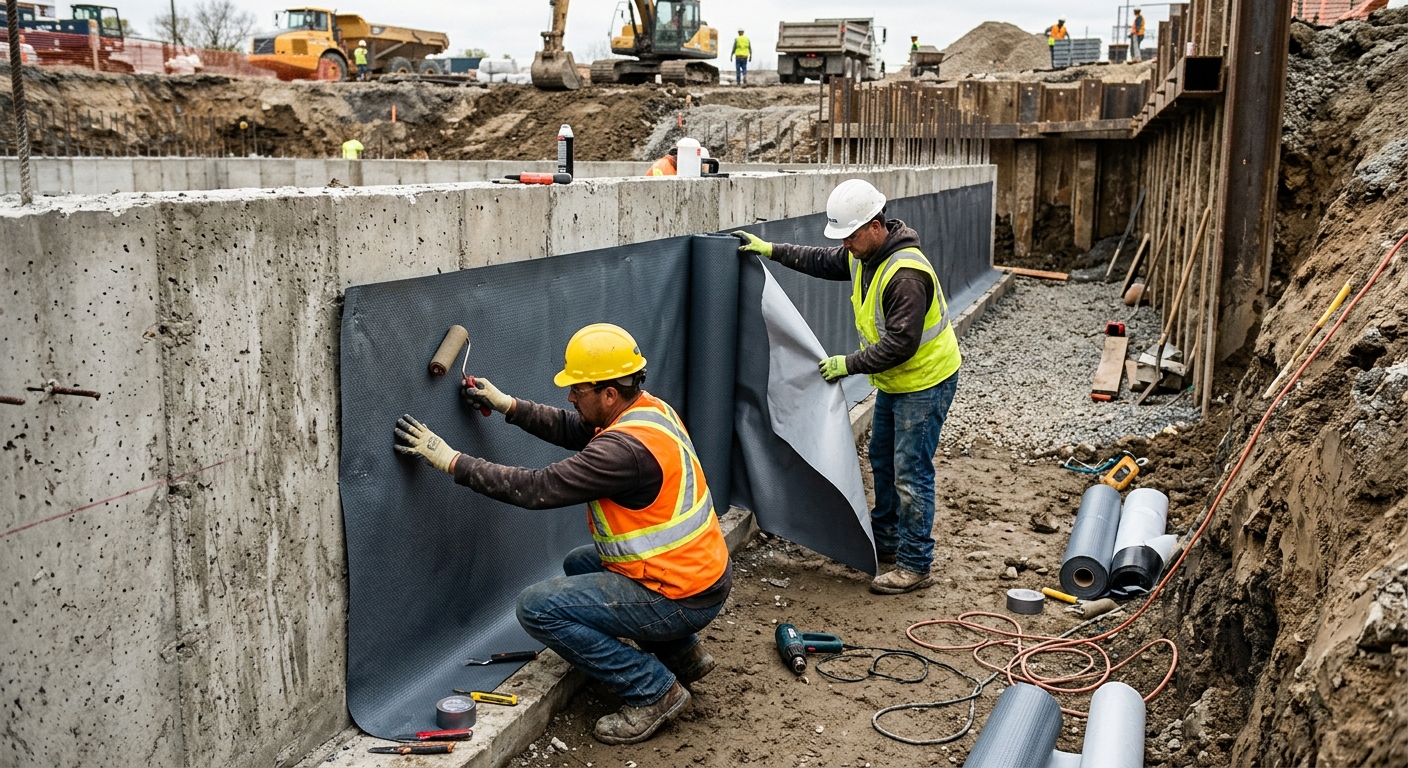
Exterior waterproofing is the “source-control” option: full excavation exposes the foundation, then a membrane and a new drainage tile system are installed, followed by backfill and drainage improvements. This approach directly addresses the water entry point, which is why it’s the most permanent style of solution when the perimeter drainage is failing. The trade-off is cost and disruption—excavation, breaking/patching at the property line, and landscaping restoration are typically required.
Interior waterproofing manages the problem after water enters. It usually involves a perimeter drain channel, sump pit, and sump pump (often with backup). In Pitt Meadows, where persistent wet seasons and hydrostatic pressure are common, interior systems can be very effective at preventing floor seepage and reducing ongoing pressure at the interior surfaces. However, it won’t stop water from reaching the outer face of your foundation wall. That matters most when your basement walls are poured concrete and cracks are the main entry path—those often respond well to crack injection—but for block foundations or conditions with unclear exterior drainage failure, interior drainage is frequently a necessary complement.
Power reliability is another local consideration. In spring flooding periods, a sump pump without backup can still fail during an outage or when discharge is temporarily overwhelmed. Adding a battery backup can be a smart risk reduction in British Columbia, particularly if your home has known intermittent wetness during heavy rain.
To illustrate cost justification: if your site is easy to access and the perimeter drainage is truly at the end of its life, a full exterior system in the $15,000–$30,000 band can be worth it. But if you have localized interior seepage and can capture it with a perimeter drain and sump within the $8,000–$18,000 band, an interior approach may solve the lived problem with much less disruption—provided the contractor correctly identifies the water path.
| Method |
Best For |
Addresses Source? |
Disruption |
Lifespan |
Price Band |
| Full exterior excavation + membrane |
Widespread perimeter seepage; failing weeping tile; long-term source control |
Yes |
High |
Long-term |
$15,000–$30,000 |
| Interior French drain + sump system |
Homes with limited exterior access; active seepage collection and control |
No (manages water after entry) |
Medium |
Good with maintenance |
$8,000–$18,000 |
| Crack injection — epoxy (structural) |
Structural/low-flow cracks in poured concrete where movement is understood |
Partially (seals entry at the crack) |
Low to Medium |
Good when water source is addressed |
$500–$2,000 |
| Crack injection — polyurethane (active leak) |
Active leaking cracks and voids where water has to be stopped quickly |
Partially (seals active path) |
Low to Medium |
Good (depends on crack conditions) |
$500–$2,000 |
| Interior drain channel only (no sump) |
Light seepage where gravity drainage to an existing sump/pit is possible |
No |
Medium |
Fair to Good |
$6,000–$12,000 |
| Re-grading + downspout extensions |
Surface water routing issues (roof runoff/surface ponding near foundation) |
Yes for surface-driven moisture |
Low |
Fair (requires ongoing slope care) |
$1,500–$6,000 |
How to choose a waterproofing contractor in Pitt Meadows
Start by verifying British Columbia licensing and coverage. Ask for the contractor’s licence/business details (then confirm via the provincial online registry), and request a certificate of liability insurance that names the correct legal entity and includes an active coverage period. For staffing and subcontracting, ask for WSIB/WCB proof/clearance documents so you’re not exposed to unpaid worker claims. A contractor should also explain who will be on-site, which trades are subcontracted, and whether they carry engineering support for any structural crack conditions.
Next, get 2–3 itemised written quotes—not a single lump sum. Itemisation should show labour and materials separately (e.g., excavation hours, membrane system components, drainage tile and filter fabric, sump pit and piping, pump model, and electrical/power tie-in). Confirm exactly what’s included: permit pull (if required), disposal of excavated materials, protection for landscaping, and restoration scope. A quote that doesn’t clearly mention exclusions (like underpinning, additional engineering, or mould remediation) is a common source of disputes later.
On warranty, separate workmanship warranty from product/manufacturer warranty. Ask: How many years on installation? Is the product warranty tied to proper system registration? Is it transferable to future owners? For payment, never pay more than 10–15% upfront; use a holdback until the job is fully complete and verified. Also insist on a written timeline with a start date and completion estimate, and require photos/records of the membrane and drainage installation before backfill.
- Scope includes leak investigation method (flashlight inspection isn’t enough—ask about moisture mapping and crack identification).
- Quote lists specific components (drain tile size, membrane type, sump pump model, check valve, backup system).
- Disposal and site restoration are itemised (haul-off, topsoil, sod replacement or seeding).
- Permit responsibility is clear (who pulls it, who schedules inspections, and any inspection hold points).
- Engineering requirement is addressed for structural cracks (step cracks, horizontal cracks, bowing/wall movement signs).
- Workmanship warranty includes coverage for leaks and workmanship defects (not just “materials only”).
- Product warranty registration steps are included in writing.
- Payment schedule holds at least 10–20% until final walkthrough and system testing.
- Electrical/power tie-in details are stated if a sump/battery backup is included.
- Backflow/check valve and discharge routing are described (where water goes and how it avoids re-entering).
- They explain how freeze-thaw and drainage performance are accounted for (slope, backfill gradation, membrane continuity).
- They provide a site-access plan for Pitt Meadows lots (driveway/deck removal and protected restoration).
Red flags in Pitt Meadows: a contractor who promises “one-size-fits-all” waterproofing without diagnosing the water entry path; a quote that only mentions “sealing” cracks but excludes drainage (or vice versa); no clear warranty terms for workmanship; no proof of liability insurance and WSIB/WCB/coverage documentation; and pressure to pay the majority upfront before the membrane, drain tile, and pump discharge have been installed and tested.
Frequently asked questions — waterproofing in Pitt Meadows
What drainage issues are most common in Pitt Meadows homes?
In Pitt Meadows, the most common drainage issues are perimeter saturation from failing or undersized weeping-tile systems and poor surface water routing near the foundation. Homeowners often notice damp concrete, efflorescence, and musty odours after prolonged rain seasons, because hydrostatic pressure builds when drainage can’t keep up. A second frequent issue is localized pooling—especially around window wells, downspouts that discharge too close to the house, or low spots from grading settling. In many older homes (25.9% built before 1981 per Statistics Canada, 2021 Census), the original drainage components are at the end of their service life, so water finds its way through joints and cracks.
When you’re pricing options, interior perimeter drainage and sump solutions typically start in the $8,000–$18,000 range, while exterior excavation-based systems often sit higher at $15,000–$30,000 because they restore the perimeter at the source.
How do I choose a waterproofing contractor in Pitt Meadows?
Choose a contractor by matching their proposal to the cause of the water, not just the symptom you can see on basement walls. In Pitt Meadows, ask how they will confirm whether the water is coming from perimeter saturation, a specific crack path, or surface runoff. Get 2–3 itemised quotes that separate labour and materials, and confirm what’s included for permits, disposal, and restoration. Verify British Columbia coverage by requesting a certificate of liability insurance and WSIB/WCB proof where applicable, then confirm licensing details using the provincial online registry.
Look for scope clarity: a proper plan should describe drainage tile replacement versus interior drainage, pump model selection, discharge routing, and whether backup power is included. Finally, insist on a workmanship warranty and a payment schedule that keeps most funds back until the job is complete and tested.
What is a battery backup sump pump and do I need one in Pitt Meadows?
A battery backup sump pump is designed to keep the sump working during power outages or short interruptions. In Pitt Meadows and across the Lower Mainland–Southwest, spring storms and heavy rain can coincide with periods of electrical disruption or overloaded drainage, so backup reduces the chance that a power loss turns a “controlled seepage” problem into a flooded basement. The battery runs the primary sump pump automatically for a limited duration, buying time until power returns or until the batteries need recharging/servicing.
Whether you “need” it depends on how critical the basement space is and your risk tolerance. If you already have active seepage or a history of pumps running during wet spells, backup is usually a worthwhile protection. Price-wise, sump work with backup commonly aligns with the $1,000–$5,000 band depending on system type and electrical tie-in complexity.
How much does basement waterproofing cost in Pitt Meadows?
Basement waterproofing in Pitt Meadows typically falls into a few predictable bands, depending on whether you address the source externally or control water internally. Exterior excavation and a full membrane plus drainage tile replacement commonly lands between $15,000–$30,000 because excavation, mechanical breaking, disposal, and landscaping restoration are labour-heavy. Interior waterproofing—usually perimeter drain channel plus a sump pit and pump—often fits $8,000–$18,000, since disruption is mostly inside. Foundation crack repairs via injection generally start lower, commonly $500–$2,000 depending on crack type and length.
If you only need minor grading fixes, downspout extensions, or window well drains, costs can be less, but those are best when surface runoff is the true cause. A proper assessment is what keeps you from paying for the wrong system.
Interior vs exterior waterproofing — which is better?
In British Columbia, “better” depends on where the water is coming from. Exterior waterproofing is best for true source control: full excavation, new membrane, and perimeter drainage redirect groundwater before it reaches your basement walls. It’s more expensive and disruptive, which is why Pitt Meadows exterior projects typically sit in the $15,000–$30,000 range. Interior waterproofing is better when exterior access is limited or when you need a practical way to manage water after it enters—perimeter drain channel, sump pit, and pump—often in the $8,000–$18,000 range.
For poured concrete, crack injection can be effective when the crack is the entry path and the wall isn’t actively moving. For block foundations, interior drainage is frequently a practical complement, because water can move through porous wall systems and joint areas even after sealing attempts.
Why is my basement leaking in Pitt Meadows?
Basement leaks in Pitt Meadows are usually caused by a combination of prolonged rainfall saturation, drainage failure, and how water interacts with your foundation. When weeping tile or exterior perimeter drainage is clogged, broken, or undersized, hydrostatic pressure builds and finds weak points—joints, construction seams, and cracks. Freeze-thaw during wet winters and spring can enlarge existing openings, turning small seepage into more noticeable moisture. Older homes (with a significant share built before 1981 per Statistics Canada, 2021 Census) are also more likely to have dated drainage and waterproofing materials that have aged out.
To pinpoint the cause, look for patterns: active dripping at specific crack lines often points to injection needs; wall dampness after heavy rain suggests perimeter saturation; and localized pooling around windows or along one wall can point to downspout/well drainage problems.