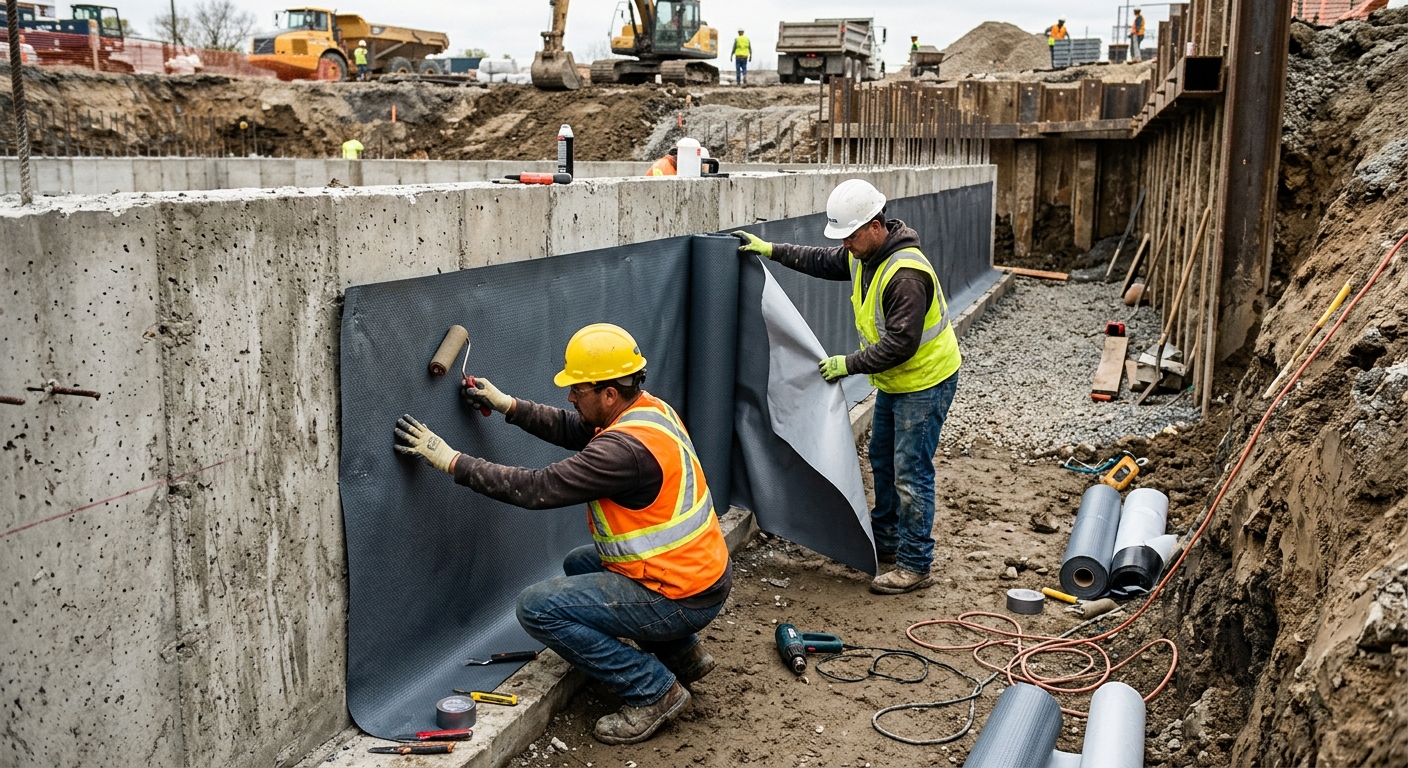
Basement waterproofing options and costs in Castlegar
Castlegar homeowners typically start waterproofing decisions with one question: do we stop water at the foundation, or manage it once it gets into the basement? In this part of the Kootenays, that choice matters because the majority of local homes were built before 1981 (64.5% of the housing stock in the 2021 Census profile), when exterior damp-proofing and perimeter drainage details were often basic or simply not designed for today’s heavier rain patterns and long freeze–thaw seasons. With 2,700 homeowner households locally (Statistics Canada, 2021 Census), there’s steady demand—especially in neighbourhoods on the valley edges where yard slopes, older retaining landscaping, and older perimeter drains are common.
In the Castlegar market, the biggest cost drivers are excavation difficulty, the condition and depth of existing weeping tile (often undersized or failed), and how hydrostatic pressure builds during spring melt and shoulder-season storms. Glacial and alluvial soils can be well-drained on slopes, but in lower, moisture-holding pockets, water backs up faster against basement walls. That’s why exterior excavation + drainage design tends to price higher (often aligning with the $18,000–$35,000 exterior excavation band), while interior solutions often sit in the $9,000–$20,000 range.
The table below compares the most common options for Castlegar basements, including what each method addresses and how disruptive it is—so you can match scope to your leak pattern before you request quotes.
| Method |
What It Addresses |
Disruption Level |
Durability |
Price Range |
| Exterior excavation + new membrane + drainage tile |
Source water entry by restoring perimeter drainage and full waterproofing system |
High (yard excavation, regrading, material disposal) |
High (when backfill, membrane, and tile are installed to spec) |
$18,000–$35,000 |
| Interior perimeter drain channel + sump pit |
Collects seepage after it enters; reduces hydrostatic pressure at the floor/wall interface |
Medium (floor saw cuts and sump pit work) |
Medium to high (depends on pump maintenance and discharge routing) |
$9,000–$20,000 |
| Foundation crack injection (epoxy or polyurethane) |
Stops active leaks and/or seals non-moving cracks to slow infiltration |
Low (drilling ports; interior patching) |
Medium (best when paired with proper drainage) |
$800–$2,500 |
| Sump pump installation (primary + battery backup) |
Moves water out during heavy melt/rain events; prevents basement flooding during outages |
Low to medium (pit, discharge line, minor concrete access) |
High (when backup power is included) |
$2,500–$5,500 |
| Window well drain installation |
Controls water pooling around egress windows |
Low to medium (excavation around window wells) |
Medium (improves localized seepage conditions) |
$1,200–$4,000 |
| Lot re-grading / downspout extension |
Reduces water that runs toward foundation walls |
Low (landscaping adjustments) |
Low to medium alone; high when combined with drainage repairs |
$1,000–$3,500 |
Prices are estimates only and vary by project scope, site access and material selection.
What affects the price of waterproofing in Castlegar
In Castlegar and across the Kootenays, it’s normal to see quotes for the “same” basement waterproofing range by 30–50%. That spread usually comes down to how much excavation is required, how far contractors need to go to repair or replace drainage, what they find behind existing backfill, and whether you’re solving the source of water entry or only treating symptoms. Your home’s foundation age matters too: many basements were built when perimeter drainage details were less consistent, which means contractors often spend more time locating and assessing failed weeping tile and older sealants.
Three local drivers separate Kootenay costs from the national average: soil type, water table, and freeze–thaw. Where clay-heavy or moisture-holding soils dominate, freeze–thaw can expand around the foundation and exert lateral pressure, widening cracks over time. In areas with a higher local water table near rivers and alluvial fans, sump systems run more frequently and require more robust discharge routing and backup pumping. Even though Castlegar isn’t “coastal,” intense rain events can still saturate backfill quickly when older drainage fails, which accelerates hydrostatic pressure and increases labour for excavation and disposal.
Concrete examples: (1) If your existing weeping tile is collapsed or buried shallow, an exterior approach can climb toward the $18,000–$35,000 band because excavation and new drainage line runs must be rebuilt properly. (2) If leaks are mostly through a few active cracks, injection may sit near the $800–$2,500 crack repair band—but only if exterior grading and roof water control are also corrected. (3) If your basement floor shows recurring seepage after heavy melt, interior drainage and sump work often becomes the practical path in the $9,000–$20,000 range, especially where exterior access is blocked by mature landscaping.
| Price Factor |
Why It Matters |
Cost Impact |
| Interior vs. exterior approach — interior is less disruptive but addresses symptoms |
Interior systems collect water after entry; exterior systems prevent entry by restoring drainage and membrane |
Interior often $9,000–$20,000; exterior often $18,000–$35,000 |
| Foundation type — poured concrete vs. block vs. stone vs. ICF |
Crack repair methods and sealing performance differ by wall material and joint design |
Block and stone commonly require complementary drainage; poured may respond better to targeted crack work |
| Soil type — clay expands more than sand, adding pressure |
Moisture-holding soils raise hydrostatic pressure and worsen freeze–thaw crack movement |
More labour and stronger drainage specifications; can add thousands to exterior scopes |
| Crack type and length — hairline vs. structural horizontal cracks |
Active and moving cracks demand different injection materials and sometimes engineering |
Hairline repairs cheaper; structural cracks can push costs upward due to assessment and expanded scope |
| Sump pump backup system — battery or water-powered backup needed |
Spring melt and storm events increase risk during outages |
Typically adds meaningful cost within the $2,500–$5,500 sump band for reliability |
| Access — landscaping, decks, or driveways must be removed for exterior |
Exterior work requires excavation clearance and safe material staging |
Land removal/disposal and reinstatement can add several thousand depending on landscaping |
| Weeping tile age — original tile (60+ years) may be completely failed |
Older drainage often collapses, clogs, or was never properly routed |
May require full re-installation rather than spot fixes, moving you toward higher band pricing |
| Mould or efflorescence remediation required before sealing |
Moisture chemistry and contamination need controlled cleaning before sealing materials can bond |
Increases labour for cleaning, drying time, and appropriate containment |
Permits & regulations in British Columbia
In British Columbia, some foundation-related work typically requires a permit, especially when you’re changing drainage patterns, altering or repairing structural elements, or working near services. In general, foundation excavation for an exterior waterproofing system, structural crack repair that could affect load paths (particularly major horizontal cracks in block foundations), and modifications to lot drainage or discharge routes typically need a building permit. If you’re installing a sump pump that connects to storm or sanitary sewer (or otherwise changes how water is discharged), municipal approval is often required before you tie into any approved drainage system.
Step one for a homeowner in Castlegar: ask the contractor to confirm in writing whether a permit is required for your specific scope, and who pulls it. Step two: for crack repairs, request the basis for the approach—if the crack geometry suggests movement or structural concern, an engineer’s assessment is commonly required so the contractor isn’t just sealing symptoms. Step three: verify the contractor carries liability insurance and WSIB/WCB coverage (as applicable to the company’s workforce). For structural repairs, make sure they can show engineering support where needed.
Where to check: (1) the province’s public contractor/permit licensing information (via the appropriate online registry), (2) your contractor’s certificate of insurance for liability coverage dates and project/territory, and (3) documentation of WSIB/WCB account standing or clearance letter. If they can’t provide current proof, that’s a major red flag before you sign.
Interior vs exterior waterproofing — what does Castlegar need?
The fundamental difference is where the water is dealt with. Exterior waterproofing involves full excavation, new membrane, new perimeter drainage tile, and backfill—so it addresses the source of water entry. It’s more expensive and disruptive, but it can be the most permanent way to reduce hydrostatic pressure against the foundation wall. Interior waterproofing uses a perimeter drain channel and sump pit/pump to manage water after it enters; it’s typically less invasive and faster to complete, but it doesn’t fully stop the pressure at the wall.
For Castlegar’s Kootenay climate, the “right” approach depends on soil moisture behaviour and foundation construction. If you have poured concrete walls with cracks that respond to sealing, crack injection (especially when paired with exterior grading correction) can work well as part of a broader plan. With block foundations, mortar joints and block seams can act like capillaries; in many real Castlegar basements, interior drainage plus sump control becomes a practical complement to reduce ongoing seepage and protect finishing work.
Sump pump backup matters locally. British Columbia spring flooding risk and outage uncertainty mean a primary pump without backup can leave you vulnerable during peak melt. That’s why many homeowners choose battery backup or another backup method when the basement is used as living space or when there’s a history of pump failure during storms.
Dollar example: if you’re quoted around $18,000–$35,000 for exterior excavation and new drainage, but the leak is limited to a few active cracks and intermittent dampness, an interior approach plus crack repair may stay closer to the $9,000–$20,000 interior band and $800–$2,500 crack repair band—provided the lot grading and downspouts are corrected. If you have repeated hydrostatic pressure signs (active seepage after heavy melt), the exterior scope is often the justified spend.
| Method |
Best For |
Addresses Source? |
Disruption |
Lifespan |
Price Band |
| Full exterior excavation + membrane |
Frequent seepage, high hydrostatic pressure, failed perimeter drainage, long-term control |
Yes |
High |
High (properly executed drainage + membrane) |
$18,000–$35,000 |
| Interior French drain + sump system |
Basements where exterior access is limited or leaks are already penetrating |
No (manages water after entry) |
Medium |
Medium to high (depends on pump reliability and maintenance) |
$9,000–$20,000 |
| Crack injection — epoxy (structural) |
Non-moving cracks in poured concrete; sealing to stop infiltration through static defects |
Partial (seals pathways but doesn’t replace drainage) |
Low |
Medium (best when water is controlled around the foundation) |
$800–$2,500 |
| Crack injection — polyurethane (active leak) |
Active seepage through cracks; water-driven leaks that need flexible sealing |
Partial |
Low |
Medium (often improved when combined with drainage) |
$800–$2,500 |
| Interior drain channel only (no sump) |
Minor dampness or low-flow seepage where water can be controlled without pumping |
No |
Medium |
Lower to medium (risk if water volumes increase) |
$6,500–$14,000 |
| Re-grading + downspout extensions |
Roof-water and surface-water management where foundation wetting is mostly surface-driven |
Partial (reduces inflow) |
Low |
Low to medium alone; higher when integrated with drains |
$1,000–$3,500 |
How to choose a waterproofing contractor in Castlegar
Start with the basics: British Columbia licensing, liability insurance, and WSIB/WCB coverage. How to check each—before you sign anything. First, ask for the contractor’s licence/registration number and verify it through the applicable online registry for BC. Second, request a current certificate of liability insurance and confirm the coverage dates and that it matches the scope of the work at your address. Third, ask for WSIB (or WCB) account/clearance documentation for the company’s workforce; don’t accept verbal confirmation.
Then get 2–3 itemised written quotes. The best quotes break labour and materials into line items (excavation, drainage tile, membrane, backfill, disposal, concrete saw cuts, sump pit liner, pump + discharge piping, and reinstatement). Avoid “lump sum” proposals that don’t state what’s included. Read the scope for exclusions: is disposal included? Is permit pulling included (when required)? Will they tie discharge to an approved location? Are saw cuts and reinstatement covered? A strong waterproofing plan should also specify drying time and whether moisture levels are verified before sealing.
Warranty matters. Ask for the workmanship warranty length, product/manufacturer warranty details, and whether the warranty is transferable to future owners. Payment schedule: never pay more than 10–15% upfront; keep a holdback until the job is complete and you’ve received final documentation. Timeline: ensure the start date and completion estimate are in writing, including key dependencies like excavation weather windows.
- Verify BC licence/registration using the contractor’s number (not just a brochure).
- Confirm liability insurance is current and active for the project dates.
- Check WSIB/WCB coverage documentation for the company.
- Request an itemised quote with labour + materials breakdown, not just a total.
- Ask what happens if existing weeping tile is found failed—spot repairs vs full replacement?
- Ensure discharge routing is described (and approved where required).
- Confirm disposal, backfill, and site reinstatement are included.
- Check whether they will address mould/efflorescence remediation before sealing.
- Ask about drying and cure times for injections and membranes.
- Review warranty: workmanship duration, product warranty, and transferability.
- Set payment terms with a holdback; avoid large deposits.
- Get an in-writing timeline including start, milestones, and weather-related contingencies.
Red flags in Castlegar include: (1) contractors who promise “one-coat” exterior waterproofing without addressing drainage tile routing, (2) refusing to put permit responsibility in writing when drainage changes are proposed, (3) dismissing hydrostatic pressure concerns and suggesting crack injection only for active seepage, (4) no documented sump backup option when your basement has flooded during melt periods, and (5) minimal or non-specific warranties that don’t clearly separate workmanship from product coverage.
Frequently asked questions — waterproofing in Castlegar
Interior vs exterior waterproofing — which is better?
In Castlegar (and across BC’s Kootenays), “better” depends on what’s driving the water. Exterior waterproofing (excavation, membrane, and new drainage tile) is generally best for long-term source control because it reduces hydrostatic pressure before water reaches the wall. It’s also the most disruptive, which is why many projects land in the $18,000–$35,000 exterior excavation band. Interior waterproofing (perimeter drain channel + sump system) is often the better choice when excavation access is limited, or when you’re dealing with seepage already inside. Those projects commonly align with the $9,000–$20,000 interior band, sometimes paired with crack repair in the $800–$2,500 range. If your goal is to stop the entry point, exterior usually wins; if you need a practical solution that protects the basement quickly, interior is often the next-best path.
Why is my basement leaking in Castlegar?
Basement leaks in Castlegar are usually a combination of water management and foundation condition. Older homes—many built before 1981 (Statistics Canada, 2021 Census profile)—often have original weeping tile that’s undersized, collapsed, or routed incorrectly. During spring melt and shoulder-season rains, saturated backfill can build up against basement walls, and freeze–thaw cycles can widen existing joints and micro-cracks, turning slow seepage into visible dampness. Soil type also matters: some lots sit on moisture-holding pockets where water stays in the ground longer, increasing hydrostatic pressure. If your sump pump runs often or fails during storms, it’s a sign your system or discharge routing may not be matched to local conditions. A proper diagnosis usually includes checking crack locations, floor-wall interfaces, and whether roof downspouts and grading are steering water toward the foundation.
How do I know if a foundation crack is serious?
A crack can be “cosmetic,” or it can indicate movement or active water entry. In BC basements, look for patterns: horizontal or step-like cracks in block walls, widening over time, or cracks that coincide with water seepage after heavy rain and melt seasons suggest the need for deeper evaluation. Hairline vertical cracks can sometimes be monitored, especially if they’re dry and stable. But if you notice dampness, efflorescence (white mineral deposits), or water staining along the crack line, that points to a pathway for infiltration. In older Castlegar homes, freeze–thaw can also cause cracks to re-open, so even previously sealed lines may need re-treatment. A contractor should measure crack width and provide an injection material plan—epoxy for non-moving cracks and polyurethane for active leaks—while structural assessment may be needed for major defects.
How much does foundation crack repair cost in Castlegar?
Foundation crack repair pricing in Castlegar typically depends on crack type, length, whether it’s active leaking, and how many ports and injection stages are required. For many residential cases, estimates fall within the $800–$2,500 band for injection repairs. Dry, hairline cracks that are non-moving generally cost toward the lower end, especially with epoxy-style sealing for poured concrete. Active leaks through cracks that require a flexible, water-reactive polyurethane approach usually land toward the higher end, since you may need more preparation and staged injection. If a crack is tied to structural movement, the scope can change significantly because an engineer’s assessment—and possibly underpinning—may be required before any sealing system is installed. That’s why reliable contractors explain the diagnosis and injection choice before quoting.
Do I need a sump pump in Castlegar?
You may need a sump pump in Castlegar if you’re seeing recurring seepage, water pooling at the lowest point after storms, or if your interior drain system can only manage water effectively with pumping. Interior drainage solutions often include a sump pit so the system can handle intermittent flows during spring melt and heavy rain events. Many homeowners choose a backup system (battery or other backup method) because power interruptions can occur when weather is severe. While some basements can be managed with drainage-only measures when flows are minimal, most “wet season” basements benefit from sump control, especially where older perimeter drains have failed. If you’re being quoted, ask whether backup is included in the sump scope; typical sump pump installation pricing is in the $2,500–$5,500 range when you’re building a more reliable setup for Canadian weather realities.
How does Castlegar's soil affect my foundation?
Castlegar’s soils can vary from well-drained gravels on slopes to finer, moisture-holding silts and clays in valley areas. That variation affects how quickly water builds up against your foundation and how long it stays near the basement wall after storms. Moisture-holding soils tend to raise hydrostatic pressure, increasing seepage at the wall/floor joint. They also amplify freeze–thaw effects: when water in the soil expands during freezing and contracts during thawing, cracks and joints can widen over time—especially in older poured concrete, concrete block, or stone foundations. If your lot has a clay-leaning profile, you may see more lateral pressure and more recurring leaks unless drainage is restored around the perimeter. The practical takeaway: the best solutions match both the foundation’s condition and the site’s water behaviour—often requiring exterior drainage design, or interior drainage plus sump control when exterior excavation isn’t feasible.