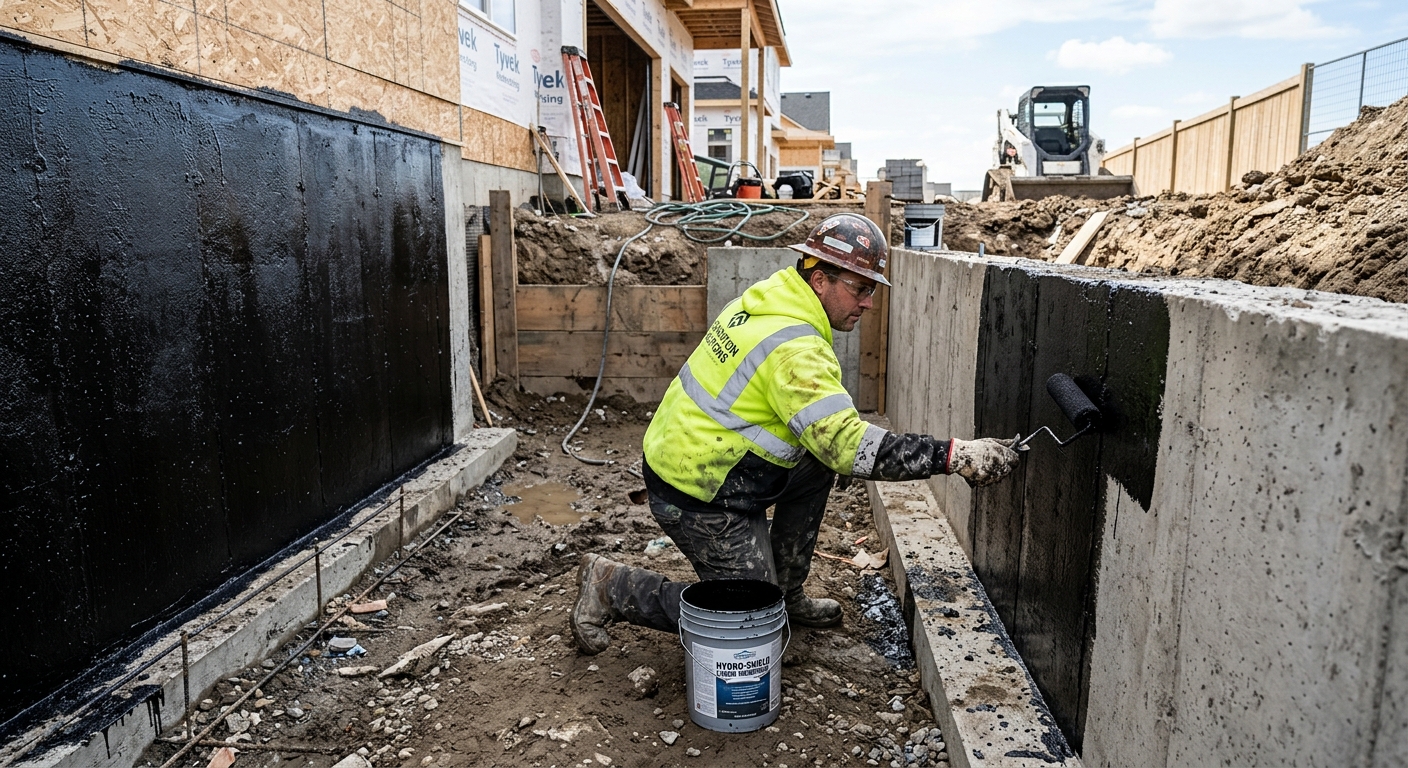
Basement waterproofing options and costs in Crescent Beach
Crescent Beach, British Columbia is a coastal community where basement moisture problems are often driven less by soil “movement” and more by persistent saturation and hydrostatic pressure against foundation walls. With a population around 1,200 (Statistics Canada, 2021 Census), many homes sit close together, and excavation work can be constrained by landscaping, walkways, and tight side yards—pushing labour and disposal costs higher than you might expect. In addition, Crescent Beach’s Lower Mainland–Southwest market often involves older foundations that are more likely to have aging or failing perimeter drainage (weeping tile) systems, so interior wet areas can show up even when a home looks “fine” on the surface.
In this region, intense, prolonged rainfall keeps backfill saturated and raises groundwater levels, which maintains pressure on basement slabs and walls. Wet, mild winters plus frequent freeze-thaw cycles widen existing cracks and joints, increasing seepage pathways even in newer homes. Contractors are busiest in the Semiahmoo Peninsula area around Crescent Beach, where driveway access and rocky sections can require mechanical breaking during excavation, raising the overall cost for exterior work. Those same factors also affect availability—solid crews can book out quickly during peak wet-season months, which can influence scheduling and mobilization fees.
Below is a practical comparison of the common approaches homeowners choose in Crescent Beach, from full exterior waterproofing to targeted interior retrofits, and what they typically cost before site-specific measurements and drainage testing.
| Method |
What It Addresses |
Disruption Level |
Durability |
Price Range |
| Exterior excavation + new membrane + drainage tile |
Primary water source (hydrostatic pressure) and exterior seepage; replaces failed perimeter drainage |
High (breaking excavation, landscape reinstatement) |
Long-term (often 20+ years with proper installation) |
$15,000–$30,000 |
| Interior perimeter drain channel + sump pit |
Water after entry; reduces accumulation against walls |
Medium (interior flooring/finish impacts possible) |
Good (typically 15+ years; depends on maintenance of pump and drains) |
$8,000–$18,000 |
| Foundation crack injection (epoxy or polyurethane) |
Crack leakage pathways (polyurethane targets active leaks; epoxy suits stable cracks) |
Low to Medium (minor drilling and patching) |
Moderate to long-term (often 10–20 years depending on crack movement) |
$500–$2,000 |
| Sump pump installation (primary + battery backup) |
Controls water level; prevents basement flooding during power dips/outages |
Low (interior work around pit; limited concrete cutting) |
Good (hardware lifespan varies; backup reduces risk) |
$1,000–$5,000 |
| Window well drain installation |
Rainwater entry near egress windows; reduces localized pooling |
Low to Medium (excavation around window wells) |
Good (5–15+ years with correct grading/drain rock) |
$2,000–$6,000 |
| Lot re-grading / downspout extension |
Redirects roof runoff away from foundation and improves surface drainage |
Low (minor landscaping disruption) |
Moderate (performance depends on ongoing maintenance) |
$1,500–$4,500 |
Prices are estimates only and vary by project scope, site access and material selection.
What affects the price of waterproofing in Crescent Beach
In the Lower Mainland–Southwest region, quotes for the same “type” of waterproofing job can vary by roughly 30–50% from contractor to contractor because the underlying cause of water entry is rarely identical between homes. Two houses may both show seepage in the same corner, but one may have a failing weeping tile line with saturated backfill, while the other may have an active crack pathway that needs targeted injection. Those differences directly change excavation depth, drainage materials, labour hours, pump sizing, and the amount of interior restoration required.
Three factors most strongly separate local costs from the national average: soil conditions, water table levels, and freeze-thaw. In Crescent Beach, coastal BC rainfall can saturate backfill quickly when original drainage fails, keeping hydrostatic pressure high on basement walls and slabs. Freeze-thaw then widens cracks and joints—so repairs that ignore movement risk (or use the wrong injection product) often fail sooner. By contrast, clay-heavy soils found in parts of Ontario and the Prairies can expand during freeze-thaw and exert lateral pressure too, but here the dominant driver is often persistent saturation and drainage challenges rather than extreme seasonal swelling.
Concrete examples: if your foundation is within a few metres of a low spot or where downspouts dump toward the basement, re-grading and downspout work may reduce how often the sump runs, lowering system sizing and long-term operating stress. If your home has tight access off 8th Avenue-area lanes and requires mechanical breaking to excavate rocky sections, your exterior excavation can land toward the upper end of the exterior waterproofing band (about $15,000–$30,000). If instead the problem is localized and stable, an injection-only approach can sometimes fall within the crack repair range (about $500–$2,000)—but only after moisture mapping confirms the crack is the true entry pathway.
| Price Factor |
Why It Matters |
Cost Impact |
| Interior vs. exterior approach — interior is less disruptive but addresses symptoms |
Interior methods manage water after entry; exterior addresses water source and pressure |
Interior is often lower upfront; exterior can cost materially more due to excavation and reinstatement |
| Foundation type — poured concrete vs. block vs. stone vs. ICF |
Crack behaviour and sealing strategy differ; block often benefits from interior drainage complements |
Poured concrete may take injection more cleanly; block can require wider interior retrofits |
| Soil type — clay expands more than sand, adding pressure |
Different soils hold water differently; saturated backfill increases hydrostatic pressure |
More saturation and slower drying raises drainage and pump requirements |
| Crack type and length — hairline vs. structural horizontal cracks |
Active vs. stable cracks determine injection product and scope |
Structural/severe cracks may require engineering review and additional structural work |
| Sump pump backup system — battery or water-powered backup needed |
Protects during power interruptions during wet-season surges |
Backup adds cost but reduces flood risk; often recommended in coastal BC conditions |
| Access — landscaping, decks, or driveways must be removed for exterior |
Tight lots increase labour, mobilization, and disposal/restoration |
Can shift exterior pricing toward the high end of local excavation bands |
| Weeping tile age — original tile (60+ years) may be completely failed |
Old drainage can be clogged, collapsed, or undersized |
May require replacement and longer excavation runs |
| Mould or efflorescence remediation required before sealing |
Moisture must be reduced before coatings/membranes; contaminants must be addressed |
Adds time, testing/cleaning, and sometimes additional materials |
Permits & regulations in British Columbia
In British Columbia, foundation excavation, structural crack repair, and changes to lot drainage typically require a building permit. A sump pump installation that connects to storm drainage (or otherwise alters how water is discharged) also commonly requires municipal approval or permit review, because routing affects downstream systems and compliance. For structural crack repair—especially horizontal cracks in block walls or major step cracks—a structural engineer’s assessment is often required to determine whether underpinning or other structural work is necessary before waterproofing proceeds.
What typically does NOT require a permit: routine interior drainage cleaning, non-structural patching of small cracks, minor re-grading limited to correcting surface drainage without altering engineered drainage patterns, and replacing a pre-existing pump when no discharge routing changes. Even so, the line between “maintenance” and “scope change” can blur during quotes, so confirm the permit responsibility in writing.
Step-by-step for homeowners in Crescent Beach: (1) Ask the contractor for the exact scope, including whether they plan exterior excavation, crack injection on structural elements, and where they intend to discharge sump water. (2) Verify the contractor’s business licence and trade eligibility using the online provincial registry resources they provide, and request a current certificate of insurance. (3) Request proof of liability insurance and WSIB/WCB coverage (or the applicable coverage proof for the contracting model). (4) For structural work, ask whether they can supply engineering support or an engineer-stamped recommendation and whether that will be included in the permit package if required. (5) Look for a clearance letter or coverage confirmation where applicable before work starts.
Interior vs exterior waterproofing — what does Crescent Beach need?
In Crescent Beach, the fundamental difference is what you’re trying to stop. Exterior waterproofing—full excavation, new membrane, new drainage tile, and proper backfill—targets the source by reducing hydrostatic pressure against foundation walls and slabs. It costs more and disrupts landscaping, but it’s the most direct way to stop persistent seepage at the perimeter. Interior waterproofing—an interior perimeter drain channel, sump pit, and sump pump—manages water after it enters the basement. It’s less invasive and often faster to complete, but it does not eliminate pressure against the wall; instead, it collects seepage and keeps floors and walls drier.
Given Lower Mainland–Southwest conditions (saturated backfill from intense rainfall and freeze-thaw widening existing pathways), exterior systems are often justified when the perimeter drainage is failing or the basement shows multiple seepage points around the entire circumference. In contrast, interior retrofits are commonly the best fit when excavation access is restricted by decks, driveways, or rock removal costs, or when moisture is localized and you can capture and pump it away. Poured concrete walls generally respond well to crack injection when the crack is stable, while block foundations often benefit from interior drainage as a practical complement—especially if the exterior tile is unknown or likely aged.
Battery backup is a smart decision here because spring flooding conditions and power interruptions, even if brief, can turn a “controlled” system into a wet basement quickly. If you’re comparing scopes, consider this example: exterior waterproofing is typically in the $15,000–$30,000 band, while a well-designed interior perimeter drain with sump can land around $8,000–$18,000. The extra cost of exterior work is usually justified when it prevents repeat failures, not when a single crack repair would have solved the issue.
| Method |
Best For |
Addresses Source? |
Disruption |
Lifespan |
Price Band |
| Full exterior excavation + membrane |
Widespread seepage, unknown/failed perimeter drain, high hydrostatic pressure sites |
Yes |
High |
20+ years |
$15,000–$30,000 |
| Interior French drain + sump system |
Limited access, localized entry but ongoing wetness, interior moisture control needed |
No (manages after entry) |
Medium |
15+ years |
$8,000–$18,000 |
| Crack injection — epoxy (structural) |
Stable, non-moving cracks where water is not actively flowing under pressure |
Partially (seals crack pathway) |
Low |
10–20 years |
$500–$2,000 |
| Crack injection — polyurethane (active leak) |
Active seepage from cracks/joints during wet weather |
Partially (forms flexible seal) |
Low to Medium |
10–20 years (often depends on ongoing movement) |
$700–$2,500 |
| Interior drain channel only (no sump) |
Light moisture where gravity drainage to a sump/crushable area is already available |
No |
Medium |
5–10 years (higher risk during heavy rain unless managed properly) |
$4,000–$9,000 |
| Re-grading + downspout extensions |
Surface runoff issues where water is reaching foundation edges |
No (reduces contribution) |
Low |
5–10 years with maintenance |
$1,500–$4,500 |
How to choose a waterproofing contractor in Crescent Beach
Choosing a contractor in Crescent Beach is about verifying capability before you sign—because waterproofing failures often come from mismatched scope, skipped testing, or unclear responsibility for permits and discharge routing. Start by confirming British Columbia coverage requirements: ask for liability insurance and proof of WSIB/WCB (or the appropriate coverage proof tied to their working structure). Request certificate documents, verify policy status, and confirm the coverage matches the actual job location and dates. For waterproofing that involves structural crack work, insist they can coordinate engineering support when needed.
Next, get 2–3 itemised written quotes with a labour and materials breakdown (not a single lump sum). Make sure each quote spells out: what gets excavated or cut, whether they replace weeping tile, what membrane system is used, how drains are graded, and where sump discharge goes. Ask whether disposal and debris haul-away are included, whether permit pulls are included (or who is responsible), and what the exclusions are for pre-existing conditions like mould/efflorescence, saturated backfill, or unexpected rock.
Warranty should be explicit: workmanship warranty length, product/manufacturer warranty coverage, and whether the warranty is transferable to future owners. For payment schedule, never agree to more than 10–15% upfront; hold back a portion until critical testing and completion items are finished. Finally, demand a written timeline with a start date and completion estimate, including how they’ll protect existing landscaping and how they handle rain delays.
- Use itemised quotes showing labour hours, pipe/drain components, pump model, membrane type, and disposal.
- Confirm whether a permit is required for your scope and who pulls it.
- Ask how they will verify water entry points (inspection, moisture mapping, hose testing, or drainage observation).
- Require proof of liability insurance and WSIB/WCB coverage before work begins.
- Check that the discharge plan is compliant with local routing requirements.
- Confirm whether they include excavation support for rocky sections and how they manage confined access.
- Get the warranty in writing: workmanship term, coverage exclusions, and who administers claims.
- Ask whether manufacturer warranties require specific installation steps or lead to automatic denial if skipped.
- Review the payment schedule; keep holdback until waterproofing performance items are verified.
- Ensure the scope lists interior restoration details (flooring/trim reinstatement) if interior work is done.
- Clarify how they protect and reinstate landscaping, decks, and driveways after exterior excavation.
- Request start and completion dates, plus a rain-delay plan for Lower Mainland–Southwest conditions.
Red flags in Crescent Beach include: quoting “epoxy injection for everything” without assessing whether the crack is active; promising “guaranteed dryness” without mentioning sump/pump capacity or discharge routing; using vague scopes that omit excavation limits, disposal, or reinstatement; starting without proof of coverage and permit responsibility clarity; and offering very low prices that skip drainage replacement while claiming the problem is “just a leak.”
Frequently asked questions — waterproofing in Crescent Beach
What drainage issues are most common in Crescent Beach homes?
Crescent Beach homes most commonly see perimeter drainage failures that allow rainwater to saturate backfill and push against basement walls during long wet stretches. In the Lower Mainland–Southwest, the high groundwater and persistent rainfall mean hydrostatic pressure stays elevated longer than many homeowners expect. That often shows up as recurring seepage along foundation joints, damp concrete floors, and water that increases during storms and spring melt periods. Many cases also involve older or undersized weeping tile (sometimes originally installed decades ago) that becomes clogged or collapses, and downspouts or grading that gently—but repeatedly—send runoff toward foundation edges.
How do I choose a waterproofing contractor in Crescent Beach?
In Crescent Beach and across British Columbia, choose a contractor based on proof of capability and clarity of scope—not just price. Start by requesting itemised quotes (labour and materials), and confirm whether permits are required for your specific work. Verify liability insurance and WSIB/WCB coverage by asking for current certificates and matching coverage dates to your project period. For structural crack work, ask whether they coordinate engineering support and how that connects to any permit process. Also review warranty terms in writing: workmanship coverage length, manufacturer product warranty, and whether the warranty transfers with the home. If they can’t explain the water entry mechanism and discharge plan, move on.
What is a battery backup sump pump and do I need one in Crescent Beach?
A battery backup sump pump is an additional power system that runs the pump during a power interruption, allowing the system to continue controlling water levels when electricity fails. In Crescent Beach, spring and heavy rainfall periods can create high-demand conditions and shorten the time water sits before it becomes a problem. Even short outages can matter if you already have an active seepage pathway. Whether you “need” backup depends on your risk tolerance, basement history, and how high the groundwater load is. Many homeowners upgrade to backup when they’re seeing frequent pumping cycles, have known hydrostatic pressure, or want peace of mind during wet-season storms.
How much does basement waterproofing cost in Crescent Beach?
Basement waterproofing in Crescent Beach typically falls into a few predictable bands, depending on whether you address water at the source (exterior) or manage it after entry (interior). Exterior waterproofing (excavation, new membrane, and drainage tile) is commonly estimated in the $15,000–$30,000 range, especially when access is tight or excavation requires mechanical breaking. Interior perimeter drainage and sump retrofits are often estimated in the $8,000–$18,000 range. Foundation crack repair via injection can be far lower for localized issues, often around $500–$2,000, while sump pump installations can range from $1,000–$5,000 depending on pump type and backup.
Interior vs exterior waterproofing — which is better?
Exterior waterproofing is usually “best” when the perimeter drainage system is failing or when there are multiple seepage points around the basement perimeter. It addresses the source of water entry by relieving hydrostatic pressure through membrane and drainage tile, but it costs more and disrupts landscaping. Interior waterproofing is often the best practical option when excavation access is difficult, when you’re targeting symptom control, or when the home can’t easily accommodate exterior work. In many Crescent Beach cases with coastal saturation and freeze-thaw, a strong interior system (perimeter drain channel plus sump, often with backup) can be highly effective—even if it doesn’t eliminate pressure at the wall. The right choice depends on where the water is entering and whether exterior tile needs replacement.
Why is my basement leaking in Crescent Beach?
Basement leaks in Crescent Beach are usually caused by water getting in where it can—then being held against your foundation by persistent moisture in the soil. In Lower Mainland–Southwest conditions, high groundwater levels and prolonged rainfall maintain hydrostatic pressure against walls and slabs. Freeze-thaw cycles also widen existing cracks and joints, turning older seepage pathways into active leaks. Common culprits include failed perimeter weeping tile, poor downspout routing or grading that directs runoff toward the foundation, clogged drains that can’t relieve saturation, and foundation cracks (especially around joints and corners) that open during wet seasons. If your leak is cyclical—worse after storms—that pattern typically points to pressure and drainage rather than a random plumbing leak.