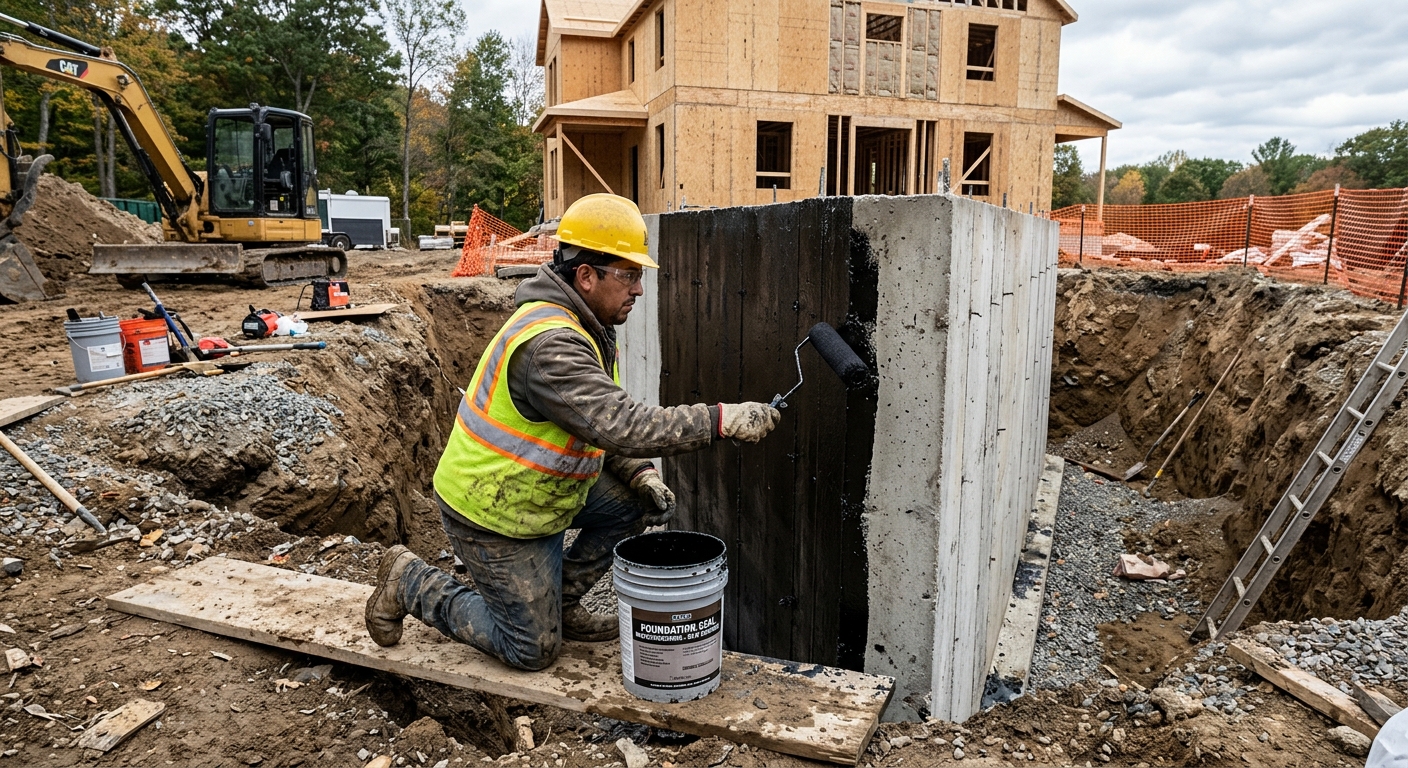
Basement waterproofing options and costs in Springbank Hill
Springbank Hill, Alberta has a mix of newer builds and older infill, but basement waterproofing is especially in demand in areas where properties sit close to low swales, older landscaping grades, or have original perimeter drainage that’s never been serviced. With Springbank Hill’s population at 9,840 (Statistics Canada, 2021 Census), there’s a steady base of homeowners tackling leaks before they turn into recurring mould or efflorescence. In Calgary-area communities built out over decades, many basements in the older housing stock category are more likely to have aged tar-and-paper systems and weeping tile that can be partially plugged or completely failed—so the “water problem” often shows up as recurring dampness rather than a single flooding event. Freeze–thaw cycles in southern Alberta also widen hairline cracks and joint separations, so water can follow the path of least resistance around window wells, penetrations, and perimeter mortar lines.
In Springbank Hill specifically, costs vary because clay and clay‑till soils hold water and exert more lateral pressure on foundation walls when saturated. That means exterior drainage, membrane continuity, and properly sized perimeter drains (plus correct discharge) can become the difference between a one-time fix and a return call. Contractors also charge more when access is tight—removing patios, tight side yards, or deep excavation in heavy clay can add time, disposal, and labour. South Calgary and Rocky View-area crews are busy each spring, so availability can influence scheduling.
Below is a practical comparison of common solutions—so you can map a likely approach to your leak pattern and budget, then refine it with an itemised quote.
| Method |
What It Addresses |
Disruption Level |
Durability |
Price Range |
| Exterior excavation + new membrane + drainage tile |
Primary water entry from outside by re-establishing the waterproof barrier and perimeter drainage path (membrane continuity, weeping tile, backfill control) |
High (excavation, landscape/driveway impacts, spoil removal) |
High (typically the most complete, source-control option when installed correctly) |
$9,000–$25,000 |
| Interior perimeter drain channel + sump pit |
Water that enters through cracks/joints by collecting it inside and pumping it away (works well with clay soils and hydrostatic seepage) |
Medium (floor/crawl/basement impacts) |
Medium-High (depends on discharge, sump reliability, and maintenance) |
$5,000–$15,000 |
| Foundation crack injection (epoxy or polyurethane) |
Crack sealing—epoxy for structural/stable cracks and polyurethane for active leaks and seepage paths |
Low (small demo, patching) |
Medium-High (requires correct crack type assessment) |
$500–$1,800 |
| Sump pump installation (primary + battery backup) |
Controls basement water accumulation and reduces risk during spring power interruptions and heavy runoff |
Low-Medium (small pit work, wiring/backup integration) |
High (when backup is included) |
$900–$3,000 |
| Window well drain installation |
Stops water pooling and infiltration around egress/window wells (common entry point during snowmelt) |
Low-Medium (excavate around wells, drain and connect) |
Medium-High (depends on grading and connection to drainage) |
$1,200–$4,000 |
| Lot re-grading / downspout extension |
Reduces surface water and directs flow away from the foundation (often the fastest “first step”) |
Low (limited demo) |
Medium (great when drainage is the root cause) |
$1,000–$3,500 |
Prices are estimates only and vary by project scope, site access and material selection.
What affects the price of waterproofing in Springbank Hill
In Springbank Hill, you’ll often see waterproofing quotes for the same symptom that can swing by 30–50% across Calgary and Alberta. The job “looks similar” on the surface—damp walls, efflorescence, a recurring wet corner—but the cause differs: it might be blocked exterior drainage, failed weeping tile, an active crack under hydrostatic pressure, or downspouts discharging near the foundation. Labour rates, disposal fees for heavy clay spoils, and the amount of excavation or interior demo required are usually what drive the largest pricing differences.
Three local drivers separate Calgary-area costs from the national average: soil type, water table and freeze–thaw. First, clay-heavy soils common in southern Alberta expand during freeze–thaw and can increase lateral pressure, worsening existing cracks over time. That can move your scope from “crack sealing” to “drainage + crack management,” which is a major cost jump (for example, interior drainage solutions commonly align with $5,000–$15,000 bands, while full exterior systems sit in the $9,000–$25,000 range). Second, higher seasonal groundwater and storm events in some pockets can require a more robust sump setup and careful discharge routing. Third, freeze–thaw widens joints, so water penetrates more easily after snowmelt—especially when window wells and exterior penetrations are involved.
In Springbank Hill, two practical examples: if a contractor must excavate under a concrete patio or remove a compacted driveway apron to reach the foundation, exterior costs climb quickly due to increased demo and reinstatement. Conversely, if your leak is primarily from roof drainage—like short downspouts or ponding near the wall—simple re-grading and downspout extensions can reduce active water entry and sometimes delay the need for full excavation.
To get a realistic budget, your scope should reflect whether water is entering from outside (source control) or accumulating inside (management), and whether the foundation material and crack type demand a specific sealing approach.
| Price Factor |
Why It Matters |
Cost Impact |
| Interior vs. exterior approach — interior is less disruptive but addresses symptoms |
Interior drainage manages water after it enters; exterior addresses the water entry path and pressure conditions |
Interior often lands nearer $5,000–$15,000; exterior can move into $9,000–$25,000 depending on excavation |
| Foundation type — poured concrete vs. block vs. stone vs. ICF |
Crack and joint behaviour differs; some systems seal well with injection, while block often benefits from interior drainage |
Crack injection scope changes; block + seepage can increase prep and drainwork |
| Soil type — clay expands more than sand, adding pressure |
Clay holds water longer and expands during freeze–thaw, increasing lateral pressure against the wall |
More water management measures and stronger detailing raise costs |
| Crack type and length — hairline vs. structural horizontal cracks |
Epoxy is typically for stable/structural cracks; active seepage often needs polyurethane and sometimes additional drainage |
Structural assessment and extended injection can increase labour/materials |
| Sump pump backup system — battery or water-powered backup needed |
Spring storms and power interruptions increase risk; backup keeps pumping during outages |
Often adds to the sump line item (commonly $900–$3,000 depending on complexity) |
| Access — landscaping, decks, or driveways must be removed for exterior |
Tight lot lines and built landscaping increase excavation time and reinstatement work |
Exterior projects can spike quickly if patios/steps must be removed |
| Weeping tile age — original tile (60+ years) may be completely failed |
Failed tile can mean water bypasses drainage channels and overwhelms interior systems |
May push scope toward full exterior drainage rebuild |
| Mould or efflorescence remediation required before sealing |
Sealers and membranes need clean, properly prepared surfaces; salt deposits can interfere with adhesion |
Additional demo/cleaning extends schedule and adds material cost |
Permits & regulations in Alberta
In Alberta, certain types of foundation-related work commonly require a permit, especially when you’re altering drainage patterns, touching structural elements, or changing how the lot manages water. In practice, foundation excavation, structural crack repair, and changes to lot drainage typically require a building permit. If the work involves tying a sump pump discharge into a storm or sanitary sewer system, municipal approval is generally required before connecting. For structural cracks—such as horizontal cracks in block walls, major step cracking, or any crack pattern that suggests movement—an assessment by a qualified structural engineer is often needed to determine whether underpinning or other structural measures are required.
To protect yourself in Springbank Hill, verify the contractor’s Alberta compliance and insurance before work starts. Step 1: confirm their Alberta licence/registration status (and any related trade authorizations if applicable) using the contractor registry sources available online. Step 2: request a current certificate of liability insurance naming you as the client/owner (where required) and confirm coverage limits are suitable for excavation and interior demo. Step 3: verify WSIB/WCB coverage—ask for the clearance letter or current status confirmation. Step 4: for structural repair scopes, ask whether they coordinate with engineering and provide documentation that the engineer reviewed the plan.
What typically does not require a permit: minor cosmetic sealing on interior surfaces only (without structural repair), small window well drain upgrades, and straightforward re-grading/downspout extension that doesn’t materially change the drainage system or connect to municipal services. When in doubt, your contractor should confirm permit needs in writing before quoting.
Interior vs exterior waterproofing — what does Springbank Hill need?
In Springbank Hill, the right choice comes down to whether you’re stopping water at the source or managing it after it enters. Exterior waterproofing involves full excavation along the foundation, applying a continuous exterior membrane, installing or renewing perimeter drainage tile, then backfilling with correct drainage materials. Done properly, it addresses the water entry pathway and reduces hydrostatic pressure at the wall. The trade-off is cost and disruption: excavation in heavy clay can be labour-intensive, and patios, decks, fences, and landscaping often need temporary removal and reinstatement.
Interior waterproofing typically uses a perimeter drain channel and a sump pit/pump system to collect seepage that already made it through cracks or joints. It’s less invasive and usually faster to complete, but it doesn’t eliminate water pressure against the wall itself—so if the source water entry is heavy or ongoing, you may get recurring dampness or higher loads on the sump. Calgary-area basements with poured concrete walls often respond well to crack injection when the cracks are stable; block foundations commonly benefit from interior drainage as a practical complement, because seepage paths through joints can be harder to fully “stop” from the inside alone.
Given Alberta’s spring runoff and the reality of occasional power instability during storms, sump pump backup matters. If you’re budgeting for a sump installation, remember that a primary unit plus backup can be the difference between a controlled dry basement and a flood event during a brief outage. As a concrete example, a homeowner sometimes chooses interior drainage at roughly $5,000–$15,000 and adds sump/battery backup, instead of moving directly to full exterior excavation at $9,000–$25,000. That can be justified when leaks are light-to-moderate seepage and exterior access is highly constrained—but if the weeping tile is failed or surface water is repeatedly saturating the foundation, exterior source control typically becomes the more durable value.
The best next step is a scope that matches your leak pattern, foundation type, and whether water entry is likely from the exterior perimeter or from specific cracks/penetrations.
| Method |
Best For |
Addresses Source? |
Disruption |
Lifespan |
Price Band |
| Full exterior excavation + membrane |
Recurring seepage, failed original drainage, or high hydrostatic pressure pockets along the foundation perimeter |
Yes (source control) |
High |
Long (often the most durable when drainage is rebuilt correctly) |
$9,000–$25,000 |
| Interior French drain + sump system |
Clay-saturated conditions where exterior access is limited, or as part of a staged approach |
No (water management after entry) |
Medium |
Medium-High (depends on sump capacity and discharge reliability) |
$5,000–$15,000 |
| Crack injection — epoxy (structural) |
Stable cracks where structural movement is not active and the goal is restoring barrier integrity |
Partly/Yes for stable cracks (seals the crack pathway) |
Low |
Medium-High (only when crack is stable) |
$500–$1,800 |
| Crack injection — polyurethane (active leak) |
Active seepage or damp cracks with ongoing water movement |
Partly/Yes for active crack pathways (treated pathway) |
Low |
Medium-High (best when paired with appropriate drainage) |
$700–$2,200 |
| Interior drain channel only (no sump) |
Light seepage where collected water can be managed reliably without continuous pumping |
No (management only) |
Medium-Low |
Short-Medium (sumpless systems can struggle in clay-saturated periods) |
$3,500–$9,000 |
| Re-grading + downspout extensions |
Surface water issues, roof runoff discharge near foundations, and minor dampness after storms |
Yes for surface-driven leaks |
Low |
Medium (can fail if subsurface drainage is also compromised) |
$1,000–$3,500 |
How to choose a waterproofing contractor in Springbank Hill
Choosing a waterproofing contractor in Springbank Hill starts with compliance and documentation, then moves to scope clarity. In Alberta, you should verify the company’s licensing/registration status where applicable, confirm current liability insurance, and ensure WSIB/WCB coverage is active. How to check: ask for a certificate of insurance (or COI) showing liability limits and effective dates, and request the WSIB/WCB clearance letter or status confirmation. Don’t rely on screenshots—ask for originals or verifiable documents you can keep with your contract.
Next, get 2–3 itemised written quotes. You want a labour + materials breakdown, not just a lump sum. Itemisation should show excavation quantities (if exterior), membrane type and layers, drain tile specifications and pipe diameters, sump pump model and horsepower, backup system type, and disposal/reinstatement allowances. Make sure the quote states what’s excluded (for example, repairing interior floor finishes, structural engineering, concrete patio reinstatement, or landscape restoration beyond basic grading).
Warranty matters: look for a written workmanship warranty length and understand what it covers—especially for interior drainage components and labour tied to membrane/drain continuity. Ask whether the product/manufacturer warranty exists, what conditions must be met, and whether it’s transferable if you sell the home. For payment schedule, never pay more than 10–15% upfront; use a holdback until the job is complete and verified. Finally, insist on a written timeline with start date and estimated completion, so spring work doesn’t drift.
- Ask for photo/video documentation of the exact leak point(s) found during inspection
- Request a crawl/basement moisture history and a brief explanation of your crack type diagnosis
- Confirm whether they recommend exterior source control or interior management—and why
- Ensure their scope includes disposal for heavy clay spoil if excavation is part of the plan
- Verify sump discharge routing and whether it complies with Alberta/municipal requirements
- Ask for sump pump model and capacity (gallons per hour) and backup system type
- Confirm surface prep and how they handle mould or efflorescence before sealing
- Get clarification on what happens if they find failing weeping tile during excavation
- Require permit responsibility in the contract (who pulls it and what it costs)
- Review warranty details in writing: length, exclusions, and whether it’s transferable
- Use a milestone-based payment schedule with holdback until final inspection
- Ask for a clean-up and reinstatement plan for landscaping, sod, patios, or driveways
Red flags to watch for: (1) no discussion of water entry source vs symptom management, (2) quotes that skip sump/backup details despite a wet-corner or sump-pump-ready basement history, (3) refusal to provide insurance/WSIB/WCB documents, (4) only offering “caulking” or surface sealant without addressing drainage and crack pathways, and (5) lump-sum pricing with no itemisation for membrane, drainage tile, disposal, or reinstatement—these omissions commonly lead to cost creep in Springbank Hill.
Frequently asked questions — waterproofing in Springbank Hill
Why is my basement leaking in Springbank Hill?
Basement leaks in Springbank Hill are usually driven by water finding a pathway: surface runoff near the foundation, failed or clogged perimeter drainage, or cracks/joints that open and leak during spring melt. Southern Alberta’s freeze–thaw cycles can widen hairline cracks, and clay and clay‑till soils can hold water longer, increasing lateral pressure on foundation walls. In older Calgary-area housing stock, weeping tile that’s never been serviced (or is partially collapsed) can lead to recurring seepage rather than one-off wetness. If the leak appears after storms or snowmelt and concentrates near window wells or along a wall seam, it often points to exterior drainage and grading issues rather than a single “bad patch” of caulking.
How do I know if a foundation crack is serious?
Not all cracks mean structural danger, but certain crack patterns and behaviours should be treated as serious in Alberta. A hairline vertical crack that doesn’t grow over seasons may be less urgent, while horizontal cracks in block walls, step cracking that worsens, or cracks that show signs of movement (wider in winter/spring) need closer review. In Springbank Hill, freeze–thaw can temporarily change crack widths, so the key is whether the crack is active and associated with moisture. If you see dampness, efflorescence, or water seepage along the crack line, plan for an assessment of active leakage and crack type before choosing epoxy vs polyurethane injection. If you suspect movement (especially major step or horizontal cracking), a structural engineer review is typically the prudent route before you invest in sealing alone.
How much does foundation crack repair cost in Springbank Hill?
Foundation crack repair cost in Springbank Hill commonly depends on crack length, whether the crack is stable or actively leaking, and how much prep is needed. For many homeowners, injection work lands in the $500–$1,800 band when the crack is limited and access is straightforward. If you’re dealing with an active leak that requires polyurethane injection (and possibly more ports, sequencing, or additional sealing around penetrations), cost can trend toward the upper end—sometimes higher when multiple cracks are present. The most common reason prices vary is that a contractor may quote injection as if every crack is “dry,” but the reality of seepage under spring hydrostatic pressure can expand the scope. Always ask for an itemised quote describing the crack type diagnosis and the planned injection material.
Do I need a sump pump in Springbank Hill?
You may need a sump pump when water accumulation is recurring and gravity drainage can’t reliably keep the basement dry—especially during spring runoff. In Springbank Hill, clay and clay‑till soils can keep the backfill saturated longer, and freeze–thaw can increase seepage through joints and cracks. If you’re seeing wet corners, water weeping along the base of walls, or puddling after storms, a sump system is often the reliable interior “management” layer. Costs for sump pump installation (including primary and, in many cases, backup) commonly fall in the $900–$3,000 band depending on complexity. If there’s any chance of power interruption during heavy snowmelt, ask about battery or other backup options—this is where homeowners often avoid expensive aftermath.
How does Springbank Hill's soil affect my foundation?
Springbank Hill sits in a Calgary-area region where clay and clay‑till soils are common. These soils hold water and can expand when saturated, increasing lateral pressure against foundation walls and footings. During freeze–thaw cycles, trapped moisture in the soil can expand repeatedly, which tends to worsen existing cracks over time and can reopen sealed joints. Practically, that means a foundation can appear “dry” most of the year but still leak during spring melt or after heavy rain, when the soil becomes fully saturated. It also explains why drainage details matter: correct perimeter drainage, proper backfill, downspout extensions, and functioning weeping tile can have a bigger impact than cosmetic interior sealants.
Do I need a permit for foundation work in Alberta?
In Alberta, foundation excavation, structural crack repair, and changes to lot drainage typically require a building permit. If your plan includes connecting a sump pump discharge to a storm or sanitary sewer, you generally need municipal approval before the connection is made. For cracks that suggest movement—such as major step cracking, horizontal cracks in block walls, or any pattern that could involve structural stability—an engineer’s assessment is often required to determine whether additional structural work is needed. For Springbank Hill homeowners, the simplest verification process is: confirm the contractor’s Alberta licensing/registration status, ask for liability insurance and WSIB/WCB clearance documentation, and ensure the quote clearly states who pulls permits. If the scope doesn’t mention permits, ask directly before signing.