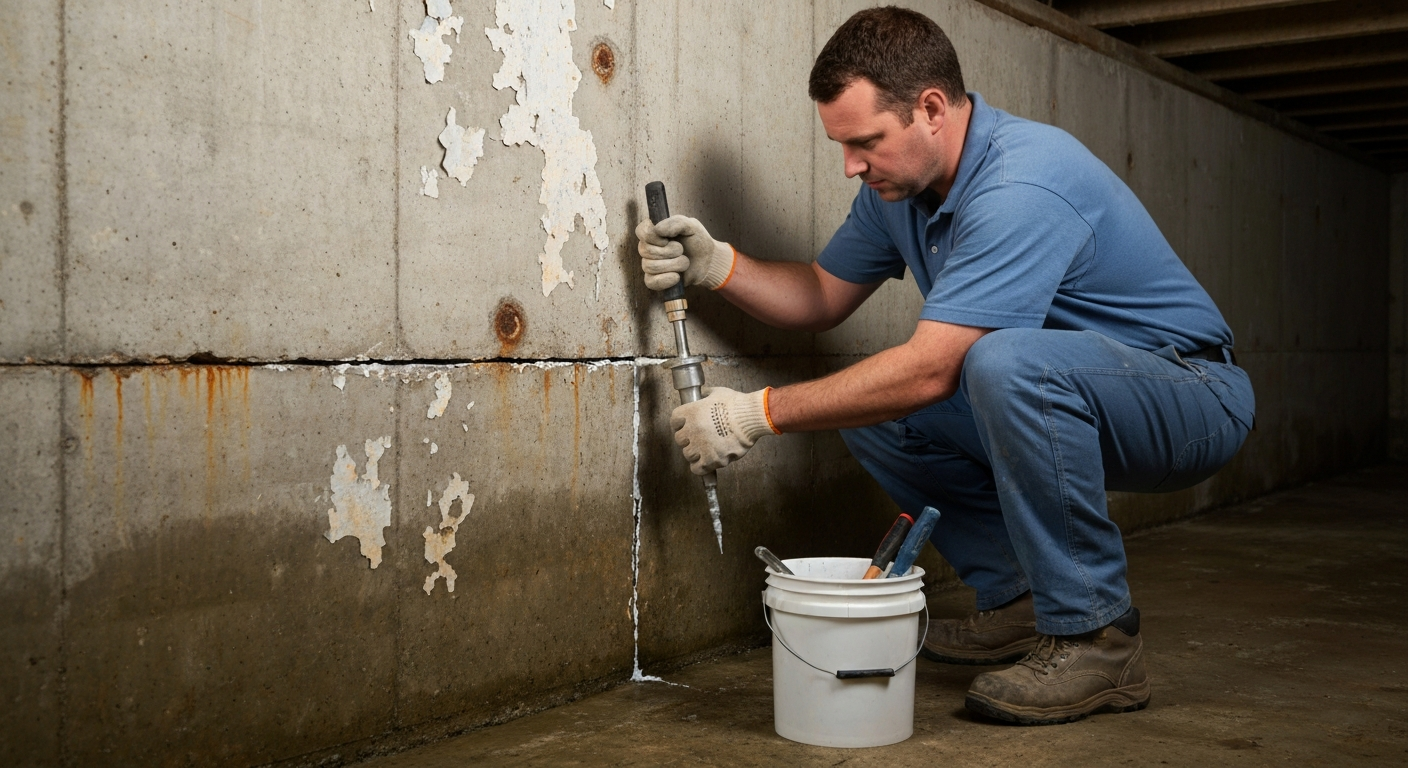
Basement waterproofing options and costs in Edmonton
In Edmonton, basement leaks are rarely caused by one single factor—they’re usually the result of water finding a path through foundation walls, joints, or cracks while clay-rich soils hold moisture and expand during freeze–thaw. According to Statistics Canada (2021 Census), 40.5% of Edmonton homes were built before 1981, and many of those basements still rely on older tar-and-paper style systems and weeping tiles that have been partially blocked for decades. Add Edmonton’s winter freeze–thaw cycling, and minor seepage can become active cracking, damp floors, and persistent wall staining.
Costs also reflect what contractors can access quickly. In established areas like Belgravia and Glenora, excavations often require careful handling of landscaping, mature trees, and tight side yard layouts—so exterior work can take longer. Meanwhile, interior-only solutions tend to be faster to mobilize, but they’re designed to manage water after it enters rather than remove hydrostatic pressure at the source.
Because Edmonton’s housing stock includes plenty of older poured concrete and block foundations, the “best” option depends on whether you have active hydrostatic pressure and whether the weeping tile or drainage system is functioning. The table below compares common methods—exterior and interior drainage systems, crack repair, sump upgrades, and lot grading changes—so you can see how disruption and expected lifespan typically change from one approach to the next.
| Method |
What It Addresses |
Disruption Level |
Durability |
Price Range |
| Exterior excavation + new membrane + drainage tile |
Bulk water before it reaches the foundation; reduces hydrostatic pressure |
High (excavation, backfill, landscaping restoration) |
Long-term (often the most complete source-control option) |
$12,000–$25,000 |
| Interior perimeter drain channel + sump pit |
Captures seepage and manages water inside basement walls |
Medium (floor work, sump pit, limited wall openings) |
Good when combined with reliable discharge and maintenance |
$8,000–$18,000 |
| Foundation crack injection (epoxy or polyurethane) |
Sealing cracks to stop or reduce water intrusion through wall penetrations |
Low to Medium (minor surface prep; more time for active leak injections) |
Variable (best results when the water pressure problem is controlled) |
$600–$2,500 |
| Sump pump installation (primary + battery backup) |
Reliable pumping during spring high-water and power interruptions |
Low to Medium (excavation for sump pit; discharge plumbing) |
High when backup is included and discharge is properly designed |
$1,800–$3,800 |
| Window well drain installation |
Directs water away from egress points and basement window assemblies |
Medium (window well openings and gravel/discharge routing) |
Good (typically targeted at known entry points) |
$1,200–$2,900 |
| Lot re-grading / downspout extension |
Redirects surface water away from foundation footing and walls |
Low to Medium (grading, pipe routing, landscaping touch-ups) |
Moderate (best as part of a system, not the only fix) |
$900–$2,700 |
Prices are estimates only and vary by project scope, site access and material selection.
What affects the price of waterproofing in Edmonton
In Edmonton, two quotes for what seems like the same waterproofing “job” can differ by 30–50% because each site has different water paths, foundation conditions, and access constraints. Edmonton-area homes are often on clay-rich and silty soils that drain slowly and can hold saturated moisture; when freeze–thaw occurs, pressure against foundation walls increases and can widen existing cracks. That means contractors may need more extensive drainage work, additional pump capacity, or deeper corrections to the weeping tile/discharge route—even when the visible symptoms look similar.
Three drivers consistently separate Edmonton costs from the national average: soil type, water table behaviour, and freeze–thaw. Clay-heavy soils expand more when saturated than sandier soils, which adds lateral pressure and accelerates crack movement. Higher local groundwater demands longer pump run times and stronger discharge design. And Edmonton’s winter cycles repeatedly stress seals and joints, so a partial fix can fail sooner. In many older Edmonton neighbourhoods, original weeping tile systems may be underperforming, and that frequently pushes contractors toward interior perimeter drains plus sump upgrades—often in the $8,000–$18,000 band—if exterior excavation isn’t practical.
Concrete examples: (1) If your foundation is block with multiple hairline cracks and you have damp corners after snowmelt, interior drainage + sump work usually costs more than a simple crack injection because the water is still migrating through multiple pathways. (2) If there’s easy side-yard access and your exterior membrane/draintile can be installed to proper depth, exterior excavation can land in the $12,000–$25,000 band and deliver stronger source control than repeated interior spot repairs. (3) If the basement shows mouldy odours or active efflorescence, remediation steps can add labour and material time before any sealing is applied.
| Price Factor |
Why It Matters |
Cost Impact |
| Interior vs. exterior approach — interior is less disruptive but addresses symptoms |
Exterior removes water pressure at the source; interior captures it after it enters |
Interior can be cheaper upfront, but repeated issues may increase lifetime cost |
| Foundation type — poured concrete vs. block vs. stone vs. ICF |
Crack behaviour and sealing compatibility vary by material |
Poured concrete often responds well to injection; block often needs added drainage strategy |
| Soil type — clay expands more than sand, adding pressure |
Saturated clay increases lateral pressure during freeze–thaw |
More robust drainage and sealing detailing may be required |
| Crack type and length — hairline vs. structural horizontal cracks |
Structural movement may require engineering and/or underpinning, not just sealing |
Structural cases can push projects well beyond basic crack injection pricing |
| Sump pump backup system — battery or water-powered backup needed |
Edmonton spring conditions and power interruptions can leave basements vulnerable |
Backup adds cost but can prevent major interior water damage |
| Access — landscaping, decks, or driveways must be removed for exterior |
Excavation time increases with obstacles and restoration requirements |
Exterior jobs often rise in cost when there are hard-to-access sections |
| Weeping tile age — original tile (60+ years) may be completely failed |
Old tile clogs reduce drainage performance and increase hydrostatic pressure |
Often forces a drainage replacement or interior catchment system |
| Mould or efflorescence remediation required before sealing |
Sealers won’t perform correctly over contaminated or unstable surfaces |
Prep and remediation increase labour before waterproofing materials are applied |
Permits & regulations in Alberta
In Alberta, the rules around waterproofing and foundation work depend on how the work affects structure and drainage. In many Edmonton projects, foundation excavation, structural crack repair where structural integrity is at issue, and changes to lot drainage typically require a building permit. If a contractor is proposing anything that could be considered structural stabilization or a significant reworking of drainage routes, it’s safest to treat it as permit-worthy until the contractor confirms the scope.
When you’re dealing with a sump pump, connections to municipal sewer systems (storm or sanitary) generally need municipal approval. Also, if cracks are suspected to be more than cosmetic—such as horizontal cracks in block walls or major step cracking—an engineer’s assessment is often needed to confirm whether underpinning or additional structural work is required. A reputable contractor should be able to coordinate engineering support for structural repairs, not just “seal and move on”.
To verify coverage in Edmonton, start with (1) the contractor’s Alberta licence information (where applicable for the scope and the company’s trade/registration), (2) a certificate of liability insurance showing active coverage, (3) evidence of WSIB/WCB coverage for workers, and (4) ask for a clearance letter or proof documentation dated recently. For structural jobs, request the engineer’s letter/report and confirm it’s included in the project file.
Interior vs exterior waterproofing — what does Edmonton need?
The fundamental difference is simple: exterior waterproofing controls water at the foundation wall by fully excavating, installing new membrane and drainage tile, and then backfilling correctly. This approach is the most permanent source-control method because it reduces hydrostatic pressure before water reaches the basement. The trade-off is disruption—excavation, backfill compaction, and restoring landscaping and hardscapes can be significant.
Interior waterproofing—like a perimeter drain channel, sump pit, and sump pump—manages water after it has already entered the basement. It’s less invasive, usually starts faster, and can be the right option when exterior access is limited or when the main issue is seepage through cracks and floor edges during Edmonton’s spring melt cycle. In Edmonton’s freeze–thaw climate zone, though, interior-only systems still need reliable discharge and ideally backup power. Without backup, a power interruption can turn a manageable leak into a costly cleanup.
In the Edmonton market, I often see poured concrete basements where crack injection (especially when the crack is stable and not actively moving) performs well as a targeted solution. Block foundations more commonly benefit from interior drainage as a practical complement, because block mortar joints and multiple leakage pathways can keep water pressure working against the wall. If you’re considering two options, here’s the real-world takeaway: exterior work often lands in the $12,000–$25,000 range, while an interior drain and sump system commonly fits within the $8,000–$18,000 range—so the price difference is justified when exterior access is feasible and you have broad wall seepage. If the leak is localized (for example, a window well problem), interior drainage alone may be unnecessary cost.
| Method |
Best For |
Addresses Source? |
Disruption |
Lifespan |
Price Band |
| Full exterior excavation + membrane |
Broad wall seepage, recurring hydrostatic pressure, failed weeping tile, accessible exterior |
Yes (primary source control) |
High |
Long-term |
$12,000–$25,000 |
| Interior French drain + sump system |
Interior dampness, floor-edge seepage, limited exterior access, high melt-season activity |
No (secondary management of incoming water) |
Medium |
Good with proper pump/discharge and backup |
$8,000–$18,000 |
| Crack injection — epoxy (structural) |
Stable cracks in poured concrete or well-identified non-moving pathways |
Partial (seals entry at crack, not soil pressure) |
Low to Medium |
Good when crack movement is controlled |
$600–$2,500 |
| Crack injection — polyurethane (active leak) |
Cracks with active seepage where the material needs to expand/flow with water |
Partial (seals entry but may need drainage support) |
Low to Medium |
Good when paired with drainage strategy |
$700–$2,800 |
| Interior drain channel only (no sump) |
Light seepage, controlled conditions, where gravity drainage is feasible |
No |
Medium |
Moderate (depends heavily on site drainage and water volume) |
$5,000–$10,500 |
| Re-grading + downspout extensions |
Surface water issues: runoff against the foundation, splash-back, poor grading |
Often yes for surface water component |
Low to Medium |
Moderate (must be maintained and doesn’t replace failed tile) |
$900–$2,700 |
How to choose a waterproofing contractor in Edmonton
Start by verifying the contractor’s ability to legally and safely do waterproofing work in Alberta. For the job you’re planning, ask for proof of liability insurance (certificate of insurance naming you as additional insured if applicable), proof of WSIB/WCB coverage for workers, and evidence of the company’s qualification/registration for the type of work being proposed. You can request these documents directly and also verify dates and coverage amounts; if they hesitate or provide generic COIs that don’t match your project timeframe, that’s a warning sign.
Next, ask for 2–3 itemised written quotes that break out labour and materials by line item (excavation, membrane/drain tile, disposal, pump and backup options, crack prep/injection, and restoration). Avoid “lump sum only” proposals because exclusions often hide in the details. Make sure the scope confirms whether permits are included (or who pulls them), whether disposal of excavated materials is covered, and what restoration is guaranteed after waterproofing—especially in Edmonton backyards where final grading and drainage must be correct.
Warranty matters. Confirm the workmanship warranty length, any product/manufacturer warranty for membranes or pumps, and whether it’s transferable if you sell. For payment, never agree to pay more than 10–15% upfront; hold back a portion until the work is complete and accepted. Finally, get a written start date and completion timeline so you can plan around spring thaw and the reality of scheduling trades in Edmonton.
- Confirm liability insurance coverage and request a certificate matching your project dates
- Verify WSIB/WCB clearance or documentation for the company’s workers
- Ask whether permits are required for your specific scope and who is responsible for pulling them
- Require an itemised quote (labour + materials + disposal + restoration)
- Check that discharge routing is explained (where the sump water goes) and whether approvals are needed
- Ensure crack injection products match crack type and reported seepage conditions
- Get pump model details and clarify primary + backup plan (battery or water-powered)
- Confirm pre-application prep: mould/efflorescence remediation and surface preparation steps
- Ask what happens if the weeping tile is found failed during excavation
- Review warranty terms in writing, including transferability and exclusions
- Agree on payment milestones (limit upfront; hold back until commissioning and cleanup)
- Request a written schedule with inspection points (rough-in, waterproofing inspection, backfill/restore)
Red flags in Edmonton include: contractors who promise a “one-size-fits-all” fix without a site assessment, quotes that omit discharge and backup details, vague warranty language (“parts only” or no workmanship term), and proposals that recommend injecting cracks while ignoring ongoing hydrostatic pressure signs like recurring floor-edge seepage after melt seasons.
Frequently asked questions — waterproofing in Edmonton
Why is my basement leaking in Edmonton?
In Edmonton, basement leaks are commonly driven by water pressure from saturated soils and freeze–thaw cycles that widen existing cracks and joints. Many homes built before 1981—about 40.5% of Edmonton dwellings—still have older drainage assumptions, including weeping tiles that may be partially failed or undersized for today’s conditions. The location of the leak matters: wall seepage and floor-edge wetness often point to foundation seepage and hydrostatic pressure, while window well water is frequently a surface runoff or egress assembly drainage issue.
If the leak worsens during spring thaw or after heavy rains, it usually means water is arriving in volume. That’s when interior perimeter drains and sump upgrades can become necessary. In other cases, simple re-grading or downspout extensions may help, but they shouldn’t be the only step if you already have active hydrostatic pressure. (Statistics Canada, 2021 Census)
How do I know if a foundation crack is serious?
A crack is more concerning when it shows signs of movement (widening over time, noticeable offset, or horizontal step-like patterns), especially in block walls, which can shift differently than poured concrete. Active moisture—dampness, seepage, or rust staining—also increases concern because it indicates water is pushing through the crack path. In Edmonton, freeze–thaw can progressively worsen hairline cracks, so “it’s small” doesn’t always mean “it’s stable.”
Take photos with dates and measure width changes over a few weeks, and watch whether the crack becomes wetter during melt. If you have major step cracks or a suspected horizontal crack, a structural engineer assessment is often recommended in Alberta to determine if there’s structural movement before any sealing-only plan. If it’s a stable crack, injection may be enough; typical foundation crack repair pricing in Edmonton is often around $600–$2,500, but the right method depends on crack behaviour and pressure.
How much does foundation crack repair cost in Edmonton?
Foundation crack repair in Edmonton varies by crack length, depth, and whether the crack is actively leaking. For many stable, accessible cracks, epoxy injection pricing commonly falls into the $600–$2,500 band. If the crack is actively weeping and requires a more flexible, water-reactive polyurethane approach, costs can trend toward the higher end because of additional prep, drainage, and injection steps.
Cost also changes based on surface conditions—if you need mould/efflorescence remediation or extra surface grinding and drying time, labour increases. Don’t underestimate the “system” part: if water pressure continues to push through multiple paths, injection alone may not solve the problem. In that situation, you may need interior drainage (often $8,000–$18,000) or other source-control measures, which can feel more expensive but prevents repeated crack work.
Do I need a sump pump in Edmonton?
You may need a sump pump in Edmonton if your basement shows consistent seepage during spring melt, if floor edges stay wet, or if you have poor drainage response after heavy precipitation. Edmonton-area soil conditions—especially clay and silty soils that hold water—can keep basements damp unless incoming water is captured and discharged reliably. A sump pump becomes more critical when interior perimeter drains are installed to manage collected water.
Equally important is backup power. In Alberta winters and spring flooding periods, power interruptions can happen, and a sump without backup can lead to quick water damage. Many homeowners choose a primary pump with battery backup as part of interior waterproofing systems. Typical sump pump installation pricing in the region is commonly in the $1,800–$3,800 band depending on whether backup and discharge complexity are included.
How does Edmonton's soil affect my foundation?
Edmonton’s soil profile often includes clay-rich and silty materials that drain slowly and can remain saturated longer than sandier soils. When the soil freezes and thaws repeatedly, saturated clay can expand and exert more lateral pressure on foundation walls, which can worsen cracks and push water through joints. That’s why a foundation can look “mostly fine” until spring melt or a wet season triggers measurable dampness.
Where soils drain better—such as areas with more sand or improved grading—the same foundation might leak less or respond better to surface corrections. But in many parts of Edmonton, even with better surface drainage, you can still get chronic seepage if groundwater and perched water tables feed pressure near the footing. If you’re seeing wall dampness plus floor-edge wetness, you should assume the soil is contributing to hydrostatic pressure rather than treating it as only a surface runoff issue.
Do I need a permit for foundation work in Alberta?
In Alberta, permits are frequently required for foundation excavation, structural crack repair where structural integrity may be affected, and changes to lot drainage. Sump pump work can also require approval if you’re connecting discharge to municipal storm or sanitary sewer systems. Because requirements depend on the exact scope, a contractor should clarify permit responsibility before work starts.
For structural repairs—like major step cracks, suspected horizontal cracks in block walls, or any indication that the wall has shifted—an engineer assessment is commonly part of the process to confirm whether underpinning or stabilization is needed. To verify compliance in Edmonton, ask the contractor what permits apply, who will pull them, and provide documentation. Also confirm they carry liability insurance and WSIB/WCB coverage before signing anything.