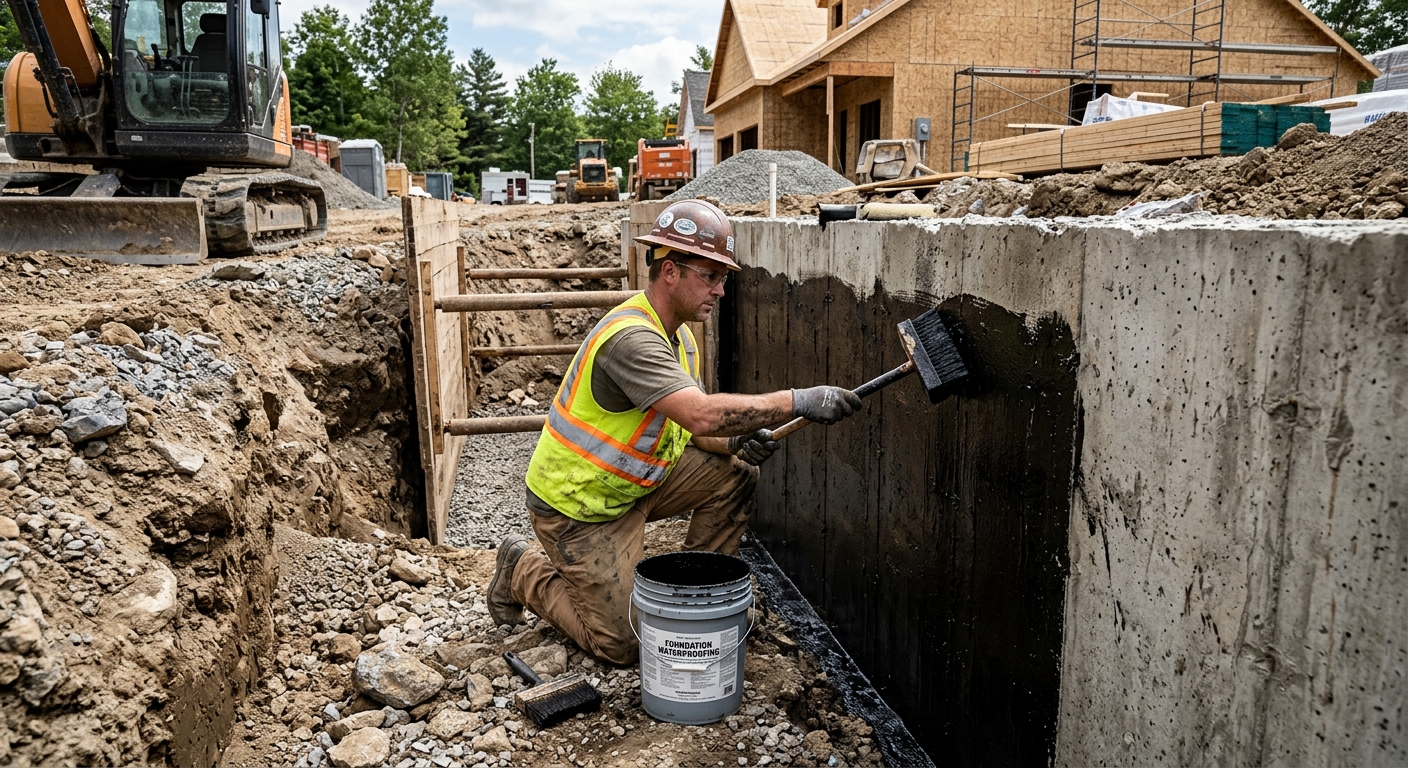
Basement waterproofing options and costs in Cliff Bungalow
In Cliff Bungalow, Alberta, homeowners typically face waterproofing issues because older foundations meet clay-heavy soils and repeated freeze–thaw cycles. With a population of 1,805 (Statistics Canada, 2021 Census), the neighbourhood is tight-knit, and that usually means you’ll see more local contractors familiar with common basement layouts and older drainage patterns. Many homes here were built before modern membranes became standard, which increases the odds of corroded or poorly draining weeping tile and water paths behind block or poured-concrete walls.
Calgary-area pricing is influenced by site access (tight lots, landscaping, patios), excavation depth, and disposal for saturated clay spoils. In southern Alberta, freeze–thaw widens existing joints, while spring runoff and heavy rain events can raise near-surface water pressure along the Bow and Elbow river valleys. That pressure is why “patch-and-paint” approaches often fail: water finds the crack, then keeps migrating through. In older Cliff Bungalow pockets, localized wall seepage, efflorescence, and basement corner dampness are more common failure points than sudden structural collapse.
If you’re comparing options, the key is whether the job addresses water at the source (exterior) or manages it after entry (interior). Below is a practical cost comparison to help you start discussions with contractors and match the method to your specific leak pattern.
| Method |
What It Addresses |
Disruption Level |
Durability |
Price Range |
| Exterior excavation + new membrane + drainage tile |
Water at the foundation perimeter; reduces hydrostatic pressure and seepage |
High (excavation, landscaping impacts, backfill) |
High (system designed to manage exterior water pathways) |
$9,000–$25,000 |
| Interior perimeter drain channel + sump pit |
Water after it enters; captures seepage behind/under wall where exterior isn’t feasible |
Medium (interior demo at perimeter only) |
High (when drain slope, discharge, and pump performance are correct) |
$5,000–$15,000 |
| Foundation crack injection (epoxy or polyurethane) |
Crack sealing to stop leakage pathways (epoxy typically structural; polyurethane often active leaks) |
Low to Medium (minor drilling/patching) |
Medium to High (depends on crack type and cause) |
$500–$1,800 |
| Sump pump installation (primary + battery backup) |
Continuous control of collected water; prevents flooding during heavy wet periods |
Medium (pit excavation and electrical work) |
Medium to High (improved by backup power and alarms) |
$900–$3,000 |
| Window well drain installation |
Groundwater and surface water entry around egress wells |
Low to Medium (localized exterior/interior work) |
Medium (depends on grading, membrane details, and discharge route) |
$1,200–$3,800 |
| Lot re-grading / downspout extension |
Surface water control to reduce the volume reaching foundation walls |
Low to Medium (landscaping and minor excavation) |
Low to Medium (often a helpful add-on, not a full waterproofing system) |
$800–$2,600 |
Prices are estimates only and vary by project scope, site access and material selection.
What affects the price of waterproofing in Cliff Bungalow
In Cliff Bungalow, it’s not unusual to see waterproofing quotes for the “same” basement range by 30–50% across Calgary and the broader Alberta market. The big reason is that the visible symptom (a damp corner, efflorescence, a wet floor seam) can be caused by very different water pathways—some fixable with targeted interior work, others requiring a full perimeter system.
The three drivers that most often separate local costs from the national average are soil type, water table conditions, and freeze–thaw. In clay-heavy soils common in parts of Alberta, clay expands when saturated during freeze–thaw and exerts lateral pressure on foundation walls and footings, worsening cracks over time. In Calgary-area low-lying pockets near river valleys and coulees, seasonal groundwater and storm events can increase hydrostatic pressure, which means higher drainage performance demands and longer run times for sump systems. Finally, freeze–thaw cycles widen hairline gaps and joints, so “quick sealing” sometimes fails unless the underlying cause is addressed.
Concrete examples in Cliff Bungalow: (1) If your downspouts discharge near the foundation and the yard is flat, re-grading and extensions may be a relatively low-cost improvement—often a few hundred dollars to a couple thousand—yet it can reduce how often the interior sump runs. (2) If you have corroded original weeping tile, an interior perimeter drain and sump pit may be the practical path, commonly aligning with the $5,000–$15,000 band. (3) If the landscaping is heavily built up and you need full excavation for a membrane and drainage tile, pricing can climb toward the $9,000–$25,000 band due to excavation depth, disposal fees for clay spoils, and restored hardscape.
Contractor availability also matters in older neighbourhood pockets—more call-backs happen when access is tight and materials (membranes, drainage board, pumps) must be scheduled around demolition and waterproofing windows.
| Price Factor |
Why It Matters |
Cost Impact |
| Interior vs. exterior approach — interior is less disruptive but addresses symptoms |
Exterior reduces water pressure at the source; interior manages water after entry |
Interior often $4,000–$12,000 less on average, but may need monitoring/supplemental work |
| Foundation type — poured concrete vs. block vs. stone vs. ICF |
Crack behaviour and detailing differ by wall system |
Block walls often increase labour for drainage/connection work |
| Soil type — clay expands more than sand, adding pressure |
Clay saturation and freeze–thaw intensify lateral pressure on walls |
More robust membrane/drainage detailing increases cost, especially for exterior work |
| Crack type and length — hairline vs. structural horizontal cracks |
Active leaks and structural movement change repair method and materials |
Structural repair/investigation can add $500–$3,000+ |
| Sump pump backup system — battery or water-powered backup needed |
Backup reduces risk during outages and spring load periods |
Often adds ~$900–$2,000 depending on system and alarm features |
| Access — landscaping, decks, or driveways must be removed for exterior |
Removal/restoration increases time and disposal costs |
Can swing exterior projects by several thousand dollars |
| Weeping tile age — original tile (60+ years) may be completely failed |
Failure can redirect water paths into basement corners and seams |
May require full perimeter replacement or supplemental interior drainage |
| Mould or efflorescence remediation required before sealing |
Moisture damage must be treated before sealing to avoid trapping contaminants |
Adds remediation labour and drying time before waterproofing |
Permits & regulations in Alberta
In Alberta, foundation excavation, structural crack repair, and changes to lot drainage typically require a building permit. If the work involves structural crack repairs (for example, significant horizontal cracks in block walls, major step cracks, or any indication the wall may have moved), you should expect that a structural engineer’s assessment is often needed to determine whether underpinning or other structural measures are required before waterproofing proceeds. For sump pump installations that connect discharge to the storm or sanitary sewer, municipal approval is typically required—your contractor should be able to explain the exact tie-in method and the documentation they coordinate.
What usually requires a permit/approval: (1) permit-based foundation-related work that changes drainage to or around the foundation, (2) structural crack repair where wall stability could be implicated, and (3) any sewer connection for sump discharge that alters how water is routed.
What often does not require a permit: general interior waterproofing and sealing that doesn’t involve structural changes, small patching after localized crack injection, or downspout extensions/re-grading when they don’t involve major drainage reconfiguration. However, contractors should confirm based on your exact scope and how/where discharge is routed.
How to verify contractor credentials in Cliff Bungalow: First, check their Alberta licence/registration information online through the province’s contractor-related registry (use the company legal name). Second, ask for a Certificate of Insurance and confirm liability coverage limits are appropriate for excavation and concrete work. Third, request proof of WSIB/WCB clearance (clearance letter or equivalent documentation) and confirm it’s current. For structural repairs, ask whether they coordinate engineer involvement and include it in the quote if required.
Interior vs exterior waterproofing — what does Cliff Bungalow need?
The fundamental difference is source control versus water management. Exterior waterproofing—full excavation, new membrane, new drainage tile, and backfill—targets where water first enters the foundation system. It can reduce hydrostatic pressure on the wall and footing, which is critical in clay-heavy soils where saturation and freeze–thaw expand and press against basement structures. The trade-off is disruption: excavation along the perimeter, landscaping impacts, and re-restoration.
Interior waterproofing—perimeter drain channel, sump pit, and sump pump—captures water after it gets into the basement. It’s typically less invasive, so it can be a practical solution when access is restricted or you need to control costs. In many older Cliff Bungalow basements, poured concrete walls tend to benefit from crack injection (when the crack type supports sealing) paired with interior drainage, while block foundations often need interior drainage as a reliable complement because wall joints and block voids can create recurring pathways.
Given Alberta conditions, sump pump reliability matters. Spring wet periods and occasional power disruptions make backup power important; a battery backup system helps keep the pump operating even if electricity is interrupted, reducing the risk of water rising to finish-floor levels.
Where the price difference is justified: if you’re seeing widespread seepage along multiple wall segments, evidence of long-term hydrostatic pressure, and failed exterior drainage, an exterior system can be worth the investment—often within the $9,000–$25,000 range. But if the issue is a limited number of active seep points and you can’t excavate easily, interior perimeter drainage and a properly selected sump system can be the more cost-effective route, commonly closer to $5,000–$15,000.
| Method |
Best For |
Addresses Source? |
Disruption |
Lifespan |
Price Band |
| Full exterior excavation + membrane |
Widespread seepage, high hydrostatic pressure, failed weeping tile, water pressure symptoms |
Yes (best source control) |
High |
Long (when drainage tile, membrane, and backfill are executed correctly) |
$9,000–$25,000 |
| Interior French drain + sump system |
Clay soils with recurring seepage where exterior access is limited or disruption needs to be minimized |
No (manages water after entry) |
Medium |
Long (when pump capacity and discharge are correct, and the drain slope is maintained) |
$5,000–$15,000 |
| Crack injection — epoxy (structural) |
Non-moving structural cracks in poured concrete where moisture is not actively flowing through |
Often partially (seals crack pathway) |
Low |
Medium to long (depends on whether the crack is active and the cause is corrected) |
$700–$1,800 |
| Crack injection — polyurethane (active leak) |
Active leaks and minor water flow through cracks where sealing needs flexibility |
Often partially (seals active pathway) |
Low |
Medium (best when paired with drainage control to reduce ongoing pressure) |
$500–$1,800 |
| Interior drain channel only (no sump) |
Very limited dampness that can be drained by a gravity route; lower risk scenarios |
No |
Medium to low |
Short to medium (performance depends heavily on discharge route and water levels) |
$2,500–$7,000 |
| Re-grading + downspout extensions |
Surface water issues (wet spots near perimeter, runoff stains, pooling after storms) |
No (reduces volume at source) |
Low to Medium |
Medium (as maintenance; effectiveness depends on grading maintenance) |
$800–$2,600 |
How to choose a waterproofing contractor in Cliff Bungalow
Start by verifying Alberta requirements and then move into documentation quality. Ask for proof of their Alberta licence/registration (use the company’s legal name) and keep a copy of what you were shown. Request a Certificate of Insurance and confirm liability coverage is appropriate for excavation and foundation-related work; don’t accept vague “we’re insured” statements. Finally, verify WSIB/WCB coverage using a current clearance letter or equivalent documentation—coverage should be active before work begins.
Next, get 2–3 itemised written quotes with a labour-and-material breakdown. A good quote separates excavation/disposal, membrane system components, drainage tile and pipe, pump and backup (if included), concrete patching, and interior restoration. It should also state whether permits will be pulled and what happens if discovery reveals deeper failure than expected (for example, weeping tile is fully collapsed). Disposal fees for heavy clay spoils can be a major swing factor—make sure they’re included or explicitly excluded.
Warranty matters. Look for a workmanship warranty that clearly states coverage length and what’s excluded. Also confirm whether product/manufacturer warranties apply and if they’re transferable if you sell your home. Payment schedules should be conservative: never pay more than 10–15% upfront. Use a holdback until the job is complete and inspected. Also insist on a written timeline: start date, expected sequence (demo, prep, membrane, backfill/drying, restoration), and estimated completion date.
- Confirm the contractor’s Alberta registration/licence matches the quote and contract.
- Collect Certificate of Insurance and verify liability limits.
- Request WSIB/WCB clearance documentation before any excavation.
- Ask whether an engineer is coordinated for structural crack concerns.
- Demand itemised scope: membrane, drainage tile, pump model, backup system, and discharge method.
- Check inclusions: permit pull, disposal, sawcut/demo limits, and restoration details.
- Verify how crack injection will be chosen (epoxy vs polyurethane) based on crack behaviour.
- Ask how they test drainage function (run test, slope verification, observation ports).
- Ensure a sump includes backup (battery or water-powered) when power reliability is a risk.
- Review warranty length for workmanship and products; confirm transferability.
- Set a payment schedule with a 10–15% max deposit and holdback until close-out.
- Get start date and completion estimate in writing, with weather-related contingencies stated.
In Cliff Bungalow, concrete red flags include: quoting an “exterior waterproofing” job without specifying the drainage tile route and discharge method; refusing to discuss sump backup options or alarm monitoring; bundling the scope as a lump sum with no disposal or restoration inclusions; claiming crack injection is enough for every leak without checking whether cracks are active or structural; and offering a short warranty that doesn’t clearly cover workmanship.
Frequently asked questions — waterproofing in Cliff Bungalow
What is a battery backup sump pump and do I need one in Cliff Bungalow?
Battery backup is a secondary power system that keeps a sump pump running during an electrical outage. In Alberta, power interruptions can happen during storms and sometimes around heavy spring conditions, and that matters because clay-saturated backfill and freeze–thaw can increase seepage before the ground fully dries. For Cliff Bungalow basements that rely on an interior perimeter drain, battery backup can prevent water from rising if the main pump loses power. If your quote is in the $900–$3,000 band, ask whether backup (battery) and an alarm are included, and confirm the discharge path is correct. It’s usually a smart add-on when you have history of power loss or frequent sump cycling during wet months.
How much does basement waterproofing cost in Cliff Bungalow?
Basement waterproofing in Cliff Bungalow typically comes down to whether you’re solving the water at the foundation perimeter (exterior) or managing it after it enters (interior). Exterior excavation and a full membrane plus drainage tile commonly land in the $9,000–$25,000 range, especially when landscaping and access require more demo and restoration. Interior perimeter drains and sump systems are often closer to $5,000–$15,000, depending on the length of perimeter work, whether a sump pit is needed, and how difficult discharge is. If you’re only dealing with localized cracking, crack injection repairs can be far less, often around $500–$1,800. A proper site review is important—quotes that skip that step usually miss the real scope.
Interior vs exterior waterproofing — which is better?
In most cases, exterior waterproofing is the “best” method because it addresses the source: it reduces hydrostatic pressure and stops water from migrating behind the wall by pairing membrane with drainage tile. However, it’s not always the best fit for every Cliff Bungalow home because full excavation disrupts yards, patios, and plantings, and can be expensive on tight lots. Interior waterproofing is a strong option when you need less disruption or exterior access is limited; it captures water after entry using a perimeter drain channel and sump system. Poured concrete basements often seal well with crack injection when cracks aren’t actively moving, while block foundations often benefit from interior drainage as a practical complement. If you’re choosing based on costs alone, exterior often trends toward $9,000–$25,000, while interior systems often fall within $5,000–$15,000.
Why is my basement leaking in Cliff Bungalow?
Leaks in Cliff Bungalow are usually a combination of water pathways and pressure conditions. Clay-heavy soils can hold water longer, and freeze–thaw cycles widen gaps in joints and cracks, letting meltwater and storm runoff seep inward. If your weeping tile is older (or clogged), the water can bypass it and show up as corner dampness, efflorescence, or seepage along perimeter seams. Another common cause is surface water dumping too close to the foundation—downspouts that discharge near the house or yard grading that directs runoff toward the basement. In areas where groundwater influence is higher during wet seasons, hydrostatic pressure can push against basement walls and slabs, even if cracks look small. The best way to pinpoint the cause is to match leak locations to drainage patterns and verify exterior drainage performance (or explain why it can’t be accessed).
How do I know if a foundation crack is serious?
Not every crack is an emergency, but some patterns signal movement or structural concern. In Alberta, watch for cracks that change over time, widen after freeze–thaw, show offset (“step” cracks), or form horizontal cracks—especially in block walls. If you notice water tracking through the crack during rain or thaw, that’s a sign the crack is an active pathway and typically needs targeted injection plus drainage control. Seriousness also increases if cracks are accompanied by noticeable wall bowing, sticking doors/windows, or floors that feel out of level. For Cliff Bungalow homes with older block foundations, it’s common to see seepage tied to joints; however, structural cracks usually require a structural engineer assessment before waterproofing measures proceed. A reputable contractor should explain whether they’re recommending epoxy or polyurethane injection based on whether the crack is actively leaking or structurally oriented.
How much does foundation crack repair cost in Cliff Bungalow?
Crack repair cost in Cliff Bungalow depends on crack type (hairline vs. structural), length, access, and whether the crack is actively leaking. Many homeowners with localized sealing needs fall into the $500–$1,800 range for injection repairs, which can include drilling ports, injection material (epoxy for structural/non-moving cracks or polyurethane for active leaks), and patch finishing. If the crack is accompanied by ongoing hydrostatic pressure—like perimeter seepage, efflorescence, or repeated wet seasons—you may need a sump system or perimeter drainage as well, which can shift the overall project toward interior waterproofing bands like $5,000–$15,000. If an engineer or additional structural work is required due to horizontal/step cracking, you’ll typically see a higher cost than injection alone.