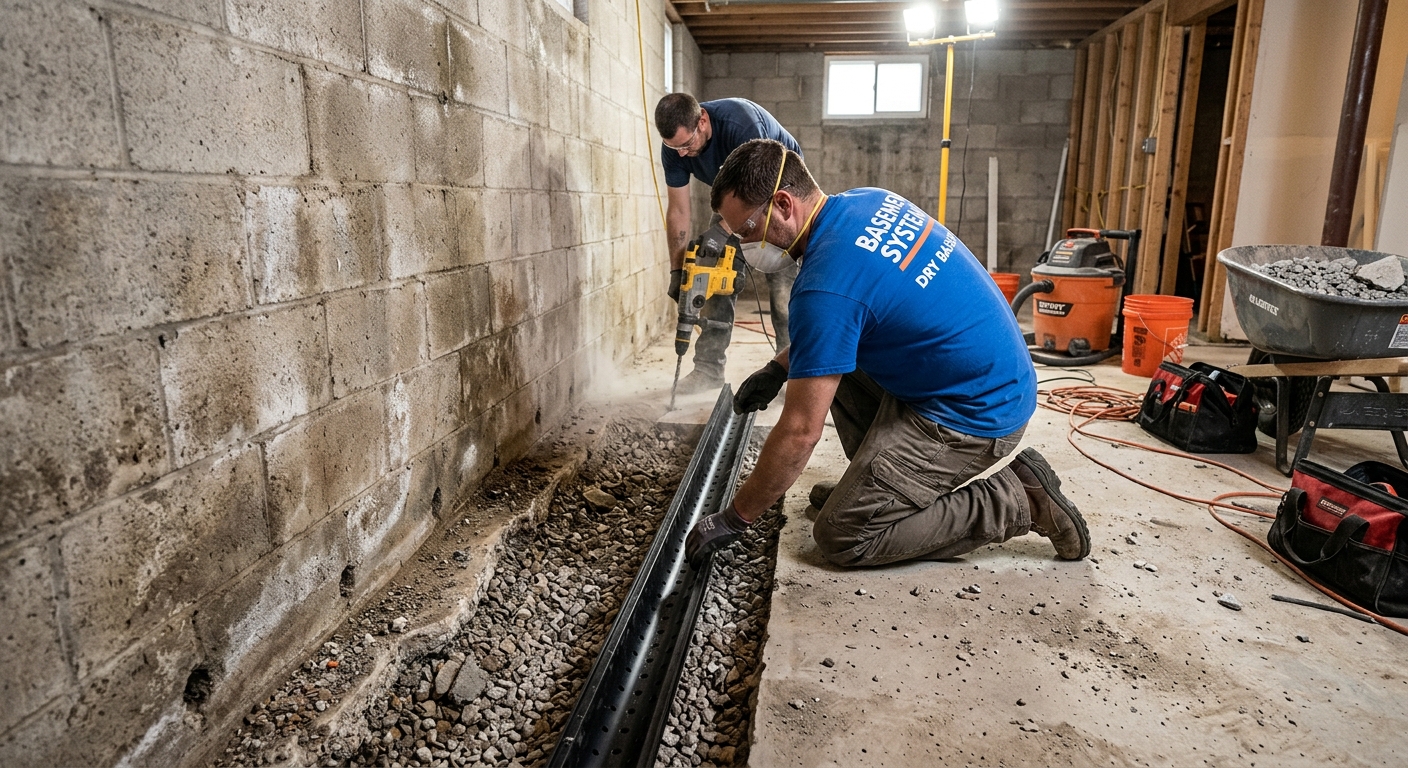
Basement waterproofing options and costs in Banff Trail
Basement waterproofing in Banff Trail, Alberta, usually comes down to one question: where is the water actually getting in, and do you need to stop it at the source or manage it after it enters? Banff Trail is a smaller community within the Calgary economic region, with a 2021 population of 3,805 (Statistics Canada, 2021 Census). In neighbourhoods like this, older housing stock tends to be more concentrated, and many basements were originally treated with short-lived, tar-and-paper type systems and undersized drainage. Those older setups are far more likely to have failed weeping tile and allow seepage to develop along joints and around slab edges over time.
Calgary’s climate also drives the pricing. Freeze–thaw cycling in southern Alberta widens existing cracks and joints, and clay-rich soils tend to hold water and apply more lateral pressure when saturated. That’s why exterior work—excavation, membrane detailing, and a functional perimeter drain—often costs more than interior-only fixes. At the same time, the local contractor market can be busy during spring runoff season, which can affect scheduling and labour availability.
In Banff Trail specifically, exterior systems are often in highest demand for older homes near established streets where excavation access is tight and landscaping is already developed—especially around long, narrow yards where heavy clay spoils must be disposed of and replacement grades restored. If you’re weighing options, the table below compares typical methods, what they address, and how much disruption you can expect.
| Method |
What It Addresses |
Disruption Level |
Durability |
Price Range |
| Exterior excavation + new membrane + drainage tile |
Stops bulk water at the foundation wall using a continuous exterior membrane and perimeter drainage |
High (landscape removal, excavation, backfill, re-grading) |
Long-term (typically 20+ years when installed with proper detailing) |
$12,000–$22,000 |
| Interior perimeter drain channel + sump pit |
Collects seepage that enters at cracks/joints and channels it to a sump |
Medium (concrete cuts in affected areas, limited landscaping impact) |
Good (often 15+ years depending on tile function and pump maintenance) |
$7,500–$13,500 |
| Foundation crack injection (epoxy or polyurethane) |
Seals cracks; polyurethane is used where there’s active seepage and movement |
Low to Medium (small access openings, surface prep) |
Variable by crack type; best for stable, properly prepared conditions |
$900–$1,900 |
| Sump pump installation (primary + battery backup) |
Manages water in the sump pit to prevent basement flooding during storms and spring melt |
Medium (pit excavation, minor plumbing/electrical work) |
High (system reliability depends on discharge routing and backup) |
$1,600–$3,600 |
| Window well drain installation |
Reduces water pooling around window wells and directs inflow to a drain |
Low to Medium (small excavation, window well modification) |
Moderate to Good (typically 10–15+ years with cleanouts) |
$1,200–$2,900 |
| Lot re-grading / downspout extension |
Improves surface drainage so roof runoff and grading don’t drive water toward the foundation |
Low to Medium (minor demo, soil placement, landscaping touches) |
Moderate (can last years, but depends on ongoing site maintenance) |
$3,500–$7,500 |
Prices are estimates only and vary by project scope, site access and material selection.
What affects the price of waterproofing in Banff Trail
In Banff Trail, homeowners often see waterproofing quotes for the “same” basement issue that vary by 30–50% once contractors account for excavation access, drainage tie-ins, and how extensive the failure is. The biggest reason is that waterproofing scopes are rarely identical: one quote might seal visible cracks, while another addresses the actual water path with perimeter drainage, membrane continuity, and proper discharge.
Three local drivers typically separate Calgary-area pricing from the national average: soil type, water table conditions, and freeze–thaw. Clay-heavy soils common in the Prairies expand as they saturate and freeze, pushing laterally on foundation walls and worsening cracks over time. In pockets where groundwater and heavy storms coincide—especially where lots sit near low-lying drainage paths—sump systems can need longer run times and higher-capacity pumping, which changes both labour and parts. And while freeze–thaw doesn’t directly “cause” leaks, it rapidly widens existing joints and hairline cracks, increasing the chance that small defects become recurring seepage.
Concrete examples from Banff Trail: (1) a basement with multiple wall joints and efflorescence often requires more interior channel length and more discharge plumbing than a single localized seepage line; (2) if exterior access is blocked by a concrete patio or tight side yard, excavation becomes slower and disposal costs rise—especially with heavy clay spoils; (3) homes with original weeping tile (often decades old) may have collapsed sections, meaning simple surface repairs won’t hold. As a ballpark, interior approaches commonly fall closer to the $5,000–$15,000 band, while full exterior systems typically align with $9,000–$25,000 when excavation and a functioning drainage loop are included.
| Price Factor |
Why It Matters |
Cost Impact |
| Interior vs. exterior approach — interior is less disruptive but addresses symptoms |
Exterior targets water entry; interior manages water after it enters |
Interior can be materially cheaper, but may require recurring monitoring and upgrades |
| Foundation type — poured concrete vs. block vs. stone vs. ICF |
Crack behaviour and wall permeability differ by foundation material |
Poured walls often respond well to injection; block and older stone often need more drainage |
| Soil type — clay expands more than sand, adding pressure |
Clay saturation increases hydrostatic and lateral pressure on walls |
Higher likelihood of active leaks; more prep and drainage detailing |
| Crack type and length — hairline vs. structural horizontal cracks |
Stable cracks seal differently than movement-related structural cracks |
Structural or extensive cracks increase engineering review and injection volume |
| Sump pump backup system — battery or water-powered backup needed |
Backup reduces flood risk during power interruptions common around storms |
Adds cost, but often prevents costly cleanup and damage |
| Access — landscaping, decks, or driveways must be removed for exterior |
More removal means more labour, restoration, and disposal |
Can push projects toward the upper part of the $9,000–$25,000 exterior range |
| Weeping tile age — original tile (60+ years) may be completely failed |
Old systems may be clogged, disconnected, or deteriorated |
Often requires replacement and verified discharge capacity |
| Mould or efflorescence remediation required before sealing |
Sealers and membranes won’t perform properly over contamination |
Additional labour for cleaning, treatment, and surface prep |
Permits & regulations in Alberta
In Alberta, some waterproofing-related work typically does require a building permit—especially when it involves foundation-related structural changes or changes to how water is managed on your lot. Foundation excavation, structural crack repair, and modifications that affect lot drainage commonly fall into permit territory because they can alter load conditions, drainage routes, or how the building is protected.
Where sump pumps connect to municipal systems (storm or sanitary sewer), municipal approval is usually required for the discharge routing and connection details. If the contractor plans to route discharge in a way that affects municipal infrastructure, you should expect paperwork and an inspection trail. For structural crack repair—particularly horizontal cracks in block walls or major step cracks—an engineer’s assessment is often needed to determine whether underpinning, reinforcement, or other structural work is required.
To verify a contractor in Banff Trail step by step, ask for three documents before work starts: (1) licence proof and trade authorization for the relevant scope (if applicable to the work type), (2) a current certificate of liability insurance, and (3) WSIB/WCB clearance—then confirm the clearance letter/number is active. Look online for the contractor’s standing, then cross-check the policy expiry dates on the certificate. Finally, confirm whether the company provides engineering support for structural repairs and whether they’ll coordinate the permit/inspection process with the appropriate parties.
Interior vs exterior waterproofing — what does Banff Trail need?
The fundamental difference is that exterior waterproofing targets the water source, while interior waterproofing manages water after it enters the basement. In Banff Trail’s Calgary-area soil and weather reality—clay-till that holds water, plus frequent freeze–thaw—exterior systems (full excavation, new membrane, and functioning perimeter drainage tile) can be the most reliable way to stop recurring seepage, because they restore a continuous barrier and a drainage path before water can build up against the wall.
Interior systems (perimeter drain channel, sump pit, and sump pump) are less invasive and typically cheaper up front, but they don’t stop hydrostatic pressure from pressing on the wall; they capture seepage and prevent it from accumulating. This is why many poured-concrete walls in the area can benefit from crack injection (especially where cracks are stable), while block foundations often need a practical complement like interior drainage to deal with moisture pathways through mortar lines and joints.
Power reliability also matters in Alberta: in spring, stormy periods and snowmelt can overload drainage, and even short outages can turn a “slow seep” into an emergency. That’s why homeowners in Banff Trail increasingly ask for sump pump systems with backup capability. As a concrete example, if one scope is quoted at around $12,000–$22,000 for exterior work and another is closer to $7,500–$13,500 for interior drainage plus a reliable pump, the exterior option is usually justified when the leak is recurring, you’re seeing widespread dampness/efflorescence, or you have direct exterior access to do it properly. Interior-only may be the better choice when the source is hard to correct (limited excavation access) and you can capture water efficiently and safely.
Ultimately, the best approach depends on how continuous the water entry is, your foundation type, and whether your site grading and weeping tile system can be restored—not just on what looks damp today.
| Method |
Best For |
Addresses Source? |
Disruption |
Lifespan |
Price Band |
| Full exterior excavation + membrane |
Recurring seepage, heavy clay pressure, failing weeping tile, and long wall problem areas |
Yes |
High |
20+ years when detailed correctly |
$12,000–$22,000 |
| Interior French drain + sump system |
Basements with localized leaks where exterior access is limited, or as a targeted upgrade to stop water accumulation |
No (manages after entry) |
Medium |
15+ years with good pump maintenance |
$7,500–$13,500 |
| Crack injection — epoxy (structural) |
Stable, non-leaking-to-slow seepage cracks (often in poured concrete) |
Partial (seals the crack path) |
Low to Medium |
Variable; often long-lasting when the crack is stable |
$900–$1,800 |
| Crack injection — polyurethane (active leak) |
Active seepage through cracks or joints where material needs to accommodate movement |
Partial (targets active entry points) |
Low to Medium |
Good for active leaks when surface prep and crack selection are correct |
$1,100–$2,100 |
| Interior drain channel only (no sump) |
Very minor seepage that can gravity drain and doesn’t require active pumping |
No |
Medium |
Moderate; depends on reliable drainage and cleanouts |
$5,000–$9,500 |
| Re-grading + downspout extensions |
Surface-water-driven dampness near slab edges or around eaves |
Yes for surface flow (not wall seepage) |
Low to Medium |
Moderate; effectiveness relies on maintenance |
$3,500–$7,500 |
How to choose a waterproofing contractor in Banff Trail
Choosing a waterproofing contractor in Banff Trail starts with verifying Alberta coverage and then matching the scope to your actual water path. Ask for proof of Alberta licence/authorization for the work type (if applicable), a current certificate of liability insurance, and WSIB/WCB clearance. To check: (1) confirm the clearance letter is current (not expired), (2) verify the insurer and policy limits shown on the certificate align with the scope, and (3) confirm the contractor is insured for the specific activities they’ll perform (excavation, concrete cutting, plumbing, electrical for pump systems).
Next, get 2–3 itemised written quotes. You want a breakdown that separates labour from materials: excavation and disposal, membrane system components, drainage tile and filter fabric, sump pit and pump model, check valve, discharge routing, and concrete restoration. Watch for what’s excluded (for example, restoration of landscaping, concrete patio demolition, permit pulling, and engineering if structural cracks are involved). A reputable quote clearly states whether permits are included or if you’re expected to pull them yourself.
Warranty matters: request the workmanship warranty length and what it covers (labour to return and repair versus materials only). Product/manufacturer warranties should be provided for membranes, sealants, and drainage components—and ask if they transfer if you sell the home. Keep payments controlled: never pay more than 10–15% upfront; hold back the remainder until the job is complete and water routing/pump operation are verified. Get an expected start date and completion estimate in writing, including seasonal constraints for spring runoff and curing times.
- Confirm they have liability insurance and an active WSIB/WCB clearance letter before signing.
- Ask whether the quote includes disposal fees for clay spoils (often overlooked in Banff Trail).
- Ensure excavation protection and restoration are listed (paving, sod, fences, grading).
- Require pump details: primary pump specs, discharge size, check valve, and backup plan.
- Ask how they verify drainage performance (camera/inspection, flow testing, or verified tie-in).
- Get crack injection scope that identifies crack type and whether it’s epoxy or polyurethane.
- Confirm cleanout access for interior drains and how they’ll handle maintenance.
- Ask if a permit is required for your scope and who is responsible for pulling it.
- Review warranty terms: labour coverage, start/end dates, and transferability.
- Check for itemised labour/materials—not just a lump-sum number.
- Confirm timeline includes concrete curing and membrane cure windows.
- Never rely on “we’ll fix it later” language—demand a complete scope and sign-off steps.
Red flags in Banff Trail waterproofing contracts include: vague scopes that don’t specify drainage routing or pump models, refusing to show insurance/WSIB/WCB clearance, quoting structural crack work without engineering input, offering no written warranty terms, and pushing for large upfront payments without a schedule or milestones.
Frequently asked questions — waterproofing in Banff Trail
What drainage issues are most common in Banff Trail homes?
In Banff Trail and the broader Calgary region, the most common issues we see are surface runoff moving toward the foundation, failing or clogged weeping tile (often from older installations), and seepage along slab edges, wall joints, and crack lines. Clay-heavy soils can stay saturated for longer periods after spring melt, increasing the chance of seepage and damp corners. Freeze–thaw then widens hairline cracks, making leaks more persistent. If your basement shows efflorescence (white salt staining) or recurring dampness during storms, it usually indicates water movement through masonry joints or minor cracks rather than a one-time plumbing failure. (Statistics Canada, 2021 Census)
How do I choose a waterproofing contractor in Banff Trail?
Start with documentation and scope clarity. In Alberta, ask for the contractor’s active WSIB/WCB clearance and a current certificate of liability insurance, then verify what licence/authorization applies to their scope. Next, request 2–3 itemised quotes that separate labour and materials, and clearly list exclusions such as permits, disposal, landscaping restoration, and any engineering support for structural crack work. A strong contractor will identify whether you need an interior perimeter drain, an exterior membrane system, or crack injection based on crack type and active seepage evidence. Finally, confirm warranty coverage (workmanship and product) and keep payments structured—typically no more than 10–15% upfront with a holdback until completion.
What is a battery backup sump pump and do I need one in Banff Trail?
A battery backup sump pump is an additional pumping capability designed to run during power interruptions. In Alberta, outages can occur during storm events and spring weather swings, and a basement sump that relies only on grid power can become ineffective for even a short window. For many Banff Trail homes—especially those with active seepage, heavier seasonal loads, or a history of dampening during spring runoff—backup capability is worth the investment because it reduces the risk of a flood when the primary pump can’t run. If you’re being quoted around the $1,600–$3,600 range for a sump system with backup, ask what backup technology they use and how long it’s expected to run under your conditions.
How much does basement waterproofing cost in Banff Trail?
Cost depends heavily on whether the fix is interior-only or a full exterior system, plus access and how far drainage must be rebuilt. For interior perimeter drain work, homeowners often land in the $7,500–$13,500 range when a sump pit and reliable drainage capture are included. Exterior excavation and membrane systems commonly fall in the $12,000–$22,000 range when access allows proper excavation, membrane detailing, and a new perimeter drainage loop. Smaller scopes like crack injection can be closer to $900–$1,900, while re-grading and downspout extension jobs may start around a few thousand. Your contractor should itemise labour, materials, and disposal so you can compare apples-to-apples.
Interior vs exterior waterproofing — which is better?
Exterior waterproofing is usually the “source-control” approach: it excavates around the foundation, installs a continuous exterior membrane, and provides a proper perimeter drainage system. That can be the most effective long-term solution in Calgary-area clay soils under freeze–thaw pressure. Interior waterproofing is typically less disruptive and cheaper upfront; it manages water after it enters via a perimeter drain channel, sump pit, and pump. In Banff Trail, poured concrete walls often respond well to crack injection when the cracks are stable, while block foundations often need interior drainage as a practical complement. If exterior access is limited by patios, decks, or tight lot lines, homeowners frequently choose interior drainage with backup. If you have recurring efflorescence and widespread seepage, exterior is more likely to be justified even though it sits higher in the $12,000–$22,000 band.
Why is my basement leaking in Banff Trail?
Most basement leaks in Banff Trail come from water finding a path through foundation cracks, joints, or around slab edges—often aggravated by clay soil saturation and freeze–thaw cycles. Common triggers include heavy spring melt, storm runoff, clogged or failed weeping tile, and poor downspout discharge or grading that directs water toward the foundation. If you notice dampness after rain or snowmelt, it points toward ongoing water entry rather than a one-time fixture leak. Efflorescence and recurring damp corners also suggest moisture movement through masonry or crack lines. The fastest way to confirm is a proper site assessment: check crack locations, look for efflorescence patterns, test discharge routing, and confirm whether interior drains or weeping tile are functioning.