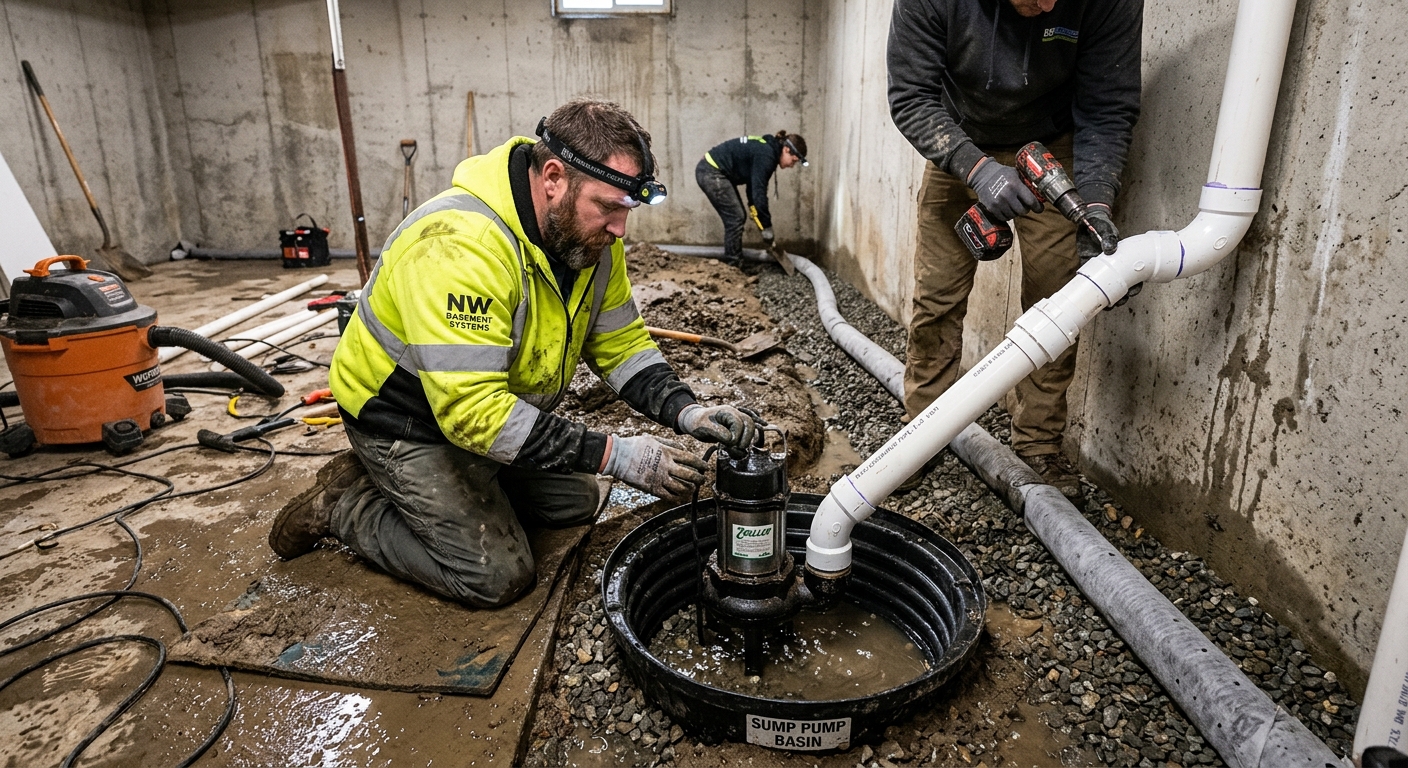
Basement waterproofing options and costs in Surrey
Basement waterproofing in Surrey, British Columbia is rarely a one-size-fits-all fix. With 568,322 residents and about 129,100 homeowner households (Statistics Canada, 2021 Census), many homes were built with drainage detailing that has since aged—especially in older neighbourhoods. Surrey also has a large share of housing built before 1981 (19.6% of dwellings), which matters because original tar-and-paper systems and early weeping tile installations are more likely to fail and let water build up behind walls. When that happens, you usually see interior seepage, damp corners, or recurring efflorescence even after surface repairs.
In the Lower Mainland–Southwest, costs are shaped by higher groundwater pressure and persistent saturation following intense, prolonged rainfall. Even though winters are mild compared with other parts of Canada, freeze-thaw still expands existing cracks and weak joints, which is why contractors in Surrey often quote higher labour and more comprehensive scopes for excavation and drainage upgrades. Access constraints on tight Surrey lots and occasional rocky or mechanically tough excavation sections also push exterior work toward the higher end of regional price ranges.
In practice, demand is especially common around Fleetwood and parts of Newton where lots are established, landscaping is mature, and perimeter drainage upgrades frequently need careful tie-ins. From there, homeowners typically choose between exterior excavation with a new membrane and drainage tile, or interior retrofits such as a perimeter drain channel and sump system. The right choice depends on how much water pressure you’re dealing with and whether the original weeping tile is still functioning—see the comparison table for the typical cost bands.
| Method |
What It Addresses |
Disruption Level |
Durability |
Price Range |
| Exterior excavation + new membrane + drainage tile |
Active seepage from below-grade walls, hydrostatic pressure management, perimeter drainage replacement |
High (excavation, landscaping/driveway impacts) |
Long-term when drainage slope and daylighting are correct |
$15,000 – $30,000 |
| Interior perimeter drain channel + sump pit |
Water that has already entered; reduces basement seepage and floor/wall dampness |
Medium (interior cut/restore, limited exterior work) |
High when sump capacity and discharge are sized properly |
$8,000 – $18,000 |
| Foundation crack injection (epoxy or polyurethane) |
Crack sealing and (depending on product) stopping active leaks |
Low to Medium |
Moderate to long-term; best for stable, properly selected crack type |
$500 – $2,000 |
| Sump pump installation (primary + battery backup) |
Improves resiliency during outages and heavy rain events; keeps sump from backing up |
Low to Medium |
Long-term when discharge routing is correct |
$1,000 – $5,000 |
| Window well drain installation |
Bulk water and seepage around window wells and below-sill wetting |
Medium (excavation around well) |
Good when grading and weeping tile connection are done right |
$2,500 – $6,500 |
| Lot re-grading / downspout extension |
Reduces roof-water runoff and helps move surface water away from foundation |
Low to Medium |
Good; effectiveness depends on drainage slope and maintenance |
$1,500 – $7,500 |
Prices are estimates only and vary by project scope, site access and material selection.
What affects the price of waterproofing in Surrey
In Surrey and across the Lower Mainland–Southwest, two homeowners can receive quotes that differ by 30–50% for the “same” issue because the underlying cause of water entry isn’t always the same. A simple-looking damp wall might involve failed perimeter drainage, undersized sump capacity, crack movement from wet soils, or blocked discharge lines. On top of that, labour rates and excavation difficulty are typically higher in the Lower Mainland, where contractors deal with tighter urban lots and more frequent water management during heavy rain periods.
The three biggest cost drivers that separate Surrey pricing from national averages are soil conditions, water table behaviour, and freeze-thaw impact. Unlike clay-heavy, highly expansive soils in parts of Ontario and the Prairies, Lower Mainland problems are more often driven by persistent saturation and drainage challenges—yet the outcome is still serious lateral pressure during wet periods. In Surrey, higher groundwater conditions increase sump run times and the need for properly sized interior drainage and discharge pathways. During wet winters, backfill can stay saturated longer, so interior systems may need upgraded pumps or backup power. Freeze-thaw also matters: it widens existing cracks and joint lines so seepage can reappear even after early patching.
Concrete examples we see in Surrey include: (1) a home with pre-1981 foundation drainage where the original weeping tile is likely failed—interior-only work can cost less upfront (for example, interior perimeter drain and sump in the $8,000–$18,000 range), but ongoing water pressure may require exterior correction later; (2) block foundation walls where cracks are irregular, often making crack injection alone insufficient; (3) exterior excavation on tight lots where landscaping removal and mechanical breaking can push the exterior excavation + membrane scope closer to the $15,000–$30,000 band rather than the low end.
| Price Factor |
Why It Matters |
Cost Impact |
| Interior vs. exterior approach — interior is less disruptive but addresses symptoms |
Interior systems manage water after entry; exterior reduces water entry at the source |
Interior often 30–60% less than full exterior in the same home; exterior can be the “true fix” when exterior drainage is failed |
| Foundation type — poured concrete vs. block vs. stone vs. ICF |
Crack behaviour and permeability differ by system |
Block and older stone often increase labour due to variable crack paths and detailing |
| Soil type — clay expands more than sand, adding pressure |
Expansive or poorly draining soils can increase hydrostatic pressure and crack widening |
Higher excavation and more robust drainage sizing; can add material and labour to seals/sumps |
| Crack type and length — hairline vs. structural horizontal cracks |
Structural movement needs different treatment than static hairline cracks |
Structural cracks can require engineering assessment and more expensive, staged repairs |
| Sump pump backup system — battery or water-powered backup needed |
Hydrostatic surges continue during outages; backup reduces flood risk |
Often adds $1,500–$3,500 to pump scope depending on setup |
| Access — landscaping, decks, or driveways must be removed for exterior |
Exterior work depends on safe excavation and workable machinery access |
Can shift exterior projects upward by requiring more removal/restoration |
| Weeping tile age — original tile (60+ years) may be completely failed |
Blocked or failed weeping tile forces water to find new paths |
May change the plan from interior-only to full exterior drainage replacement |
| Mould or efflorescence remediation required before sealing |
Moisture and contaminants can prevent coatings from bonding and can affect indoor air |
Additional steps can add time and disposal costs before waterproofing proceeds |
Permits & regulations in British Columbia
In British Columbia, permits are commonly required for work that affects structure and drainage outcomes—especially when you’re excavating near a foundation, repairing structural cracks, or changing how water leaves a property. Homeowners in Surrey should expect that foundation excavation, structural crack repair, and modifications to lot drainage often require a building permit. In many cases, the city/municipality will want confirmation that excavation and backfill are done safely and that any changes to discharge routes won’t push water onto a neighbour’s property or create new icing or runoff hazards.
Sump pump installations can also trigger municipal approval when the discharge ties into storm or sanitary systems. If the plan is to connect a sump discharge to existing sewer infrastructure, you should be prepared for required documentation before the work starts. For structural crack repairs—like horizontal cracks in block foundation walls or step cracking that suggests movement—an engineer’s assessment is often required to determine if underpinning or structural reinforcement is necessary before sealing. Ask your contractor whether they can provide engineering support for the structural portion of the work.
To verify a contractor is compliant in BC, follow a simple step-by-step routine: (1) confirm they are licensed/qualified for the scope (and that any required sub-trades are also properly licensed); (2) request a current certificate of liability insurance; (3) request WSIB/WCB clearance letters for workers who will be on site; and (4) for structural repairs, confirm there’s either an engineer involved or an engineered plan provided before work begins. If any of these items are missing, pause and get it in writing before you sign.
Interior vs exterior waterproofing — what does Surrey need?
The fundamental difference in Surrey is that exterior waterproofing treats the source, while interior waterproofing controls the symptoms. Exterior waterproofing means full excavation, installation of a new waterproofing membrane, and replacement of perimeter drainage tile, then backfilling and re-grading. Done correctly, it reduces water entry by relieving hydrostatic pressure and improving how groundwater is collected and routed away. The downside is cost and disruption—excavation can involve removing landscaping and working around decks, driveways, and mature planting beds.
Interior waterproofing typically uses a perimeter drain channel, sump pit, and sump pump. It’s less invasive, but it doesn’t stop the wall from being exposed to hydrostatic pressure; instead, it captures and removes water once it enters. In Surrey’s Lower Mainland–Southwest climate—wet winters, persistent saturation, and freeze-thaw widening—interior systems are often very effective when the main goal is to keep floors dry and manage interior seepage, but they rely on correctly sized pumps and discharge routing. Poured concrete walls usually respond well to crack injection when cracks are stable and properly selected (epoxy for non-moving cracks), while block foundations often need interior drainage as a practical complement to manage variable seep paths.
Power outage risk is another local reality. During spring heavy rain and flooding, having backup capacity matters. A primary sump pump with a backup option can be a smart investment in BC, particularly when you’re dealing with recurring basement moisture. For example, if you’re comparing exterior excavation at around $15,000 – $30,000 to an interior approach at $8,000 – $18,000, the extra cost is justified when original weeping tile has failed, when water is actively pressing from multiple directions, or when you need a permanent source correction—rather than repeated interior cleanouts and re-sealing.
| Method |
Best For |
Addresses Source? |
Disruption |
Lifespan |
Price Band |
| Full exterior excavation + membrane |
High groundwater seepage, failed perimeter drainage, repeated leaks |
Yes (source reduction) |
High |
Long-term (commonly decades with correct drainage) |
$15,000 – $30,000 |
| Interior French drain + sump system |
Ongoing seepage that needs control without full excavation |
No (manages water after entry) |
Medium |
Long-term with proper pump sizing and maintenance |
$8,000 – $18,000 |
| Crack injection — epoxy (structural) |
Non-moving, stable cracks in poured concrete where sealing is appropriate |
Partially (if crack is primary entry point) |
Low to Medium |
Moderate to long-term when cracks remain stable |
$500 – $2,000 |
| Crack injection — polyurethane (active leak) |
Active weeping through cracks where flexibility is needed |
Partially (targets active pathways) |
Low to Medium |
Moderate to long-term depending on water pressure source |
$700 – $2,500 |
| Interior drain channel only (no sump) |
Light seepage or manageable water volume where a sump isn’t required |
No (interior capture only) |
Medium |
Good for limited conditions; can be less resilient in heavy rain |
$4,500 – $10,000 |
| Re-grading + downspout extensions |
Surface water problems, wet corners tied to roof runoff |
No (indirect source reduction) |
Low to Medium |
Good with ongoing maintenance |
$1,500 – $7,500 |
How to choose a waterproofing contractor in Surrey
Choosing the right contractor in Surrey starts with proof, not promises. In British Columbia, verify the company’s qualifications for the work they’re bidding and ensure they carry liability insurance. Ask for a current certificate of insurance and confirm it covers the exact scope (excavation, concrete cutting, pump/electrical tie-ins if applicable). For workers on site, request WSIB/WCB clearance letters so you know the crew is properly covered. If the quote includes structural crack repair, insist on engineered support where required and request the engineer’s involvement in writing—especially if the scope includes horizontal or step cracking that could indicate movement.
Next, get 2–3 itemised written quotes. You want labour and materials broken out separately (e.g., excavation and disposal, membrane and drainage tile supply, pump and backup components, concrete cutting/patching, and any re-grading). Make sure the scope lists what’s included and what’s excluded: permit pull included or not, disposal of excavated material, restoration of landscaping, and whether discharge lines are tested and verified. A waterproofing quote should not be a vague lump sum without details of how water will be collected and routed.
Warranty matters in a damp climate. Look for a workmanship warranty (often covering installation defects for a multi-year period) plus a manufacturer/product warranty. Confirm whether the warranty is transferable to a new owner. For payment scheduling, never pay more than 10–15% upfront; hold back a portion until the job is complete and the discharge/pump performance is confirmed. Finally, get a start date and a realistic completion timeline in writing.
- Ask for a site visit and written moisture/water-source assessment (not just a “standard basement dry” proposal).
- Confirm the scope includes how discharge will be routed (and where it daylights or ties in).
- Verify they plan for freeze-thaw and expect seepage through cracks/joints, not only surface water.
- Request a detailed materials list (membrane type, drain tile specification, filter fabric, pumps, check valves).
- Ensure excavation planning includes restoration (topsoil, grass seeding/sod, repairs to paving if affected).
- Confirm the contractor states permit responsibility clearly (who pulls permits, what drawings/documents are needed).
- Ask about disposal inclusion for excavated materials and spoils.
- Check that electrical/pump components are installed to a safe standard and whether they use qualified sub-trades.
- Get confirmation of sump pump backup option if power outages are a concern for your area and basement history.
- Review the warranty terms in writing, including exclusions and what triggers warranty service.
- Ask whether the warranty is transferable and how it’s documented.
- Set clear milestones: excavation completed, drainage installed, inspection/recording photos, backfill, finishing, and final test.
Red flags in Surrey include: contractors who refuse to put the discharge plan in writing; quoting only interior sealing when you have indications of failed perimeter drainage; vague scopes that don’t list permit responsibility or disposal/restoration; offers that require large upfront payments beyond 10–15%; and warranties that exclude workmanship without stating clear, workable coverage terms.
Frequently asked questions — waterproofing in Surrey
How much does foundation crack repair cost in Surrey?
In Surrey, foundation crack repair typically depends on crack length, whether it’s active leaking, and whether movement is present. Hairline, stable cracks in poured concrete are often sealed with an injection product as a smaller scope, commonly in the $500 – $2,000 range. If the crack is actively weeping, contractors may recommend a polyurethane system, which can push the cost higher due to additional preparation and sealing steps. Because Surrey’s wet winters and freeze-thaw can widen joints over time, the most important variable is diagnosing whether the crack is the main water entry point or a symptom of perimeter drainage failure. If the weeping tile or discharge route is already compromised, crack injection may need to be paired with interior drainage for lasting performance. (Statistics Canada, 2021 Census)
Do I need a sump pump in Surrey?
You may need a sump pump in Surrey if you’re dealing with recurring basement seepage, signs of water pooling, or interior moisture that increases during sustained rain. In the Lower Mainland–Southwest, higher groundwater saturation can keep basements wet unless water is actively removed. Many homeowners choose interior perimeter drainage (drain channel and sump pit) in the $8,000 – $18,000 range, and then decide on a sump pump that may include battery backup. Sump pumps are also about resiliency—during heavy spring events, power interruptions can happen, so backup capacity can reduce flood risk. If your issue is primarily roof runoff or surface water, re-grading and downspout extensions might be the better first step. A reliable contractor should assess water sources before recommending a sump.
How does Surrey's soil affect my foundation?
Surrey’s foundation risk is often less about extreme expansion like some clay-heavy areas farther inland, and more about persistent saturation and drainage challenges. In the Lower Mainland–Southwest, prolonged coastal rainfall can keep backfill and near-foundation soils saturated, maintaining hydrostatic pressure against basement walls and slabs. Even if soils aren’t highly expansive, that ongoing wet condition can accelerate deterioration and reopen minor cracks during freeze-thaw cycles. For older homes—especially those built before 1981 (19.6% of dwellings in the area)—original perimeter drainage may have failed, so water finds new paths through joints and cracks. Where poured concrete walls are present, crack injection can work well when the cracks are stable; for block foundations, interior drainage is often a practical complement to manage variable seep paths.
Do I need a permit for foundation work in British Columbia?
In British Columbia, many homeowners will need permits for foundation-related work—particularly foundation excavation, structural crack repair, and changes to lot drainage that affect how water is managed. If you’re installing or altering drainage that ties into storm or sanitary systems, municipal approval is often required before connecting discharge. For structural repairs such as horizontal cracks or step cracking in block walls that suggest movement, an engineer’s assessment is frequently required so the scope is safe and compliant. To verify the process in Surrey, ask your contractor whether they will pull the permit and what documentation is included. You can also confirm the contractor’s compliance by checking the written scope and ensuring they provide required supporting documentation. If a contractor won’t explain permit responsibility clearly, that’s a concern.
How long does waterproofing last?
In Surrey, the lifespan of waterproofing depends on whether the solution addresses the source of water entry or only manages water after it enters. Exterior waterproofing (excavation, membrane, and new drainage tile) typically offers the most durable, long-term results when drainage routing and slopes are correct—often lasting for many years with proper installation and backfill. Interior waterproofing systems, such as perimeter drain channel and sump setups in the $8,000 – $18,000 range, can also perform for the long term, but their success relies on pump sizing, discharge routing, and keeping the system functional during peak wet weather. Crack injection repairs priced around $500 – $2,000 can last if cracks remain stable, but freeze-thaw and ongoing hydrostatic pressure can shorten their effectiveness if the perimeter drainage is failing. Always confirm warranty terms and maintenance expectations.
Can I waterproof my basement from the inside only?
Yes, you can sometimes waterproof from the inside only in Surrey, particularly when you’re controlling active seepage without excavating the exterior. Interior methods typically include a perimeter drain channel and sump pit/pump, and they’re generally less disruptive than exterior excavation. However, interior systems manage water after entry—they don’t fully stop hydrostatic pressure from reaching the foundation wall. In Surrey’s Lower Mainland–Southwest climate, where groundwater saturation and prolonged rainfall can be persistent, an interior-only approach may work best when the leaks are limited or when you’re sure the main problem is interior water accumulation rather than wholesale drainage failure outside. If the perimeter weeping tile is completely failed (common in older housing stock), exterior corrections may be required for a true long-term fix. A good contractor should explain both options and why one is appropriate for your foundation type and moisture source.