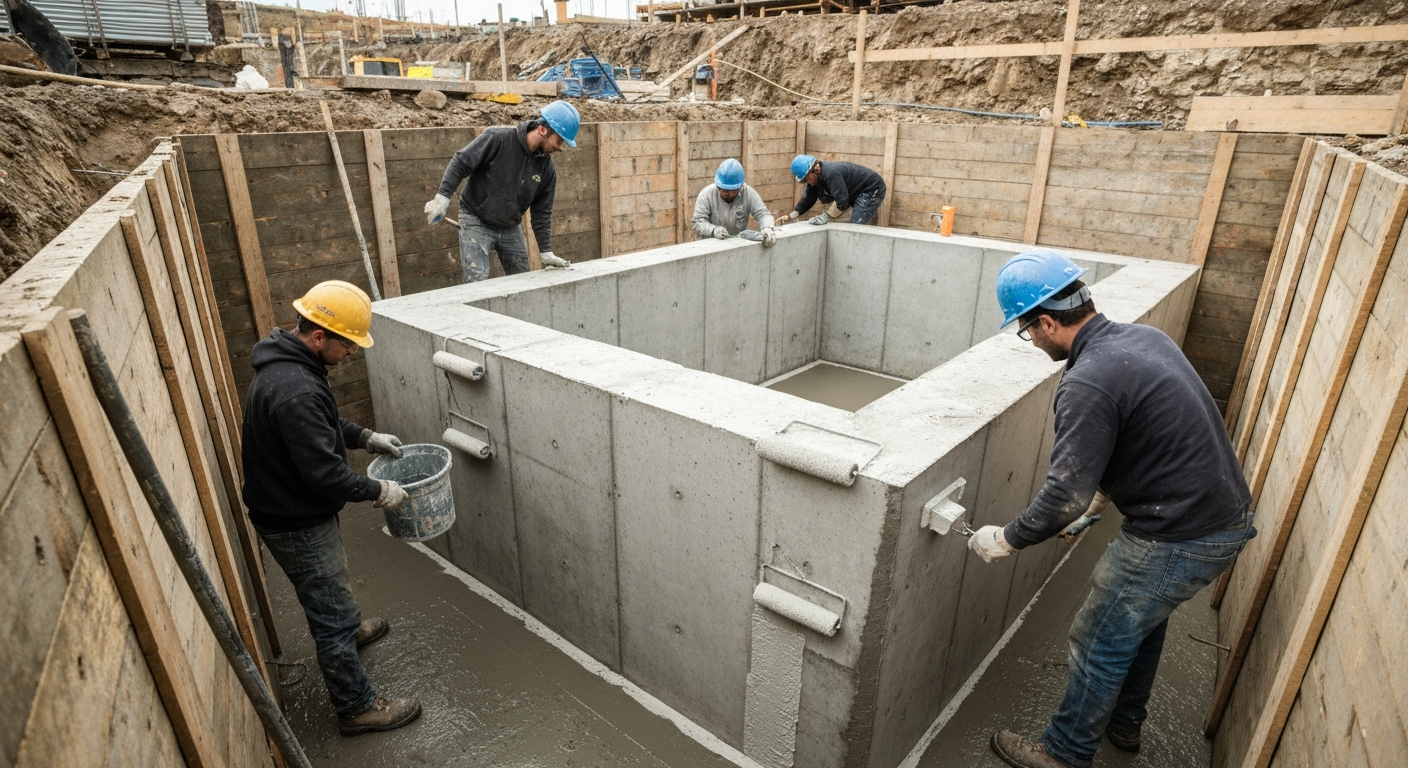
Basement waterproofing options and costs in Invermere
In Invermere, choosing basement waterproofing is largely about managing how water behaves against your foundation through spring snowmelt, shoulder-season rain, and repeated freeze–thaw cycles. In this area, many homes are older: 40.7% of dwellings were built before 1981, which typically means earlier waterproofing systems (or none at all) and weeping tile that may be undersized or fully failed. With 70.8% of households owning their homes, there’s strong demand for solutions that hold up for decades—not just patch symptoms.
Kootenay soil and groundwater conditions are a major cost driver. Around Invermere, glacial/alluvial soils can shift from relatively well-drained gravels near slopes to moisture-holding silts and clays toward valley-bottom areas. When water backs up against basement walls, hydrostatic pressure increases and older joints and mortar points can open wider during freeze–thaw, making leaks reappear after repairs that don’t address the source. Labour availability can also affect pricing: exterior excavation work is more time-intensive and dependent on how quickly crews can schedule around winter access constraints and landscaping restoration.
In demand areas often include neighbourhoods close to creeks and lakeside lots, where drainage problems show up quickly after heavy rain. In those cases, homeowners frequently decide between full exterior excavation versus an interior system with sump and perimeter drainage.
Below is a practical side-by-side comparison to help you frame your project budget before you request detailed quotes.
| Method |
What It Addresses |
Disruption Level |
Durability |
Price Range |
| Exterior excavation + new membrane + drainage tile |
Water entry at the foundation, replaces failed drainage route |
High (excavate, re-grade, restore landscaping) |
Long-term when properly detailed to discharge away |
$18,000–$35,000 |
| Interior perimeter drain channel + sump pit |
Collects seepage after it enters; reduces basement water |
Medium (floor cutting, ducting around sump) |
Very durable with quality pump + sealed penetrations |
$9,000–$20,000 |
| Foundation crack injection (epoxy or polyurethane) |
Stops targeted cracks; helps prevent ongoing seepage |
Low to medium (surface prep, minor patching) |
Good for the right crack type and depth |
$800–$2,500 |
| Sump pump installation (primary + battery backup) |
Handles higher hydrostatic events and power interruptions |
Low to medium (pit, discharge line, electrical) |
Strong protection when backup is included and maintained |
$2,500–$5,500 |
| Window well drain installation |
Manages runoff around egress windows |
Low to medium (localized excavation, grading) |
Good for localized wet spots |
$2,000–$4,500 |
| Lot re-grading / downspout extension |
Redirects roof/lot water away from foundation perimeter |
Low (minimal demolition) |
Moderate to good if slope and discharge are maintained |
$1,800–$6,000 |
Prices are estimates only and vary by project scope, site access and material selection.
What affects the price of waterproofing in Invermere
Two homeowners in Invermere can receive very different quotes for what sounds like the same “waterproofing” job. In Kootenay regions, it’s common to see 30–50% swings between bids because exterior work is heavily driven by excavation difficulty, soil/water conditions, and how far contractors must mobilize to properly drain and restore landscaping. The same spread can happen across British Columbia because labour rates, disposal access, and how complex a foundation layout is (corner lots, retaining walls, decks, driveways) differ from community to community.
The three biggest drivers that separate Invermere and Kootenay costs from the national average are soil type, water table, and freeze–thaw. Clay-heavy soils expand and contract more during freeze–thaw, which can push water and widen foundation joints over time—especially in older poured concrete or block foundations. When water tables are high near rivers, lakes, or alluvial fans, sump run times and discharge requirements increase, which can mean stronger pumps, more drainage piping, and sometimes battery backup. Additionally, as moisture saturates backfill after intense rainfall events, the foundation sees more hydrostatic pressure, so “surface fixes” often fail unless drainage design is matched to site conditions.
Concrete examples from Invermere pricing: (1) a homeowner on a sloped lot with good natural drainage may only need re-grading and downspout extension—often a smaller line item—while a valley-bottom site may require exterior drainage tile plus membrane, pushing the scope into the exterior band of $18,000–$35,000. (2) For a short, isolated crack, injection can sit closer to the $800–$2,500 range, but when multiple hairline cracks are actively seeping into a wet corner, the solution may need an interior perimeter drain and sump budgeted closer to the $9,000–$20,000 band.
In short: your home’s age (40.7% pre-1981) and how quickly water builds up around your foundation are what determine whether you’re solving a localized symptom or correcting a high-pressure water entry path.
| Price Factor |
Why It Matters |
Cost Impact |
| Interior vs. exterior approach — interior is less disruptive but addresses symptoms |
Exterior removes the water at the source; interior manages collected water |
Can shift cost by a large margin (often from interior bands toward exterior bands) |
| Foundation type — poured concrete vs. block vs. stone vs. ICF |
Different wall movement and crack behaviour affect system choice |
Block and stone often need more attention to drainage and crack sealing |
| Soil type — clay expands more than sand, adding pressure |
Freeze–thaw expansion increases lateral pressure |
More robust detailing may be required, especially for exterior systems |
| Crack type and length — hairline vs. structural horizontal cracks |
Structural movement may require engineer review before sealing |
Structural cracks can significantly increase scope and labour |
| Sump pump backup system — battery or water-powered backup needed |
Power outages during spring melt can leave basements unmanaged |
Backup can add cost but reduces failure risk |
| Access — landscaping, decks, or driveways must be removed for exterior |
Excavation depth and limited access raise labour time |
Restoration work can become a major portion of exterior pricing |
| Weeping tile age — original tile (60+ years) may be completely failed |
Failed tile can allow persistent hydrostatic pressure |
May require full replacement rather than partial repairs |
| Mould or efflorescence remediation required before sealing |
Moisture chemistry must be corrected to support proper adhesion and longevity |
Prepping and remediation can add time and materials |
Permits & regulations in British Columbia
In British Columbia, some waterproofing-adjacent work commonly requires permits—especially when foundation excavation or structural-level repairs are involved. As a general rule, foundation excavation, structural crack repair (particularly for horizontal cracks in block walls or cracks that suggest movement), and changes that materially affect lot drainage typically require a building permit. If a sump pump ties into storm or sanitary services, municipal approval is usually necessary. For structural crack repair, an assessment by a structural engineer is often required to confirm whether underpinning or additional structural measures are necessary before sealing.
What often does not require a building permit is limited interior patch work that is not structural and does not change drainage routes—for example, localized crack injection to stop seepage when the crack does not appear structural, minor grading adjustments limited to downspout extension, or installing a window well drain where it doesn’t alter required service connections. However, permitting requirements can vary depending on your exact foundation condition and discharge path, so it’s best to have your contractor confirm in writing.
To verify a contractor in Invermere, start with the provincial registry for their licence/registration details (online), then request a certificate of liability insurance and check the coverage is active for the job period and the address. Ask for WSIB/WCB clearance (as applicable) and confirm the clearance letter number/date. For structural repairs, confirm they can provide engineering support for the repair scope, not just waterproofing materials—this is a key difference between “sealing leaks” and ensuring the foundation is stable.
Interior vs exterior waterproofing — what does Invermere need?
The fundamental difference is that exterior waterproofing addresses the source of water entry, while interior waterproofing manages water after it gets into your basement. Exterior systems require full excavation, application of membrane waterproofing, installation (or replacement) of drainage tile, and backfill restoration. When done well, it can be the most permanent option because it reduces hydrostatic pressure at the wall. The tradeoff is higher cost and more yard disruption—important in Invermere where lots may be landscaped, sloped, or have limited access around the foundation perimeter.
Interior waterproofing typically includes a perimeter drain channel and a sump pit with a sump pump. This approach is less invasive and can be more feasible when excavation access is limited or when homeowners want to avoid major landscaping restoration. But it does not stop water pressure against the foundation wall itself; it collects seepage and lowers basement water levels. In Invermere’s freeze–thaw conditions, that can still be a very effective long-term strategy—especially when paired with proper crack sealing and good discharge detailing.
Which is right? In general, poured concrete walls often respond well to crack injection (especially for targeted seepage), while block foundations frequently benefit from interior drainage as a practical complement because joints and mortar points can allow moisture pathways. If you’re dealing with repeated spring wetness from high local groundwater and poor drainage, exterior drainage solutions tend to be justified. If the issue is localized runoff from downspouts or a few corners, interior work may be enough.
Dollar example: if your inspection shows widespread perimeter wetting that requires new drainage tile and membrane, exterior work may fall in the $18,000–$35,000 range. That’s often worth it when compared with repeatedly treating interior symptoms (interior perimeter drainage often sits around $9,000–$20,000), particularly where hydrostatic pressure reappears after heavy rain events.
| Method |
Best For |
Addresses Source? |
Disruption |
Lifespan |
Price Band |
| Full exterior excavation + membrane |
Persistent leaks, high hydrostatic pressure, failed original drainage |
Yes (source and pressure reduced) |
High |
Long-term (when discharge and backfill are detailed) |
$18,000–$35,000 |
| Interior French drain + sump system |
Basements that remain damp after rain/snowmelt; limited excavation access |
No (manages water entry) |
Medium |
Very good with quality pump and sealed penetrations |
$9,000–$20,000 |
| Crack injection — epoxy (structural) |
Cracks that are non-moving and not actively flowing |
Partial (seals pathways; does not replace drainage) |
Low to medium |
Good for the correct crack type and depth |
$1,200–$2,500 |
| Crack injection — polyurethane (active leak) |
Ongoing seepage where injection must respond to moisture |
Partial (seals active pathway) |
Low to medium |
Good where the water path is properly targeted |
$800–$2,000 |
| Interior drain channel only (no sump) |
Light seepage that can drain by gravity to a safe location |
No |
Low to medium |
Limited where water collects during heavy events |
$5,500–$12,000 |
| Re-grading + downspout extensions |
Roof runoff and surface water driving the problem |
Yes (reduces water contacting foundation) |
Low |
Moderate (depends on maintenance of grading/slope) |
$1,800–$6,000 |
How to choose a waterproofing contractor in Invermere
Start by confirming the contractor’s British Columbia licensing and business standing, then verify insurance and worker coverage. Ask for their licence/registration information (and check it yourself on the provincial registry), along with a current certificate of liability insurance. For jobsite protection, request WSIB/WCB clearance documentation—this is how you ensure workers are properly covered. If the scope includes structural crack repair or engineer-required steps, confirm they have engineering support available (and document it in your quote) rather than relying on “we’ve seen this before.”
Next, get 2–3 itemised written quotes. You want a breakdown of labour and materials (excavation, membrane, drainage tile, pipe and discharge, pump and controls, sump pit construction, concrete patching, disposal, and restoration). Avoid lump sums with vague exclusions. Ask whether a permit pull is included and whether disposal of excavated material is part of the price. Confirm what happens if conditions change (for example, if additional cracks are discovered after excavation, or if weeping tile is found collapsed).
Warranty matters: look for a workmanship warranty length in writing, and understand whether it’s backed by the contractor or only the product manufacturer. Also ask if warranties are transferable to the next owner—many homeowners in Invermere plan to sell at some point, and documentation protects you. For payment, never pay more than 10–15% upfront, and hold back until completion and final walkthrough. Get a start date and completion estimate in writing, tied to weather windows and cure times.
- Provide a site visit and moisture/crack assessment in the proposal (not just “we seal everything”).
- Itemize labour vs materials (membrane, tile, pipe, sump components, concrete patching).
- State inclusions: disposal, backfill specification, compaction approach, and restoration.
- Confirm permit responsibility: who pulls it and what work is permitted.
- Ask for a clear discharge plan (where drainage water goes, and whether backup is included).
- Request pump details: primary model, float controls, and backup type (battery backup where needed).
- Get warranty terms for workmanship and confirm if product warranty applies too.
- Ensure structural repairs include engineer sign-off when cracks suggest movement.
- Verify liability insurance certificate is current and includes your address/jobsite.
- Confirm WSIB/WCB clearance documentation is provided before work begins.
- Review schedule: start date, cure times, and what triggers delays or change orders.
- Use a written change-order process (price impact and approval required before extra work).
Red flags in Invermere include: quotes that exclude disposal and restoration without stating costs; refusing to provide insurance/WSIB/WCB proof; vague scopes that don’t specify drainage tile discharge and pipe routing; “one-size-fits-all” crack injection without explaining crack type (epoxy vs polyurethane); and warranties that only cover materials or expire immediately after install.
Frequently asked questions — waterproofing in Invermere
How much does foundation crack repair cost in Invermere?
In Invermere, foundation crack repair typically lands in the $800–$2,500 range depending on how many cracks are involved, their length, and whether the crack is active (actively leaking) or stable. In older Invermere homes—many built before 1981—cracks can be wider at joints after freeze–thaw, so injection products and prep matter. Epoxy (often used for non-moving, structural-type cracks) may push you toward the higher end, while polyurethane (used when leaks are active) can still fall in the same overall band but may require additional surface prep and verification. If your inspection shows multiple pathways or mould/efflorescence from ongoing moisture, you may need waterproofing beyond injection.
Do I need a sump pump in Invermere?
You may need a sump pump if your basement collects water during spring melt or heavy rainfall and gravity drainage alone can’t keep the area dry. In Invermere and the Kootenays, snowmelt and intense rain events can increase hydrostatic pressure, and older lots often have drainage limitations. A sump pump is also commonly recommended when an interior perimeter drain is installed, because it provides reliable removal during peak wet weather. If power reliability is a concern, consider a system that includes battery backup; a sump pump installation with backup often sits in the $2,500–$5,500 band. The right answer depends on where water enters, basement grading, and whether you can discharge safely away from the foundation.
How does Invermere's soil affect my foundation?
Invermere’s soils can vary from well-drained gravels on slopes to finer, moisture-holding silts and clays in valley-bottom areas. Clay-rich soils tend to expand and contract more during freeze–thaw, which increases lateral pressure on basement walls and can worsen crack openings over time. When groundwater or runoff accumulates quickly after snowmelt or shoulder-season rains, water builds up against the foundation and can overwhelm older weeping tile or perimeter drainage (common in homes built before 1981). That’s why two nearby properties can have very different outcomes: one may be mostly a surface runoff issue, while the other needs drainage tile and membrane detailing outside, or an interior perimeter drain and sump system inside.
Do I need a permit for foundation work in British Columbia?
In British Columbia, permit requirements often depend on the exact work. Foundation excavation and changes to lot drainage usually require permits, and structural-level crack repairs (especially where horizontal cracks or signs of movement suggest structural concern) commonly need a structural engineer’s assessment and related approvals. If a sump pump discharge connects to storm or sanitary services, municipal approval is typically required. On the other hand, smaller, non-structural interior waterproofing steps that don’t alter drainage routes may not require the same permitting level. For Invermere homeowners, the best approach is to ask your contractor to confirm what is permit-required in writing and to include permit pull responsibility in the quote. Also verify the contractor provides proper insurance and WSIB/WCB clearance documentation.
How long does waterproofing last?
With correct site investigation and proper detailing, many waterproofing solutions are designed to last decades, not years. Exterior excavation systems—with membrane and new drainage tile—tend to be the most long-term because they reduce water pressure at the source, especially when discharge is directed away effectively. Interior systems can also last a long time when the perimeter drain is properly installed and the sump pump is maintained; adding backup helps reduce risk during spring events. The reality in Invermere is that longevity depends on match: if soils hold water and freeze–thaw keep widening joints, and drainage isn’t designed for your conditions, even good workmanship can get overwhelmed. Home age matters too—because 40.7% of local dwellings were built before 1981, many start with older drainage failures that must be addressed for durability.
Can I waterproof my basement from the inside only?
Yes, many Invermere basements can be managed from the inside only, especially when exterior excavation is difficult or when you’re dealing with seepage that can be collected rather than fully stopped at the source. Interior perimeter drainage (often with a sump pit and sump pump) is designed to capture water after it enters and reduce basement dampness during wet seasons. Interior waterproofing commonly falls in the $9,000–$20,000 range, depending on sump system complexity and how much floor needs to be opened. However, inside-only approaches do not relieve hydrostatic pressure against the wall itself; if you have persistent high-pressure conditions, an exterior drainage and membrane plan is often the more complete long-term risk reduction. In most cases, crack injection plus interior drainage is a practical combination, provided the crack behaviour is correctly assessed.