Basement waterproofing options and costs in Ramsay
In Ramsay, Alberta, homeowners usually face waterproofing the same way they do across Calgary—one part water management, one part protecting aging foundation details from freeze–thaw. With a population of 2,155 in the area (Statistics Canada, 2021 Census), the local housing base is relatively tight-knit, and many repair crews know the typical failure patterns we see on older properties. Ramsay’s foundation waterproofing demand is often tied to homes that pre-date modern, continuous exterior membranes; when original tar-and-paper systems fail and weeping tile clogs, meltwater and spring runoff find their way into basement corners and along the wall-footing joint.
Calgary’s clay and clay-till soils are a cost driver because they hold water and expand when saturated, which increases lateral pressure on foundation walls and can widen cracks. Southern Alberta’s freeze–thaw cycles also aggravate joints and sealants, so a “patch” that works in summer may open again after winter. On top of that, excavation access matters: landscaping, concrete patios, and tight lot lines in mature pockets can push labour hours and disposal costs higher—one reason exterior waterproofing is often at the upper end of the city pricing bands. Contractor availability can also shift the final number, since the best-fit crews for full-perimeter work need several days of scheduling when multiple homes in the same area need excavation. This trade tends to be especially active around the older residential blocks near the inner-city / railway-adjacent areas where foundations are more exposed to drainage changes and aging weeping tile.
Below is a practical comparison of common approaches, what they address, and the typical price range homeowners in Ramsay budget for—so you can line up quotes and scope clearly.
| Method |
What It Addresses |
Disruption Level |
Durability |
Price Range |
| Exterior excavation + new membrane + drainage tile |
Source control by stopping water before it reaches foundation; installs functioning perimeter drainage to relieve hydrostatic pressure |
High (excavation to foundation, backfill, landscape restoration) |
Long-term when paired with proper regrading and outlets |
$12,000 – $25,000 |
| Interior perimeter drain channel + sump pit |
Captures seepage after it enters; reduces wall-floor flooding and efflorescence |
Medium (partial interior work, core drilling, sump discharge run) |
Very durable with quality sump components and cleanouts |
$7,000 – $15,000 |
| Foundation crack injection (epoxy or polyurethane) |
Seals cracks to stop leakage through the wall (polyurethane for active leaks; epoxy for structural/secondary water intrusion) |
Low to Medium (interior access, surface prep) |
Good to long-term depending on crack type and movement |
$700 – $1,800 |
| Sump pump installation (primary + battery backup) |
Manages recurring groundwater and storm-driven water; reduces risk of basement flooding during power interruptions |
Low to Medium (sump pit, discharge line, electrical work) |
Strong reliability when backup and check valves are installed correctly |
$1,500 – $3,000 |
| Window well drain installation |
Stops water pooling and seepage at basement windows; improves drainage around egress areas |
Medium (window well excavation/adjustments, gravel bed, discharge) |
Good when connected to perimeter drainage or a proper outlet |
$800 – $2,000 |
| Lot re-grading / downspout extension |
Moves roof and surface water away from the foundation; reduces how much water ever reaches seepage points |
Low to Medium (minor excavation, landscaping touch-up) |
Moderate (depends on ongoing maintenance of slopes and eavestroughs) |
$2,000 – $7,000 |
Prices are estimates only and vary by project scope, site access and material selection.
What affects the price of waterproofing in Ramsay
In Ramsay and the broader Calgary market, two quotes for the “same” waterproofing problem can differ by 30–50% because contractors price for site realities, not just the method name. The work often starts with excavation constraints, then moves to how much water pressure you’re dealing with, and finally to how much demolition/restoration is required to get to the foundation. A similar interior drain job may run higher if the discharge route is long, if there are many penetrations, or if the basement is finished and needs careful removal and reinstatement.
The three biggest drivers that separate Calgary-area costs from the national average are soil type, water table conditions, and freeze–thaw. Clay-heavy soils common across the Prairies expand during freeze–thaw and exert lateral pressure on foundation walls, worsening cracks over time; that means more prep, more sealing work, and sometimes a bigger crack injection plan. High seasonal groundwater in some Calgary low-lying pockets increases sump pump run times and makes a continuous, properly piped perimeter drainage approach more important. By comparison, regions with consistently coastal rainfall can saturate backfill quickly when original drainage fails—less “freeze-driven” opening and more “volume-driven” saturation. In Ramsay, where you can see seepage after spring runoff and heavy rain, interior drainage systems may be increased in capacity (bigger basin, better discharge routing), which is where costs climb toward the upper interior bands like $7,000 – $15,000.
Concrete examples that commonly change costs in Ramsay: (1) if you have a concrete patio or tight side yard against the foundation, exterior excavation can push you from the mid range toward $9,000 – $25,000; (2) older weeping tile systems may be completely failed—when that’s the case, we plan for more removal and a full reset of drainage performance rather than “patching” the old line; and (3) when efflorescence or mould is present, the waterproofing work can’t start until remediation is complete, adding labour and time before sealing.
| Price Factor |
Why It Matters |
Cost Impact |
| Interior vs. exterior approach — interior is less disruptive but addresses symptoms |
Exterior stops water at the source; interior captures water after it enters and usually requires sump sizing and discharge planning |
Interior often runs lower, exterior can add 40–80% depending on access and excavation depth |
| Foundation type — poured concrete vs. block vs. stone vs. ICF |
Crack behaviour and sealing strategy differ by material; block and stone often need interior drainage as a practical complement |
Poured concrete crack work may be cheaper; block/stone typically adds drainage scope |
| Soil type — clay expands more than sand, adding pressure |
Clay retains moisture and increases hydrostatic and lateral pressure, affecting membrane and drainage requirements |
More capacity, more sealing, and sometimes higher sump specifications |
| Crack type and length — hairline vs. structural horizontal cracks |
Structural movement may require engineering review; injection type and volume change with crack severity |
Structural cracks can increase labour and may add engineer/structural prep costs |
| Sump pump backup system — battery or water-powered backup needed |
Backup reduces flooding risk during spring storms and short outages in power-sensitive seasons |
Adds material and install time but prevents high-damage callbacks |
| Access — landscaping, decks, or driveways must be removed for exterior |
Excavation depth and restoration complexity affect labour and disposal |
Can swing exterior totals significantly upward |
| Weeping tile age — original tile (60+ years) may be completely failed |
Failed tile means old routing doesn’t perform, so performance drainage needs a full replacement strategy |
May move the job from “targeted” repair to “full perimeter” replacement |
| Mould or efflorescence remediation required before sealing |
Sealers won’t properly bond on contaminated surfaces; lingering moisture can reactivate symptoms |
Remediation adds time and labour before waterproofing can proceed |
Permits & regulations in Alberta
In Alberta, certain foundation and drainage changes typically require a building permit, especially work that changes load paths, foundation performance, or how water leaves the site. Foundation excavation and structural crack repair generally require a permit because the scope can affect foundation stability and adjacent drainage. Likewise, changes to lot grading and downspout discharge can trigger permit requirements when they alter drainage patterns near neighbouring property lines or public infrastructure.
Sump pump installations can also need municipal approval when the discharge connects to storm or sanitary systems; the key is whether and how the discharge is tied into municipal services, which is why contractors should confirm the required approvals before they cut pipe or route discharge. For structural crack repair—particularly horizontal cracks in block walls or major step cracks—a structural engineer’s assessment is often needed to determine whether underpinning or other structural remediation is required before sealing.
Here’s how a homeowner in Ramsay can verify coverage step-by-step. First, ask for the contractor’s Alberta licence details (or the appropriate registration if applicable) and confirm it using the appropriate online registry. Second, request a current certificate of insurance showing liability coverage for construction work—ensure the dates are valid and the project address is covered. Third, verify WSIB/WCB coverage with documentation or clear proof of account status. Finally, for any structural component, ask whether the contractor has engineering support in place and whether they will coordinate engineer recommendations in writing. Clear answers before a quote reduce the risk of delays once excavation begins.
Interior vs exterior waterproofing — what does Ramsay need?
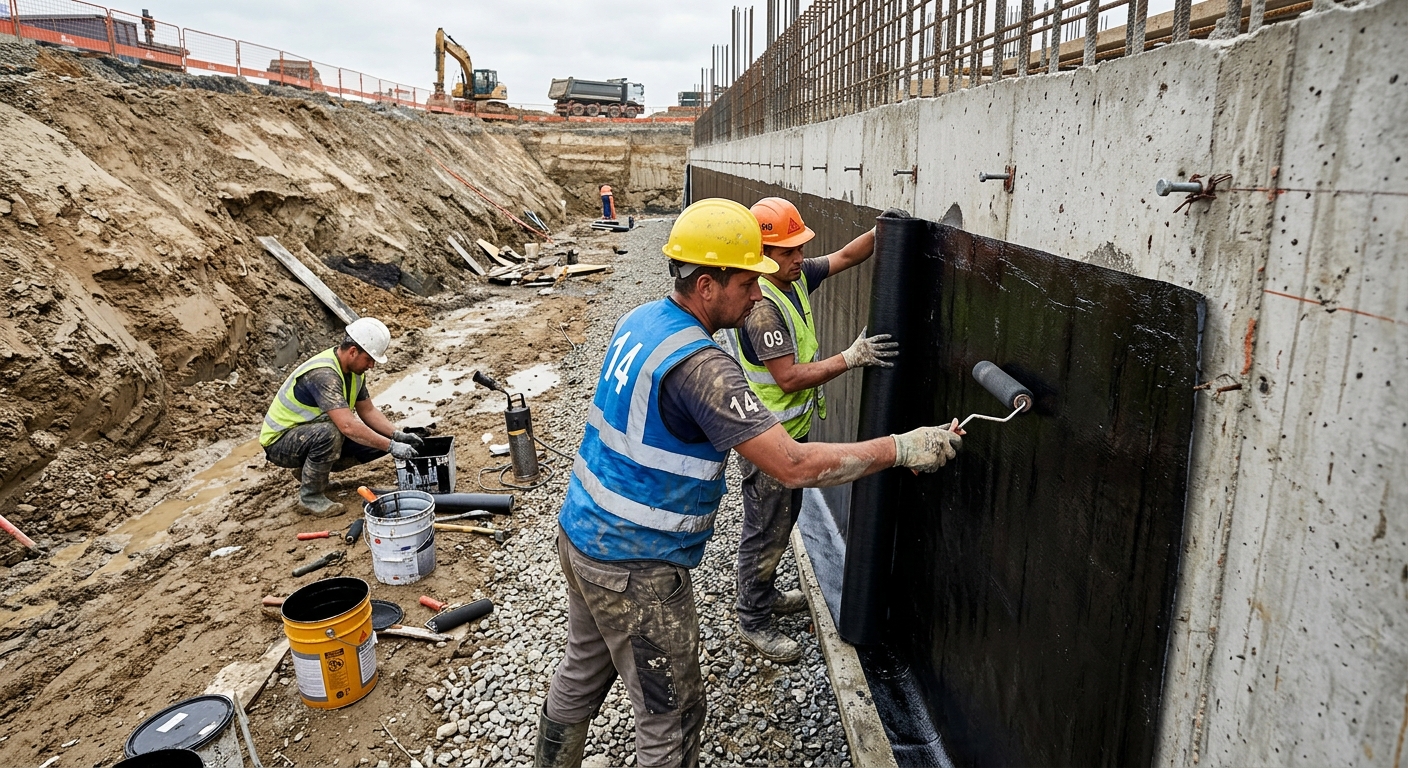
The fundamental difference is simple: exterior waterproofing manages water at the source by excavating to the foundation, installing a continuous membrane system, re-establishing reliable perimeter drainage tile, then backfilling properly. Interior waterproofing helps after water entry by capturing seepage with a perimeter drain channel, sump pit, and sump pump—reducing flooding and addressing symptoms like efflorescence. However, interior systems do not eliminate hydrostatic pressure against the wall itself; they move water once it arrives.
In Ramsay’s clay-and-clay-till conditions with southern Alberta freeze–thaw cycles, exterior waterproofing is usually the better long-term choice when you have active seepage, multiple problem areas, or older weeping tile that’s clogged or failed. Exterior work also shines when hydrostatic pressure is persistent because the perimeter drainage and membrane reduce the amount of water reaching the wall and footing. That said, interior waterproofing can be the correct call when access is limited, the basement is finished and demolition would be excessive, or when you’re targeting localized leaks. For poured concrete walls, crack injection combined with interior drainage often performs well because poured concrete tends to seal more predictably when cracks are properly treated. For block foundations, it’s common to use interior drainage as a practical complement because moisture paths through block voids and joints can be hard to fully control from the inside.
Power reliability is another Alberta reality. A sump pump without backup can be a risk during spring outages when snowmelt surges and the pump is working hardest. In terms of dollars, the spread can be justified: an exterior system can land around $12,000 – $25,000, while a properly designed interior perimeter drain + sump plan often fits $7,000 – $15,000. If your issue is localized and your soil drainage is improving, you may not need full excavation. If the water is persistent and you see signs all along a wall, the extra cost for exterior source control is usually what prevents recurring season-to-season callbacks.
| Method |
Best For |
Addresses Source? |
Disruption |
Lifespan |
Price Band |
| Full exterior excavation + membrane |
Ongoing seepage, heavy spring runoff impacts, failed original drainage, or evidence of hydrostatic pressure |
Yes |
High (excavation, waterproofing membrane, backfill, landscape restoration) |
Many years when drainage outlet and regrading are done correctly |
$12,000 – $25,000 |
| Interior French drain + sump system |
Finished basements where exterior excavation is impractical, or when leaks are localized but recurrent |
No (captures water after entry) |
Medium (core drilling, channel work, sump discharge routing) |
Long-term with quality pump, basin, and check valves |
$7,000 – $15,000 |
| Crack injection — epoxy (structural) |
Non-moving or secondary intrusion cracks where structural integrity is confirmed |
Limited source reduction (seals the crack pathway) |
Low to Medium (interior or accessible crack prep) |
Good when movement is minimal |
$500 – $1,800 |
| Crack injection — polyurethane (active leak) |
Active, damp, or leaking cracks where material needs to flex with moisture |
Limited source reduction (seals leak pathway under conditions) |
Low to Medium (surface prep, injection ports) |
Good to long-term when paired with drainage management |
$700 – $2,100 |
| Interior drain channel only (no sump) |
Minor seepage without standing water, or when discharge can be gravity-fed effectively |
No (only intercepts and routes water) |
Medium (interior demolition, channel installation) |
Moderate (depends heavily on routing and conditions) |
$5,000 – $10,000 |
| Re-grading + downspout extensions |
Surface water problems, early signs of dampness, or foundation exposure to roof runoff |
Yes (reduces water reaching foundation) |
Low to Medium (minor excavation and landscaping) |
Moderate (requires continued maintenance) |
$2,000 – $7,000 |
How to choose a waterproofing contractor in Ramsay
To choose the right waterproofing contractor in Ramsay, start by verifying Alberta coverage and then insist on itemised paperwork that matches your foundation issue. First, confirm the contractor’s Alberta licensing/registration status through the appropriate online registry, and ask for the specific licence details they rely on for the scope you’re hiring. Second, request a certificate of insurance showing liability coverage for construction work; it should be current and correspond to the project period. Third, verify WSIB/WCB coverage—ask for a clearance letter or proof of account status, not just a verbal “we’re covered.” These checks protect you if an excavation step causes damage or if a worker gets injured on site.
Next, get 2–3 itemised written quotes. You want labour and materials broken down (membrane system, drainage tile, sump basin/pump, discharge components, disposal/restoration allowances). Avoid lump sums that don’t show what’s included. Read the scope carefully: are permits included or excluded, and who pulls them? Is disposal included for clay spoils? If exterior excavation is involved, confirm what gets removed and restored, and what happens if you discover additional foundation defects.
Warranty matters in a business where freeze–thaw failures can appear later. Ask for the workmanship warranty length and whether the product/manufacturer warranty is direct in your name or transferable to future owners. For payment schedule, never pay more than 10–15% upfront; hold back a portion until the job is complete and cleaned up. Finally, timeline: get the start date and a realistic completion estimate in writing, including curing periods and reinspection steps if a permit is required.
- Ask what problem they are diagnosing first (e.g., seepage pathways, crack type, discharge routing).
- Request an itemised quote with labour/material line items, not only method names.
- Confirm permit responsibility in writing (permit pull included or not).
- Verify liability insurance is current and ask which date range it covers.
- Check WSIB/WCB coverage with clearance/proof before work starts.
- Look for a written warranty: workmanship length + what products are covered.
- Confirm whether warranties are transferable if you sell the home.
- Demand a clear disposal and restoration allowance for excavated clay.
- Require details for discharge: where the sump drains, what check valves are used, and how backflow is prevented.
- Ask about sump backup (battery or water-powered) when spring flooding risk is present.
- Ensure contract exclusions are listed (e.g., mould remediation, landscaping, permit fees).
- Get a written start date and completion timeline with conditions (weather/access constraints).
In Ramsay, watch for red flags like (1) quotes that skip a drainage-outlet plan and only promise “seal it and forget it,” (2) no mention of crack type (epoxy vs polyurethane) and no assessment of movement, (3) contractors who won’t provide insurance/WSIB/WCB documentation in writing, (4) a payment schedule asking for more than 10–15% upfront, and (5) vague warranty terms that don’t specify workmanship coverage or transferability.
Frequently asked questions — waterproofing in Ramsay
How much does foundation crack repair cost in Ramsay?
In Ramsay, foundation crack repair pricing depends on crack type, length, and whether the crack is active (actively leaking) or just damp. For many typical injection projects, homeowners can expect costs around the lower band for crack work—commonly fitting the $500 – $1,800 range when access is straightforward and the scope is limited to surface prep and injection. If the crack is longer, multiple segments are involved, or additional materials are needed for proper surface sealing, you can see numbers move toward the higher end. Alberta’s freeze–thaw cycle also means contractors should confirm whether movement is present, since that affects whether they recommend epoxy (structural/less movement) versus polyurethane (for active leaks).
Do I need a sump pump in Ramsay?
You may need a sump pump when your basement sees recurring seepage, water pooling in corners, or hydrostatic pressure signs—especially after spring runoff when clay soils hold saturation. In Ramsay and surrounding Calgary, it’s common to add a sump when interior perimeter drains are installed to capture water effectively. If you’re considering sump work, typical installation pricing often starts around $900 – $3,000 in the local market; adding battery backup increases the likelihood you won’t face a flood during power interruptions. That backup is especially important in Alberta during stormy spring periods when the pump runs more frequently. A contractor should also assess discharge routing and check valves so the pump doesn’t just move water, but moves it safely away from your foundation.
How does Ramsay's soil affect my foundation?
Ramsay’s clay and clay‑till soils are a major reason waterproofing failures can feel “seasonal.” Clay holds water; when it saturates and then freezes, it expands and can increase lateral pressure against foundation walls and footings. That pressure can widen existing cracks and joints, allowing meltwater and spring runoff to penetrate more easily. It also means drainage details matter: if weeping tile is clogged or undersized, water can build up around the foundation instead of flowing away. When you see efflorescence, damp wall bases, or persistent corner seepage, soil-driven saturation is often part of the cause. In those cases, interior drainage + sump systems or exterior membrane/perimeter drains can be justified depending on access and how widespread the seepage is.
Do I need a permit for foundation work in Alberta?
In Alberta, many foundation and drainage changes typically require a building permit—especially foundation excavation, structural crack repair, and changes to lot drainage that affect how water is managed near the home. Sump pump installations may also require municipal approval when you connect discharge to storm or sanitary systems. For structural crack repair (for example, horizontal cracks in block walls or major step cracks), an engineer’s assessment is often needed to confirm whether structural remediation is required. The best practice for homeowners in Ramsay is to ask your contractor to specify exactly what permits are required for your scope and who is responsible for pulling them. If a quote is unclear on permits, pause and get it in writing before excavation begins.
How long does waterproofing last?
“Lifespan” depends on the system design and whether water management is handled from the correct side of the wall. Exterior membrane + properly functioning drainage tile and correct regrading generally last longer because they reduce the water reaching the foundation in the first place. Interior perimeter drainage and sump systems can also perform for many years, but they depend on the pump’s reliability, discharge routing, and clear maintenance access. Crack injection can last long when the crack is properly diagnosed and the material matches the crack behaviour (epoxy for structural/non-moving cracks versus polyurethane for active leaks). In Alberta’s freeze–thaw conditions, any detail that lets water sit near the foundation—like clogged eavestroughs or poor downspout discharge—can shorten system life. That’s why high-quality installation plus correct site grading is what separates a long-performing job from a recurring one.
Can I waterproof my basement from the inside only?
Yes, you can waterproof from the inside only, and it’s often a practical choice in Ramsay when exterior excavation isn’t feasible due to access, finished landscaping, or tight lot lines. Interior approaches like a perimeter drain channel plus a sump pit can manage seepage after it enters, which helps control flooding and reduces efflorescence. If your leaks are localized and your walls are poured concrete with cracks that are stable, crack injection—sometimes paired with interior drainage—can also be an effective strategy. However, interior-only work usually doesn’t eliminate hydrostatic pressure on the wall itself; it redirects water. If you’re dealing with persistent hydrostatic pressure or widespread leakage along a wall, exterior source control is more likely to provide a long-term fix. Cost-wise, interior work commonly falls around $7,000 – $15,000, while exterior can be higher (often up to the $12,000 – $25,000 range) when excavation and full membrane installation are needed.