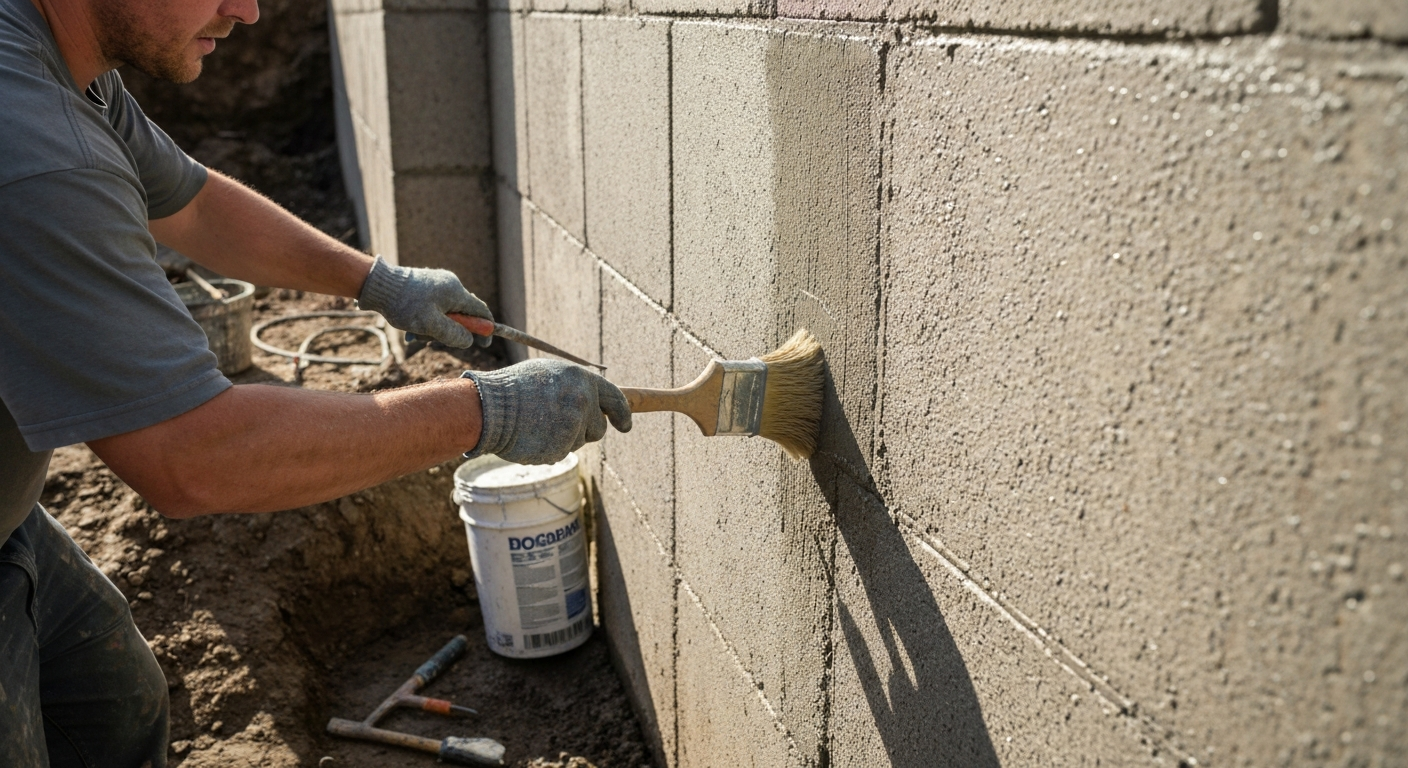
Basement waterproofing options and costs in Provost
In Provost, basement waterproofing decisions start with what kind of water problem you’re seeing—surface seepage, hydrostatic pressure through foundation joints, or active leaks at cracks and around penetrations. That matters because Provost has a large share of older housing: about 59.9% of homes were built before 1981 (Statistics Canada, 2021 Census), which often means the original tar-and-paper style systems are long past their service life and weeping tile may be undersized or failed. With 79.6% of dwellings being single-detached homes, many sites are workable for full exterior drainage upgrades, but excavation access still affects the final price.
In the Camrose–Drumheller region, costs are shaped by clay to clay-loam subsoils that hold water and create sustained pressure when soils saturate. Freeze–thaw cycles then widen existing cracks and joints, turning slow seepage into repeat winter leakage. Contractors also see higher demand in older neighbourhoods near Main Street and around the newer service expansions, where foundation moisture issues are more common in established lots.
To help you compare apples to apples, here are the most common waterproofing methods and typical ranges contractors quote in Provost, then we’ll break down what pushes a project up or down in price.
| Method |
What It Addresses |
Disruption Level |
Durability |
Price Range |
| Exterior excavation + new membrane + drainage tile |
Water at the foundation source (hydrostatic pressure) using exterior drainage and waterproof coating system |
High (excavation, landscaping disruption) |
Long-term (commonly 15–25+ years with proper grading and tile performance) |
$9,500–$21,500 |
| Interior perimeter drain channel + sump pit |
Water after it enters by collecting seepage and relieving pressure with a perimeter drain and sump |
Medium (flooring and wall finishes disturbed) |
Good (often 10–20 years depending on conditions and pump maintenance) |
$6,800–$15,500 |
| Foundation crack injection (epoxy or polyurethane) |
Stopping seepage through cracks; polyurethane is used for active leaks, epoxy is typically for stabilized/structural gaps |
Low to Medium (patching required) |
Good when properly matched to crack type and substrate condition |
$900–$2,300 |
| Sump pump installation (primary + battery backup) |
Reducing risk of interior flooding during spring melt and power outages; backup protects during outages |
Low to Medium (pit + discharge line work) |
High (pump lifespan depends on water volume and servicing; backups extend resilience) |
$1,600–$3,400 |
| Window well drain installation |
Water pooling and seepage around basement windows, especially during snowmelt and heavy rains |
Low to Medium (excavation around window area) |
Good (typically 10–15 years if kept clear and properly graded) |
$750–$2,100 |
| Lot re-grading / downspout extension |
Surface water control to reduce how much water reaches foundation walls |
Low (modifies exterior grade and drainage connections) |
Moderate (can last 5–10+ years if maintained) |
$900–$3,000 |
Prices are estimates only and vary by project scope, site access and material selection.
What affects the price of waterproofing in Provost
In Provost, two neighbours can receive quotes that differ by 30–50% for what sounds like the same basement issue, because the “source of water” isn’t always the same and the job scope changes once the contractor sees the foundation and soil conditions. In the Camrose–Drumheller market, pricing tends to move away from national averages when excavation conditions are tight, when drainage tile and weeping tile performance are unknown, and when crews have to design for saturated clay soils and freeze–thaw pressure.
The three biggest local drivers are soil type, water table conditions, and freeze–thaw. Clay-heavy subsoils are less permeable, so when they saturate they expand and increase lateral pressure on foundation walls; that can mean more extensive crack preparation and more reliable drainage. When the effective water table runs high during spring melt, a sump system may need larger pumps and higher-capacity discharge, which increases labour and materials. If the region’s drainage is compromised (common where older weeping tile systems are undersized), interior “symptom control” can cost less up front—but may repeat sooner, especially in homes built before modern membrane standards.
Here are a few practical Provost examples that change the number you’ll see: (1) A basement with active corner seepage usually pushes you into a higher interior drain scope or crack injection; (2) a foundation wall with long, horizontal cracking often requires careful crack mapping, and that can push repair toward the upper end of crack work (for example, $900–$2,300 for injection depending on length and access); (3) if you can’t get equipment to the back yard without removing a deck or significant landscaping, exterior excavation may approach the top of the range—moving from typical interior pricing toward higher exterior budgets (often $9,500–$21,500 depending on depth and drainage complexity).
| Price Factor |
Why It Matters |
Cost Impact |
| Interior vs. exterior approach — interior is less disruptive but addresses symptoms |
Interior work relieves pressure after it enters; exterior work reduces the water at the foundation source |
Interior can be ~30–60% less upfront; exterior often costs more but can reduce recurrence risk in wet clay |
| Foundation type — poured concrete vs. block vs. stone vs. ICF |
Crack behaviour and how water travels through joints varies by wall system |
Poured concrete may respond well to injection; block often needs interior drainage plus targeted sealing |
| Soil type — clay expands more than sand, adding pressure |
Saturated clay increases lateral load and keeps the wall colder/wetter longer |
Can increase sump sizing, drain channel design, and crack prep labour |
| Crack type and length — hairline vs. structural horizontal cracks |
Structural-oriented cracks may indicate movement; sealing alone may not be enough |
Long or horizontal cracks typically push injection scope and material costs upward |
| Sump pump backup system — battery or water-powered backup needed |
Power outages during spring wet periods can turn a “managed” leak into a flood |
Backup adds cost but reduces risk substantially; often a meaningful part of interior project pricing |
| Access — landscaping, decks, or driveways must be removed for exterior |
More teardown = more labour and replacement restoration |
Access issues can move exterior projects toward the upper end of the excavation range |
| Weeping tile age — original tile (60+ years) may be completely failed |
Old tile may be clogged, collapsed, or disconnected |
If tile performance is poor, contractors may recommend replacing drainage which increases costs |
| Mould or efflorescence remediation required before sealing |
Sealers and membranes don’t bond well to contaminated or deteriorated surfaces |
Remediation adds time, disposal, and sometimes additional wall treatment steps |
Permits & regulations in Alberta
In Alberta, foundation excavation, structural crack repair, and changes to lot drainage typically require a building permit. If the work involves structural elements—especially where crack patterns suggest movement—permits and professional review become more important. Sump pump installations that connect to the storm or sanitary sewer usually need municipal approval before any tie-in is made.
For structural crack repair (for example, major horizontal cracks in block walls, significant step cracks, or signs of ongoing movement), a structural engineer’s assessment is often required to determine whether underpinning or additional structural work is needed—not just sealing. A reputable waterproofing contractor should be able to coordinate engineering support for structural repairs, and should carry liability insurance and WSIB/WCB coverage for their crew.
Step-by-step, here’s how a Provost homeowner can verify a contractor before signing:
- Ask for their Alberta licensing/registration details and confirm they match the exact type of work proposed.
- Request a current certificate of liability insurance and confirm the coverage limits are appropriate to the project scope.
- Check WSIB/WCB clearance or account details (ask for proof or a clearance letter).
- For structural crack repairs, ask whether they engage an engineer and whether the recommendation is documented in writing.
- Confirm who pulls the permit (and what’s included) and whether municipal approval is required for any sewer or discharge tie-in.
What typically does NOT require a permit includes minor re-grading that doesn’t redirect drainage onto neighbours, routine downspout extensions that discharge to your own eavestrough extensions/approved area, and small interior seal repairs that are purely non-structural. Still, your contractor should confirm permit needs based on your specific foundation and drainage plan.
Interior vs exterior waterproofing — what does Provost need?
Interior and exterior waterproofing differ in one key way: exterior systems aim to keep water from reaching your foundation in the first place, while interior systems manage water after it enters. In Provost’s clay-to-clay-loam soils, water can stay against foundation walls longer during spring melt, and freeze–thaw can widen existing weaknesses. That’s why exterior waterproofing—full excavation, membrane, and new drainage tile—can be the most complete fix when you have persistent seepage or a foundation with older drainage performance. It’s also the option that most directly reduces hydrostatic pressure at the source, but it requires landscape disruption and more time on site.
Interior waterproofing—perimeter drain channel, sump pit, and sump pump—can be less invasive and is often the best fit when yard access limits excavation or when you’re focused on stopping current water intrusion. However, interior work doesn’t eliminate the hydrostatic pressure against the wall itself; it controls the water you collect. That’s where crack injection fits well as a complement. Poured concrete foundations generally seal more predictably with properly prepared crack injection, while block foundations often benefit from interior drainage combined with targeted sealing because water can travel through block voids and mortar/joint pathways.
Given Alberta’s winter freeze–thaw and spring saturation cycles, sump backup systems matter for homeowner confidence. If you get a power interruption during heavy melt, the difference between a primary pump only versus primary + backup can be the difference between a damp basement and a flooded one.
As a budget reality check: upgrading exterior excavation and drainage often sits around $9,500–$21,500, while interior perimeter drainage and sump work is commonly closer to $6,800–$15,500. If your main problem is localized active seepage at a crack plus occasional seep around a window well, investing in crack injection and a sump plan may be justified. If your issue is widespread wall wetting that returns every spring, exterior drainage upgrades are often the more cost-effective choice over multiple seasons.
| Method |
Best For |
Addresses Source? |
Disruption |
Lifespan |
Price Band |
| Full exterior excavation + membrane |
Persistent seepage, high moisture seasons, and homes with older or failing exterior drainage |
Yes (source control) |
High |
15–25+ years |
$9,000–$22,000 |
| Interior French drain + sump system |
Limited exterior access, finishing constraints, or when you need reliable interior control fast |
Partially (after-entry management) |
Medium |
10–20 years |
$6,500–$16,000 |
| Crack injection — epoxy (structural) |
Non-moving, stabilized cracks in poured concrete where a structural gap exists |
No (seals the crack path rather than draining soil) |
Low to Medium |
10–20 years |
$900–$2,500 |
| Crack injection — polyurethane (active leak) |
Active seepage or wet cracks where a flexible seal is needed |
No (stops flow path; may still need drainage if pressure is high) |
Low to Medium |
8–15 years (varies with pressure conditions) |
$800–$2,300 |
| Interior drain channel only (no sump) |
Very light seepage where gravity drainage works and flooding risk is low |
No (after-entry management) |
Low to Medium |
5–10 years (depends on effectiveness) |
$1,800–$6,500 |
| Re-grading + downspout extensions |
Surface water runoff issues, minor dampness, and foundation wetting during storms |
Yes (surface control) |
Low |
5–10+ years with maintenance |
$900–$3,000 |
How to choose a waterproofing contractor in Provost
Choosing the right waterproofing contractor in Provost is mostly about verification and scope clarity—not marketing. Start by confirming Alberta coverage details. Ask for proof of liability insurance (a current certificate showing coverage limits), and verify WSIB/WCB clearance so you know the crew is properly registered for work in Alberta. Also ask how they handle permit requirements—foundation-related excavation and drainage changes can require approvals, so the contractor should clearly state who pulls the permit and what inspections are expected.
Next, get 2–3 itemised written quotes. You want a breakdown that separates labour from materials (membranes, drainage tile, pumps/backup, excavation/disposal, crack prep materials, and patching/restoration). Avoid quotes that lump everything into one price with no line items; waterproofing outcomes depend on correct sequencing and materials.
Read the scope for exclusions: will they replace or protect landscaping, remove and reinstall eavestrough/downspout sections if needed, include disposal of excavated soil, and address any mould or efflorescence before sealing? Ask for the warranty details in writing: workmanship warranty length, product/manufacturer warranty terms, and whether warranties are transferable to future owners.
Payment schedule matters too. A good rule in Alberta projects is to never pay more than 10–15% upfront. Request progress payments tied to milestones, and hold back funds until the site is clean and the system is verified (for example, pump operation and discharge routing).
Finally, insist on a timeline with start date and estimated completion in writing, including weather contingencies for excavation in the prairie freeze–thaw season.
- Confirm contractor registration/licensing for the scope being proposed.
- Request liability insurance certificate and verify coverage amount.
- Request WSIB/WCB clearance letter (or proof) before scheduling work.
- Get 2–3 itemised quotes (labour + materials), not lump-sum only.
- Ask whether permits are included and who is responsible for inspections.
- Confirm disposal is included for excavation spoils and old drainage materials.
- Ask how they diagnose water source (crack mapping, moisture checks, drainage review).
- Verify crack injection method matches crack type (epoxy vs polyurethane) and wall material.
- Require sump discharge plan details (where discharge goes and whether approvals are needed).
- Ask about pump backup options and include them if power risk is part of your concern.
- Clarify what repairs/restoration are included after waterproofing (patching, flooring reinstalls).
- Review warranty: workmanship duration, product warranty, exclusions, and transferability.
Red flags to watch for in Provost: (1) they recommend a “one-size-fits-all” fix without checking crack location and water origin; (2) they quote only interior drainage even when exterior source water is clearly grading-related; (3) they won’t discuss backup power for sump systems; (4) they can’t provide proof of insurance/WSIB/WCB clearance; and (5) they avoid itemising labour/materials or won’t put the permit scope in writing.
Frequently asked questions — waterproofing in Provost
Interior vs exterior waterproofing — which is better?
In Provost, “better” depends on the water source. Exterior waterproofing (excavation, membrane, and new drainage tile) is usually best when you have recurring wall wetting during spring melt or when older exterior drainage has failed in clay-heavy soils. It addresses the source and reduces hydrostatic pressure at the wall. Interior waterproofing (perimeter drain channel and sump) is often the better choice when excavation access is limited or you need a faster, less disruptive solution. If you’re seeing active crack seepage, crack injection can pair with either approach. Budget-wise, exterior projects commonly land around $9,500–$21,500, while interior drainage and sump work is often closer to $6,800–$15,500.
Why is my basement leaking in Provost?
Basement leaks in Provost are usually triggered by a combination of saturated soils and freeze–thaw. Clay-to-clay-loam subsoils can hold water against foundation walls longer, and when winter freeze expands minor gaps, seepage can worsen over successive seasons. Homes built before 1981 are more likely to have failing original drainage systems or older waterproofing layers (Statistics Canada, 2021 Census). Common causes include failed or undersized weeping tile, downspouts that discharge too close to the foundation, cracked mortar/joints, and openings around penetrations. If the basement is damp mostly during spring melt, that points strongly to drainage and water table conditions rather than a single isolated plumbing leak.
How do I know if a foundation crack is serious?
A crack’s “seriousness” depends on pattern, movement, and how wet it is. In Alberta, structural concerns increase if you see horizontal cracks in block walls, widening over time, stepped cracks progressing across block units, or cracks that are associated with bulging/misalignment. Hairline cracks that are dry and stable may be sealed, while active wet cracks often need polyurethane-type injection and can indicate water entry. In Provost’s freeze–thaw cycle, even previously minor cracks can become active; that’s why monitoring matters. A good contractor will map the crack and assess whether it looks like movement versus leakage. If structural indicators are present, an engineer’s review may be needed before relying on sealing alone.
How much does foundation crack repair cost in Provost?
Foundation crack repair in Provost typically depends on crack type (active leak vs stabilized), length, access, and whether surface remediation is required. For crack injection, pricing commonly sits in the range of $900–$2,300, with longer runs or more involved preparation pushing toward the upper end. If you have multiple cracks, corner leakage, or significant prep due to efflorescence/mould, the scope can increase. Note that crack injection is not always a stand-alone fix—if hydrostatic pressure is driving ongoing seepage, interior drainage and/or a sump may be required as a complement. For planning, also budget for restoration (patching and finishing) after injection.
Do I need a sump pump in Provost?
You may need a sump pump if you have seepage that collects in a low point, recurring water during spring melt, or high moisture in clay soils where the effective water table stays elevated. If your foundation drainage is weak or failed, a sump is often the most reliable way to keep water from building up and causing mould or freeze-related damage. Many Provost homeowners also choose backup power during spring flooding risk—especially where power interruptions could occur. Sump pump installations commonly fall in the $1,600–$3,400 range when including backup options. That said, if your issue is primarily surface runoff, upgrading grading and downspouts may reduce the need for a sump.
How does Provost's soil affect my foundation?
Provost’s foundation problems are strongly tied to clay to clay-loam subsoils common across the Camrose–Drumheller area. Clay soils are less permeable, so they can hold water against the foundation longer. When they saturate and then freeze, the freeze–thaw cycle can widen existing cracks and joints, increasing the chance of seepage at cold joints and weak spots. That’s why waterproofing approaches in this region often emphasize drainage performance (proper tile layout, effective discharge routing, and reliable interior collection when needed). In older homes—where 59.9% were built before 1981 (Statistics Canada, 2021 Census)—the waterproofing and drainage systems may not be designed for today’s moisture patterns, so symptoms can repeat every spring.