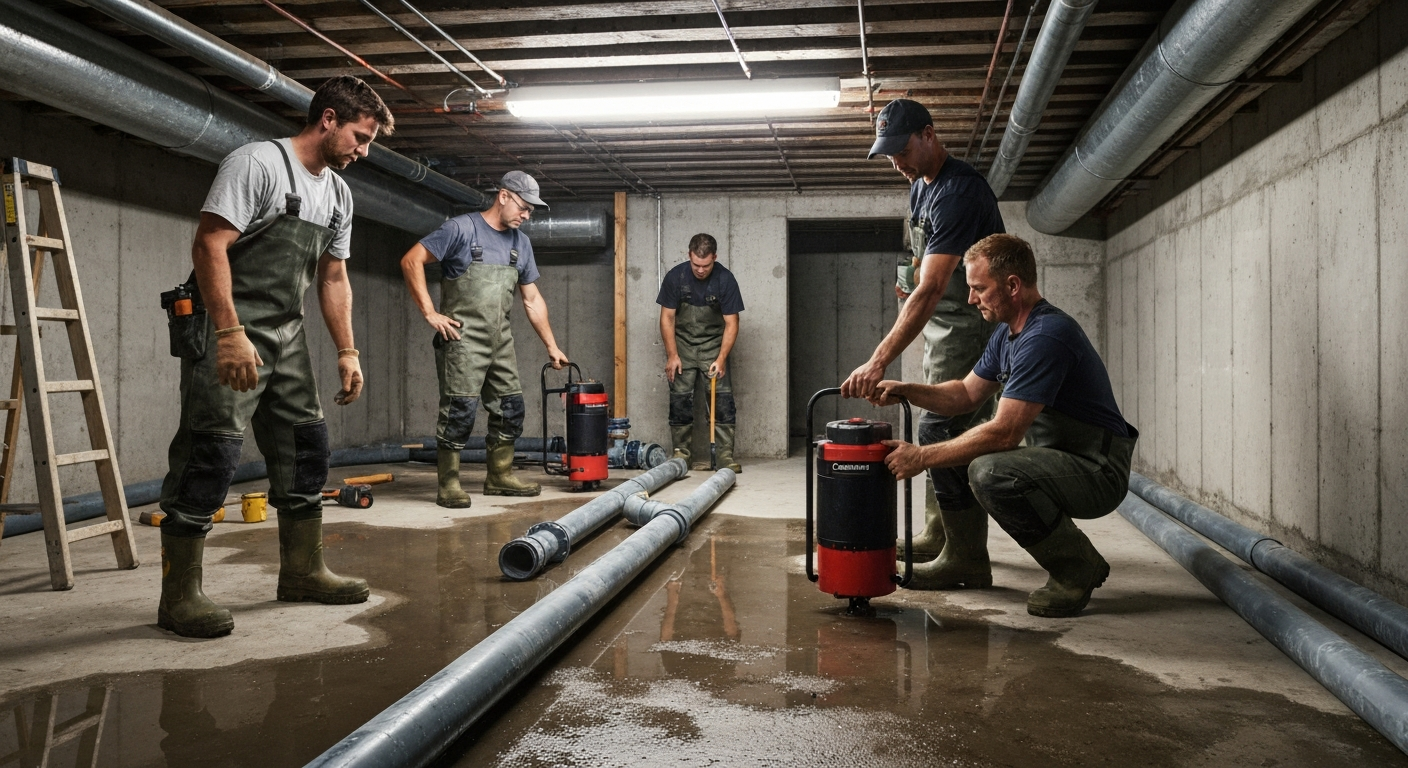
Basement waterproofing options and costs in McKenzie Lake
McKenzie Lake homeowners typically start waterproofing conversations when they notice spring seepage, damp corners, or musty odours. With a population of 13,290 (Statistics Canada, 2021 Census), the area has a steady mix of older and newer basements, and that matters: older homes are more likely to have original drainage approaches that are now nearing end-of-life, especially corroded or clogged weeping tile. Calgary-area basements also sit in a climate where freeze–thaw cycles widen joints and cracks, so small leaks can become persistent over time rather than staying “one-off.”
In the Calgary and surrounding market, waterproofing pricing tends to land in the national Canadian range, but can swing higher when you need full excavation, full-perimeter drainage, or when tight lot lines and landscaping access slow the work. Trades are also in higher demand in older neighbourhood pockets, where weeping tile failures and localized wall leaks show up more frequently than catastrophic structural problems. If your home is near the more established residential sections of McKenzie Lake (or similar older streets with mature landscaping), you’ll often find contractors scheduling exterior work earlier because excavation access takes more coordination.
The table below compares common approaches—so you can see what each method addresses, how disruptive it is, and the typical cost band you should expect before a site visit.
| Method |
What It Addresses |
Disruption Level |
Durability |
Price Range |
| Exterior excavation + new membrane + drainage tile |
Active water pressure at the exterior wall, bulk water infiltration, and perimeter drainage failure |
High (excavate perimeter, remove/repair landscaping) |
Long-term (commonly decades with proper backfill/drainage) |
$9,500–$24,500 |
| Interior perimeter drain channel + sump pit |
Water that gets past the exterior wall, relieving hydrostatic pressure inside |
Medium (interior excavation at foundation line) |
Long-term (depends on sump reliability and discharge routing) |
$7,000–$14,500 |
| Foundation crack injection (epoxy or polyurethane) |
Seepage through cracks; restores continuity and reduces leak paths |
Low to Medium (localized drill/patch) |
Good to long-term when crack type matches the product |
$1,000–$2,500 |
| Sump pump installation (primary + battery backup) |
Reduces water accumulation during spring storms; protects against power loss |
Medium (core drilling, trenching discharge) |
Long-term with periodic testing/maintenance |
$1,400–$3,400 |
| Window well drain installation |
Bulk water entry from window wells and surface runoff at grade |
Low (localized work at window wells) |
Good (depends on weeping routing and cover/egress) |
$1,200–$2,900 |
| Lot re-grading / downspout extension |
Redirects surface water away from foundation; reduces surcharge to drains |
Low to Medium (landscaping adjustments) |
Variable (best when combined with drainage corrections) |
$3,000–$9,500 |
Prices are estimates only and vary by project scope, site access and material selection.
What affects the price of waterproofing in McKenzie Lake
In McKenzie Lake and across Calgary, you can see the same “type” of basement waterproofing quoted for very different totals—often 30–50%—because the real drivers are site conditions and how much work is required to stop water entry, not just to manage symptoms. Even when a contractor uses similar products, one quote may include full excavation and drainage replacement while another focuses only on interior mitigation.
The three biggest cost separators versus the national average are soil type, water table conditions, and freeze–thaw behaviour. Clay-heavy soils common around southern Alberta tend to hold water and expand when saturated, increasing lateral pressure on walls and worsening existing cracks over time. That means crack injection may be insufficient on its own if the exterior water pathway isn’t corrected. In pockets where seasonal groundwater is higher—especially after heavy spring storms—interior sump runtime and required discharge details increase, pushing budgets into the upper end of the range. Calgary’s freeze–thaw cycles also widen joints and allow meltwater and spring runoff to seep where the original seals have aged.
Concrete examples in McKenzie Lake: (1) a back corner with mature trees often requires more careful excavation and re-landscaping, increasing exterior work labour; (2) downspouts that dump near a low spot can overload the foundation area, turning a “small fix” into a full perimeter drainage correction; (3) a poured-concrete wall with a structural crack may require structural-grade epoxy plus interior drainage support, whereas hairline cracks on block walls may be treated differently. If your scope includes excavation, typical exterior waterproofing bands land around $9,000–$25,000, while interior drainage and weeping tile-style approaches more commonly fall around $5,000–$15,000 depending on what’s included.
Because McKenzie Lake’s housing stock includes many basements built before modern drainage detailing became standard, failing or undersized perimeter drainage is frequently a recurring theme—so the best quotes confirm the condition of the drain system before pricing the final solution.
| Price Factor |
Why It Matters |
Cost Impact |
| Interior vs. exterior approach — interior is less disruptive but addresses symptoms |
Interior work can relieve hydrostatic pressure but may not fix the exterior water entry path |
Interior typically costs less upfront; exterior can cost more but addresses the source |
| Foundation type — poured concrete vs. block vs. stone vs. ICF |
Crack behaviour and sealability differ by foundation material and wall thickness |
Poured concrete often supports crack injection; block may need interior drainage complement |
| Soil type — clay expands more than sand, adding pressure |
Clay saturation increases lateral pressure on walls and increases seepage frequency |
More drainage design time and potentially larger sump capacity/discharge needs |
| Crack type and length — hairline vs. structural horizontal cracks |
Product selection and depth of repair differ based on crack movement and pattern |
Structural cracks generally require more labour, potentially engineering review, and higher materials |
| Sump pump backup system — battery or water-powered backup needed |
Reduces risk during power outages when spring runoff spikes |
Adds equipment and install complexity; commonly increases the total by hundreds to over a thousand |
| Access — landscaping, decks, or driveways must be removed for exterior |
Tight access increases labour and may require additional restoration scope |
Can be a major swing factor for excavation and disposal days |
| Weeping tile age — original tile (60+ years) may be completely failed |
Older tile may be clogged, collapsed, or undersized for current storm patterns |
May push you from “repair” to “replace,” increasing the work scope |
| Mould or efflorescence remediation required before sealing |
Moisture-driven materials and salts must be addressed for coatings and seals to adhere |
Extends prep work and may require containment and specialty cleaning |
Permits & regulations in Alberta
In Alberta, some waterproofing-adjacent work will require permits, and the details often depend on how the work affects structural elements and lot drainage. Foundation excavation and changes to lot drainage commonly require a permit because you’re altering how water is managed around the foundation. Structural crack repair—especially when dealing with horizontal cracks in block walls, major step cracks, or any indication the wall has moved—should be assessed as structural work and typically needs a permit path; a structural engineer’s assessment is often required to determine whether underpinning or other structural reinforcement is necessary.
Sump pump installations can also trigger approval requirements when the discharge ties into storm or sanitary systems. In those cases, you should expect municipal review before the tie-in is completed, and your contractor should know the proper connection method and documentation needed for the inspection process.
For McKenzie Lake homeowners, the practical verification steps are straightforward: (1) ask for the contractor’s Alberta licence number and confirm it via the appropriate online registry where licence details are published; (2) request a current certificate of liability insurance and confirm the coverage limits; (3) ask for proof of WSIB/WCB coverage (or clearance documentation, depending on how they’re set up) before work starts; and (4) for structural-related scopes, confirm engineering support is included or subcontracted and provided in writing.
If a contractor won’t provide documentation up front or pressures you to skip the permit/inspection steps, that’s a clear sign to pause and get clarification in writing.
Interior vs exterior waterproofing — what does McKenzie Lake need?
The fundamental difference is source control versus water management. Exterior waterproofing involves full excavation around the foundation, installation of a continuous membrane, new perimeter drainage tile, and proper backfill—so it targets the water entry pathway. It’s more expensive and disruptive, but in clay-heavy, freeze–thaw driven conditions around Calgary, it’s often the most complete long-term option when the exterior drainage has failed or the home sits in a higher-water pocket.
Interior waterproofing typically installs a perimeter drain channel and sump system after water has already entered the basement space. It can be very effective for relieving hydrostatic pressure and preventing seepage stains and recurring wet floor sections, especially when you can’t excavate due to decks, tight lot lines, or landscaping access. However, it doesn’t “stop” exterior water pressure at the wall surface; it manages the consequences indoors. For McKenzie Lake homes, this often matters with poured concrete walls (which frequently respond well to crack injection) versus block foundations (which often benefit from interior drainage to handle irregular seepage patterns).
Because Alberta spring flooding and occasional outages can coincide with heavy runoff, sump backup isn’t optional in high-risk layouts. A battery backup helps keep the pit from overflowing during short outages; for longer failures, design choices may vary by sump size and discharge routing.
A practical dollar example: if exterior excavation lands around $9,000–$25,000 but your basement only shows minor interior dampness that is tied to a few narrow cracks, interior drainage plus targeted crack injection might stay closer to the $5,000–$15,000 band. The difference is justified when exterior evidence shows failed drainage or persistent seepage during meltwater—then the higher exterior budget can prevent repeating the same leak cycle.
| Method |
Best For |
Addresses Source? |
Disruption |
Lifespan |
Price Band |
| Full exterior excavation + membrane |
Active leaks from exterior walls; failed perimeter drainage; high-risk spring seepage |
Yes |
High (excavate perimeter and restore landscaping) |
Many years to decades with correct backfill and drainage |
$9,500–$24,500 |
| Interior French drain + sump system |
Basements where exterior access is limited or leaks persist despite minor exterior fixes |
No (manages water after entry) |
Medium (trenches at foundation line) |
Long-term with reliable pump operation |
$7,000–$14,500 |
| Crack injection — epoxy (structural) |
Structural or non-water-moving cracks where sealing improves integrity |
Partially (stops some moisture paths) |
Low to Medium |
Good with correct crack preparation and product selection |
$1,000–$2,200 |
| Crack injection — polyurethane (active leak) |
Cracks that are actively weeping during wet seasons |
Partially (stops active seepage path) |
Low to Medium |
Good when leak pathways are correctly identified |
$1,200–$2,600 |
| Interior drain channel only (no sump) |
Low water volumes or situations where gravity drainage is reliable |
No (manages water after entry) |
Medium |
Moderate; depends on discharge and local drainage |
$5,000–$9,500 |
| Re-grading + downspout extensions |
Surface water problems and near-grade overflow contributing to dampness |
Yes for surface water pathways |
Low to Medium |
Variable; best as part of a broader system |
$3,000–$9,500 |
How to choose a waterproofing contractor in McKenzie Lake
Start by verifying that your waterproofing contractor is legally able to do the scope in Alberta and that they can cover you if something goes wrong. Ask for their Alberta licence number (and confirm it through the relevant online registry), a current certificate of liability insurance, and proof of WSIB/WCB coverage or a clearance letter. A legitimate company should provide these documents quickly—before you sign anything.
Next, get 2–3 itemised, written quotes with a labour-and-material breakdown (not just a lump sum). The scope should specify exactly what’s included: whether a permit will be pulled, whether disposal fees for clay spoils are included, what’s happening with discharge routing, and what restoration is included after excavation or interior trenching.
Warranty matters for waterproofing because products and workmanship both affect performance. Look for a clear workmanship warranty length, separate product/manufacturer warranty details, and whether the warranty is transferable if you sell the home. Also, review the payment schedule: never pay more than about 10–15% upfront. Hold back the final portion until the job is complete and confirmed.
Finally, insist on a realistic timeline: a start date and completion estimate in writing, plus what weather conditions could delay exterior excavation. Calgary’s freeze–thaw season means workmanship quality can be affected by temperature and scheduling.
- Provide licence number and confirm it before signing.
- Share certificate of liability insurance (coverage limits listed).
- Provide WSIB/WCB proof or clearance documentation in writing.
- Use an itemised quote: excavation, drainage tile, membrane, labour, cleanup, disposal.
- State whether permit pulling is included and who is responsible for inspections.
- Identify discharge method (where water is directed) and whether tie-ins need approval.
- Detail warranty: workmanship term, product warranty term, and transferability.
- Clarify exclusions: what is not covered (e.g., pre-existing landscaping issues, grade rework beyond stated limits).
- Confirm sump pump model(s) and backup system type (battery vs water-powered) if included.
- Ask how they test drainage and verify discharge flow at completion.
- Set a payment plan with a holdback until final walkthrough and sign-off.
- Get a written schedule and weather mitigation plan for exterior work.
Red flags in McKenzie Lake include: vague scopes that don’t name specific products, no permit/inspection discussion for work that changes drainage or impacts structural elements, refusal to provide insurance and WSIB/WCB documentation, warranties that cover only materials but not installation, and “too-good-to-be-true” pricing that omits drainage design, disposal, or restoration.
Frequently asked questions — waterproofing in McKenzie Lake
What is a battery backup sump pump and do I need one in McKenzie Lake?
A battery backup sump pump is a system designed to keep pumping if the power goes out. In McKenzie Lake and the broader Calgary area, this can matter during spring melt events when runoff is heavy and electrical disruptions can occur. A primary sump pump runs normally; if power drops, the battery takes over for a period long enough to prevent the pit from overflowing.
Whether you “need” one depends on your basement risk level: frequent spring seepage, a deep sump pit, long standing water history, and any evidence that the basement gets wet soon after storms. If your quote includes sump pump installation, adding backup typically moves you into the upper part of the sump band—commonly around $1,400–$3,400 when primary plus backup are included. A good contractor will also confirm discharge routing and test it under wet conditions.
How much does basement waterproofing cost in McKenzie Lake?
Basement waterproofing cost in McKenzie Lake varies mainly with whether you’re stopping the water entry pathway (often exterior excavation) or managing water after it enters (often interior drainage and sump). As a practical planning range, exterior waterproofing (excavation) is commonly around $9,000–$25,000, especially when full perimeter drainage, membrane, and restoration are included. Interior waterproofing—typically interior perimeter drainage and weeping tile-style channel work—often falls around $5,000–$15,000, depending on how much interior demo is needed and whether a sump and backup are part of the scope.
Your final number can swing because McKenzie Lake sits in Calgary’s clay-heavy, freeze–thaw environment where foundation cracks and joint seepage can worsen seasonally. If your job includes disposal for heavy clay spoils, complex access due to patios/decks, or full-perimeter work, expect the pricing to lean toward the higher end.
Interior vs exterior waterproofing — which is better?
Interior waterproofing and exterior waterproofing both work, but they solve different problems. Exterior waterproofing (full excavation, membrane, and drainage tile) generally offers the best chance of stopping the source—water at the exterior wall—before it enters. It’s also more disruptive and can be costlier because excavation and landscaping restoration are significant. Interior waterproofing (perimeter drain channel, sump pit, and sump pump) is typically less invasive and can effectively relieve hydrostatic pressure inside, but it doesn’t remove the exterior water pressure at the foundation wall.
In McKenzie Lake’s Calgary region—where clay soils can hold water and expand during freeze–thaw—exterior is often preferred when there’s evidence of failed perimeter drainage or persistent spring seepage. However, if you have limited access, or only moderate moisture after storms, interior solutions may be a more cost-effective start. Many homeowners end up choosing interior plus targeted crack injection rather than full excavation, especially when the interior symptoms are localized.
Why is my basement leaking in McKenzie Lake?
Basement leaks in McKenzie Lake are usually driven by water movement pathways that become active during spring runoff and freeze–thaw. Common causes include failed or clogged weeping tile, surcharge from downspouts that run too close to the foundation, widened basement wall cracks from seasonal movement, and interior hydrostatic pressure that overwhelms older drainage approaches. Clay-heavy soils in the Calgary region can increase pressure because they retain water when saturated, and that water can push laterally on foundation walls and slabs.
Local housing-stock patterns also matter: older basements more often have aging drainage systems that no longer function as intended, leading to seepage, efflorescence (white salt deposits), and localized wall dampness. If your basement gets wetter right after snowmelt or heavy rain, that usually points toward exterior drainage and grade issues, even if the water appears inside through small cracks.
How do I know if a foundation crack is serious?
Not every crack is a structural emergency, but you should treat some patterns as “needs assessment” in McKenzie Lake—especially in the Calgary clay-and-freeze–thaw environment. Hairline cracks that are dry most of the year can sometimes be related to minor shrinkage, but if you see water staining, dampness at the crack, or the crack “weeps” during spring storms, it’s actively letting moisture in. Horizontal cracks, noticeable step cracks in block walls, and cracks that widen over time are the ones that can indicate movement beyond normal sealing issues.
A practical approach: monitor the crack after a storm and during thaw—take photos and note width changes. If there’s efflorescence, discolouration, or the crack is associated with persistent seepage, it’s likely more than cosmetic. Serious crack patterns often require a structural engineer assessment before repairs like injection or any reinforcement, and a good contractor will recommend that path rather than guessing.
How much does foundation crack repair cost in McKenzie Lake?
Foundation crack repair cost in McKenzie Lake depends primarily on crack type (hairline vs moving/active), length, depth, wall material, and whether the repair is treated as structural sealing versus active leak control. For typical injection scopes, homeowners often budget in the lower range compared to full exterior excavation. As a planning reference, injection repairs frequently land around $1,000–$2,500 once labour, surface prep, and the correct product system are included, with active-leak scenarios sometimes trending higher due to more intensive prep and product choice.
If the crack is part of a broader drainage problem, crack injection alone may not hold because freeze–thaw and clay saturation keep pushing water through the foundation. In those cases, contractors may recommend adding interior drainage or addressing exterior grading/downspout issues alongside injection—so your overall budget could move toward interior or exterior waterproofing bands.