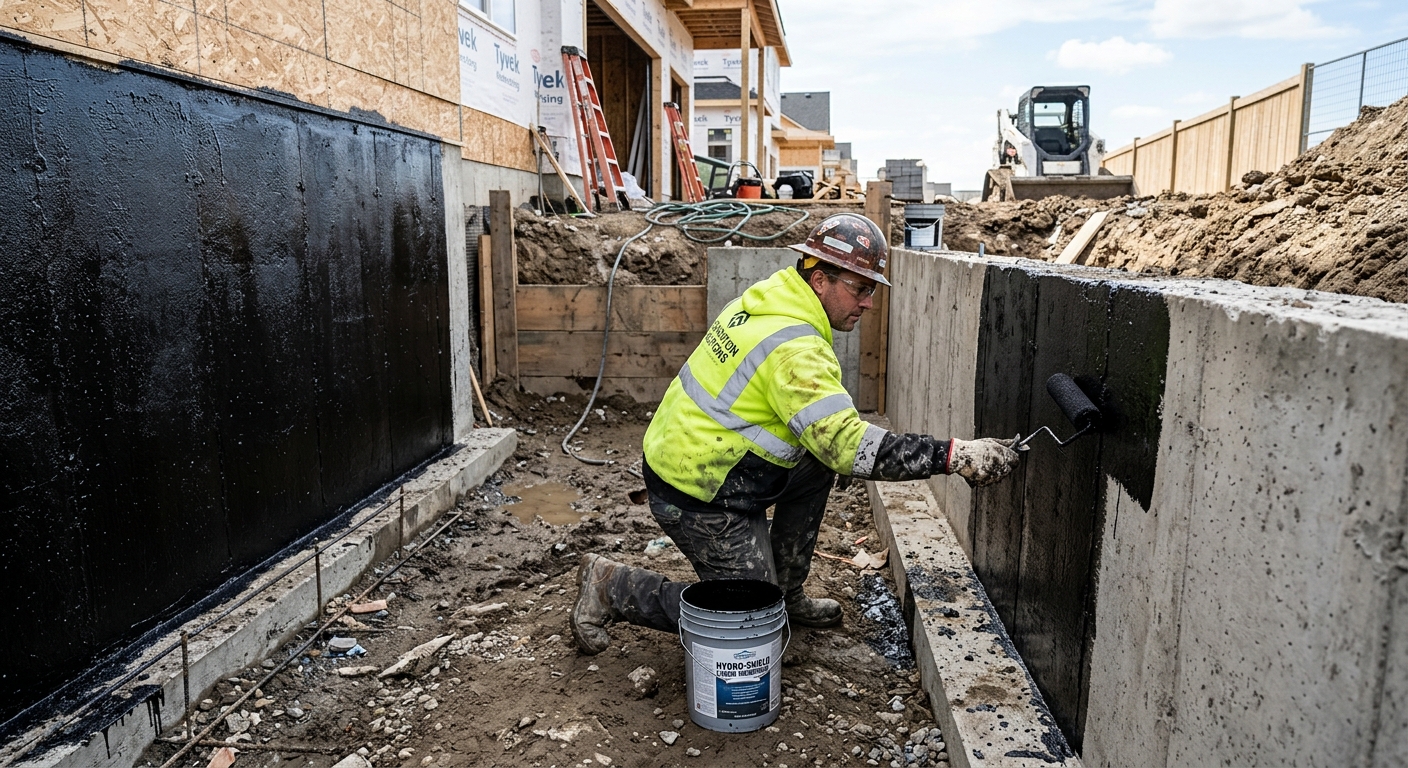
Basement waterproofing options and costs in Lakeview
In Lakeview, Alberta, homeowners typically face waterproofing decisions that balance winter freeze–thaw, clay-heavy soils, and the practical realities of tight urban access. Lakeview sits within Calgary’s broader clay-and-clay-till belt, where saturated ground can expand and push laterally against foundation walls and footings. That dynamic is why older homes in the area are so often the most costly to fix: a large portion of local housing stock is older, and many basements still rely on original tar-and-paper systems and weeping tile that have been carrying water for decades. With a 2021 population of 5,640 in Lakeview (Statistics Canada, 2021 Census), the trade is active but scheduling can vary depending on how many projects are stacked in the spring and early summer.
On top of soil pressure, southern Alberta’s freeze–thaw cycles open up hairline cracks and joints, letting meltwater and spring runoff migrate downward. In Calgary-area neighbourhoods with aging drainage—often including pockets around Lakeview where landscaping, patios, and finished basements complicate access—contractors commonly see seepage at the wall/floor junction, efflorescence near window openings, and weeping-tile failures rather than a single catastrophic “structural collapse.” Costs also swing because deep exterior excavation (with clay spoil disposal) and full-perimeter membrane work are labour- and equipment-intensive, while interior solutions are usually faster but may not eliminate ongoing hydrostatic pressure.
Below are the most common approaches used in Lakeview, with realistic cost bands to help you compare like-for-like scopes before you request itemised quotes.
| Method |
What It Addresses |
Disruption Level |
Durability |
Price Range |
| Exterior excavation + new membrane + drainage tile |
Hydrostatic pressure at the wall, bulk water entry pathways, failed exterior drainage |
High (excavation, landscaping/restoration) |
High (source control when properly detailed) |
$9,000 – $25,000 |
| Interior perimeter drain channel + sump pit |
Water after it enters, reduced wall/floor moisture, improves basement dryness |
Medium (some interior floor/wall work) |
Medium to high (depends on source conditions and drainage capacity) |
$5,500 – $14,000 |
| Foundation crack injection (epoxy or polyurethane) |
Seepage through cracks; epoxy for non-moving structural cracks, polyurethane for active leaks |
Low to medium (localized drilling and patching) |
Medium to high (only as good as crack type and moisture conditions) |
$700 – $1,800 |
| Sump pump installation (primary + battery backup) |
Hydrostatic relief and overflow protection during storms/power loss |
Low to medium (pit, discharge lines, electrical) |
High when backup is installed and discharge is correct |
$1,300 – $3,000 |
| Window well drain installation |
Water pooling and seepage at egress wells, dampness around window openings |
Low to medium (excavation around the well) |
Medium to high (requires proper grading and weep/drain detailing) |
$1,200 – $2,800 |
| Lot re-grading / downspout extension |
Surface water shedding away from foundation and reducing runoff infiltration |
Low (usually limited to landscaping) |
Low to medium (best as a maintenance/adjunct measure) |
$900 – $2,500 |
Prices are estimates only and vary by project scope, site access and material selection.
What affects the price of waterproofing in Lakeview
In Lakeview, Alberta, you can see the same “basement waterproofing” described two different ways on two different quotes—and the totals can vary by 30–50% across Calgary and surrounding areas because the scopes often address different failure points. A quote that includes excavation, drainage tile, membrane, and backfill disposal is not comparable to a quote that adds interior drains and a sump without addressing exterior water entry. Labour rates and scheduling also matter, especially in peak spring wet-weather season when crews are mobilising across the city.
The three biggest local drivers that separate Calgary-area costs from the national average are soil type, water table, and freeze–thaw. Clay-heavy soils (common in parts of southern Alberta) hold water, expand as they freeze, and exert lateral pressure on foundation walls, worsening crack movement over time. Where seasonal groundwater sits higher—particularly in low-lying pockets near river valleys and coulees—sump pumps run more frequently and discharge/delivery requirements become stricter. And freeze–thaw widens cracks and joints, so materials and details that work in a mild climate may fail sooner here unless the work is targeted at active leak pathways.
Concrete examples from Lakeview jobs: (1) If your downspouts discharge too close to the foundation, a re-grading-only fix may cost closer to $900 – $2,500, but once seepage is feeding through wall cracks, interior drainage typically moves you toward the $5,500 – $14,000 band for perimeter drains and a sump approach. (2) If exterior access requires removing a patio, relocating a fence, or cutting through landscaping in tight lot lines, exterior waterproofing can shift toward the higher end of $9,000 – $25,000. (3) When we find weeping tile that’s completely failed—common with older original systems—the exterior vs interior decision becomes clearer because interior-only solutions can treat symptoms without lowering the source pressure.
| Price Factor |
Why It Matters |
Cost Impact |
| Interior vs. exterior approach — interior is less disruptive but addresses symptoms |
Exterior targets the source of water entry; interior manages water after it enters |
Interior often 30–60% less, but may require longer-term monitoring if exterior drainage is failing |
| Foundation type — poured concrete vs. block vs. stone vs. ICF |
Different wall materials behave differently under freeze–thaw and crack movement |
Poured concrete often accepts crack injection more cleanly; block walls frequently need interior drainage as a practical complement |
| Soil type — clay expands more than sand, adding pressure |
Clay saturation increases lateral load on walls and can accelerate deterioration of seals |
Higher likelihood of multi-method solutions, pushing costs toward the upper end of bands |
| Crack type and length — hairline vs. structural horizontal cracks |
Structural movement requires different engineering and sometimes different repair methods |
Structural cracks typically increase labour, materials, and may add engineering review costs |
| Sump pump backup system — battery or water-powered backup needed |
Power reliability matters during spring storms and outages |
Adding backup commonly increases the sump scope by several hundred to over a thousand dollars depending on system design |
| Access — landscaping, decks, or driveways must be removed for exterior |
Excavation access drives labour and restoration time |
Hard-to-access lots can add thousands, especially when patios and retaining walls must be worked around |
| Weeping tile age — original tile (60+ years) may be completely failed |
Failed tile reduces or eliminates drainage, increasing hydrostatic pressure |
May require full/perimeter replacement or a reinforced interior drainage design |
| Mould or efflorescence remediation required before sealing |
Moisture contamination must be cleaned and dried to ensure adhesives/membranes perform correctly |
Can add days and remediation labour; sealing too soon increases call-backs |
Permits & regulations in Alberta
In Alberta, permits are commonly required for work that impacts structural integrity and/or changes how water leaves the property. In practice, foundation excavation for exterior waterproofing, structural crack repair where a wall may be considered compromised, and modifications to lot drainage (for example, reconfiguring discharge routes or altering drainage systems in a way that affects how water is managed) typically require a permit. Sump pump installations that connect to municipal drainage systems can also require municipal approval, depending on your discharge plan and where the line terminates.
For structural crack repair—especially horizontal cracks in block walls, major step cracking, or cracks that appear to indicate movement—an assessment by a structural engineer is often required to determine whether underpinning or additional structural measures are needed. A good waterproofing contractor should be comfortable coordinating this and should carry the engineering support needed for structural scopes, plus liability insurance and WSIB/WCB coverage for the crews.
To verify compliance in Lakeview, Alberta, start with the contractor’s name on the provincial business/contractor information pages (licensing/registration varies by trade scope), then ask for: (1) a current certificate of liability insurance, (2) confirmation of WSIB/WCB clearance, and (3) the actual project scope stating whether a permit pull is included or excluded. For coverage verification, insist on seeing the certificate of insurance before work begins, and request a clearance letter or documentation that matches the legal entity on the contract.
Interior vs exterior waterproofing — what does Lakeview need?
For Lakeview basements, the fundamental choice is whether you’ll control water at the source or manage it after it enters. Exterior waterproofing—full excavation, new membrane, new drainage tile, and backfill—aims to prevent hydrostatic pressure from reaching foundation walls in the first place. It’s the most comprehensive option, but it costs more and requires landscape disruption because crews must excavate around the foundation, remove and replace soil, and restore surfaces. Interior waterproofing—perimeter drain channel, sump pit, and sump pump—doesn’t stop water pressure against the wall; it intercepts water once it migrates into the basement and routes it to the sump. That typically makes it less invasive and faster, but it works best when exterior drainage is partially functioning or when the foundation-to-wall environment can be managed reliably from inside.
Given Calgary-area freeze–thaw and clay soil behaviour, exterior systems are usually justified when you have evidence of repeated wall wetting, failed weeping tile, persistent efflorescence, or significant hydrostatic conditions in the lower parts of the home. Interior systems are often the practical choice for tight access, finished landscaping, or when the foundation wall material and crack pattern suggest a targeted “dry the basement” strategy. In Lakeview, poured concrete walls frequently respond well to crack injection combined with drainage, while block foundations commonly benefit from interior drainage as a complementary plan.
On power reliability: spring outages do happen, and adding a battery backup to the sump can protect you during heavy melt and storms. If you’re deciding between options, consider a typical example: interior perimeter drainage and a sump approach in the $5,500 – $14,000 band may be enough for a damp basement, while moving to exterior excavation and membrane in the $9,000 – $25,000 band is most justified when the exterior source of pressure is clearly active (failed drainage, widespread seepage, or persistent wetting after interior work attempts).
| Method |
Best For |
Addresses Source? |
Disruption |
Lifespan |
Price Band |
| Full exterior excavation + membrane |
Active hydrostatic pressure, failed weeping tile, repeated wall wetting, strong evidence of exterior water entry |
Yes (primary source control) |
High |
Long-term when detailed correctly |
$9,000 – $25,000 |
| Interior French drain + sump system |
Dampness, localized seepage, homes with limited exterior access, managing water after it enters |
No (managed after entry) |
Medium |
Medium to long-term with proper pump/discharge |
$5,500 – $14,000 |
| Crack injection — epoxy (structural) |
Non-moving structural cracks in suitable foundation conditions |
Partial (seals crack pathway) |
Low to medium |
Medium to long-term if cracks are stable |
$700 – $1,800 |
| Crack injection — polyurethane (active leak) |
Active seepage through cracks, damp cracks, water migration pathways |
Partial (seals active pathway) |
Low to medium |
Medium to long-term with correct leak conditions |
$700 – $1,800 |
| Interior drain channel only (no sump) |
Minor moisture, very limited seepage, situations where pump capacity is not warranted |
No |
Medium |
Shorter when hydrostatic conditions fluctuate |
$4,800 – $9,500 |
| Re-grading + downspout extensions |
Surface water runoff issues, early-stage dampness with good drainage |
Indirect (reduces entry from runoff) |
Low |
Medium (depends on maintenance and grading) |
$900 – $2,500 |
How to choose a waterproofing contractor in Lakeview
Choosing the right contractor matters in Lakeview because waterproofing failures often come from mismatched solutions—treating symptoms without addressing the water source, or sealing over moisture that should have been drained first. Start with Alberta coverage checks. Ask for proof of liability insurance (certificate of insurance showing coverage and limits), WSIB/WCB status (clearance letter or equivalent documentation), and confirm the correct legal name on the insurance matches the contract. If the scope includes structural crack repair, ask whether they coordinate engineering review and provide documentation that shows how they handle structural considerations.
Next, get 2–3 itemised written quotes. The best quotes break down labour and materials separately (excavation steps, membrane type, drainage tile/gravel details, pump model, discharge routing, backfill and compaction, and restoration). Look for exclusions: are permits included? Is disposal of clay spoil included? Is restoration (topsoil/grass/sod/patio repairs) included or listed as a separate allowance? On warranty, confirm the workmanship warranty length, whether the product/manufacturer warranty is tied to the install and whether it’s transferable if you sell your home.
Payment schedule should be conservative. Never pay more than about 10–15% upfront, and request a holdback until the job is complete and the final documentation is delivered. Finally, get a written start date and a realistic completion estimate that accounts for cure times and seasonal weather.
- Provide a written scope with method, materials, and exact work locations (walls, crack lines, window wells).
- Include whether a permit is required and who pulls it.
- State disposal fees for heavy clay spoil (and where it’s hauled).
- Confirm drainage tile routing, slope, and connection method (and photos/notes from start to finish).
- Specify pump model, discharge line route, and check-valve placement.
- Clarify backup system type (battery vs water-powered) and serviceability.
- Require a moisture assessment step before sealing (or specify drying expectations).
- Detail crack repair method: epoxy for stable cracks vs polyurethane for active leaks.
- Ask how they test/verify results at the end of the job (dry days, moisture readings, or dye test where appropriate).
- Check insurance: certificate of liability and WSIB/WCB clearance letter before signing.
- Use an itemised breakdown—no vague “waterproofing package” line items.
- Confirm warranty paperwork in writing and whether it transfers to a new owner.
Red flags in Lakeview include: promises of “100% guaranteed dry basement” without discussing water source testing; quotes that skip excavation/discharge details but recommend only interior draining; lack of proof of WSIB/WCB clearance or liability insurance; refusal to provide a permit plan when excavation or drainage modifications are part of the scope; and vague warranties that don’t separate workmanship from product/manufacturer terms.
Frequently asked questions — waterproofing in Lakeview
How do I choose a waterproofing contractor in Lakeview?
Start by comparing itemised scopes, not just totals. In Lakeview, the difference between an exterior excavation job and an interior drainage job is huge, and contractors sometimes blend them in marketing. Ask for a breakdown of labour and materials (membrane, drainage tile, pump, discharge routing, backfill and compaction, and restoration). Verify Alberta coverage before anyone touches your foundation: request a certificate of liability insurance and proof of WSIB/WCB clearance, and ensure the contractor name matches the contract. If the scope includes structural crack repair, confirm engineering support is part of their process. Finally, match warranty terms to the method—if you’re paying toward the $9,000 – $25,000 exterior band, you should expect stronger long-term source control and documentation of how the exterior system is detailed.
What is a battery backup sump pump and do I need one in Lakeview?
A battery backup sump pump is a secondary power system that keeps the sump running if the main power goes out—especially important during spring melt and heavy storm periods. In Lakeview, where freeze–thaw and rapid runoff can overwhelm drainage quickly, a power interruption can turn “water management” into a flood risk in hours. A backup system can be as simple as a battery module paired with a compatible pump setup, or it can include a more engineered arrangement depending on discharge complexity. Whether you “need” one depends on your risk profile: frequent power outages, known hydrostatic pressure pockets, and basements with prior flooding are strong triggers. Many homeowners find it worthwhile when the sump scope is within the $1,300 – $3,000 range that includes reliable backup options and correct discharge design.
How much does basement waterproofing cost in Lakeview?
Basement waterproofing in Lakeview depends on how much of the system addresses the actual source of water entry. Interior perimeter drainage and a sump approach often lands in the $5,500 – $14,000 band, especially where weeping tile issues have created persistent dampness. If you need exterior excavation, new membrane, and perimeter drainage tile, pricing commonly falls into the $9,000 – $25,000 band due to excavation labour, heavy clay spoil disposal, and landscaping restoration. Smaller, targeted repairs like crack injection may be closer to $700 – $1,800, and simple surface water corrections (downspouts and grading) can be nearer $900 – $2,500. Your final number depends on access (deck/patio/driveway), foundation type, crack length, whether mould/efflorescence remediation is needed, and whether discharge and backup pumping are included.
Interior vs exterior waterproofing — which is better?
Exterior is “better” for source control, while interior is “better” for reduced disruption and symptom management. Exterior waterproofing (membrane plus drainage tile) addresses the water entry mechanism—especially when clay soils saturate and expand during freeze–thaw, increasing lateral pressure and forcing water through joints and cracks. It’s usually the best fit if you’ve confirmed failed weeping tile, consistent wall wetting, or hydrostatic conditions in the basement. Interior waterproofing (French drain/channel plus sump) is best when access is limited, landscaping can’t be disturbed, or the issue is primarily managed water after entry. Many Lakeview poured-concrete walls respond well to crack injection combined with interior drainage, while block foundations often need interior drainage as a practical complement. If you’re choosing between scopes, a straightforward comparison is whether the expected results justify moving from the $5,500 – $14,000 interior band up to the $9,000 – $25,000 exterior band.
Why is my basement leaking in Lakeview?
Most leaks in Lakeview come from a combination of freeze–thaw and drainage that can’t keep up with spring melt and heavy runoff. Clay-heavy soils hold water, then freeze and expand; that expands cracks and joints and increases the chance for meltwater to find pathways. Common culprits include failing or clogged weeping tile, undersized interior drainage, and water pooling near window wells or at the wall/floor junction. Efflorescence—white salts—often indicates repeated wetting even when the room “feels only slightly damp.” In homes with older foundation waterproofing systems, tar-and-paper or early sealants may have aged out, leaving seepage routes. If you see leaks around egress windows, double-check window well drainage and grading. A good contractor will identify whether the water is primarily from exterior hydrostatic pressure or surface runoff so you don’t overspend on the wrong method.
How do I know if a foundation crack is serious?
A crack is more concerning when it shows signs of movement, has changed over time, or aligns with patterns linked to hydrostatic pressure. In Lakeview, watch for horizontal cracks in block walls, widening step cracks, cracks that accompany active seepage, or areas where water appears after freeze–thaw and spring melt. Hairline cracks that remain stable and dry may be suitable for crack injection with epoxy, while active leakage typically requires polyurethane targeted at the wet pathway. But if you’re dealing with major step cracking, horizontal movement indicators, or any cracks that appear to be structurally significant, Alberta guidance usually supports getting a structural engineer assessment before committing to repairs. The right contractor should explain the crack type, how it will be treated, and whether structural evaluation is needed—rather than injecting blindly.